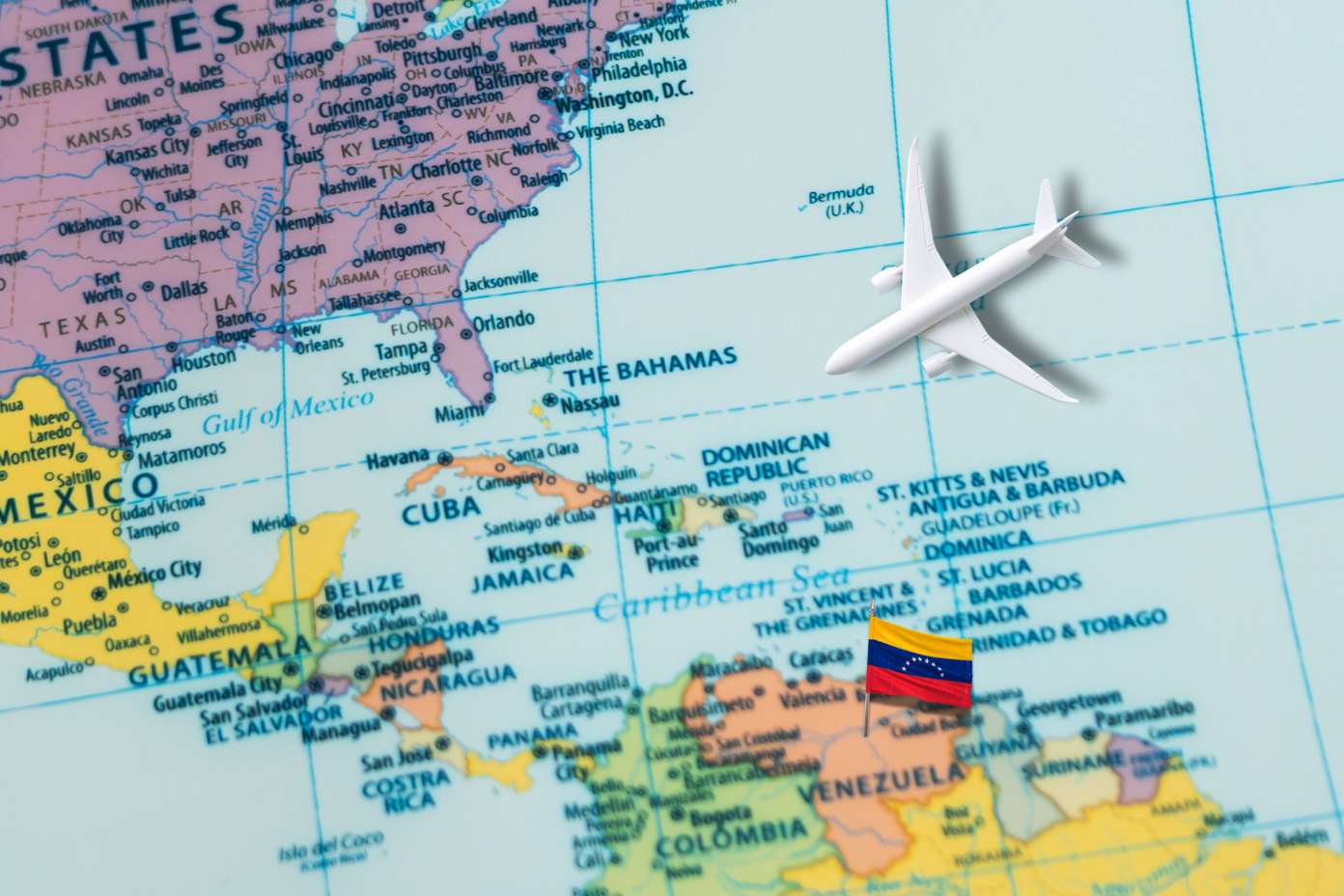
Uncertainty tied to recent developments involving the United States’ actions against Venezuela continues to weigh on travel demand across the Caribbean, despite the region’s vast geographic spread and the absence of safety concerns at most destinations.
Travel disruption began on 3 Jan., after US military activity, leading to the removal of Venezuelan leader Nicolás Maduro prompted the US Federal Aviation Administration to close airspace over parts of the region.
The move led to nearly 1,000 flight cancellations and widespread travel disruptions, leaving some passengers stranded and contributing to a sharp rise in traveller caution that has persisted for weeks.
While airspace restrictions were temporary, the episode has had a lingering effect on booking sentiment. Airlines and travel analysts say the situation has amplified broader geopolitical anxieties and reinforced a tendency among travelers to view the Caribbean as a single destination, allowing localised events to influence regional demand.
Airline industry flags concerns
Airline executives have signalled concern around the drop in Caribbean demand. During United Airlines’ fourth-quarter earnings call on 21 Jan., Chief Commercial Officer Andrew Nocella said bookings to the region had been affected by the situation in Venezuela, even as the airline expects conditions to improve over time.
“As we look into 2026, we do have this Caribbean situation which is impacting the numbers there,” he said, adding that “recent geopolitical events are having a measurable negative impact on bookings in the Caribbean.”
Caution was expressed days earlier, on 16 Jan., when the FAA advised airlines to exercise care when flying over parts of Latin America, citing ongoing military activity and interference with global navigation satellite systems.
Media coverage has also shaped perceptions. A 24 Jan. Travel + Leisure article titled ‘Is It Safe to Visit the Caribbean Right Now?’, adopts a cautionary tone that introduces uncertainty and could give travellers pause, despite noting that destinations such as Cayman remain under the US State Department’s lowest Level 1 advisory.
Data points to reduced travel interest
Data from global travel intelligence firm Mabrian, which tracks international flight searches to leading airports worldwide and covers about 86.7% of global travel demand, points to early signs of softening demand, particularly from US and European markets.
An analysis of flight search activity for travel between January and June 2026 shows weakening interest in the Caribbean in the first quarter, which the firm described as a “regional instability effect”.
Mabrian analysts followed that “the effects of the tensions in the Caribbean region in early January should be monitored in the medium and long term as data indicates that international travel intent toward the Caribbean shows a global softening.”
The Venezuela-related uncertainty is also unfolding against a broader pullback in consumer confidence, particularly in the United States, the Caribbean’s largest source market. The Conference Board’s January 2026 Consumer Confidence Index fell sharply to its lowest level since 2014, reflecting rising concerns about inflation, energy prices, politics and global conflict.
“Confidence collapsed in January, as consumer concerns about both the present situation and expectations for the future deepened,” said Dana M Peterson, chief economist at The Conference Board. “All five components of the Index deteriorated, driving the overall Index to its lowest level since May 2014, surpassing its COVID-19 pandemic depths.”
Vacation intentions declined alongside confidence. The share of US consumers planning a vacation in the next six months fell to 38.7% in January from 41.8% in December. Intentions to travel to international destinations dropped even more sharply, falling to 19.5% from 22.4% the previous month.
Tourism officials respond
Tourism officials say the challenge lies in separating perception from reality. Caribbean Hotel and Tourism Association President Sanovnik Destang has emphasised that recent airspace restrictions were tied to US military activity near Venezuela and not to conditions within Caribbean destinations or the broader region.
“We’re seeing Venezuela sometimes included in the broader conversations about the Caribbean, largely because it borders the Caribbean Sea. At the same time, we’re seeing neighboring destinations swept into a single narrative based on geography,” he said in an interview with a travel industry publication.
“In moments like this, regional context is especially important, as travel advisories and operational guidance are issued on a destination-by-destination basis rather than across the region as a whole.”
Caribbean destinations, Destang said, remain open and fully operational, with resorts, airports and tourism services across the region continuing to welcome travellers as usual.
“The Caribbean is a vast and diverse region, spanning dozens of destinations across thousands of miles, each with its own operating environment,” he added.
The Caribbean Tourism Organization echoed that message in a statement, thanking airline partners for adding capacity and hotels for their flexibility following US military activity in Venezuela that led to temporary airspace closures.
In the days that followed the strikes, American Airlines and United introduced a combined 60 additional Caribbean flights, including American’s deployment of its largest aircraft, a Boeing 777-300, on the Miami–Puerto Rico route. United added 17 flights via Houston, Newark and Washington, DC, while Delta Airlines created space for 2,600 additional passengers and Southwest Airlines scheduled 21 round-trip flights to Aruba and Puerto Rico.
The Caribbean Tourism Organization encouraged partners and visitors to proceed with their plans, stating that “the Caribbean remains open for business and ready to welcome travelers.”
Related Videos