They may not wear a cape, but Luke Harding considers them heroes of conservation. The operations manager at Blue Iguana Conservation says volunteers are the cornerstone of its Blue Iguana Guardians programme, helping to preserve and care for Cayman’s endangered blue iguana population.
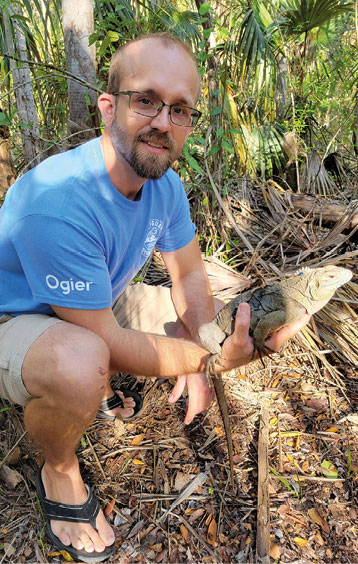
“Our Blue Iguana Guardians programme has grown into a major part of our success,” says Harding. “These volunteers assist with everything from the daily care of the animals to improvements to the facilities to being our eyes and ears in the community. Their enthusiasm is boundless.”
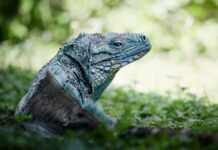
Efforts to preserve this endemic species — found nowhere else in the world but Grand Cayman — have also been boundless. Run by the non-profit National Trust for the Cayman Islands, BIC is dedicated to the preservation of these rare local lizards.
Through efforts of habitat restoration, captive breeding programmes and public education, the population of these iguanas has grown from less than 30 individuals in the wild to more than 1,000 — one of the world’s most successful reptile conservation programmes.
There are around 100 blue iguanas of varying ages in its captive breeding facility at Queen Elizabeth II Botanic Park, where these prehistoric-looking creatures can also be found roaming freely.
“While the blues are certainly far better off now than when they were declared functionally extinct, the work of the programme is far from complete,” says Harding. “The same threats that drove the blue iguana to the very brink of extinction are still occurring and, in some cases, increasing.”
That includes development, increased traffic and feral cats and dogs that prey on them. Harding says ongoing support is needed, and that’s where the Guardians come in. “We are always looking for long-term Blue Iguana Guardians,” he says. “They are the backbone of the programme’s efforts.”
BIC has trained more than 100 Guardians to date, including many young Caymanians. “We are planning even more training for our Guardians to ensure that they continue to grow as environmental ambassadors with skills that allow them to broaden their volunteer efforts to more of Cayman’s pressing issues,” he says.
For those looking to assist in other capacities — both residents and visitors alike — Harding says BIC has many hands-on and interactive volunteer opportunities.
“In the past, we have had volunteers help us with graphic design, engineering, building, painting, social media and more. Skilled volunteers help us to augment the talents of our small team and to deliver the results of a much larger organisation,” he says. “We are open to hearing from anyone who wants to help.”

Other ways to help the Blues
Get the E-Guana app
The app allows members of the community to report iguana sightings — blue iguanas, the Sister Islands’ rock iguanas — native only to Little Cayman and Cayman Brac – and green iguanas. The data helps BIC to better understand iguana populations and conserve Cayman’s native species.
Say cheers to the Blues
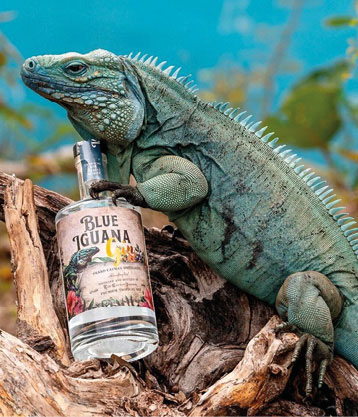
Grand Cayman Distillery produces a local Blue Iguana Gin, with a portion of the proceeds of every bottle sold donated to BIC. The gin is flavoured using flowers and plants the iguanas like to eat, such as sea grapes, June plums and hibiscus. The gin is available at Tortuga Rum Company.
Grow a garden
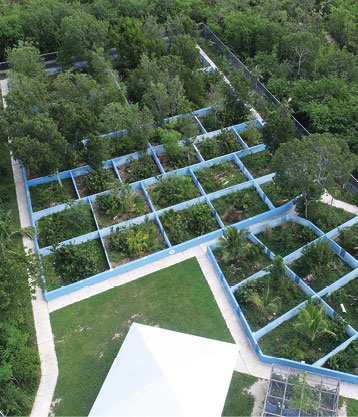
Gathering food in the wild for the iguanas is a time-consuming task for the BIC team. Its Blue Iguana Garden programme encourages residents to grow native plants in their gardens which the BIC team can harvest to feed the iguanas.
Take a tour
Self-guided and guided tours of the blue iguana captive breeding facility at Botanic Park are available, with admission fees going to the group’s conservation efforts.
Those interested in becoming a Blue Iguana Guardian — or assist in other capacities — can contact Blue Iguana Conservation at bic@ nationaltrust.org.ky.
Related Videos