

It has already been dubbed the ‘Dope Olympics’ – a controversial concept that promises the illicit thrill of a supercharged sporting competition that aims to ‘demolish’ numerous world records.
The world’s press has reacted with a mix of horror and fascination. More than 200 articles across the globe since the recent launch have referenced Frankenstein and ‘science enhanced superheroes’ as editors groped for stylish similes for the word ‘grotesque’.
Over 200 media articles on Enhanced this week. Here are some highlights. pic.twitter.com/amvnrjMFSF
— enhancedgames (@enhanced_games) July 2, 2023
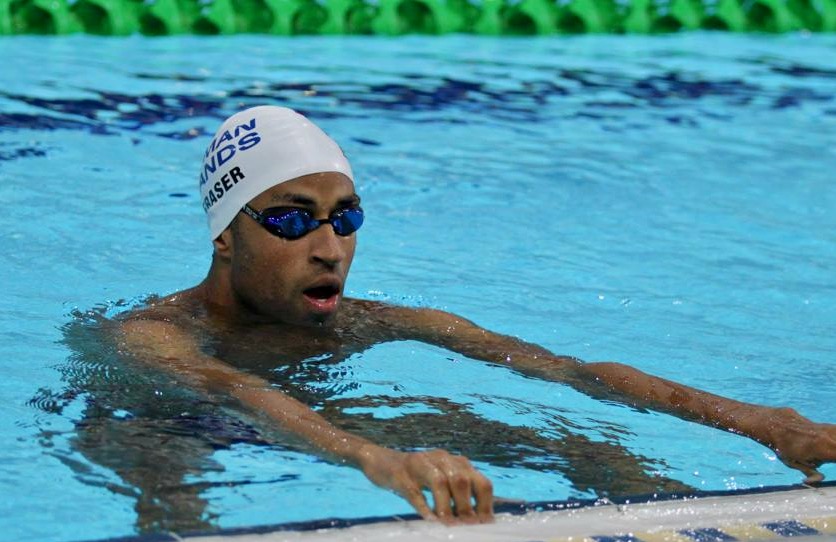
So why is Brett Fraser – one of Cayman’s all-time great swimmers – staking his name and his reputation on the Enhanced Games?
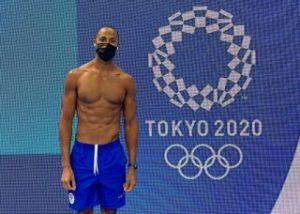
“It is controversial and it is bold but I am confident we are going to solve deeply rooted problems that have plagued elite competition for some time,” said Fraser, the 33-year-old freestyler who won PanAm gold and carried the flag for team Cayman at both the London and Tokyo Olympics, in 2012 and 2021, respectively.
Now Fraser is undergoing a post-pool metamorphosis as chief athletes officer and one of the key spokesmen for the surprising new concept of an alternative Olympics where athletes are free to take whatever supplements they wish.
The games’ founder, Aron D’Souza – a brash and charismatic Australian entrepreneur – has articulated why he thinks the public will get behind the concept.
“Who’s going to want to watch the old, boring, slow Olympics when all the world records were set at the Enhanced Games?”

Meanwhile, the Enhanced Games Twitter page is showing a video of an undercover ‘enhanced athlete’ who claims to have already broken Usain Bolt’s 100m sprint record.
He is the fastest man in the world. He has broken Usain Bolt’s 100m record.
But the world isn’t ready for him. The Olympics hate him.
Come watch him compete at the 2024 Enhanced Games.[New version of the video, as Twitter decided to take the last one down.] pic.twitter.com/kKLGPGvqha
— enhancedgames (@enhanced_games) July 1, 2023
The formula is simple: A streamlined alternative to the Olympics with five disciplines – swimming, track and field, gymnastics, strength and combat – that takes place every year.
‘Autonomy over their own bodies’
Fraser, more circumspect and understated than the Games front-man D’Souza, is equally passionate about the idea.
He insists this will be a competition that puts its athletes first, an antidote to what he and others see as the corruption and exploitation of the International Olympic Committee.
“It is an improved model of competition for athletes,” he said, promising a greater degree of profit-sharing, mental health support and “proper autonomy of their bodies” for those that compete.
The last point is inevitably the most controversial.
But Fraser is adamant that removing drug-testing is a necessary step to create a fairer competition and to allow adults to make informed choices about their bodies.
Select Olympic competitors currently have ‘Therapeutic Use Exemptions’ for supplements, while others cheat the system and put themselves in danger, using sketchy outlets and self-administered substances.
Fraser believes the Enhanced Games will allow athletes to work with doctors to explore sophisticated drug therapies timed to optimise their performance in a safe way.
Bringing everything out in the open will, he argues, create an environment where medical professionals can better protect competitors and advance research in ways to use “the best of medical achievement” to improve the ability to compete.
“It is important to note there is no substitute for training, for hard work,” says Fraser, who believes medical therapies and technologies can help with training, recovery and with longevity, but not with skill.
Moral ambiguity
There is a moral ambiguity, it seems, around the pressure that such an environment might create for athletes who may feel they have no choice but to use supplements.

Fraser insists that pressure is already there with drug use an ‘open secret’ in sports. He said the Enhanced Games is about ‘freedom of choice’.
Certain therapies that are in research and development, he said, may actually be good for athletes in the long run and he believes adults should have a choice when it comes to their own health.
“Who gets to say what is allowed and what isn’t allowed?”
He believes the answer to that question is the athletes themselves, in consultation with their doctor – their body, their choice.
“For the sake of being fair, we will embrace science and allow athletes to take whatever they want to take to perform at their best,” he said.
Competitors will also be free not to take anything at all, he adds.
“Natural athletes are just as encouraged to compete.”
Payment for athletes
There’s another element to the Enhanced Games that is garnering less traction in the media, but is equally fundamental to the concept. The athletes will be paid to train.
The qualifying criteria have yet to be established. But investor funding, media and television rights revenue and other sources of income will go towards providing a Universal Basic Income for competitors and sizeable prize money for race winners and record-breakers.
“The IOC has amassed a fortune while athletes struggle every four years to pay for their own training to try to compete,” says Fraser.
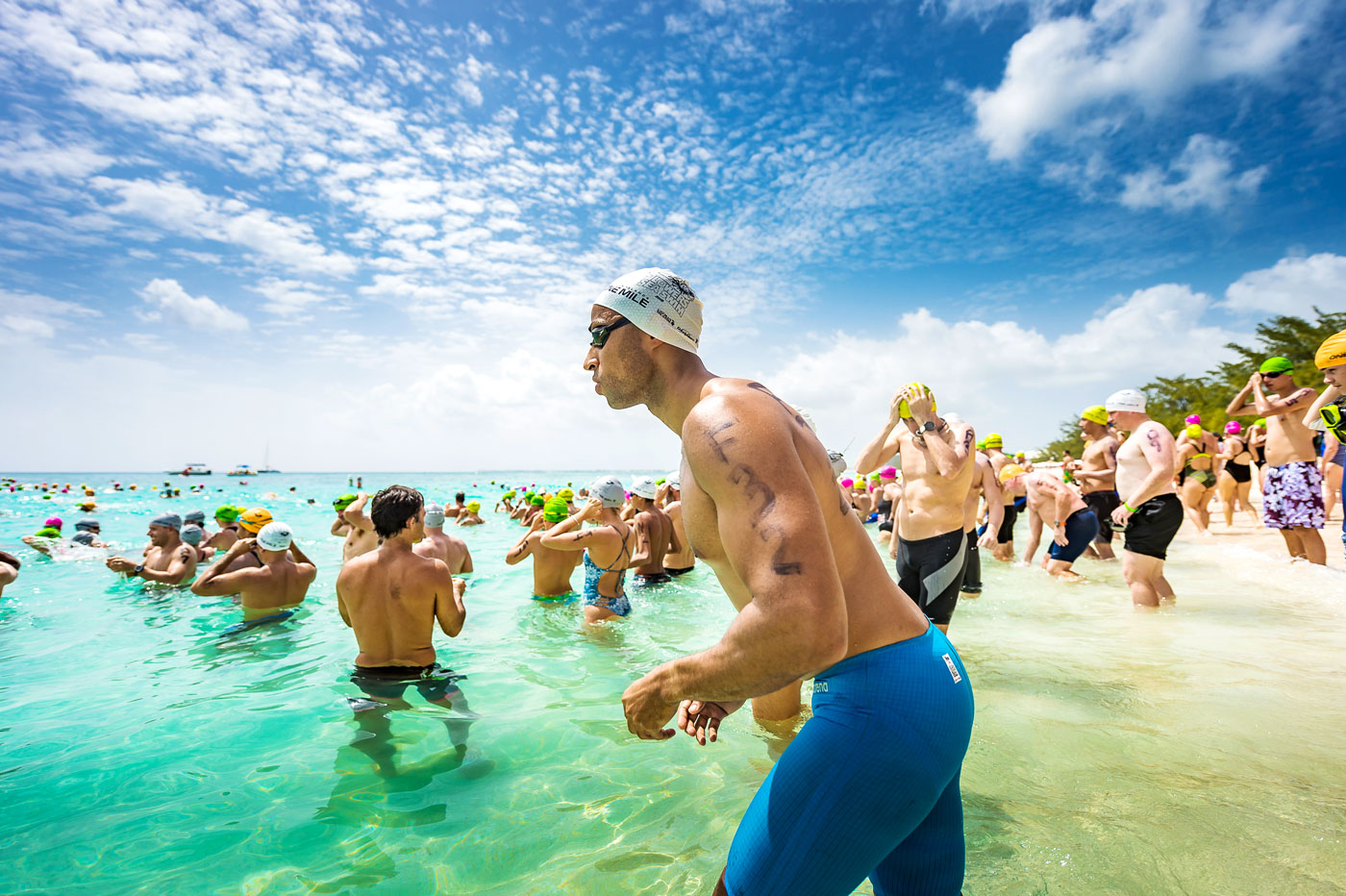
For swimmers, for example, it can take a lifetime of self-funded effort and training for a once-every-four-years shot at an Olympic team. If you are injured, ill or just out-of-form when opportunity knocks, it can feel like a lot of wasted time and effort.
“Everyone dreams of winning a gold medal but only one person can win. The work-to-reward ratio for some athletes is really skewed.”
The aim is that the games will be held annually on a dedicated campus, to provide athletes with time and money to train for it and to focus on specific events that yield fast times and thrilling spectacles. It will be entirely private sector funded, says Fraser, preventing what organisers see as a waste of taxpayer funds on purpose-built stadiums for one-off Olympics.
While several high-profile athletes, including sprinter Michael Johnson, have spoken out against the concept and World Aquatics has rejected the premise, Fraser believes it will get the public’s support. He said several athletes – including medal winners – were keen to sign up.
“Because of how bold the concept is, it is going to be talked about. It is going to take time and education to explain this to the public and to gain the support we hope for,” he said.
Editor’s note: We apologise that an earlier version of this story mistakenly used an incorrect image. This has now been corrected.
Related Videos













In 1967 the IOC banned the use of performance-enhancing drugs, instituted a Medical Commission, and created a list of banned substances. Mandatory testing began at the following year’s Games. In a few cases the IOC has reversed earlier rulings that stripped athletes of medals. The first doping case at the Winter Olympics was noted at the 1972 Sapporo Games, when West German ice hockey player tested positive for the banned substance ephedrine. He was eventually cleared of all his charges, and his suspension was lifted. Fast forward to now and there have been 89 “doping” cases in the Olympic games.
The ICOC routinely fails to investigate rule-breaking sports powers like Russia and China so it is law enforcement and journalists who take up the slack. The international bodies charged with investigating evidence of state-sponsored doping schemes, the International Olympic Committee (IOC) and the IOC-controlled World Anti-Doping Agency (WADA), either ignore these reports or make nothing more than vague promises to investigate.
In other words, the IOC’s traditional indifference to state-sponsored doping is now official policy. It is no wonder that Olympic athletes “cheat” and risk damaging their bodies. The entire system is corrupt and another example of the moral and ethical deterioration of world society. Unfortunately this is just the tip of the iceberg.
It is unfortunate that Mr Fraser is supporting this hare-brained scheme. It will only encourage the drug cheats to cheat even more and risk their health in doing so. His claim that athletes struggle to pay for their own training is misleading, this may apply to a small minority, but in most cases they are funded by their own Olympic Associations and/or their own countries, Cayman athletes have recd this support for decades. Mr Fraser is an icon in the Cayman swimming community with an unblemished record. I hope he reconsiders his decision.
I believe this is a very slippery slope. Athletes are always striving to be number one, to go for the gold. As records are broken, they will feel the need to continuously seek new, more effective–and likely more dangerous–performance enhancing drugs. I believe that in a short time, they will be putting their health and even their lives in great risk and danger.