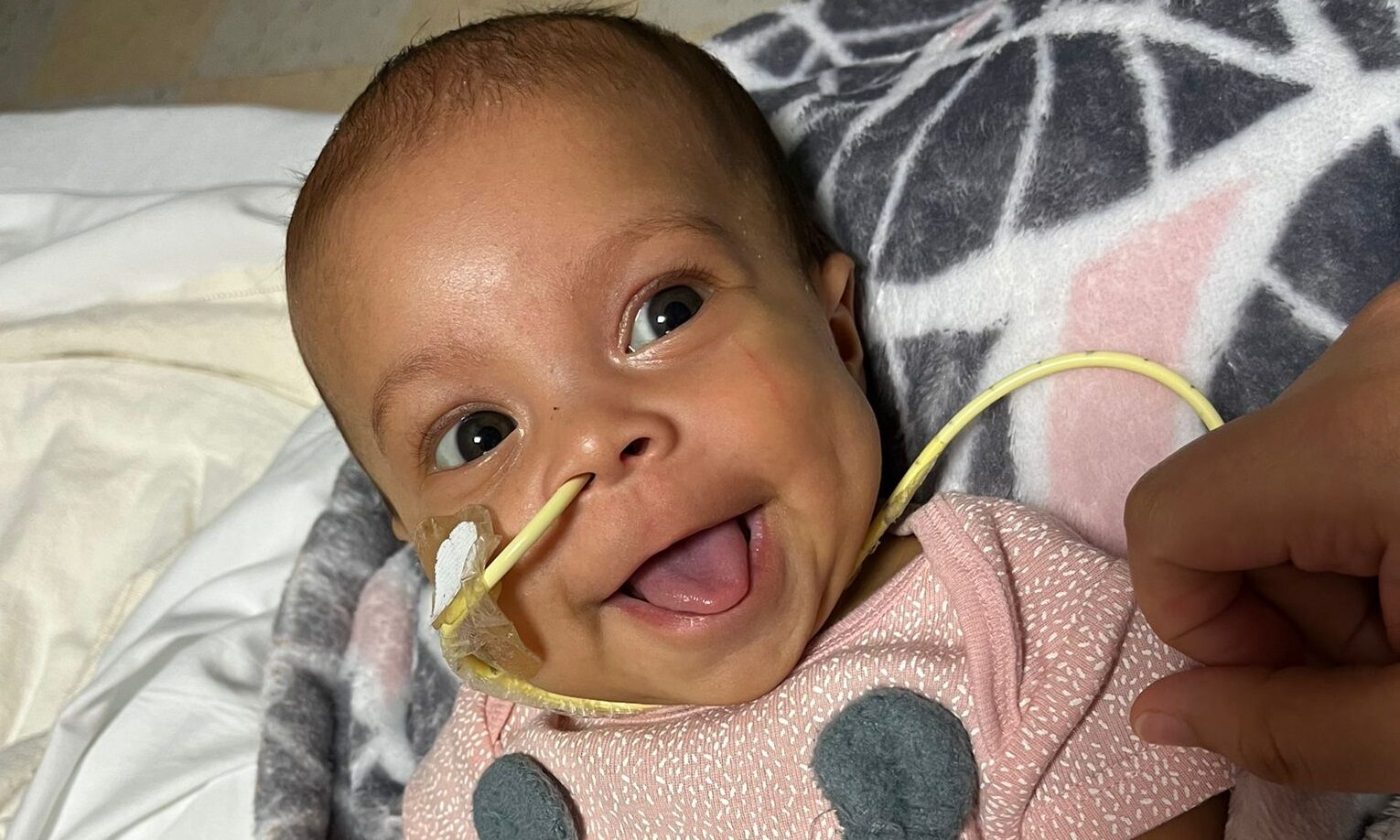
When Nicholas and Shayhnie Langlois decided it was time for baby number two, they were delighted at the news of a second daughter.
But she would be born with an extremely rare disorder that would force them to split up their family to stave off mounting expenses, while they fight to save their child’s life.
“We figured we had already had one child and survived, so now we kind of knew what to expect,” said Nicholas, half-jokingly, while speaking to the Cayman Compass via a phone call from a hospital room in Florida.

His wife Shayhnie, who was on the call from Cayman, agreed.
“The pregnancy went well and Zoe was born without complications, for which we are very grateful,” she said. “Everything was fine during her first month and the doctors were happy with her development and motor skills and so were we.”
She added, “Plus we could already start to see her happy, bubbly personality.”
But at around six weeks old, Zoe began showing signs that something was wrong.
“She was having pale stool, dark urine, a distended belly, an umbilical hernia and her jaundice, which had cleared up, was starting to develop again,” said Nicholas.
“One or two of these symptoms together, is fine for a normal baby, but all together, well that’s when we knew something was wrong,” added Shayhnie.
The collective symptoms all pointed to one diagnosis – biliary atresia, an extremely rare disorder, in which bile flow from the liver to the gall bladder is blocked, resulting in scarring, or cirrhosis, of the liver tissue. This can eventually lead to liver failure and the need for a transplant.
According to Cincinnati Children’s Hospital Medical Center, biliary atresia occurs in one in 15,000 babies, with girls being more at risk than boys.
“At first everybody was kind of in denial, saying ‘Oh, nothing’s wrong’, or ‘Oh, she will outgrow it’. Some even advised us against doing anything right now because it would have been too expensive,” said Shayhnie.
“Although we were shocked, we knew we had to act immediately,” said Nicholas.
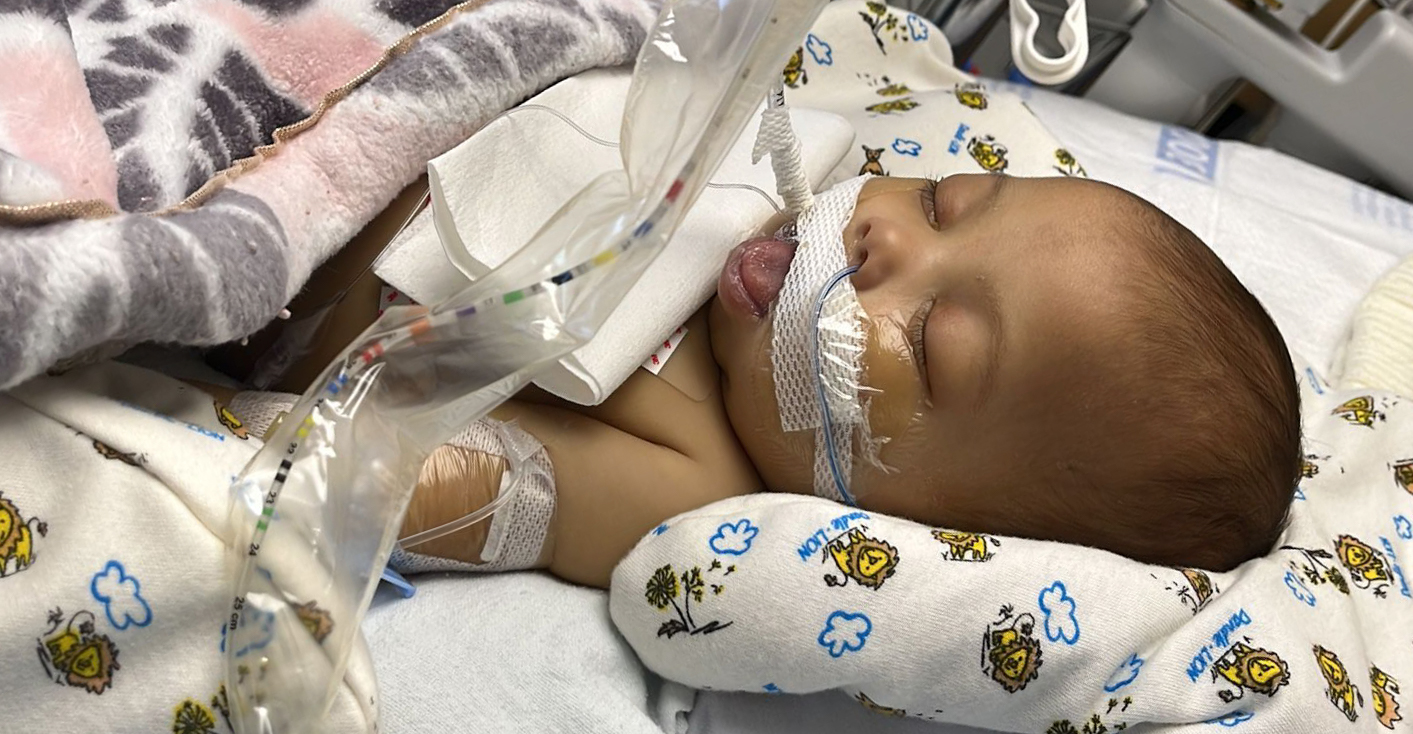
According to Cincinnati Children’s Hospital, most cases of biliary atresia in infants are discovered within the child’s first 60 days, at which time swift medical intervention is recommended – as each passing week increases the damage to the child’s liver and a host of other internal organs.
“We weren’t able to get her the treatment she needed until she was around 75 days old,” said Nicholas. “So far she has had a minimally invasive procedure where the doctors attached an IV drip directly into a main artery that they are now using to administer an antibiotic treatment.”
In most cases, a child recovers and never needs to return to the hospital for treatment in relation to the disorder, or they might have minor complications which require a bit of treatment over a prolonged period.
However, in some cases the only option is a liver transplant.
“It’s not if she is going to need a liver transplant, it’s a matter of when she is going to need one,” said Shaynie.
According to the Children’s Liver Disease Foundation, 75% of children with a liver transplant live to be 15-to-20 years old with “a good quality of life”.
Unfortunately, there is no way of telling whether Zoe will land in that bracket.
A fitting name for a little fighter
Zoe’s middle name is Valkyrie. It is derived from Norse mythology and refers to one of a host of Asgardian female warriors who guide souls of the dead to the god Odin’s hall of Valhalla where they prepare for the epic battle of Ragnarök.
“I can’t think of a better name for our little fighter,” said Nicholas.
Although the family has insurance and was able to get the treatment for little Zoe, the ancillary expenses have dealt a devastating financial blow.
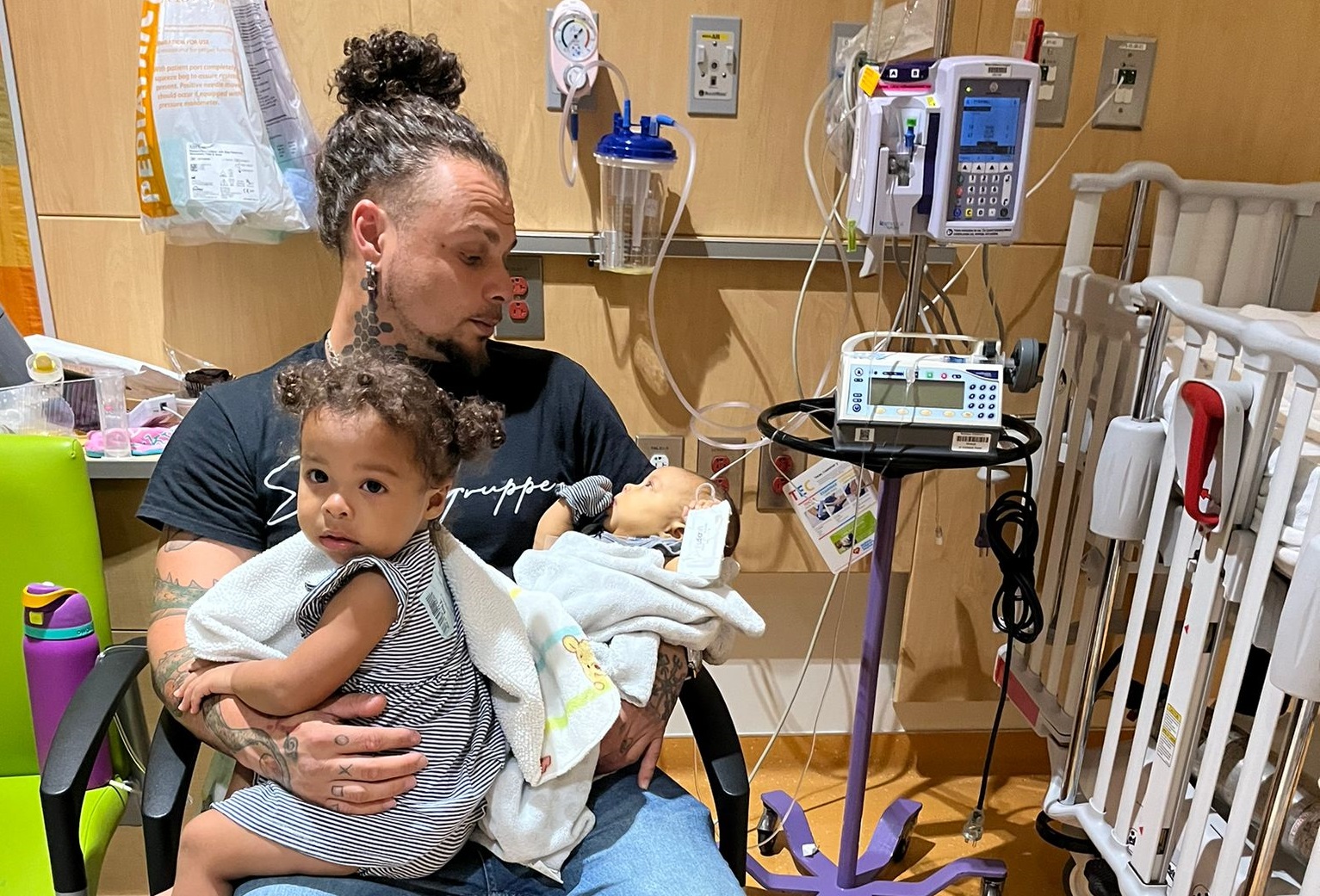
“We thought we would have been able to stay in the hospital with our eldest daughter Lila, however, that wasn’t allowed, so we have had to get a hotel room,” said Nicholas. “We pretty much had to cover most of the expenses up front such as tickets, transportation, and now accommodations for the past couple of months. So that has pretty much wiped out our savings.”
The added financial pressure of trying to keep themselves afloat in the US, while managing their expenses in Cayman, has forced the husband and wife to rotate between the two places.
“My wife and I go back and forth, sometimes she is here and I’m in Cayman, or like now, I’m here and she is back home,” he said.
The family has set up a GoFundMe page, hoping to offset expenses as they continue to fight to save Zoe’s life.
“We appreciate all the prayers, words of encouragement, and the love that the community has shown us, even people we don’t know,” said the husband and wife. “Now we ask for any little they can spare to help us in our time of need, as we continue to fight with our tough little cookie.”
People wishing to make a donation through Zoe’s GoFundMe page, can click here.
Related Videos