

The so-called ‘golden years’ are looking increasingly bleak for Cayman Islands residents seeking to retire in the territory.
Successive governments are facing accusations that they have mismanaged pensions policy to the point where only a select few can afford to retire and stay on the island. The rest will be forced to leave or rely on government handouts to survive, experts have warned.
The latest changes – circulated in draft form last month – envisage an expansion of the loophole which allows Caymanians to raid their retirement savings to help buy a home or pay off a mortgage.
But the strategy has been roundly condemned by economists and policy experts as another step that will diminish the already severely depleted pension pot.
Randall Fisher, chair of the Chamber of Commerce Pension Fund, said the average member has around $50,000 in their pension – enough to last a maximum of four years post-retirement, with paltry living costs of around $12,500 annually.
He said $495 million had been withdrawn from Cayman pension plans under COVID regulations which allowed people to access their savings to get through the lockdown.
And he cautioned that the latest changes would simply add to an already unsustainable situation.
“The question is, once people have taken funds out of their pension, who will be looking after them in their golden years – the Needs Assessment Unit?”
‘Voodoo economics’
Mario Ebanks, a former director of the Department of Labour and Pensions, said successive raids on retirement savings were “good politics” but “bad policy”.
He said government was guilty of “voodoo economics” that prioritised the desires of the day over the needs of tomorrow.
“The future looks dismal for older people unless we have a change of thinking,” he said.
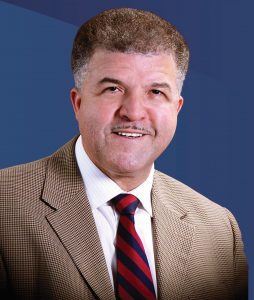
“We have to start nation building and thinking about where we want to be in 20 years, not just after the next election.”
If people can’t afford health insurance or groceries, he said, owning their own home would be only a small consolation. He said pension contributions from workers and their bosses needed to be increased, not diminished, for any ordinary person to be able to survive in retirement.
Ebanks also champions an increase in the retirement age from 60 to 65 and warned that the spectre of income taxes hovers for future governments who will face the social and financial consequences of a generation of retirees without the funds to look after themselves.
Simon Cawdery, an economist and Compass columnist who sits on the Public Service Pensions Board, argues that the entire pension system is broken and in need of radical reform.
He endorses raising the retirement age and the contribution rate and warns that allowing people to withdraw funds prior to retirement is a “tragically shortsighted policy” no matte how well intentioned.
“Many people in Cayman will retire on incomes that are woefully inadequate and suffer forms of hardship because of this. This will force the government to help out with ex-gratia payments or subsidies,” he wrote in his Compass column in August – before the new policy was unveiled.
Speaking specifically about the latest proposed changes, Cawdery said it was another step in the wrong direction.
“It is a dumb policy,” he said.
“This is political theatre, obviously meaning there’s an election around the corner since raiding pension plans seems like a no-cost solution.
“It isn’t and the island will be poorer for it in the long run.”
New bill
Proposed amendments to the National Pensions Act are currently out for consultation.
The changes would allow Caymanians to withdraw money from their pension plans to buy or build homes or pay off their mortgages.
If passed, the bill would mean that pension plan holders could withdraw up to $50,000 – increased from the existing $35,000 – to put towards a home purchase or construction.
The amendments also include a provision to allow homeowners to withdraw a maximum of $50,000 for a reduction payment on an existing mortgage or residential land loan.

They would also allow people to withdraw up to $100,000 to pay off an existing mortgage. Under the existing act, a maximum of $35,000 is allowed to be withdrawn for that purpose.
However, for those who withdraw the funds, the bill requires them to repay an additional 3% contribution from their monthly pay packet into their pension plan to help their retirement savings recover.
In a press release last month, then Minister for Labour Dwayne Seymour said the aim of amending the National Pensions (Amendment) Bill 2023 was to assist every Caymanian in owning a home.
“We recognize today’s struggles, but with this amendment, we’re paving a pathway for our people to pay off or reduce their mortgages or purchase or build homes,” he said.
Seymour has since quit the Cabinet and it is not clear where that leaves the policy.
However, successive governments have used similar strategies over the years to help residents get by in hard times.
Few have enough to live off
Regardless of whether the bill goes through, the majority of Caymanians’ pension savings will be glaringly inadequate for the purpose of sustaining them through retirement.
It is estimated that around $1 million would be needed to provide an adequate living for someone who begins drawing their pension at the current retirement age of 60. That’s $50,000 a year till age 80. Yet Fisher warns that few have anything like that kind of money in their accounts, with the average total now at around $50,000.
For those with private incomes and investments, it won’t be an issue.
But far too many people in Cayman will be entirely reliant on underfunded pensions, which are likely to be spent before they reach 65. Others will – and do – continue to work way beyond that age because the economics of retirement simply don’t add up.
Ebanks said the new policy was a sign that government had “given up” on a coherent pensions plan.
“There is no champion for pensions, there is no retirement planning and they are experimenting with voodoo economics. It is all short-term thinking,” he said.
“This is them giving up. This is them saying this thing can’t work but instead of trying to find a solution they are just writing it off.
“Some future government will have to deal with it.”
Quoting the late former Cayman political and business leader Benson Ebanks, when a pensions policy was first mooted, Mario Ebanks said Cayman would be “staring income tax in the face” if it could not find a solution to the retirement conundrum.
“Funding will have to be found to help people in retirement and I am concerned that if we don’t do anything that will mean taxation,” he added.
Double contribution rate
Warnings that pensions will not be sufficient to fund Cayman Islands residents in retirement have been echoing since they were first introduced in 1998.
Ebanks, who was part of a private sector advisory committee that helped draft that legislation, said the idea at the time was too slowly increase contributions, from the initial 5% of salary provided by the worker and the employer.
Over time, he said the intent was to double the contribution on both sides – eventually requiring combined contributions totalling 20%.
Ebanks acknowledged that putting money into a home was its own kind of savings policy. But he said supporting home ownership at the cost of adequate retirement savings demonstrated a short-term mindset.
“In not too many years from now we are going to have all of these retirees with no social security, no pension savings and nothing to live off.
“There will be no money to afford health insurance, the extended family is not what it once was. What difference does it make then if you own a house if you can’t keep it insured or maintained or even put food on the table?”
Cawdery echoed those sentiments and warned that people were essentially on their own when it comes to saving for retirement.
Under current rules, he said, only those that had adequate private investments would be able to retire in Cayman. For the rest, he said, the current pensions policy simply creates a dangerous illusion that there will be anything for them to rely on in old age.
“The valid counterargument in some instances is that many people don’t rely on the pension system for their retirement because they have invested in property or other assets,” he wrote.
“One problem with this argument is that it only applies to a tiny minority of people.
“A second problem is that home ownership only helps in retirement if people are willing to sell their houses and downsize, thereby freeing up capital, since owning a house won’t pay for groceries.”
Three solutions to pension problem*
- Increase contributions by both employer and employee incrementally to reach 20% of income
- Increase retirement age at which people can draw from pension from 60 to 65
- Loosen regulations on private sector pension investment strategies to allow funds the chance to grow
*From Simon Cawdery’s column
Related Videos












There is however one debate which should be held before all of this is really considered though.
Should it be state or individual to look after themselves in retirement?
If the answer chosen is the state then taxation is inevitable, but if the state forces people to contribute to their retirement as it seems, was the plan originally, then people need to take personal responsibility. Would ‘Grampa Charlie want to downsize from the home he has lived in for X number of years, where he has so many memories?’
I am however not sure that letting people take their pension early is a very wise idea but perhaps thats why I am not in Government?