


A court decision in the US found real estate associations were conspiring to lock in commission rates and rob consumers of the freedom of choice found in a genuinely competitive market.
The decision could have radical implications for how homes are bought and sold in the United States, with downstream impacts for the Cayman Islands, where a large part of the real estate market operates under similar rules.
At the heart of the issue is an allegation of institutional collusion between brokers to set anti-competitive rates.
A federal jury found the National Association of Realtors and large residential brokerages liable for around US$1.8 billion in damages after determining they conspired to keep commissions for home sales artificially high, the Wall Street Journal reported last month.
The New York Times described the ruling as “a decision that has the potential to rewrite the entire structure of the real estate industry in the United States, lowering the cost of moving homes by reducing commissions.”
At a time when shows like Selling Sunset are turning realtors into reality television celebrities, the large commissions that make buying and selling high end homes such an attractive career proposition are under threat.
Industry experts in Cayman believe the move could ultimately have a similar effect here, though the Cayman Islands Real Estate Brokers Association (CIREBA) argues there are crucial differences between the systems here and in the US, including more freedom of choice for consumers in Cayman.
In transactions carried out in Cayman under CIREBA rules, home sellers pay set commissions – usually between 5% and 7%, depending on the final sales price.
A Cayman family selling a million-dollar home, for example, would pay $50,000 in real-estate commissions, split between the two agents.
In many cases, there is no buyer’s agent, so the seller’s agent can run the deal alone, pocketing both sets of fees, with no scope for the homeowner to negotiate a lower rate.
In the US the commissions rate is negotiable. It was this cooperation between buyer’s and seller’s agents that the litigation attacked, with lawyers successfully arguing that it inflated the overall commission.
In Cayman, the co-operation between agents arguably goes further. CIREBA sets a schedule of commissions, which all its members must charge, and controls the rules around how these fees are shared between buying and selling agents.
Questions have long been raised about both the size of the fees and the anti-competitive nature of the CIREBA rules, which critics say limit the ability of consumers to ‘shop around’ when they buy or sell property. A 2013 Court of Appeal judgment specifically described CIREBA’s arrangement as a ‘cartel’.
In an emailed response to inquiries from the Compass, the association said Cayman home owners have the freedom to try to sell their own property, or to use an agent that is not part of CIREBA and who would be free to negotiate on commissions.
However, the association restricts its members ability to list properties jointly with non-members or to share commissions evenly, according to its rules and regulations.
Unlike in the US, there is no anti-price-fixing legislation in Cayman, and no suggestion that CIREBA or its members are doing anything that is not permitted in the territory.
The US lawsuit, however, delves into consumer concerns around competition and collaboration between realtors in that market and throws a new spotlight on similar activity in Cayman.
In a special report today – referencing reporting from the US case, the Court of Appeal judgment in Cayman and interviews with lawyers, realtors and with CIREBA’s board of directors – we try to answer some of the key questions around real estate fees in Cayman and how they could change in the future.
What happened in the US court case?
The largest real estate brokerages in the US, along with the National Association of Realtors, were found liable for US$1.8 billion in damages by a federal jury following a class action lawsuit brought on behalf of property sellers.
The verdict came at the end of a trial in which the association, which represents 1.5 million agents, and leading realtors were accused of colluding to keep commissions high.
The lawsuit was especially significant because it challenged established practice within the industry, arguing this amounted to price fixing.
An analysis of the case in the Washington Post paints a picture of a conspiracy ‘hiding in plain sight’.
Central to the case was the industry practice requiring sellers to commit to share commissions on a 50-50 basis with buyer’s agents.
As the Financial Times reported, “The rules pertain to classifieds posted on the Multiple Listing Service platform, a database of homes for sale operated by local National Association of Realtors associations.
Lawyers representing sellers of more than 260,000 homes in Missouri, where the case was heard, had argued that if such rules were not in place, the cost of buyer broker commissions would be borne by home buyers, not sellers, and “buyer brokers would thus have to compete with one another by offering a lower commission rate”.
Notably, several realtors including RE/MAX, Sotheby’s and Coldwell Banker, which have a presence in Cayman, were also initially part of the suit, but settled out of court for significant damages.
What does it mean for the US real estate industry?
The thrust of the arguments put forward in the Missouri case was that by collaborating on commissions, the association and leading realtors were driving up home prices, as well as costs borne by sellers.
Real-estate commission prices in the US (as well as in Canada and Cayman, which operate under similar systems) are at least three times higher than in Australia, Ireland or the UK, where buyers, if they use a real estate agent at all, must pay for those services themselves.
Since the judgment, several analysts have opined that it will lead to seismic changes to the way homes are bought and sold, potentially wiping out the role of buyer’s agents in a lot of cases.
Advocates for consumers believe it will make selling a home cheaper and could save Americans billions of dollars annually in commission fees.
The Missouri case will be followed by a separate, similar class-action anti-trust suit in Illinois. The Department of Justice is also on the cusp of bringing a case against the National Association of Realtors over its commissions rules, following a years-long investigation, according to reporting by Bloomberg.
How has the industry responded?
The National Association of Realtors plans to appeal the verdict.
Its president, Tracy Kasper, was quoted in the New York Times from an internal memo to members, insisting, “We remain confident we will ultimately prevail.”
Mantill Williams, a spokesman for the association, said it will appeal the verdict, adding that “this matter is not close to being final”.
“We stand by the fact that NAR’s guidance for local [Multiple Listing Service] broker marketplaces ensures consumers get comprehensive, equitable, transparent and reliable home information and that brokerages of any size, service or pricing model get a fair shot at competing,” Williams said in a statement to the Wall Street Journal.
How does any of this impact Cayman?
There is no direct impact on Cayman as US judgments and any investigation by the US Department of Justice would have no standing here.
There is currently no law in Cayman comparable to US anti-trust legislation or the UK Competitions Act, which outlaws agreements on pricing between two or more businesses.
The CIREBA system is, in many ways, similar to that under review in the US and many of the more controversial aspects – such as the requirement to cooperate on pricing with buyers agents in order to use the Multi Listing System – are also in effect here. In some elements, the CIREBA rules and regulations go further than the US National Association of Realtors – for example, by requiring members to commit to a set schedule of commissions.
COMMISSIONS SCHEDULE – CIREBA
- Price $9,995,000 and over – 4%
- Price $995,000 to $9,994,999 – 5%
- Price $495,000 to $994,999 – 6%
- Price $95,000 to $494,999 – 7%
- Price $94,999 or under – 10%
- Business – 10%
If the US system were dramatically altered, then it is likely there would be pressure for changes to be implemented here.
A Cayman Islands lawyer specialising in real estate work said the CIREBA Multiple Listing Service system was, in his view, essentially the same as those operated under the National Association of Realtors in the US, with the added element that member realtors commit to charge the same commissions.
“The only way someone can sell real estate here in practice is through realtors and their commission rates here are the same across the board and non-negotiable. If that isn’t price-fixing, tell me what is,” the lawyer, speaking to the Compass anonymously, said.
The association denies it is anti-competitive and insists consumers have options to sell properties themselves (by listing on eCayTrade or Facebook Marketplace for example) or to use agents who are not members if they don’t like the fee-structure.
How does the commissions structure work in Cayman?
The Cayman Islands system is similar, but not identical, to the US.
CIREBA, which represents 230 agents across 36 firms, according to its website, is a non-profit association set up in 1987 to provide a professional network for agencies in the islands.
It now runs a Multiple Listing System, which makes properties listed by any member company available to every CIREBA agent and company to show and sell.
“The Multiple Listing System (MLS) is becoming more widely used in major markets around the world, having originated from the US and Canada,” CIREBA writes on its website.
Anyone can view the listings, though CIREBA members are the only ones that can post and have access to the full suite of data on the system.
CIREBA rules dictate that, to list property on the site, agents must sign up to the association and commit to its price structure. That means a commission rate of between 4% and 10% depending on the type of the sale price (see graphic above).
For lower-priced properties, the commission is higher – 7% if the sales price is less than $494,500 – that’s almost $35,000 at the top end of that range. The commission goes down to 5% for properties sold at over $995,500 and drops a further percentage point for ultra-high-end property at $9.95 million or above.
Half of that goes to the listing agent – who acts for the seller – and half goes to the buyer’s agent.
What options exist outside CIREBA?
While CIREBA is the dominant player in the market in Cayman, it is not mandatory to be a part of the organisation.
“There are agents that aren’t selling as part of CIREBA, so there’s a free market from that perspective,” says Roger Southam, of My Realtor, an agency not affiliated to CIREBA, where commissions start at 3%.
Southam, who modelled the George Town business along similar lines to a UK-style estate agency, said he believes CIREBA has served Cayman well, but, for him, there are advantages to operating outside the association, including the freedom to set your own commissions.

There are caveats, however. CIREBA actively discourages its realtors from working with non-CIREBA agents.
Where a buyer is represented by a non-CIREBA agent, the association’s rules dictate that it must offer only a 60-40 split of the commission.
Despite those challenges, Southam says he has no issue with CIREBA nor the size of the commissions its members charge, which he believes can be warranted in a small market and are significantly less than the 10% routinely charged in the Bahamas.
He would like to see some changes, however, including freedom for CIREBA members to co-list with agents outside the association.
Crucially, he would like to see a property marketplace – either the current MLS system or similar – that is open to all, regardless of what commissions they charged.
Why should a seller pay for the buyer’s agent?
CIREBA’s website highlights some of the advantages of listing with an association agent and getting a property listed on their Multiple Listing Service site.
“As a seller, a CIREBA agent means that you not only have that firm working for you, but all the other members also have access to sell your listing through the MLS. That’s 36 firms and over 230 agents working to make your sale through one CIREBA listing,” the website notes.
The motive for those other agents to essentially co-list and try to sell a property is that they will get a share of the commission for bringing a buyer to the table. The exponentially magnified marketing reach gives the seller the chance to promote their listing far more widely and take advantage of the client bases of every member firm.
Equally, realtors argue, that knowledge of the commission structure is baked into the price, so the buyer does cover some of the commission – it is just negotiated as part of the sale price.
Why does the buyer need an agent?
Whether buyer’s agents are needed in the age of the internet and smartphones is becoming increasingly open to question. Industry watchers in the US, in the aftermath of the Missouri lawsuit, have drawn attention to how much easier the internet has made it to find property. Buyer’s agents are getting the same fee for doing less work.
“When we look at the data on commissions, what we see is that they’ve remained remarkably stable in a range of 5 to 6 percent, even though the role of the buyer agents in particular has changed significantly over this period,” Sam Chandan, the director of the NYU Stern Chao-Hon Chen Institute for Global Real Estate Finance, told the Washington Post.
Realtors in the US have argued that their expertise and access to industry information helps clients get the right property at the best price and that without their support, first-time buyers in particular may end up paying more for property.
What are the key differences between the listing systems in Cayman and the US?
In the US, the Washington Post writes, “If a home is barred from being listed on the MLS, it becomes nearly invisible to potential buyers.”
Realtors, both inside and outside CIREBA, argue that is not the case in Cayman.
Southam, of My Realtor, says that while he would like to be able to have access to the Multiple Listing Service, there are plenty of other ways to market and sell property in Cayman.
He is working with other non-CIREBA realtors on a new Cayman Islands Realtors Association, which he believes can operate “cheek by jowl” with CIREBA – providing professional standards, networking support, but without the requirement to agree to the same commissions structure. Part of that will include a new joint listing system that anyone can advertise on, he said.
Already, he argues that there are more properties listed on eCayTrade than on the MLS.
In the US, 90% of sales are conducted through the National Association of Realtors.
Critics maintain that it is difficult to buy or sell property in Cayman without a CIREBA agent being involved, and that their rules, including price structure, are ubiquitous.
Is CIREBA a price-fixing ‘cartel’?
Regardless of the extent to which CIREBA dominates the market, critics argue that any group of businesses coming together to agree to a fixed-price structure is anti-competitive and should be outlawed.
In a Court of Appeal decision to a dispute over the share of commissions between a CIREBA member realtor and a non-CIRBEA member – the association was described as a “cartel”.
The judgment indicated, “CIREBA purports to bind its members to rules which prevent them from entering into commission-sharing arrangements with brokers who are not members of the association. In effect, it seeks to operate a cartel on the island.”
The property industry lawyer who spoke with the Compass argued that the situation described in the court judgment is still the case in 2023. CIREBA, he said, requires its members to sign up to a fixed-pricing agreement, has rules which inhibit members from working with agents outside the association, and insists on these conditions as the ‘price of entry’ to the MLS system – which is the primary means of advertising property effectively in Cayman.
“If the realtors won’t clean house, the government should step in and do so instead, for the long-term good of the real estate market here, and on the basis that the Cayman Islands, a bastion of competition and free market enterprise, should not be tolerating price-fixing of any type,” he said.
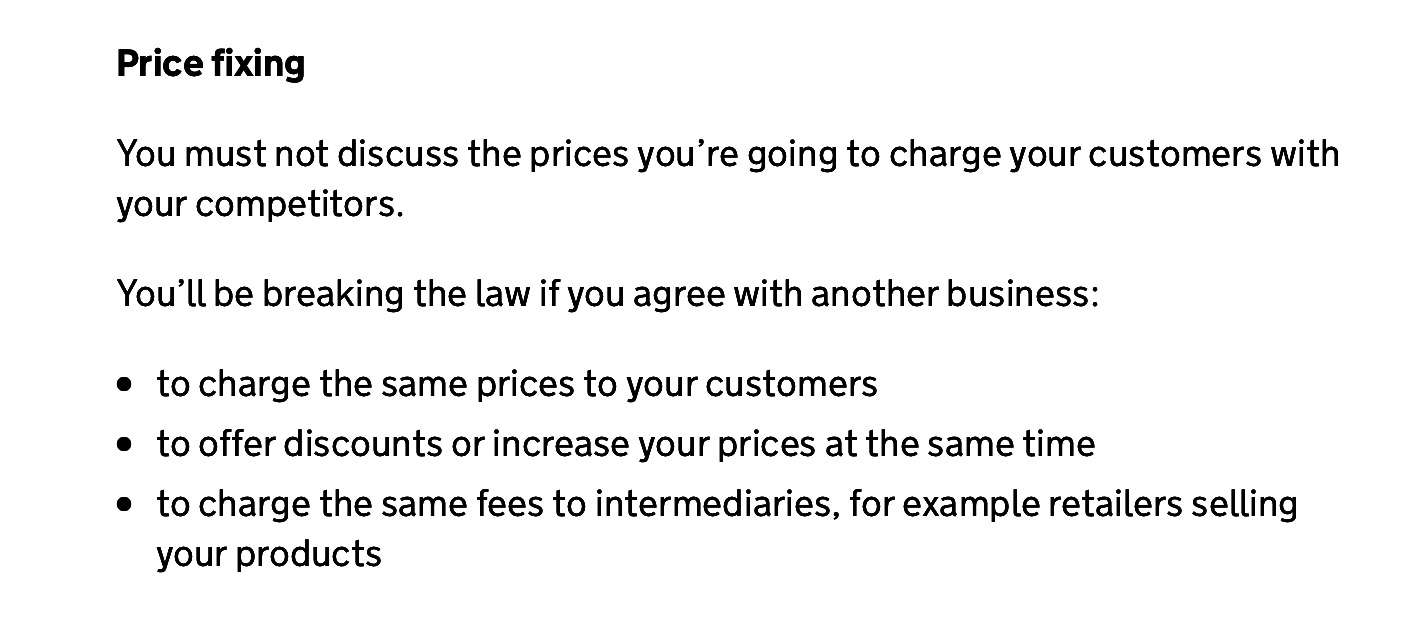
UK law considers two or more businesses that agree not to compete with each other in certain ways as a ‘cartel’, and defines ‘price fixing’ as agreeing with competitors to charge the same prices.
Do agents’ fees drive up house prices?
The basis for the US lawsuit was that this collaboration over commissions was driving up the price of real estate.
Local property industry sources told the Compass they believed the same is happening here.
For realtors in Cayman, their income depends on the amount of property they sell and the size of the fee.
For buyer’s agents too – as the US lawsuit noted – the cooperative commissions structure (where the full commission is paid by the seller to their agent and split 50/50 with the buyer’s agent) perversely means that the higher their client pays – the more money they make.
A leader column in the Economist magazine opined that “the fat fee inflates the house price” and suggested the Missouri suit could soon lead to lower commissions and lower property prices.
“Commissions could be ‘unbundled’, with buyers and sellers each paying their own agents, as early as next year. Keefe, Bruyette & Woods, a research group, estimates that this would cut 30% off agents’ $100 billion-a-year commissions pool,” the magazine reported.
CIREBA rules dictate that its agents must act ethically and in the interests of their clients, and compels member realtors to be well trained and up to date on the law and industry ethics.
And the MLS system, arguably, enables buyers to access detailed information about property availability and comparable prices to make an offer at the right price point.
What is CIREBA’s position on all this?
The Compass sent a list of questions about the lawsuit and potential implications to CIREBA.
The association did not respond directly to those questions, but sent a statement from its board of directors, pointing out some of the differences between the US and Cayman systems and presenting some of the benefits of the association’s work in Cayman.
“When the case in the US is fully resolved, we will be in a position to take advice as to how the outcome affects our industry in the Cayman Islands.
“Although similar in some ways, the Real Estate Industry in Cayman has many differences to the industry in the US.
“When final, we will be able to review the findings and receive advice as to how, if at all, this ruling may affect our business in the Cayman Islands.”
The response indicated that it is possible for property buyers and sellers to go it alone in Cayman. Access to the Land Information System is not dependent on CIREBA membership and CIREBA agents do co-broke with non-members, while all its listed properties are available to view on its public access website.
“There is no obligation for any member of the public to use a CIREBA agent in a Real Estate transaction in the Cayman Islands. There is also no obligation for a Real Estate agent to be a member of CIREBA in order to do Real Estate business in Cayman,” the statement indicated.
CIREBA stated that its listings are all displayed on a public website.
The directors wrote that CIREBA spends significant funds for ongoing mandatory training of its member agents – including on new know-your-customer and anti-money laundering rules.
Members also sign up to rules and regulations which go over and above the laws of the land and make them accountable for their actions, they said.
“The result is that over the years, CIREBA has provided the public with a safe and trusted option for pursuing Real Estate business in the Cayman Islands. The public largely takes it for granted that when they do business with a CIREBA member they are able to count on fair and ethical service.
“This is demonstrated by the growth and quality in CIREBA membership over the years. Notably, this has provided a very attractive opportunity for many Caymanians wishing to get involved in the Real Estate industry.”
Does this address the issues raised?
While the response indicates the value of CIREBA to the community – something that is not disputed, even by agents who choose to be outside of the association – it does not deal substantively with the complaint about membership being tied to agreement on prices.
In fact, it could be argued that the good work that CIREBA does to create professional standards incentivises agents to be part of the group in order to maintain reputational standing in the public’s eyes, with the side effect that more and more agents are pulled into the same price agreements.
Southam, who operates outside of CIREBA, argues that the new association could provide cooperation on standards and training, for example, while allowing agents to do their own thing on pricing. He said CIREBA members are welcomed to join the association.
What options exist for change in Cayman?
Cayman’s legal framework makes a class-action suit similar to those in the US unlikely.
So, any changes would have to come from the industry itself or from the government. If the US and Canada changes its system, with the effect of reducing commissions, it’s likely that CIREBA and other Cayman agents would have to consider some reform.
A couple of options include simply removing the requirement to cooperate on commissions as a price of entry to the MLS system, as Southam suggests, and allowing competition on commissions across the industry.
Another option would be to introduce legislation that defines and bans price-fixing arrangements throughout the Cayman Islands, similar to the UK Competitions Act.
Alternative structures in other jurisdictions, including in the UK and Australia, involve sellers engaging agents at negotiated commission rates. Buyers, if they wish to use an agent, do so independently of the seller and on their own dime.
Websites, like RightMove and Zoopla in the UK, act as online marketplaces, where buyers can do their own research and many sales do not involve a buyer’s agent at all. The average commission on a home sale in the UK is 1.5%.
Related Videos













Cayman operates under a legal system based on the U.K. so perhaps let’s also consider the U.K. real estate market.
In the U.K. there is a myriad of choice. You can even sell for free (eg Strike does this and hopes to upsell you on certain ads ons). The legal conveyancing here de facto requires an agent to act for you but you can get that down for as low a fee as free (I did this selling a house this year).
Most people though pay 1%, and it is important to note that this does not include any marketing or showing costs. You are expected to pay extra for all ads and marketing and also to show your own property.
I see nothing stopping anyone in Cayman competing with CIREBA if they wish to, btw.