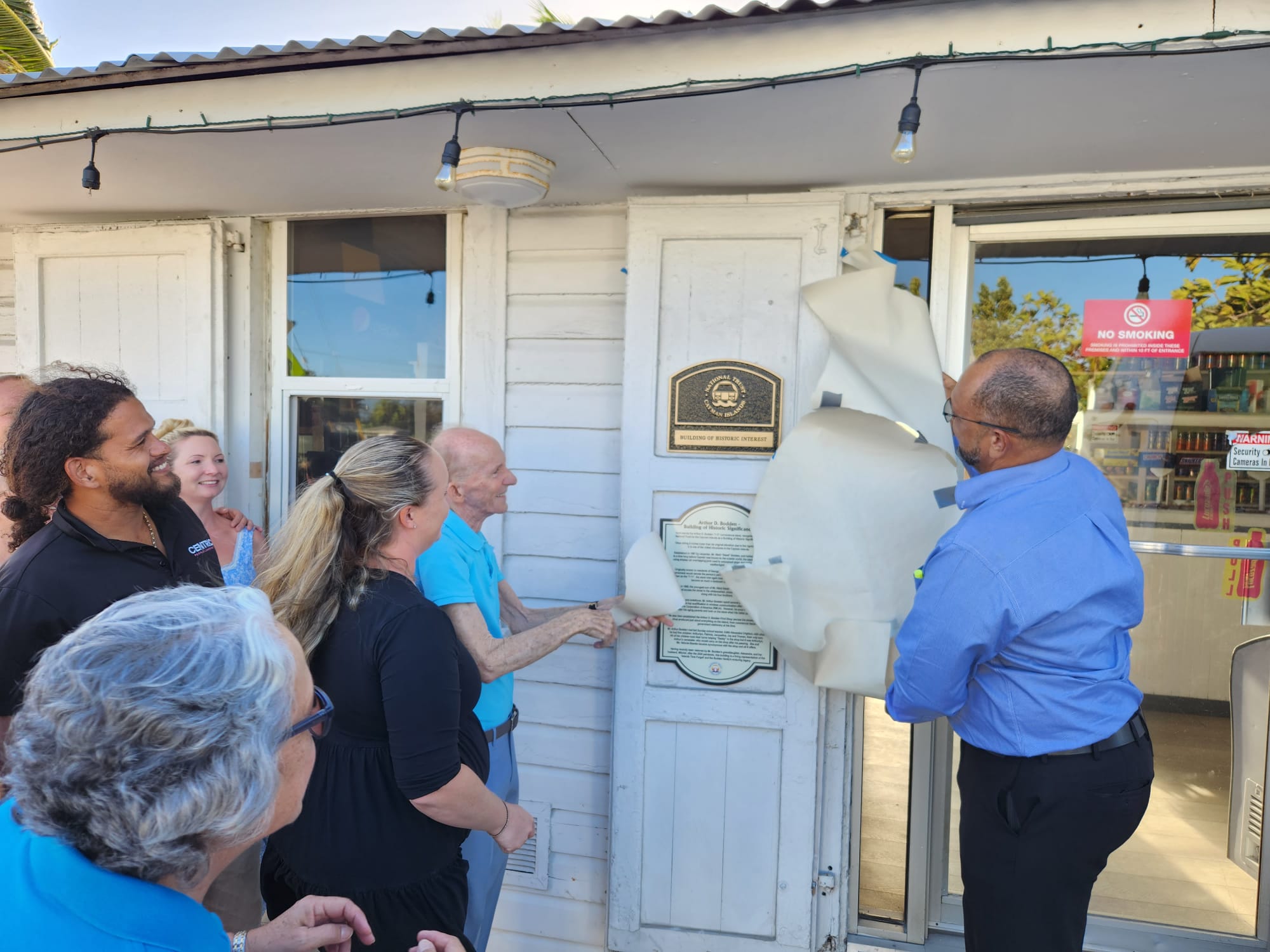
The National Trust for the Cayman Islands has named Mr. Arthur’s 7-11 shop in George Town a building of historic significance.
Family members and friends, along with members of the National Trust, the George Town District Committee, Truman Bodden and Heritage Minister Isaac Rankine gathered on Monday for the unveiling of a plaque and epithet describing the landmark store which has served the Cayman community for over 100 years.
“The plaque observes the building as being of a particularly important historical distinction and designation,” said Stuart Wilson, historic programmes manager of the National Trust.
“Whilst the epithet tells the history of the store and the Bodden family, the National Trust for the Cayman Islands’ Historic Programme is tasked with protecting, promoting and maintaining Cayman’s built heritage and our plaque-recognition initiative helps us to achieve those goal.”
Built in 1897 by Waid Stead Bodden, Mr. Arthur’s store, located on North Church Street, was known as the place to buy kerosene oil used for burning heaps, cleaning engines and lamps. Along with the store, Mr. Arthur’s printing shop served the islands by printing all government documents.
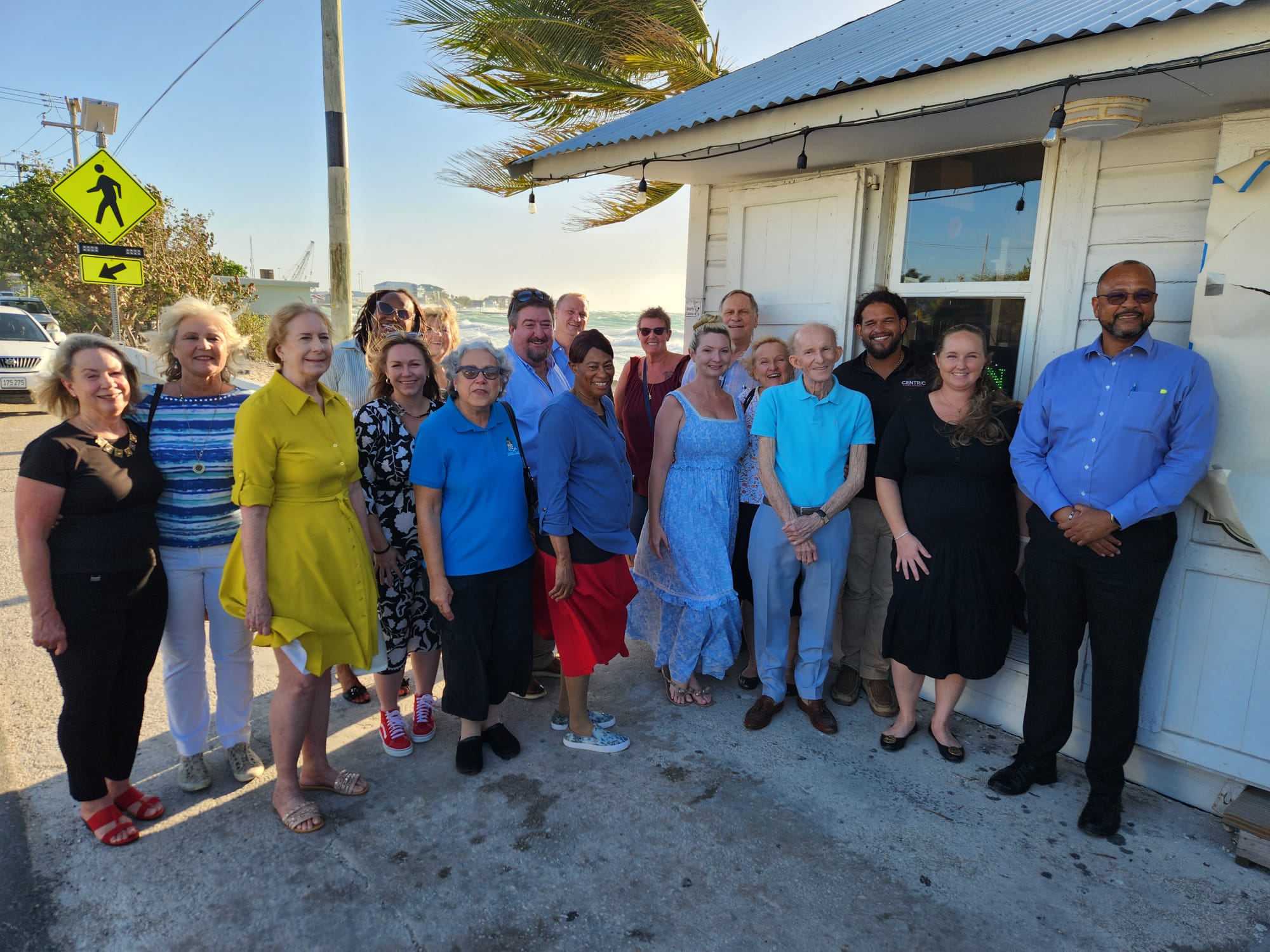
Alexandra Bodden, Waid Stead Bodden’s great-granddaughter, who now runs the shop, told the Compass she is grateful for the recognition and honour.
“I would say that my husband and I are humbled and honoured to be able to carry on the legacy of my great-grandfather and my grandfather, Mr. Arthur Bodden, then my aunt, Miss Arthurlyn Scott, to now have the store open for the community again.”
Bodden said there had been overwhelming support with reopening the store after the COVID-19 [pandemic], “with so many people sharing stories about the good times they shared with my grandfather, my aunt and Mrs. Velonie Ebanks, who still works with us. Also the love for the corn beef sandwiches, the tuna sandwiches, the patties and the peppermint candies.”
Mr. Arthur’s store now joins more than 300 traditional Cayman-style homes on the National Trust’s Heritage Register, in Grand Cayman as well as the Sister Islands.
Wilson said the Heritage Register keeps an inventory of these structures, “and assists us in determining their significance on a case-by-case basis, based on anecdotal evidence, prominence of persons who may have lived at a particular site, and other important factors, such as location, materials used in the building of the structure, and its age.”
He added, “Theses homes are just as endangered as some of our endemic species because the materials used to build them can no longer be sourced, as the ironwood is protected and is an extremely finite resource by virtue of Cayman’s size and the area it can be found in. The harvesting of coral is also no longer permitted and this was one of the main ingredients used in the wattle-and-daub method of building employed by our Caymanian forefathers.”
Related Videos