
In the face of rising gun-related crimes, Police Commissioner Kurt Walton has released his strategic policing plan which he says is focused on making the Cayman Islands safer.
Walton, in his executive summary of the plan, says the document is focused on people, infrastructure and governance, and is built from lessons learnt and the progress of the last three years.
The plan, designed by Walton – ‘Making the Cayman Islands Safer’ – is a road map for 2024-2026.
In an apparent nod to the recent upsurge in shootings within the community, Walton said, “We live in a world where crime is glamourised and often used as a tactic to lure young people”.
The Cayman Islands, he said, is not exempt from this issue.

“So, we have to employ concerted efforts in implementing strategies to address the challenges of youth violence. This is a multidisciplinary approach that involves strengthening and diversifying our community involvement to deter our youths from developing anti-social behaviour,” Walton said.
He added, “We believe collaboration is essential in suppressing criminal activities, and curtailing anti-social behaviour and will make the Cayman Islands a hostile environment for criminals.”
As part of his plan, he said he will deploy the “full range of resources” available to the RCIPS, and work with local, regional and international stakeholders.
What the plan says
Though the plan does not detail how to execute policing strategies, the commissioner says the RCIPS commitment remains to prevent and tackle crime, deliver justice for victims of crime, and protect vulnerable and at-risk people.
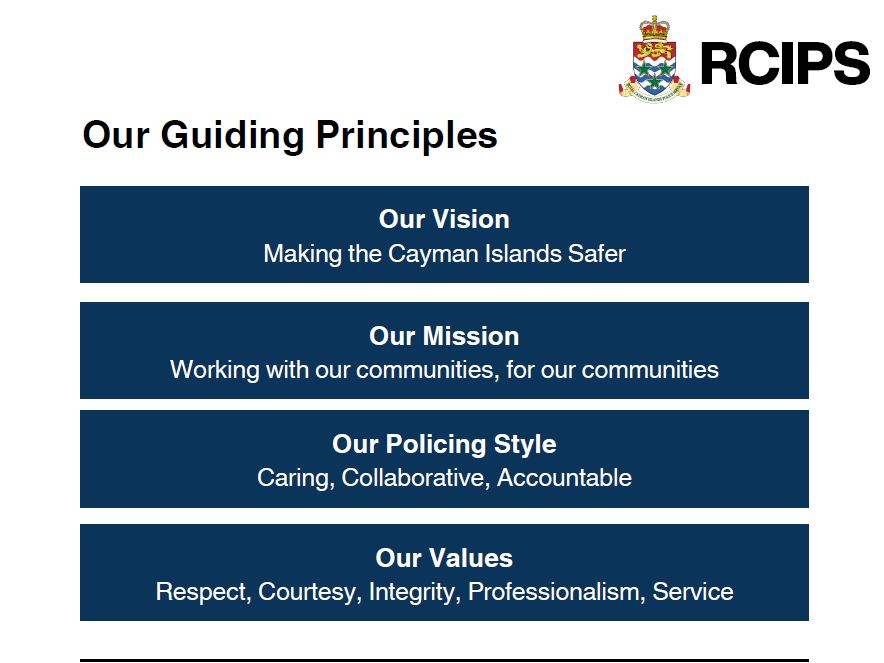
The plan encompasses the RCIPS mission of working with and for communities, and “using a policing style that is caring, collaborative and accountable as well as instilling our values of respect, courtesy, integrity, professionalism, and service”.
The plan also prioritises making local roads safe, improving public confidence in the police and modernising the RCIPS as part of Walton’s three-year strategy.
To prevent and tackle crime, the plan’s aims include to disrupt and investigate serious and organised crimes; tackle firearm, drug, violent and gang-related crimes; confront anti-social behaviour, and neighbourhood and property crimes; and tackle financial crime.
The plan also emphasises combatting cyber crimes and online scams, and collaborating with partners to secure local borders.
According to a press release announcing the plan, to create the policy Walton first conducted an internal audit of the RCIPS, followed by holding an all-staff meeting to present his ideas and request feedback, and then hosted district meetings.
The final step was a meeting with senior leadership and other stakeholders “to brainstorm and put forward ideas”.
By the numbers
The plan gave a snapshot of what was called a ‘monthly operating context’ including:
-
- 3,123 reported incidents
- 364 crimes
- 197 arrests
- 337 motor-vehicle incidents
- 23 DUI arrests
- 324 speeding tickets
Related Videos