

“No credit card transactions, no overseas phone calls, no hotel reservations, no airline reservations, no Netflix, no WhatsApp.”
Bob Taylor starts to sound like a parent grounding their child as he runs through the consequences for Cayman of losing its subsea cable links to the US and Jamaica.
But it is far more serious than that.
“There would be virtually no link between Cayman and the outside world,” said Taylor, a 40-year industry veteran and part of the Obama administration’s telecoms team.
“At this point government intervention is absolutely critical. I don’t think they are taking this seriously enough.”
End of its useful life
Another telecoms expert, who asked not to be named, put it more bluntly.
“It would be a state of emergency,” he said.
Cayman’s main telecoms lifeline is likely to be out of service in the near future.
Described as the “lifeblood of the economy”, the MAYA-1 subsea cable is reaching the end of its useful life, government’s technical experts have advised.
A consultants’ report recommends pumping public funds – potentially in excess of $100 million – into new infrastructure.
The ‘outline business case’ study produced by Grant Thornton suggests a new government cable company could be set up to manage and run it.
Price information and other key details have been redacted from the report, which was finally released to the public last week almost 18 months after it was produced.
Industry experts told the Compass the likely initial cost of putting in the infrastructure could run to $100 million, if Cayman wants a direct link to the US.
All you need to know about subsea data cables
Beyond that, the government company would need to be funded by taxpayers to maintain the cable and would need to be prepared to make annual losses, again subsidised by the government, in order to provide internet and telecoms services at an affordable rate.
“One of the reasons government needs to intervene is that this is not a viable commercial project. Cayman has a poor regulatory environment and is just too small to make it profitable for a private company,” said Taylor, who is chairman of a Cayman-based submarine cable company.
He questioned the proposed methodology, suggesting it would essentially create another Cayman Airways for the telecoms industry at massive expense.
But he agreed with the principal conclusion of the report that government needs to intervene and suggested Cayman may even need to invest in two subsea cables to ensure resilience in its communications infrastructure.
The sub-sea super highway
The vast majority of information – international telephone calls, internet searches, television broadcasts – flows through a network of fibre-optic cables that criss-cross the floors of the world’s oceans.
A map of this subsea super highway, produced by industry consultancy TeleGeography, looks something like a route plan of the London Underground.
Thick belts of coloured lines – representing hundreds of different cables – flow through major hubs, like the US and the UK. Ribbons of branching lines converge on strategically located intersections like Bermuda and the British Virgin Islands.
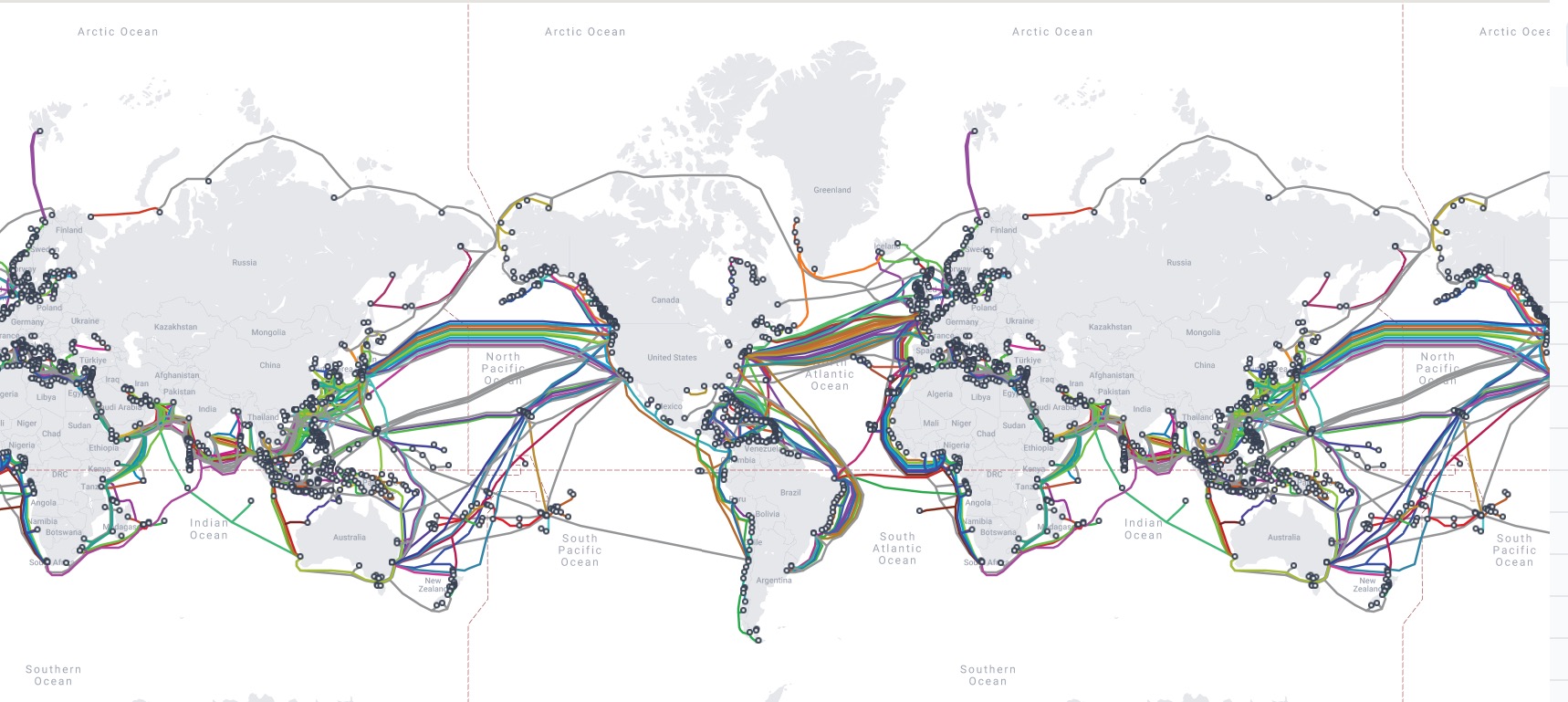
But Cayman’s geographical isolation, in the western Caribbean, makes it a lonely outpost on the far edges of this system.
Just two lines flow into the island, one from Jamaica, and one sub-route of the MAYA-1 line which plugs into seven locations in Central and South America, and the Caribbean.
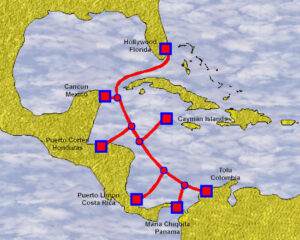
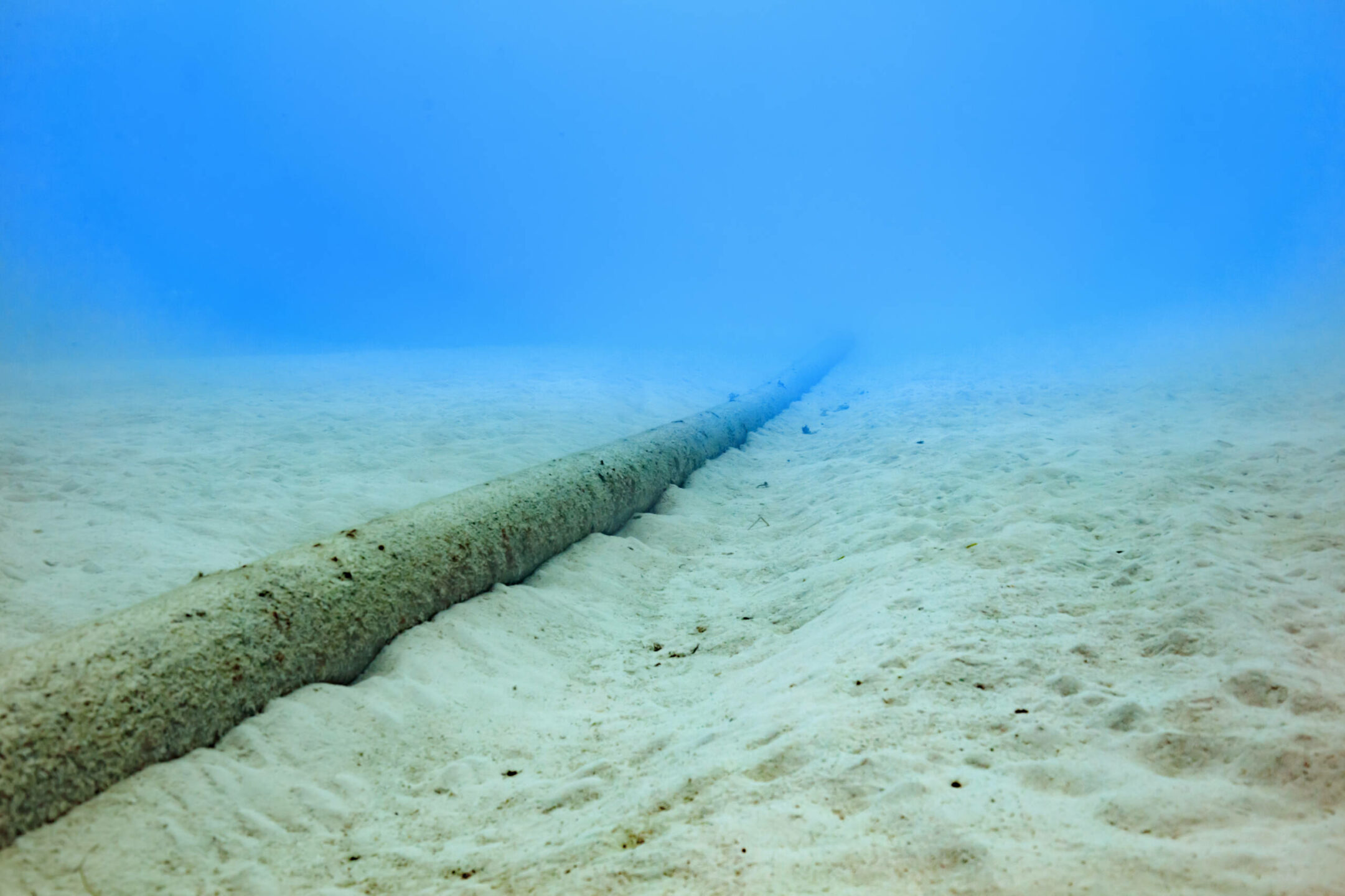
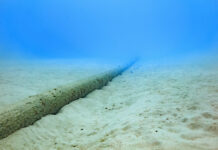
Scuba divers can see where this line snakes across a sand flat, over a reef and comes ashore near High Rock in East End. Internet providers buy capacity on those cables and then distribute it through their own networks around the island.
If you are reading this article overseas, the information is coming to you either through the MAYA-1 cable or the Cayman-Jamaica Fibre System. Even if you are reading it locally – depending on which network you use – the data may have bounced to Miami and back before it reached your cell phone.
Threat to the islands’ future
While two links may sound like a lot, the report spells out that this is the bare minimum to provide the back-up necessary to avoid regular data blackouts. If Cayman goes down to one cable, its entire economy could be at risk.
Industry consultancy TeleGeography reports that cables are often damaged by boat anchors, earthquakes or underwater landslides, technical faults and, on very rare occasions, sharks.
“You rarely hear about these cable faults because most companies that use cables follow a “safety in numbers” approach to usage, spreading their networks’ capacity over multiple cables so that if one breaks, their network will run smoothly over other cables while service is restored on the damaged one,” it reports.
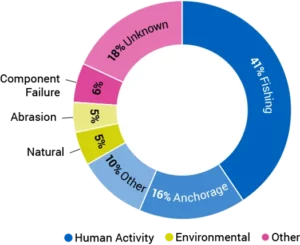
Without that backup capacity, Cayman’s connectivity would be at the mercy of all those uncontrollable factors. Potential consequences of a data outage for the islands’ banking, tourism and international business could run to millions of dollars a day.
Critically, the Grant Thornton report warns, Cayman currently has no insight into if, and when, either of the two existing cables could be taken off line.
“Both systems are ageing and the Cayman Islands government has no certainty or control with regard to the future of either of the existing cables,” it states.
Cable and Wireless, which is part of the consortium led by AT&T, has previously bristled at suggestions that the MAYA-1 cable is out of date. But Pioneer Consulting – which produced a technical report for government on the issue – suggests that the island cannot rely on its availability beyond the “immediate short term”.
Blair Lilford, group CEO of Cayman-based SALT technology company, said the normal lifespan of submarine cables was around 25 years, a milestone that MAYA-1 is about to reach.
“I think it is fair to assume that it is coming to the end of its viable lifespan. I would estimate that the existing provider will try to keep it operational until 2030,” he said.
It is not just about whether the cable works. There will come a point, suggests Lilford, when the costs of maintaining it will make it unprofitable.

Compounding the problem is the lack of commercial inventive for those telecoms giants to consider Cayman’s 80,000 population as a worthwhile market.
A spokesperson for the Cayman Islands Ministry of Infrastructure told the Compass, it has “not been able to identify any private company with a credible and funded intention to connect the Cayman Islands with a new submarine cable”.
The other countries on the MAYA-1 route have already invested in new cables so the conditions that brought the consortium together in the first place no longer exist.
Cayman is essentially on its own.
The report is stark on this point.
“The Cayman Islands government considers subsea cables critical national infrastructure and the lack of certainty about their future introduces various risks to the islands and represents a threat to the islands’ future.”
Race against time
Those risks are increasingly imminent.
The report raises the possibility of investing in two cables.
Given the possibility of both current links being disconnected, Taylor believes this is necessary.
He said the advantages may not be immediately obvious, given that Cayman would be investing tens of millions of dollars of public funds to essentially replace what it has now. That is unless you consider the ‘do nothing’ scenario.
He said government had ignored this risk for too long and was now facing a race against time to ensure the islands’ connectivity.
A draft timeline outlined in government’s report envisaged a construction start date of January 2023 and the cable being operational by mid-2025. Around 15 months later, the project is not close to breaking ground.
Even if the plan was ready to be green-lit tomorrow, the 30-month construction time is not the only constraint.
“Even if you have the money and the project is approved, which we know takes a long time in Cayman, every company that does this kind of work is contracted out for the next several years,” said Taylor, who is on the board of a company currently building a cable from California to Singapore.
He estimates that in a ‘perfect world’ it would be five years before a cable could be landed in Cayman – longer when you consider the challenges of recruiting for a new government-sponsored cable company and dealing with the complexities of the islands’ procurement process.
In the meantime, he says Cayman’s communications links to the outside world will be hanging by a thin and fraying thread.
“I still don’t think government is taking this seriously enough,” he added.
Cable cold war
He added that a geopolitical cable cold war between China and the US meant that Cayman could not take advantage of lower prices form Chinese companies.
Concerned about potential eavesdropping, the US is restricting use of Chinese contractors and materials.
“When you build a cable you have to look at which customers you’re going to target. If you want to work with hyperscalers like Google, Meta, Microsoft, you have to think about if you want Chinese equipment,” says Chris Van Zinnicq Bergmann, chief commercial officer of the upcoming Mediterranean cable Unitirreno, told the Financial Times. He added that, invariably, “the answer is no”.
Safeguarding the economy
As well as national security and standard of living, the cable link is considered key to Cayman’s international business, tourism and fledgling tech industries.
Everything from credit card transactions to Microsoft Teams calls are facilitated by subsea cables.
The report indicates that “international data connectivity” is crucial to the islands’ economy.
It adds that a new government-funded cable would enhance Cayman’s reputation as a place to do business.
The report states that high capacity, reliable and affordable telecoms are fundamental components of economic and social activity across the islands and that building a tech sector will be impossible without security around connectivity.
Lilford said he fundamentally agreed with those conclusions and suggested more urgency was required to address the issues that were identified.
“This report really highlights the need for a new cable and clearly outlines the risks and reward to the country.
“It’s a shame it has taken this long to be released to the public. I look forward to seeing some traction in the space in the coming months.”
Will it make internet cheaper?
Previous rhetoric around the subsea cable infrastructure has focused on how it could make internet prices cheaper and launch a tech sector in Cayman.
But Taylor suggests that is unlikely. While new cables could bring greater bandwidth, he believes regulatory action is needed to reduce prices.
While the report speaks optimistically about introducing competition on prices that could drive down the cost of internet, industry experts expressed scepticism about whether the technology would make consumer prices much cheaper.
Lilford said prices had remained stable in Cayman over the years, but customers were getting better value for money as tech improved.
“The price per user probably won’t change much, what will change is the bandwidth you get for that same dollar you spend today.”
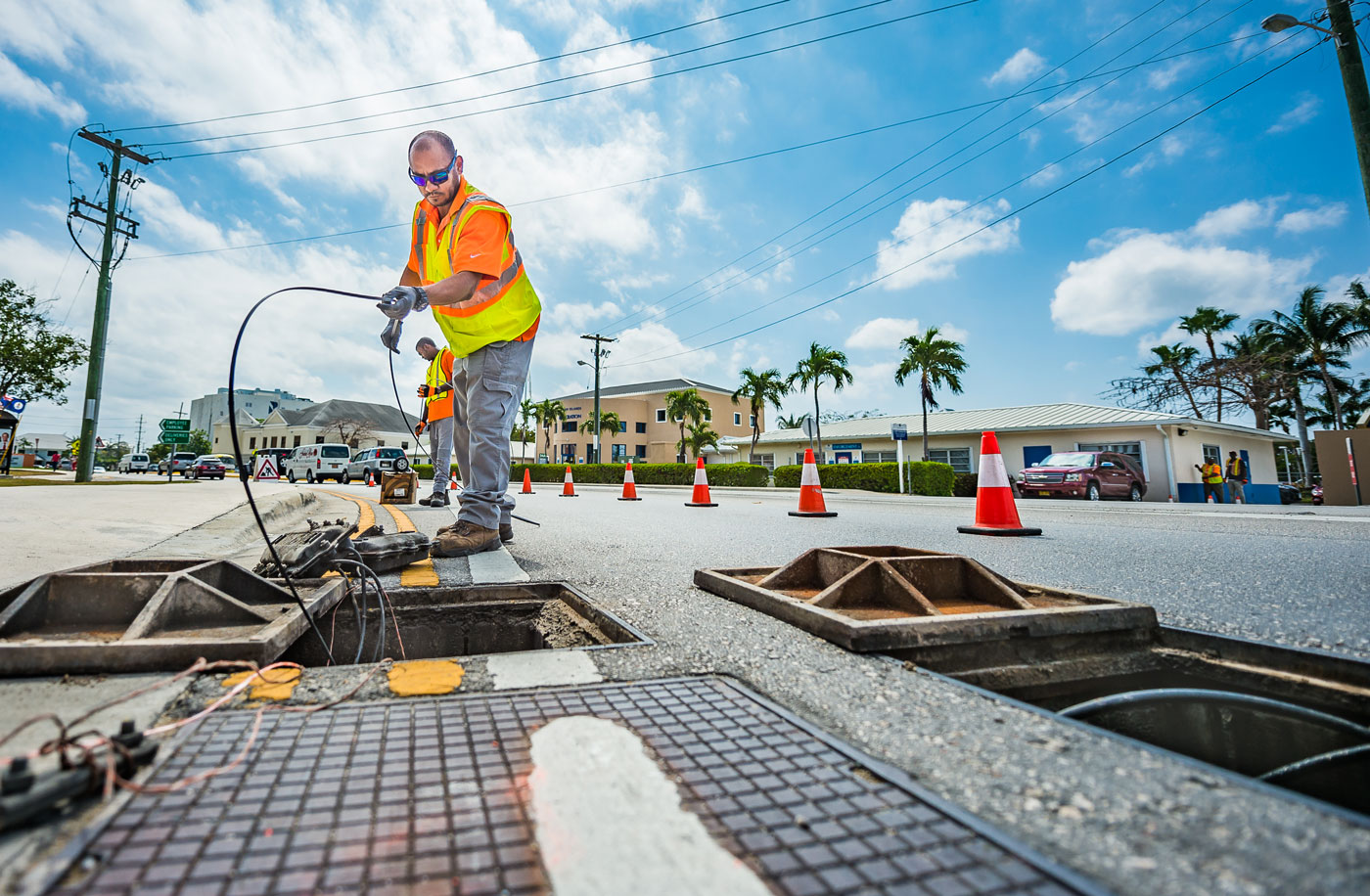
Local providers believe a new cable would solve some problems but not others.
Regulators will still need to deal with a slew of issues to allow local telecoms companies the opportunity to build out their on-island networks.
What will government do next?
Government has just hired Cambridge Management Consultants to move the subsea cable project forward.
The company has signed a $1.4 million contract to lead on project planning, system procurement and project execution.
The ministry declined to give a specific price estimate for the project, citing commercial sensitivities but estimated it would be “tens of millions of dollars”.
A spokesman told the Compass that the next steps were to work with its advisors on the final business case for the project.
The Grant Thornton report, which is the basis for that work, suggests a preferred method of using government funds or borrowing to build the infrastructure and having a company manage it.
Both Lilford and Taylor cite concerns that this could be an expensive and inefficient methodology compared with partnering with other islands or with private telecoms companies to organise ‘branch access’ for Cayman for existing or planned new routes.
“Government need to have a vested interest in the cable and really are the ones best positioned to give direction and provide the framework to move a project like this forward,” said Lilford.
“That being said, I don’t think a government entity should be responsible for running and maintaining the system. If they do, they should be prepared to subsidise the cable as they currently do with other government entities such as Cayman Airways.”
Accountability and transparency
When, earlier this month, the government finally released the publicly funded and heavily redacted Grant Thornton report, which was dated October 2022, it announced it was part of its commitment to “accountability and transparency”.
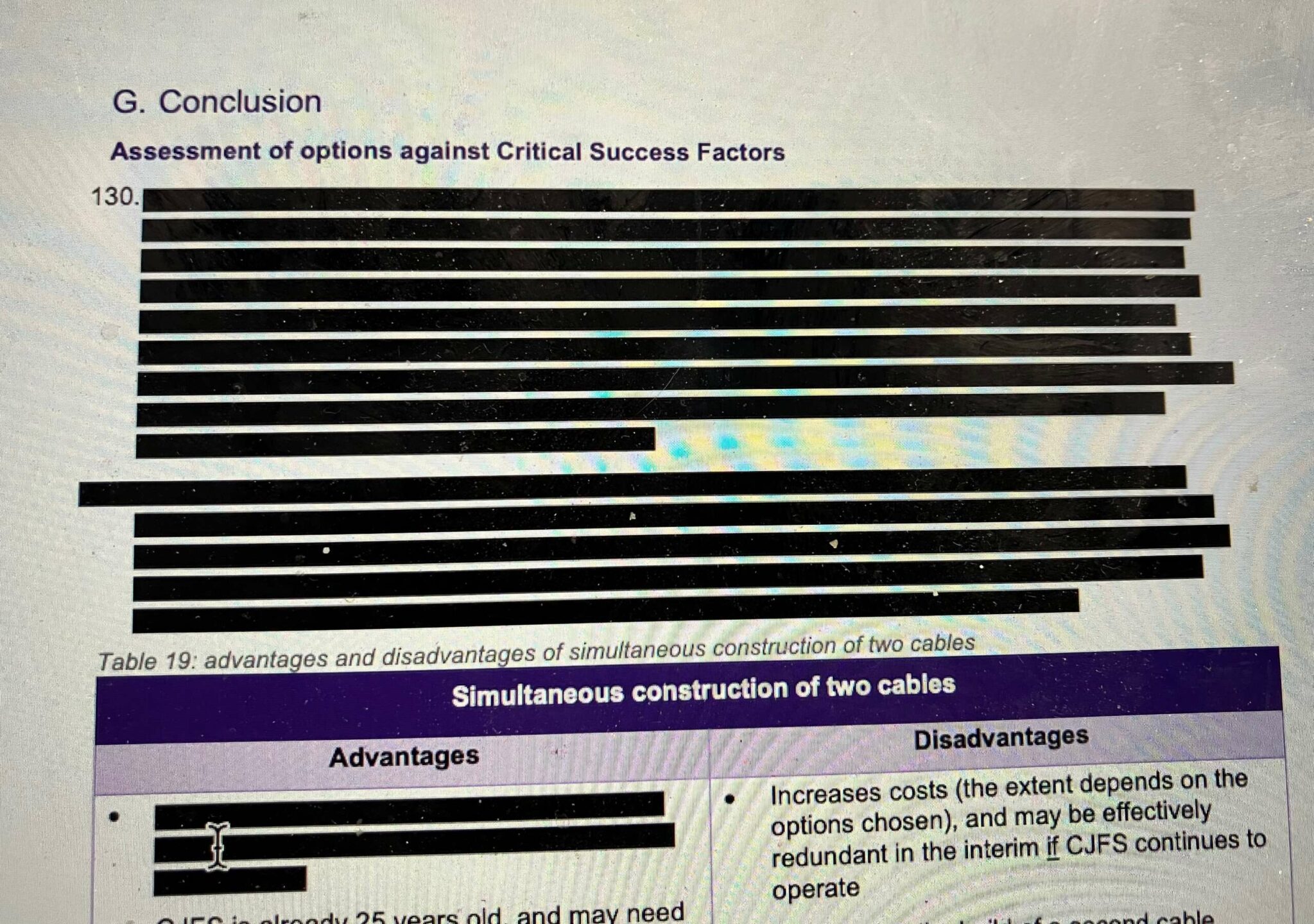
However, the claim was immediately undermined by a Cayman News Service article detailing its efforts over the past four months to have the report released under the Freedom of Information Act.
Large parts of the report are blacked out, making it impossible to assess the likely cost of the project or even where the cable would be located. Government cited a host of reasons, including national security and commercial concerns, to justify the redactions.
Infrastructure Minister Jay Ebanks, in a press release accompanying the report, said, “The Cayman Islands Subsea Cable Project is more than an infrastructure initiative; it’s a commitment to our future. By releasing this business case to the public, we are underscoring our dedication to transparency, accountability, and our unwavering belief in the power of digital connectivity to drive progress.
“I am confident that this project will serve as a lighthouse, guiding our islands towards unprecedented growth and connectivity.”
Related Videos











For starters forget spending $50 million on a new school on the Brac, this is far more important. For Govt to “release the Grant Thornton report” with 100% of the conclusion redacted is an insult to the public at large, they are accountable to the voters and this is simply unacceptable. Once again, where is accountability in Govt for this type of behaviour.
With this information the CI government would ne negligent in not immediately approving and encouraging Starlink to begin operating in the Cayman Islands. The needs of the public are more important than protecting the needs of the current internet providers from competition. Reliance only on an undersea cable for internet connectivity is clearly short sighted, and having satellite connectivity as redundancy should be considered as an essential step in protecting the Cayman Islands.
I remember hearing about this years ago. I assume this is going to be the same as the sand on SMB Lots of talk and little action until it is really bad
The “Grant Thompson” report is so redacted it’s useless.
Elon Musk Starlink Internet is the answer.