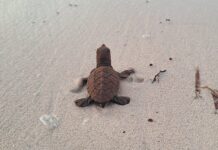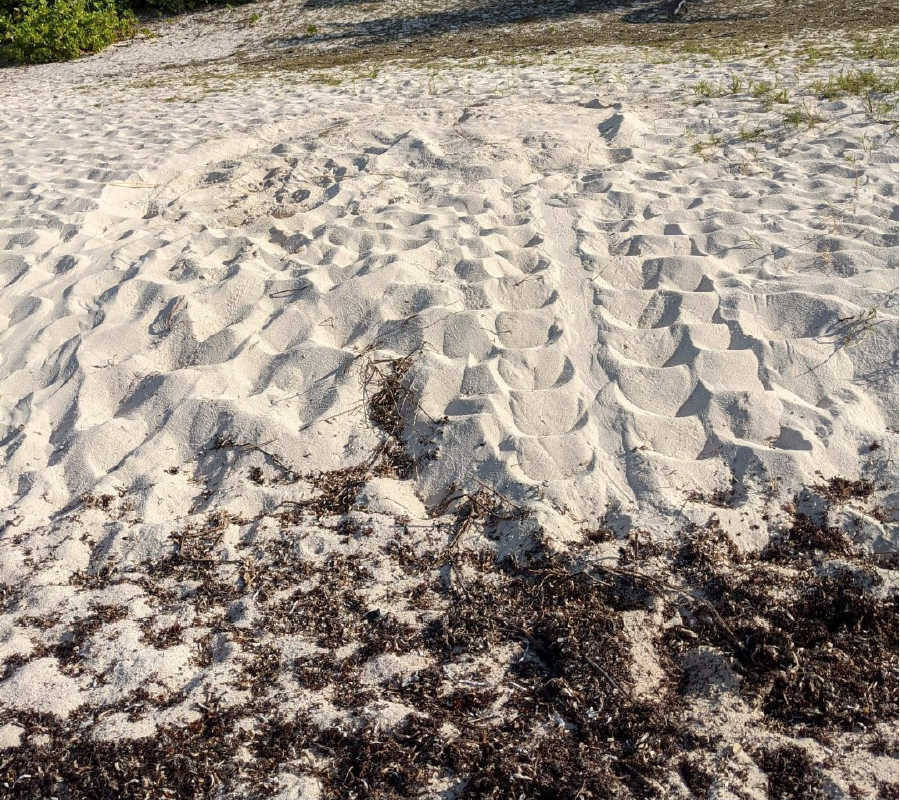
The discovery of a loggerhead nest this week on Cayman Brac has heralded the start of the 2024 turtle nesting season.
The Department of Environment confirmed to the Cayman Compass on Friday morning that this year’s first nest was discovered on Wednesday by turtle patrollers on Cayman Brac.
This is the second consecutive year that the island marked the start of the turtle nesting season.
Last year, the first loggerhead nest was found on the Brac on 12 April.
The location of the first nest of 2024, in which eggs were laid on Tuesday night, will not be disclosed for the safety of the turtles and protection of the nest.
The Cayman Brac turtle patrol team, in announcing the discovery of the first nest, urged the community to be cautious with beach activities.
“To help our mama turtles and hatchlings please no beach fires, no driving on beaches, no white lights, don’t leave holes, pits, or trash,” it said.
Cayman’s nesting season usually runs from May to November.
Last year, Cayman saw a continuation of record-breaking nesting seasons with the number of nests surpassing the 1,000 mark for the first time since the Department of Environment stared monitoring nests in 1998.
Cayman’s 2022 turtle nesting season was the longest on record after the last official nest of the season hatched on 22 Feb. 2023 on Little Cayman.
But Cayman’s turtles continue to face challenges to their survival.
Jane Hardwick, DoE sea turtle programme manager, previously noted that sea turtles face increased threats from coastal development and climate change, as well as “having a naturally low survival rate of around one in 1,000 or less”.
As the nesting season commences, the DoE is reminding those with costal properties without turtle-friendly lighting to keep their lights off to prevent misorientation.
“Never disturb nesting or mating turtles, nests or hatchlings,” it also warned.
In addition, anyone seeking to use machinery or equipment on the beach should first contact the DoE.
The community is also urged to report any suspected turtle nesting activity to the DoE hotline 938-NEST.
If anyone suspects somebody is poaching, they should call 911.
Related Videos