Young entrepreneurs have shared innovative ideas with a team of judges every year for the past four years in a bid to get financial support and backing to help get their businesses off the ground.
The winner of the annual Cayman Islands Business Design Competition is chosen on ‘Pitch Day’, when the people behind the ideas – in scenes reminiscent of TV’s ‘Shark Tank’ or ‘Dragons’ Den’ – pitch their products or services on a stage in front of judges and a room full of former winners and other business people.
Charlie Kirkconnell, chief executive officer of Cayman Enterprise City, said the standard of submissions of the competition “gets better and better each year”, describing the 2024 finalist entries as “six fantastic projects”.
Those six were:
- BureauBot, a corporate secretary platform by John Gracey and Stephanie Small;
- EcoBloxx, construction materials made from recycled plastic waste, by Anthony Wambua and Peter Kigotho;
- E-Waste Recycling, a sustainable electronic waste recycling project, by May Douglas, Xavier Suico and Melody Protacio;
- Hunted Offshore, a marketplace for offshore professional and legal services recruitment, by Kayleigh Wright;
- Music Mate, an app for music learners and educators, by Kailasa HimaBindu Peyyeti and Kranthi Kumar Chamarthi;
- PIX, a service that coverts user graphics into digital paint-by-numbers, by Lance Mason and Kas Mason.
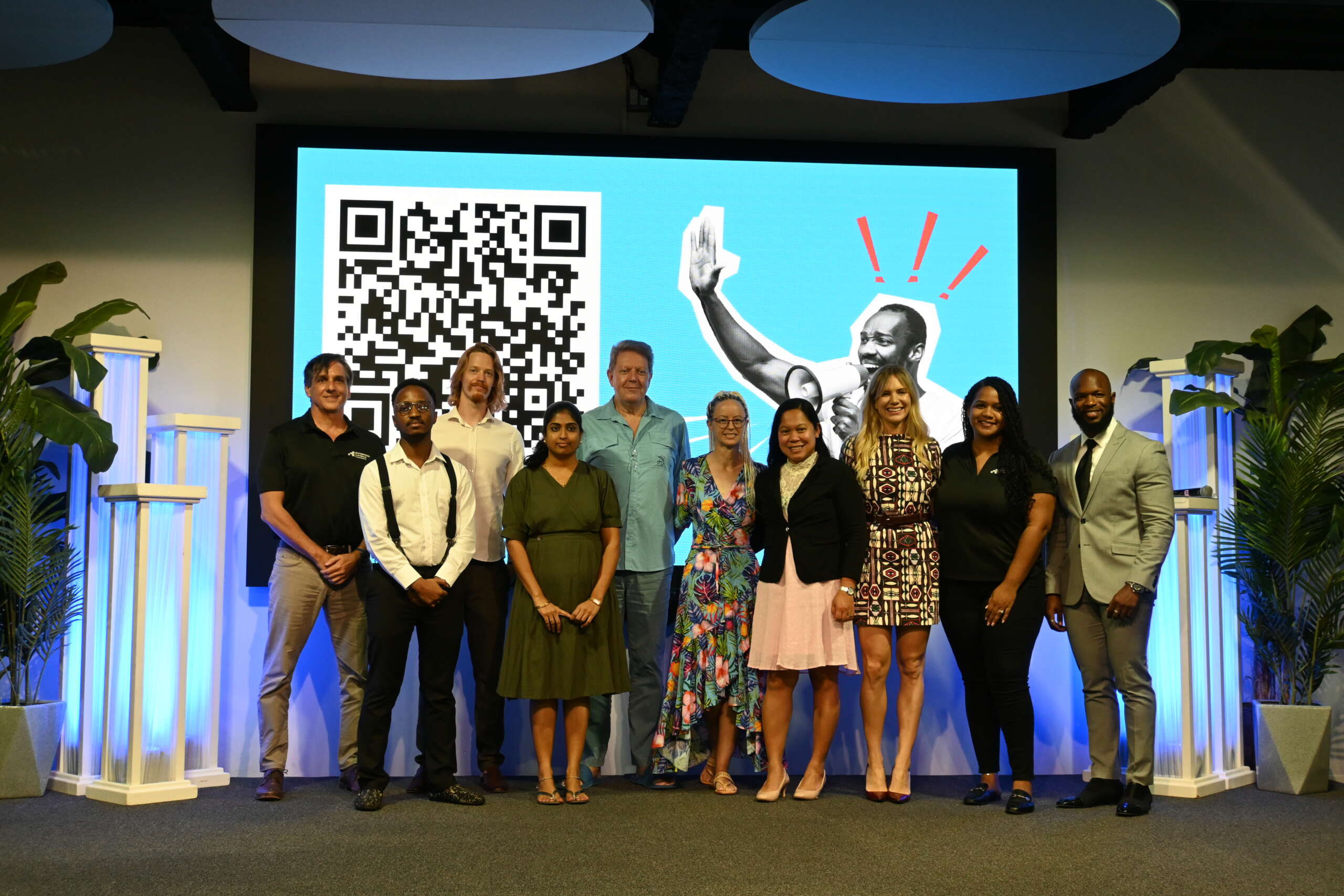
Held this year on Saturday morning, 20 April, in a packed Compass Vault, the six teams gave their pitches and then faced questions from the judges.
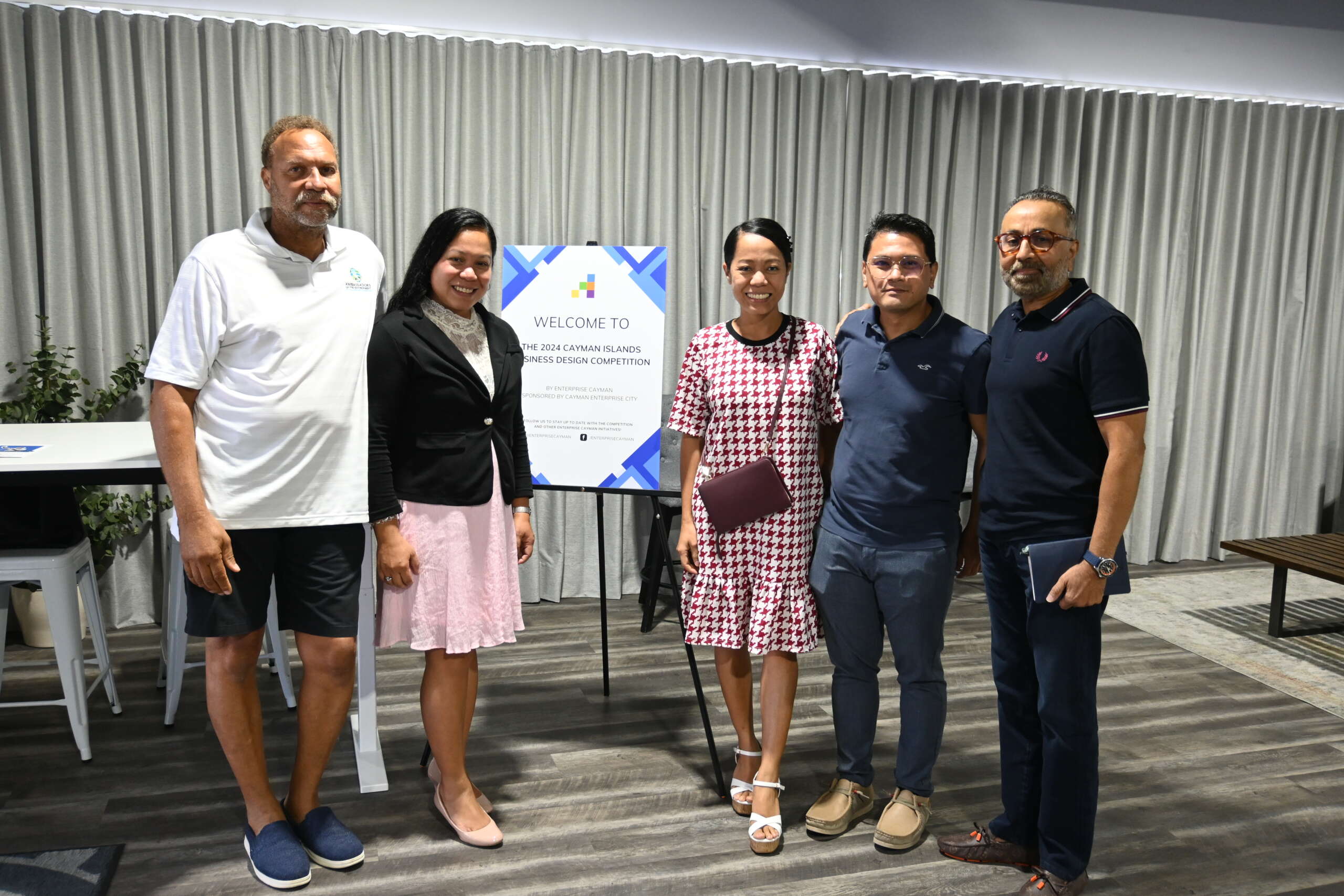
Immediately following the pitch session, audience members were invited to vote online for their favourite idea, resulting in E-Waste Recycling receiving the People’s Choice Award.
That project involves taking old electronic equipment from local companies and individuals on island and sending it to a company in Dubai, where the parts are stripped and recycled.
Following the pitches, the judges retired for the afternoon to deliberate. They reconvened, with the contestants, organisers and supporters, at the George Town Yacht Club that evening, where the Project of the Year and three other awards were announced.
Project of the Year
At the awards dinner, Kayleigh Wright’s Hunted Offshore was awarded Project of the Year, winning a US$10,000 cash prize, as well as the Storytelling Award, which comes with a US$1,000 prize.
“I really wasn’t expecting this going into the competition,” Wright told the Compass after receiving her award. “It’s one thing having the idea, but it’s another finding the confidence to speak about your idea to an audience that you don’t know, that do know about business. And to be validated by them – that is mind blowing.”
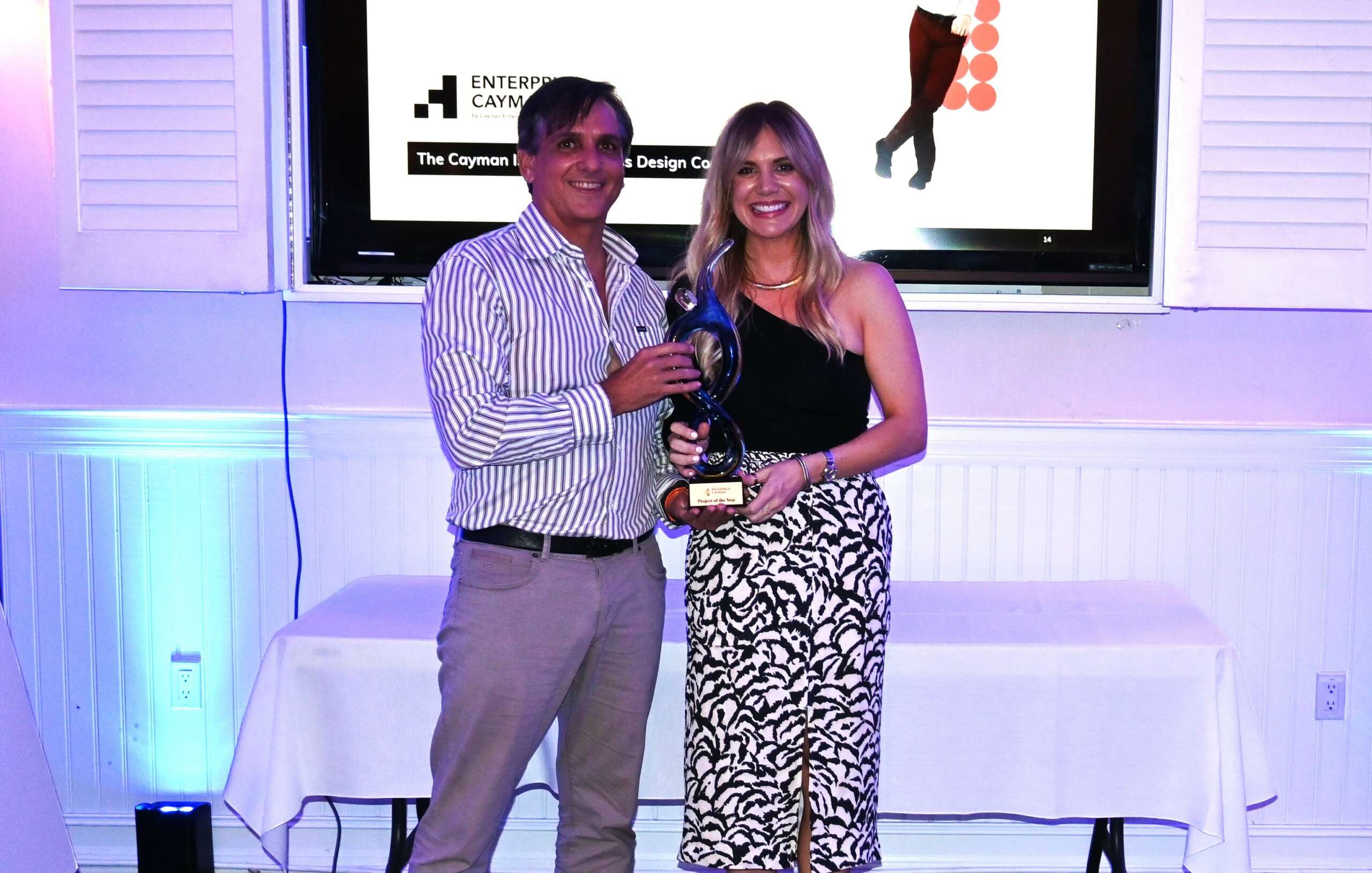
Wright, who has worked in human resources for large companies in Cayman for the past 11 years, says her Hunted Offshore platform addresses many of the issues she faces every day.
“I thought, there has to be an easier way to do what I’m trying to do, and so that’s where my idea conceptualised,” she said.
During her pitch, Wright had explained that the challenge facing many offshore firms is that recruitment is slow and expensive for the employers, and it’s also “a minefield” for candidates searching for opportunities overseas.
“So, I recognised an opportunity to create a faster, cheaper, more efficient way for organisations to hire top talent,” she said.
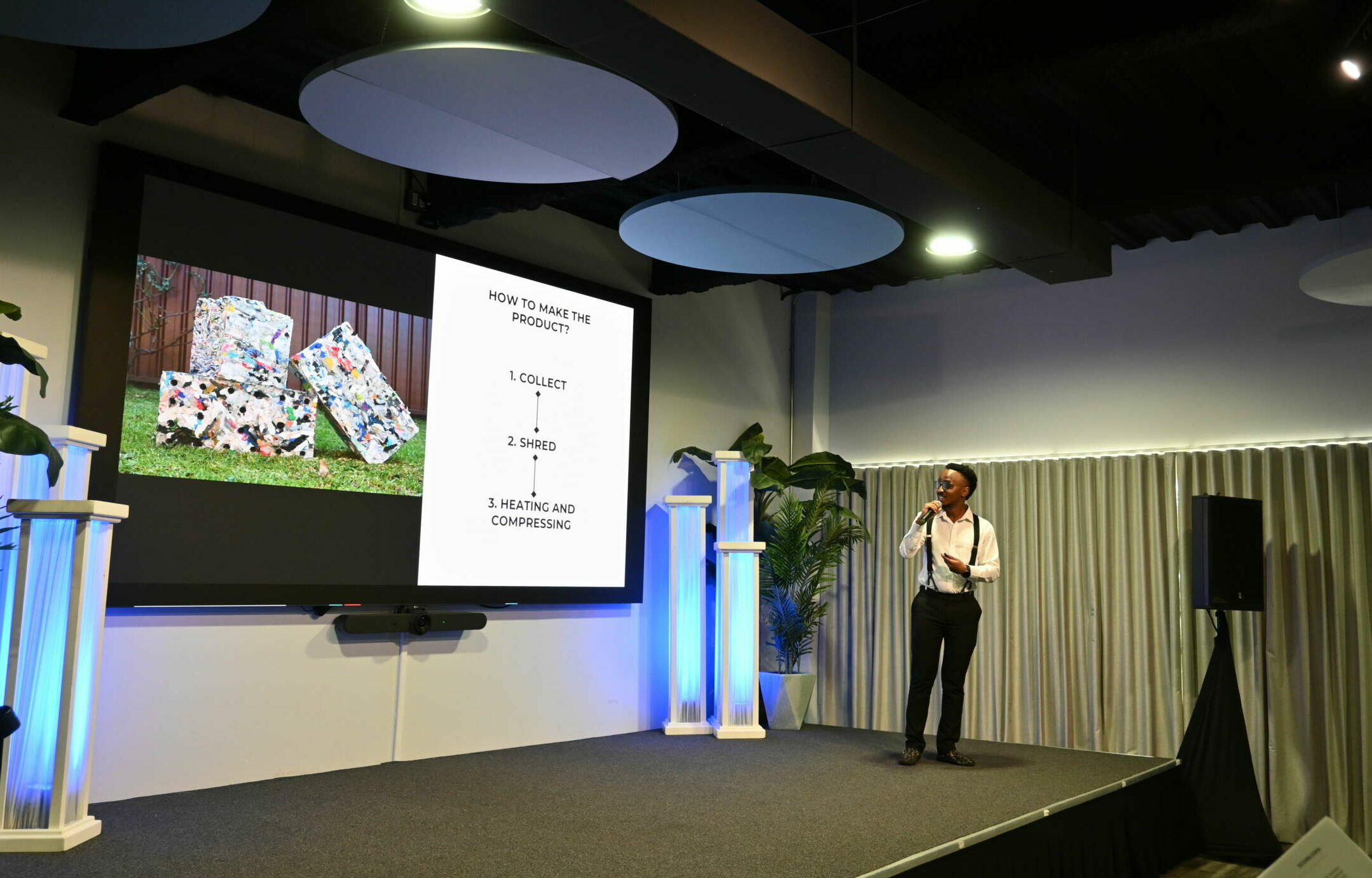
The other prizes up for grabs on Pitch Day were the Innovation Award and the Community Impact Award – both of which went to EcoBloxx. Those awards each come with a US$2,000 cash prize.
The six finalists also received a business support ‘Prize Pack’, valued at more than US$7,000, and including legal sessions, marketing support, a podcast feature on Cayman Story, which sponsored the Storytelling Award, reduced rate of incorporation, access to networking events, discounts, scholarships, a Launch Labs Studios membership, and access to Cayman Enterprise City’s Angel Investor Network.
30 entries
The six finalists were chosen from among 30 entries this year, Kirkconnell said.
He explained that Pitch Day and the entire Business Design Competition is the “idea validation stage”, which is followed by developing the finalists’ ideas until they reach a stage when they might be ready for investment.
“That’s where our nurture programme, our incubator programme, comes in,” Kirkconnell said.
Following last year’s competition, three of the finalists’ projects progressed to the incubator phase. “This year, we’re hoping we’ll have even more than that,” he said.
Speaking immediately after the pitches were made, he told the Compass, “You know, this is a great show, a lot of fun for everyone, but ultimately, the whole purpose of it is to help the projects progress to the point where they’ve launched a viable business.”
A judge who has been returning year after year is Rich Dyer of Massive Media, who says over the four years the competition has been held, he has seen the types of projects become more focused on the “real gaps in the market”, with environmental and tech initiatives coming to the fore more each year.
He explained that, unlike the judges in ‘Shark Tank’, he and his colleagues are “not trying to trip [the competitors] up on profitability or find flaws in their operational plans. It’s very much the idea and solution, and is it attractive to buyers, does it solve a problem we have. …. At this point, it’s really just conceptual, it’s entrepreneurial and it’s fun.”
Related Videos