

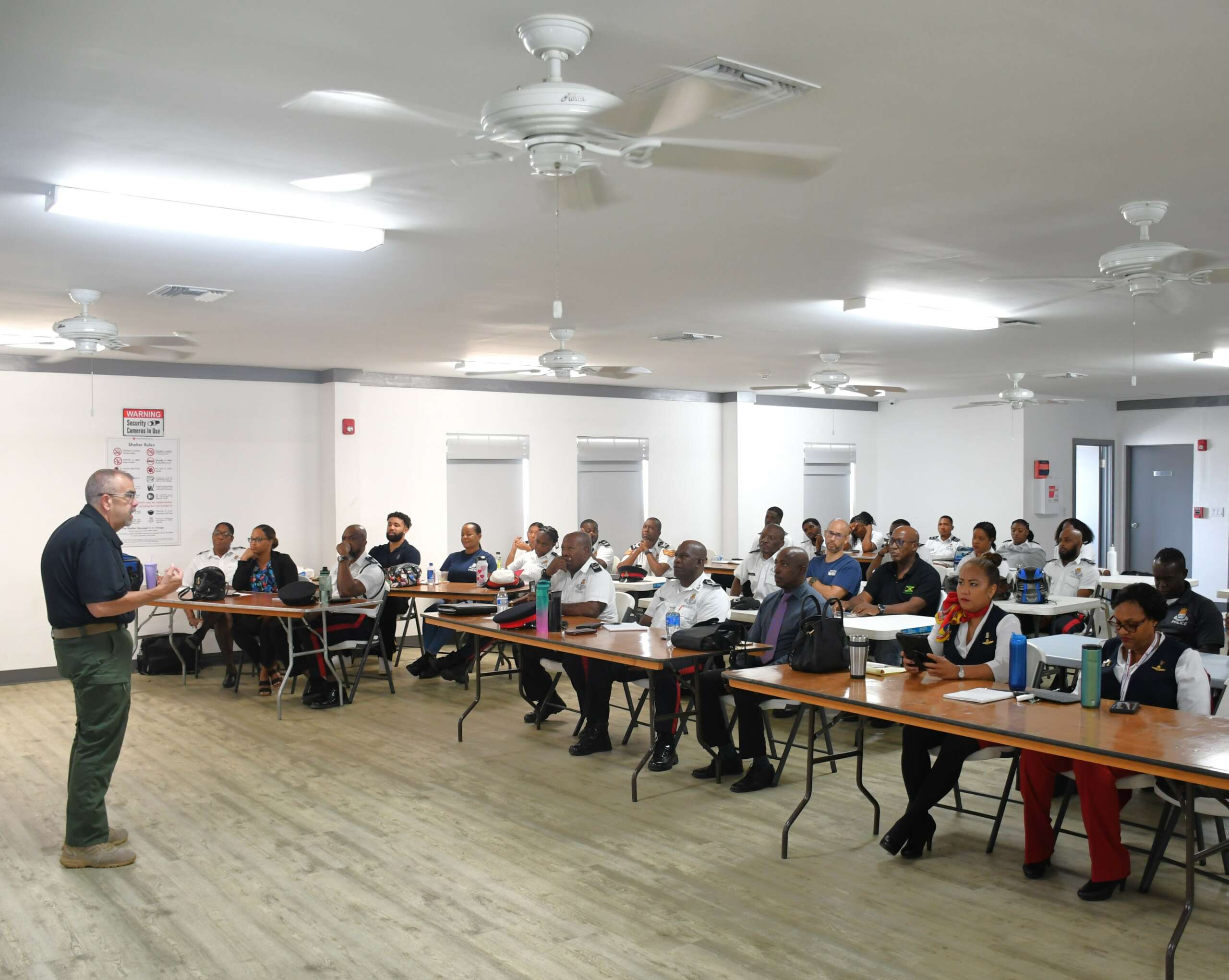
The Royal Cayman Islands Police Service held a series of one-day crisis intervention and de-escalation training sessions last week to assist officers when handling vulnerable and at-risk people.
Professional crisis and hostage negotiator Lieutenant Mark Lowther conducted sessions, including one in Cayman Brac, for RCIPS staff, as well as staff from Customs & Border Control, HM Prison Service, Cayman Airways, Cayman Islands Regiment, Hazard Management Cayman Islands and the Health Services Authority.
Lt. Lowther is a retired US Marine Corps veteran with 31 years of experience in policing and public safety. He has instructed law enforcement locally and internationally.
Sergeant Jonathan Kern of the RCIPS Training & Development Unit also helped facilitate the course, aimed at promoting identification, understanding and verbal de-escalation of people in crisis, as well as suicide intervention and autism awareness.
“De-escalation is an important tool for anyone that comes into contact with someone in crisis,” Sergeant Kern said in a press release. “We want to empower our officers and the community with more skills that will enable them to diffuse a situation.”
Attendees also learned about lawful powers under the Mental Health Act and heard input on the Mental Health Court, provided by community psychiatric nurse Dympna Carten.
Lt. Lowther encouraged the course’s 174 attendees to consider the personal circumstances of the people they encounter.
“Everyone has a story to tell; let them tell it when you can,” Lowther said.
The last training session ended Friday. Sergeant Kern said the specialised sessions served to build on previous de-escalation training for officers and help them build a better understanding of situations that may arise.
Related Videos






