

Editor’s note: If you, or someone you know, is struggling with issues similar to those raised by this article, there are resources available to help, which are listed at the end.
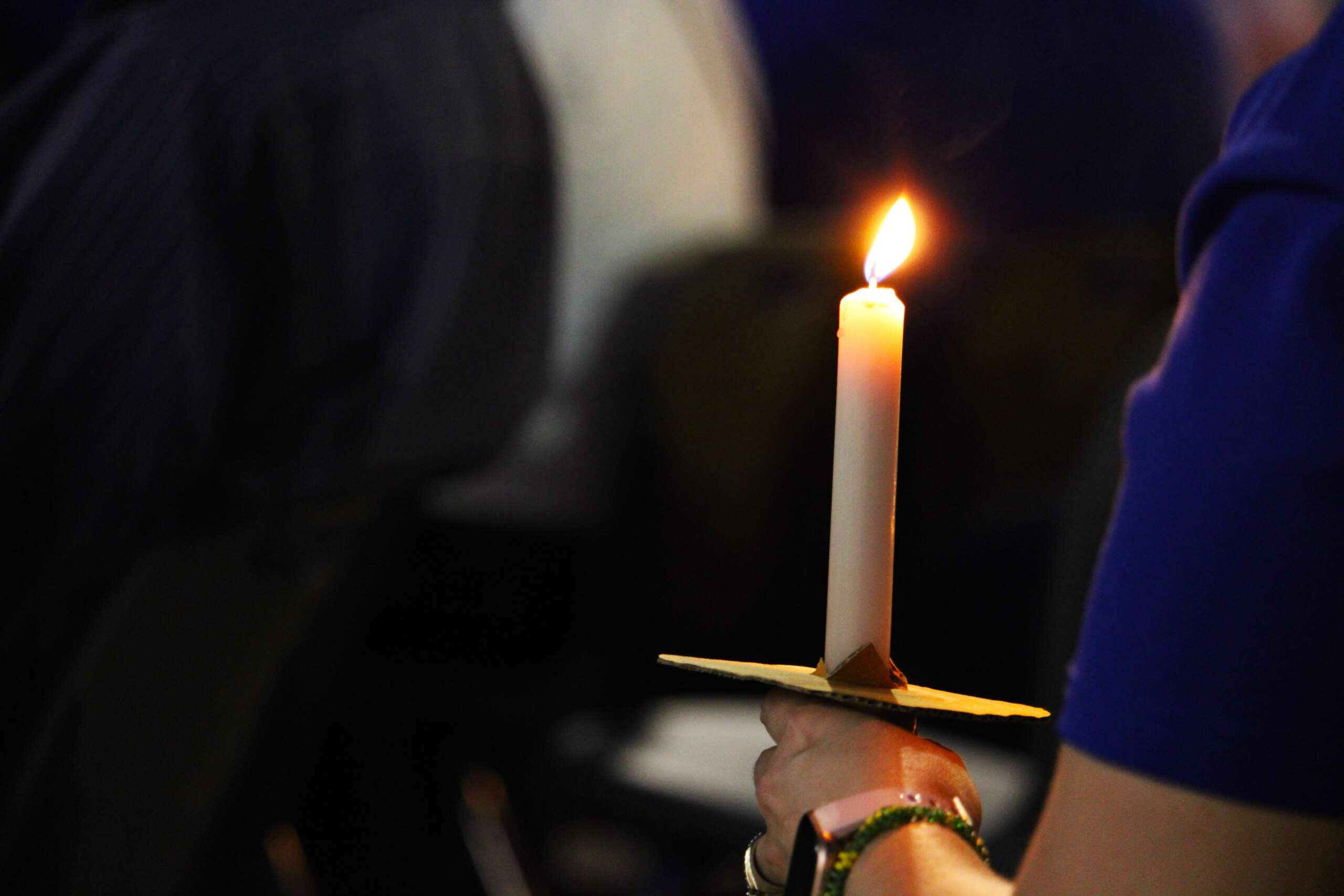
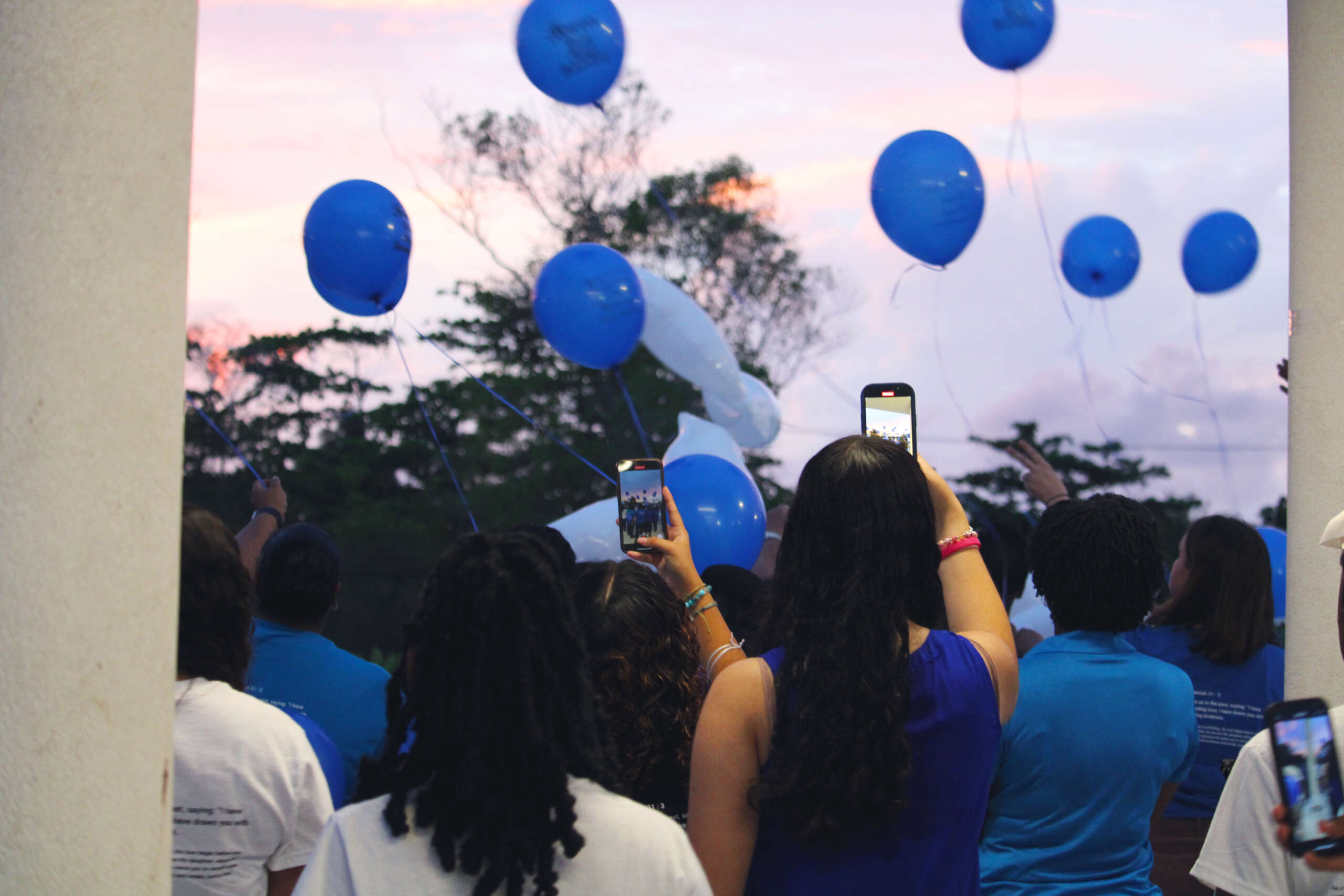
As evening fell over John Gray High School, hundreds of students and other members of the public held aloft lighted candles, while blue-and-white dove-shaped balloons floated away during a striking pink-and-indigo sunset.
The young attendees helped one another light their candles, and hugged while sharing memories and sombrely recording the crowd as people lifted up their hands in unison.
They were there to pay tribute to a bright young student admired as a multi-sport athlete, an artist, an academic and a compassionate friend, who died on 23 May at 16 years old.
“She was a wonderful student, whose potential and future were as bright as her smile,” John Gray principal Jon Clark told the assembled group at the 31 May vigil. “Her light will continue to guide us, and her spirit will forever be part of our John Gray family.”
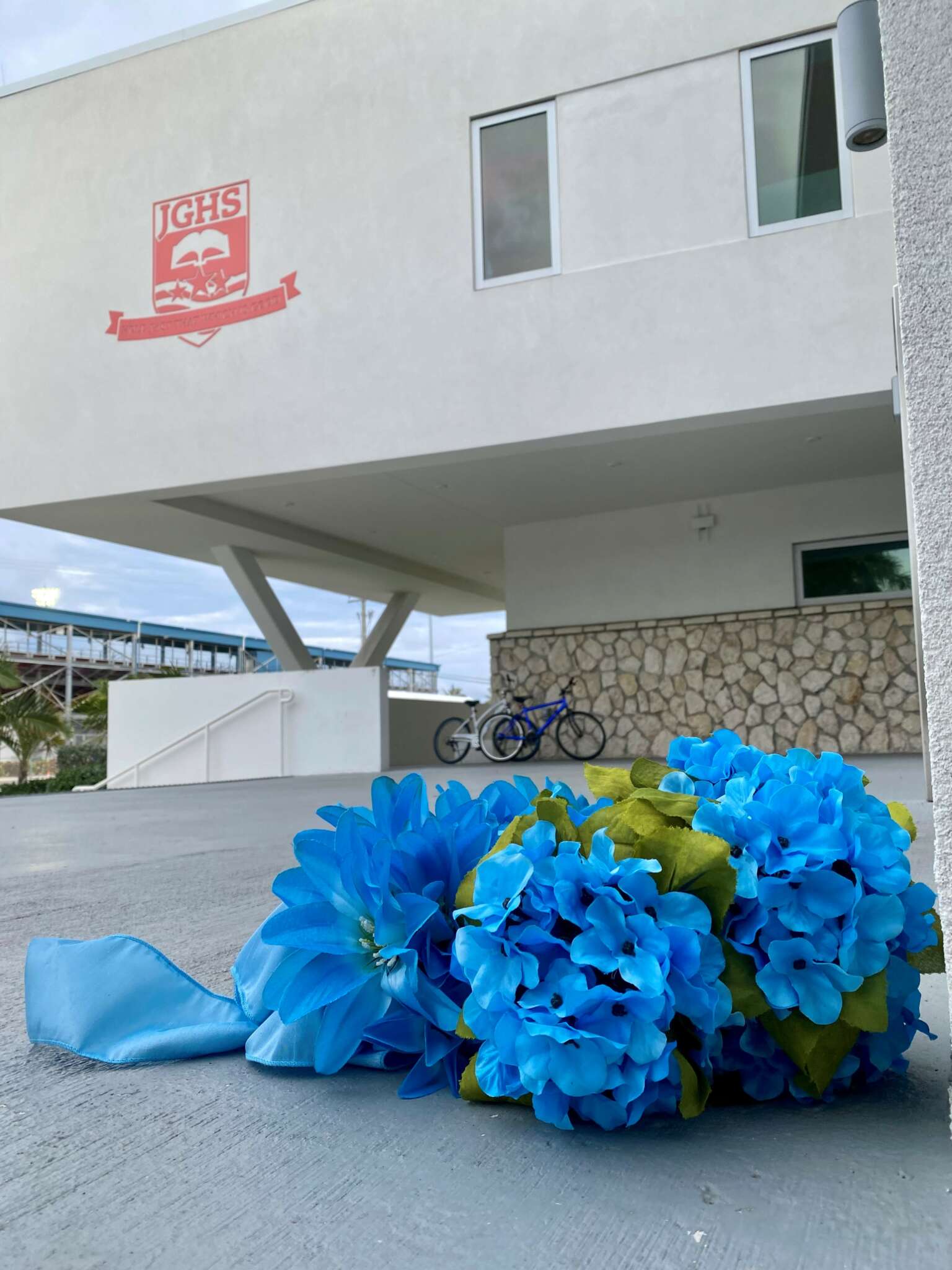
Family members, friends and fellow students packed the parking lot in front of the school, where black ribbons and blue flower bouquets hung from the pillars. Many of the hundreds of attendees wore blue in her honour. Some wore special T-shirts containing her portrait and the biblical verse Jeremiah 31:3, a reminder that the teen was gone but never would be forgotten.
“The Lord appeared to us in the past, saying: ‘I have loved you with an everlasting love; I have drawn you with unfailing kindness,” the text on the shirts said.
Clark said witnessing the students of John Gray High School, particularly those in Year 11, come together to support one another through this loss has been one of his proudest moments as principal.
Supporting young people
Organisers of the vigil noted the importance of giving students space to acknowledge and work through the unexpected loss of a peer.
The non-profit Alex Panton Foundation has stepped up to provide mental health support to adolescents with each of the several sudden deaths in Cayman this year, and watchdogs have shared their concern for the well-being of young people who face risk factors that far outpace global averages.
While up-to-date information on instances of suicide in the community is limited, data provided by the Coroner’s Court to the Compass indicated a total of 24 concluded cases of suicide since the beginning of 2015. That, however, does not include ongoing cases that may take years to work their way through the judicial system. The only case concluded in 2024 stemmed from an incident that occurred last year.
The court documented one case completed in 2016, three in 2017, two in 2019, five in 2020, one in 2021, six in 2022, five in 2023, and the one so far in 2024.
Residents have joined together for educational symposiums, fundraiser 5Ks and other events designed to show support for those who are struggling, all in memory of Alex Panton, Addison Kelly and others lost too soon.
Coupled with those events has been the rollout of new community resources, including the launch of the anonymous Cayman Kids Helpline in March.
Protecting the mental health of young people remains a critical challenge, but experts are working to broaden their outreach and help people understand how to support the youth.
Dr. Erica Lam, an Alex Panton Foundation executive member and consultant clinical psychologist, told the Compass that it is important the community understands the challenges young people face, in order to move forward.
She also noted the importance of providing space for young people to process grief and other complex emotions when tragedy occurs.
“Whenever there is a loss, everyone comes together,” she said. “Research has indicated that the most powerful healing factor for any trauma or adversity is actually human connection.”
New resources available
Processing the emotions around such loss, as well as the personal struggles many adolescents face, can be a daunting challenge.
The Alex Panton Foundation has increased efforts to support young people, providing a safe, anonymous space for kids to voice their struggles with mental health.
The foundation launched its Cayman Kids Helpline (649-5437) in early March.
APF project manager Emily Kelly said the helpline’s reach has continued to grow every month since it opened, with the texting feature proving particularly helpful.
“We want to make sure that young people are not only aware of this resource, but trust it and feel confident that it is a safe space for them to share what they might be going through, and have a non-judgemental space that they can rely on,” she told the Compass.
Kelly noted that the helpline is not geared toward emergency intervention, though trained call-takers can help refer someone in need to appropriate crisis resources. Rather, the helpline focuses on giving young people a platform for honestly speaking with someone about their mental health concerns.
Understanding their challenges
One key litmus test of students’ well-being is the biannual Cayman Islands Student Drug Use Survey, and the most recent feedback showed cause for concern.
“They’ve been through a lot of trauma. The data doesn’t lie,” Kelly said. “I think they’re just really struggling to cope, and understandably so.”
Respondents to the 2022 questionnaire described their adverse childhood experiences (ACEs), which can include violence, sexual abuse and family members suffering from addiction issues.
The self-reported survey comprised 1,934 students in Years 8 through 12.
Globally, one in six adults – about 16% – have experienced four or more types of ACEs, per data from the US Centers for Disease Control and Prevention.
“Toxic stress from ACEs can change brain development and affect how the body responds to stress,” the CDC says, noting their correlation to mental illness and chronic health problems.
Cayman Islands students reported ACEs significantly higher than that global benchmark.
Just over 23% of all student respondents reported four or more ACEs. Boys were nearly on par with the global average, but 29.9% of girls reported four or more.
“The higher the number of ACEs, the higher the risk,” Lam said.
Lam said four ACEs equates to a high level of toxic stress, and having even one type of ACE is associated with an increased risk of attempted suicide.
Pandemic-prompted confrontation
Kelly said fully understanding the challenges young people face is difficult. But one undeniable contributor is the stress families experienced during the pandemic.
“A lot of people, through the pandemic, were forced to pause and face a lot of past traumas or difficulties,” Kelly said.
This confrontation may have triggered or exacerbated underlying mental health issues in some households, she added.
“I think since then, it’s been more and more difficult for our young people to cope with the things that they’re facing,” Kelly said. “They’ve experienced a lot of trauma.”
Adding to their personal stressors was the flood of information about death and hardship experienced around the globe, all accessible through a phone.
Another challenge they face is managing their perception of reality in an increasingly social media-centric world.
Lam said it is easy to fall into a vicious cycle of disconnect and losing a sense of identity. Family and friends can help by setting dedicated off-screen time to connect.
But the digital world can also be a positive asset, offering young people access to mental health support no matter where they are.
Kelly said the foundation works to offer support services to everyone throughout the islands with virtual programmes like Breaking Barriers and Teen Talk. The former caters to young adults ages 18-30 with free online monthly meetings, led by Tara Bush.
Reaching all ages
Many outreach efforts are geared toward teenagers in the community, but residents of all ages, including young adults, are at risk.
In March, the Coroner’s Court jury declared the death of 27-year-old Raheem Tyrike Barrett to be a suicide. The Jamaican national drowned in George Town Harbour in October last year, entering the water even though he didn’t know how to swim.
More than 700,000 people globally die due to suicide every year, and it is the fourth leading cause of death for people ages 15-29, according to the World Health Organization.
Alex’s Place, founded in partnership with APF and the Ministry of Health and Wellness, provides on-site mental health assistance to people ages 10-20.
Help is also available for older community members.
Kelly said one of the foundation’s biggest support roles is offering financial assistance for eligible people up to age 30 who need help accessing private mental health services.
Changing tides
As organisations like the Alex Panton Foundation cement themselves in the community, conversations about mental health have evolved.
In December 2020, the Cayman Islands officially decriminalised suicide, based on a recommendation from the Law Reform Commission.
The commission made its recommendation in late 2019, based on Attorney General Samuel Bulgin’s referral.
Authors noted that there were no known examples of prosecutions for suicide or attempted suicide in the Cayman Islands, but they said eliminating the law would bring it in line with the United Kingdom and other countries in the world.
Finding hope
The world’s perception of mental health continues to evolve. While open conversation is important, Kelly said it is equally important to follow it up with action.
“It can add on to their stressors or mental distress, if they’re sharing what they’re overwhelmed by or what they need, and we just keep saying ‘We’re here for you,’ but we don’t address the things that are affecting their mental health,” Kelly said. “I think that’s where it can compound their concerns and can contribute to their hopelessness that they may already be feeling.”
To any young people who may be feeling such anguish, she suggests finding someone to trust, whether that is a family member, close friend, or other support person.
“Find your person,” she said. “Find someone that you trust, that you can lean on, to help you cope.”
Kelly acknowledged that some parents may not know what to say when their child approaches them about self-harm or other concerns. She advises parents to remain calm and affirm to their child that they are talking to a safe person.
“Leading with an open mind and a compassionate heart is the first step,” she added. “Coming from a place of no judgement will really make a difference when someone is disclosing that they’re struggling.”
Lam also said it can be helpful to model emotional awareness. Rather than hiding complex emotions from children, parents can mindfully share those feelings and, importantly, how to resolve them in a healthy way.
The Kids Helpline website includes information for parents and educators on how to guide children in their care.
Looking ahead
Efforts to conduct the 2024 version of the Student Drug Use Survey are under way, which will shine some light on students’ well-being farther out from the peak of the pandemic. The data is set to be published in February of next year.
In the meantime, there are ways for the wider community to support young people during difficult times.
Kelly said there are plenty of opportunities to volunteer through the foundation, including operating helplines.
But she also noted the value of simply checking in with the young people in one’s life, letting them know they always have someone on whom they can rely.
Mental health resources
If you, or others you know, are struggling with issues similar to those raised by this article, there are resources available to help.
- In an emergency, call 911.
- CayMind (formerly Mental Health Helpline). Call 1-800-534-6463 (MIND) Monday to Friday, 9am-5pm. The helpline was established during the pandemic to provide support.
- The Alex Panton Foundation. The nonprofit facilitates support groups and offers resources on grief. For information about support services, email [email protected] or visit alexpantonfound.ky/resources.
- Alex’s Place. Offers walk-ins and referrals to adolescents ages 10-20. Located in the Cayman Islands Hospital or call 244-7856 or 949-8600.
- Department of Children and Family Services. For non-critical services provided by the department, email [email protected] or call 949-0290 in Grand Cayman and 948-2331 in Cayman Brac, Monday to Friday, 8:30am-5pm.
- The Cayman Islands Crisis Centre. The charity provides support to all victims of domestic violence. Call the 24/7 crisis helpline at 943-2422, and kids’ helpline at 649-5437.
- There are a number of private health care providers offering counselling and support, such as Infinite Mindcare and The Wellness Centre.
Related Videos






