Throughout June, the Cayman Compass is publishing a series on Caymanians who first represented their beloved isles on the grandest stage of sports – ultimately paving the way for all those who came after, including the line-up heading to this year’s Paris Olympics.
At the last Olympic Games of the Cold War, in the city of Seoul, South Korea, was a determined Caymanian-American woman ready to make history as Cayman’s first runner in athletics at the Games.
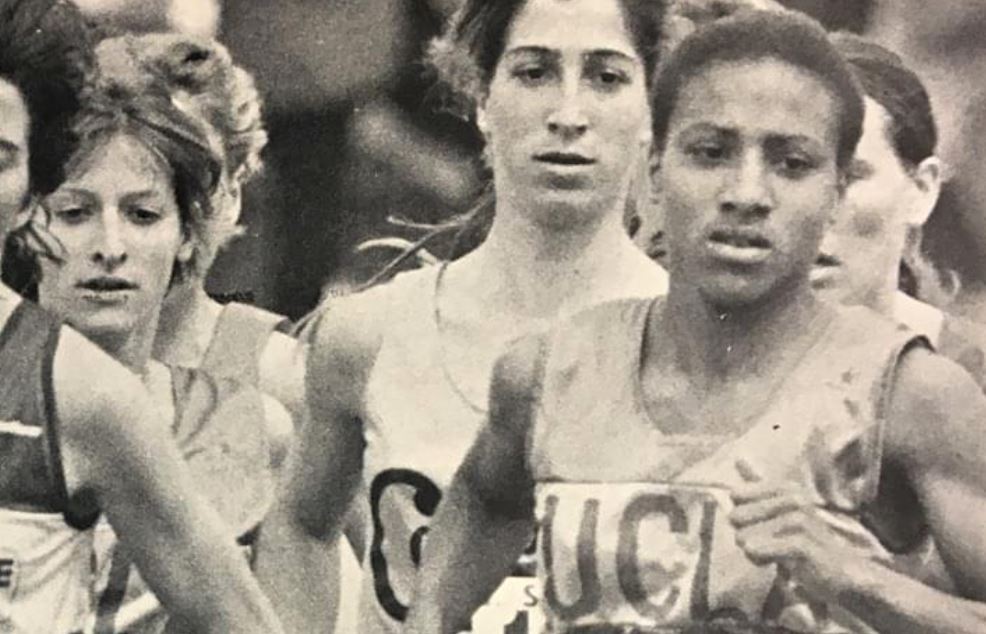
Although cyclist Merilyn Phillips was the first woman to represent Cayman at the Olympics in 1984, Michele Cuke (née Bush), four years later became the first runner – male or female – to represent Cayman at the 1988 Games.
Prior to Cuke, Cayman had only participated in sailing and cycling at the Games. Her journey in running began with the influence of her two older brothers, who did track and field.
“I was the youngest … and I just followed their footsteps,” Cuke, born and raised in the US but whose father was Caymanian, told the Compass. “I remember my coach telling me, ‘You don’t have a future as a sprinter’, and he said if you move up you’ll do better, so I began running the longer distance, which was the 1,500 metres.”
Her performances throughout high school earned her a scholarship to UCLA, where she set several distance records, and was a two-time NCAA 1,500m champion. At the 1981 Avon Marathon, she clocked 2:39:07, becoming the fastest US-born black female marathoner – a distinction she kept for eight years.
Despite her success, Cuke said that that she experienced discrimination during her days of competing, leading up to the Olympics.
“When I started running, there was no money involved but a lot of the top runners started pushing to get prize money; so I ran for financial support,” she said. “There wasn’t a lot of black women running long distance in my days. I remember going to hotels, when I travelled with the team, and people looked at me like, ‘Why are you here?’
“I experienced it at races. People asked me, ‘Who are you? What are you doing here?’ But it wasn’t too much of a hindrance. It didn’t stop me but I do remember one situation where I got third and the gentleman didn’t want to pay me the prize money, and I felt like that was racist because he paid the person who was fourth and he paid first and second, and I was the only black person.”
Seoul Games
Cuke qualified for the the 1988 Olympic Games at one of the marathons she ran, which prompted an invitation from officials in Cayman to represent the nation in Seoul, South Korea, she recalled.
“I had never been to the Olympics before, so I was very excited,” she said, adding that the realities of racism did not pervade the Games as they featured people from all over the world.
“It was a totally different culture and they had everything for the athletes,” she said.
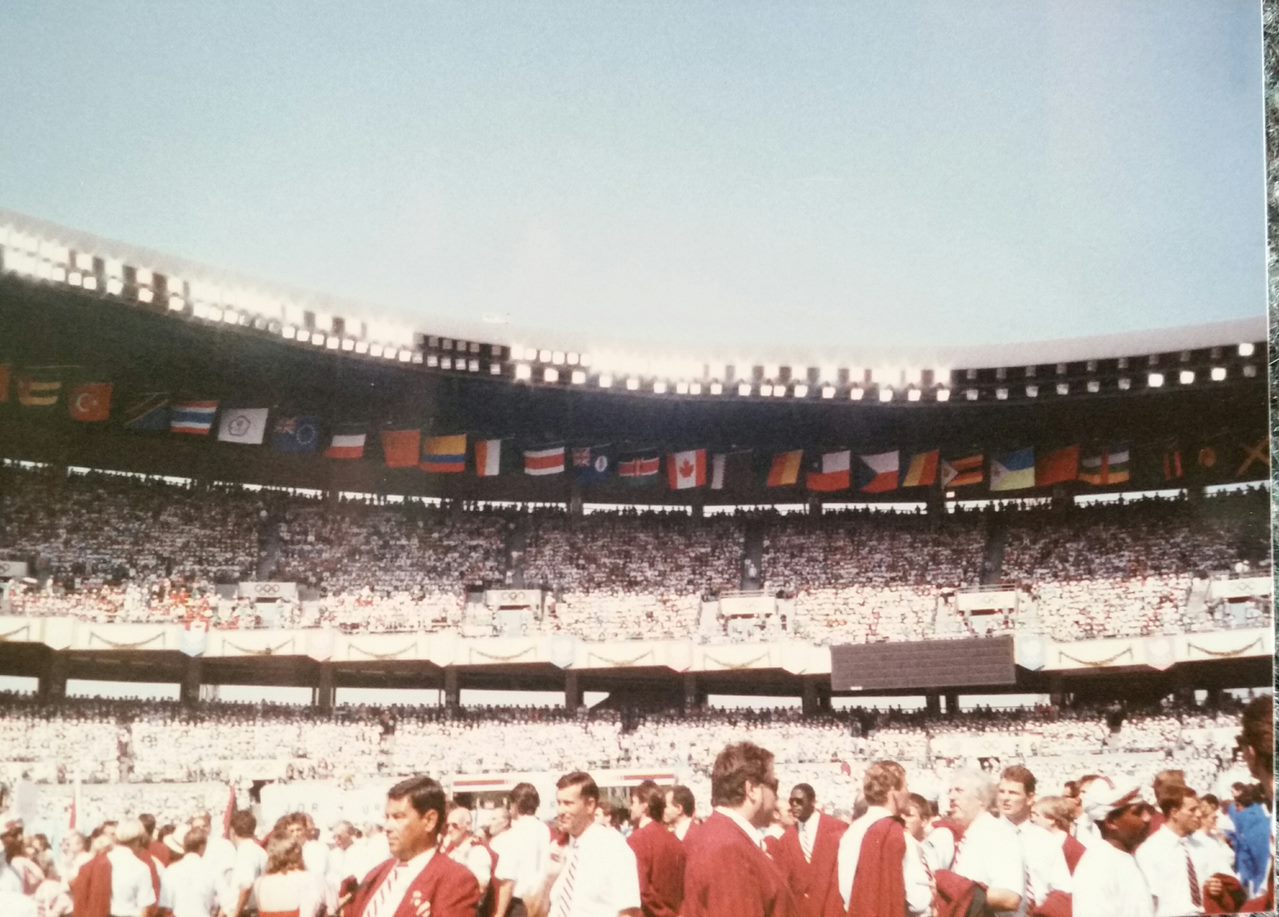
Among the festivities and different sporting events, Cuke, although beaming with Cayman pride, recalled she watched the cycling events, where six Caymanians were competing, including Alfred Ebanks, Michele Smith and Craig Merren. However, she was cheering for a different country.
“I went to one of the biking events, and my husband (David Cuke) is from Barbados, so I remember yelling for the Barbados team and someone asked, ‘Aren’t you from the Cayman Islands?'” Cuke said with a chuckle, adding that it was an all-round memorable experience outside of competing.
“They had a chauffeur. I had a lead car when I was training on the road and at the Olympic village, everything you could imagine was there.”
Cuke was raised Seventh-day Adventist, which precludes her from secular activities on the Sabbath – from sunset on Friday until sunset on Saturday – and it is a way of life to which she remains true.
Fortunately for Cuke, the 1988 Olympic marathon was held at 2:30pm (South Korea time) on Sunday, 2 Oct.
“It was sunny, nice and perfect, probably like 70 degrees,” Cuke recalled. And even with ‘perfect’ weather, her race proved to be a challenge.
“What’s great in a race is when you have a pack of runners and you are running with them, but that didn’t really happen for me. I did quite a bit of the race alone,” she said.
When she was coming into the home stretch, “at the very end and you’re super tired and you feel like you can’t make it – to have people cheering you on was a real great thing.”
She finished the race in 2:51:30. The year after the Olympics, Cuke regained her status as the fastest US-born black female marathoner with a 2:37:41 finish at the 1991 California International Marathon.
In 2022, Cuke was inducted into the National Black Distance Running Hall of Fame.
Looking back on her achievements, including Cayman’s first-ever runner at the Olympics, she said, “The thought that way after these things have occurred, people are still able to gain inspiration from it, I just have to give credit to God.”
Related Videos