


Premier Juliana O’Connor-Connolly joined forces with the government workers’ credit union on Wednesday to reject a newly proposed $200,000 annual fee, which she says will not make it to the Cabinet agenda under her control.
Saying, “Let the chips fall where they may,” O’Connor-Connolly, also a credit union member, made it clear she will not support the change.
The premier made the comment when she called into the Radio Cayman talkshow ‘For the Record’ with Orrett Connor on Wednesday morning during a discussion of the credit union registration fee.
While she said she did not want to throw her Deputy Premier and Financial Services Minister André Ebanks under the bus, she said, “The truth is truth … the matter is yet to go to caucus or Cabinet.”
She said she was not bound by collective responsibility because of this.
She told the panel, which included Civil Service Association (CICSA) Co-operative Credit Union’s chairman of the board James Watler and current CICSA CEO Patricia Estwick, that she sets the Cabinet agenda and the fees will “never come to Cabinet”.
“Credit union is much different from a commercial bank. There are perhaps some discussions that need to be held in other respects, but certainly not taking from Peter to pay for Paul,” she said.
O’Connor-Connolly said she was “sorry it had to come to this”, but she was not aware of the fees change.
She urged if such an instance is repeated, she has an open door policy and they could bring the issue to her attention.
She said based on the instructions she gave earlier on Wednesday, “The majority, if not 100% of caucus does not support this procedure that is taken and the content of the procedure taken.”
That procedure would be the issuance of a consultation document, which also includes the proposed fee as well as increases for financial services fees such as those for private funds, bank and trust companies, being made public before caucus and Cabinet agreement.
Government backbencher McKeeva Bush also called in and objected to the increased fee.
He said such decisions should be taken by caucus and Cabinet before being issued for consultation.
The credit union has said the proposed change poses a “significant threat” to its operations and its ability to serve its more than 19,000 members.
The CICSA Co-operative Credit Union Limited, through a letter to its members Tuesday, launched a public call to action, asking members to vote on the new annual fee for cooperatives, which is currently under consultation from the Ministry of Financial Services.
Deputy Premier Ebanks, earlier in the show through a message to host Orrett Connor, said he was willing to sit down and discuss the credit union’s concerns over the fees.
Government revenue stream
The consultation document indicated that the changes followed on from Premier O’Connor-Connolly’s 2024-2025 Budget Policy Statement, which pointed to “enhanced revenue streams to achieve broader economic and budgetary objectives”.
These revenue streams include regulatory fees, which the ministry said it “comprehensively” reviewed with its corresponding authorities and agencies to identify fees that have not been increased in five, 10, 15 years or longer.
This includes the cooperatives fee, which the credit union is resisting, saying that it was concerned the proposed changes to the Cooperative Societies Act could result in increased fees and reduced dividends for members.
Additional strain
CICSA, in its letter to members, said government’s proposed amendments would be “challenging the cooperative model that has been serving the community for nearly 50 years”.
“The proposed fee hike comes at a time when the Credit Union is already dealing with increased operational costs. Currently, the Credit Union spends around $800,000 per year on regulatory obligations while maintaining low fees and favourable rates for members,” it argued.
It implored members to vote no on the matter, which it will use as the basis of a petition to government.
CICSA’s past president and chairman of the board James Watler, speaking on Radio Cayman on Wednesday morning, said the increase in fees would severely impact the credit union’s ability to fulfil its core responsibility to assist those who are “hurting” and unable to seek financial assistance elsewhere.
He said that the credit union was created nearly 50 years ago as an avenue for “self-help” for government workers when they had no other alternative to high bank rates.
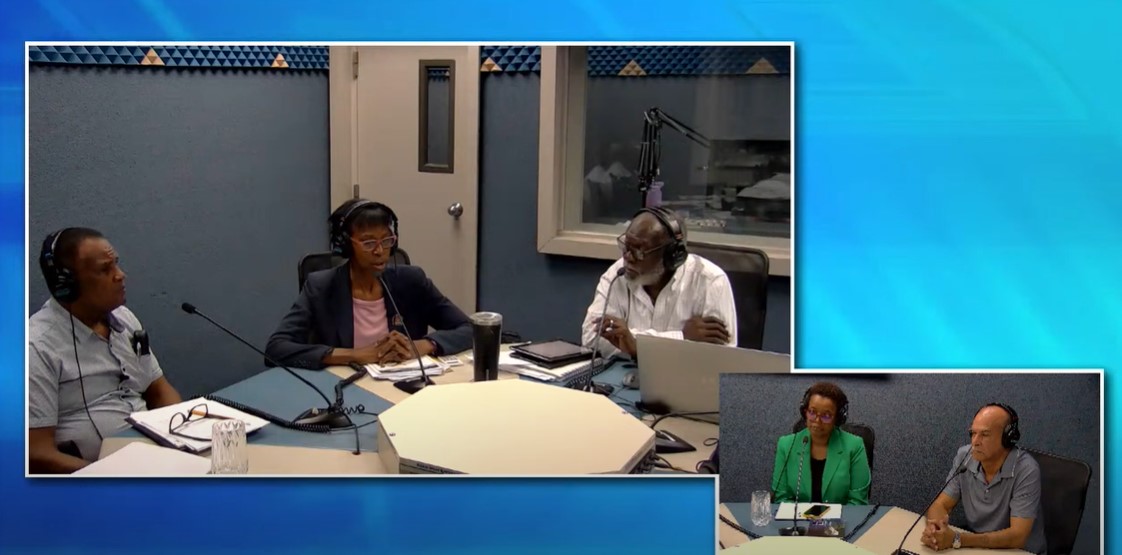
Patricia Estwick, CICSA CEO, who also appeared on the programme, said the credit union provides a valuable service and its members depend on the lower fees it offers.
“Some of them can’t even get a bank account because they don’t want the fees attached to their account every single month, and so they are unbanked. They rely on us,” Estwick said.
She added that those individuals opt for credit union services in some cases to help allay the high cost of living, adding that the organisation is the “last bastion” of help before they approach the Needs Assessment Unit.
Estwick said the credit union does not want to increase fees, adding that the “frustrating” part for her is that is the organisation is local, which means everything goes back into the community and not sent off island.
“That model the government should be protecting, not taxing,” she said, adding that the credit union has had a “revenue concession” in place for the last 48 years.
‘People are hurting’
Walter added that the credit union has been helping the government by enabling people to avoid going to the NAU for assistance, saying, “People are still hurting. People are still at the bottom.”
He said government is removing the credit union’s ability to continue to help its members. “They taking our hands and cutting it off so we will not be able to continue the good works for the people.”
A ministry spokesperson, responding to Compass queries for comment on the credit union’s position, said the matter of fees in relation to cooperatives is one item from a package of 2025 proposed financial services fee changes that was circulated for initial industry consultation.
“This consultation is therefore preliminary and not a formal published Green Bill. Constructive feedback is encouraged,” the spokesperson said.
The consultation, the spokesperson said, is normally done to gauge industry sentiment regarding proposals before formal instructions are sought from caucus.
“The feedback from this consultation will then give a steer as to which 2025 fee changes are suitable in each sub-sector before any formal position is taken,” the spokesperson added.
The consultation on the new proposed fees ends on 3 Sept.
Related Videos











I agree with the Premier here. But then question how she can support spending over a million on a cruise pier referendum, when the referendum question can be answered at the general election just a few months later? In fact it might bring out more persons to the election!