

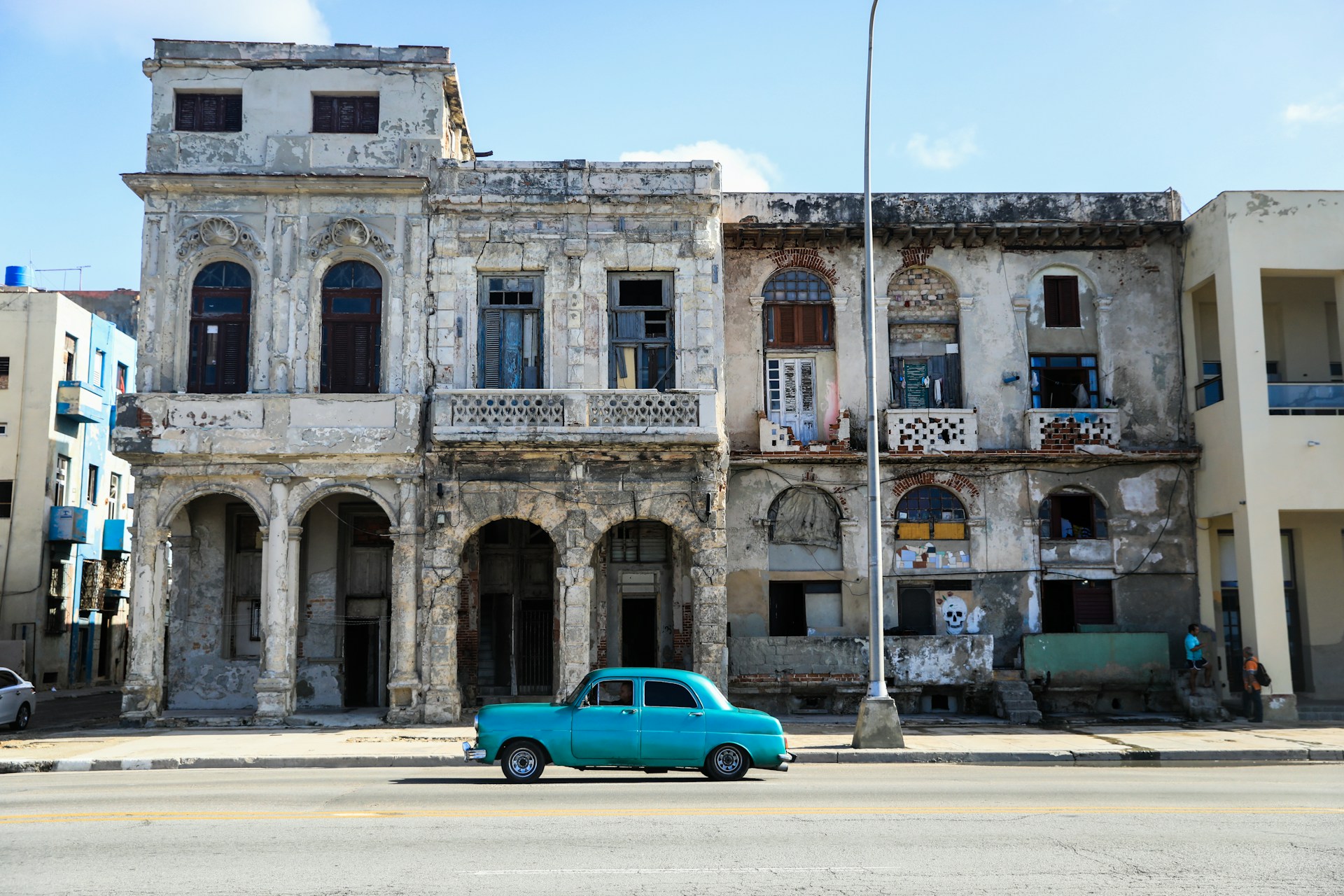
Electricity was starting to return to Cayman’s closest neighbour on Monday morning, after a complete island-wide failure of the grid on Friday, followed by repeated failed attempts to bring the power back online over the weekend.
“My grandfather is in hospital in Holguin,” said Ayme Mayan, a Cuban working in the Cayman Islands on a work permit.
“People were getting surgery in the hospital over the weekend using flashlights.”
On Saturday she was out looking for solar panels at local hardware stores to send to her mum.
“I am worried. My whole family including my mother, father, grandparents, cousins and their little babies are in the dark in Holguin and a hurricane is coming,” she added. “They can’t even keep their food cold or their phone charged.”

On Sunday afternoon, Hurricane Oscar came ashore near Baracoa in eastern Cuba with 80mph winds. Oscar weakened to a tropical storm by Monday morning and Mayan confirmed her family members were still okay.
Meanwhile on Monday morning, the NHC was forecasting the possibility of “life-threatening flash floods and mudslides” for eastern Cuba before the system was expected to move away from island and back over water by mid-week.
Concerns were being expressed that that the combination of the collapse of the grid and the hurricane could lead to a humanitarian crisis on the island.
Prior to the complete collapse of the electrical infrastructure, the critical state of the grid started to become apparent on Thursday, when the government instructed nonessential workers to stay home; they also cancelled classes for students from Monday to Wednesday.
Joe Franklin, a Canadian who has a property in Cuba, said he felt fortunate to get out of Havana on Friday.
He told the Compass that, “The prospect of no food, no water and no power was real and is now happening on a wide scale in Cuba.”
He explained that before leaving the island, he had experienced three days of power outages of four hours each, and it ended up taking nine hours to get back to Cayman via Miami, due to repeated delays of the American Airlines flight out of Havana.
A spokesperson for Cayman Airways, Olivia Scott-Ramirez said in a written statement to the Compass that they had seen no significant surge in demand from Caymanians and their family members to get out of Cuba, and the scheduled departure for the flight to Havana on Monday evening was still scheduled as normal, along with the return flight on Tuesday evening.
“We still have seats available on our flights to and from Havana this week which doesn’t indicate an increased demand,” she said.
On Sunday, one foreign visitor told CNN that Havana’s José Martí International Airport was operating in the dark on emergency power only, adding that printers did not work to issue tickets and there was no air conditioning in the terminal.
By Monday morning, Cuban energy officials said they had restored approximately one quarter of the electrical demand for the entire island, along with 56% for the Havana area. Cayman Airways confirmed that the power had also been re-established at the José Martí International Airport.
Small protests were starting to appear in Havana and in other parts of the island over the weekend. A witness told the Reuters news service they saw several scattered protests in poor, outlying neighbourhoods, as well as residents banging pots in frustration over the blackouts and food and water shortages.
President Miguel Díaz-Canel spoke to the nation on national television late on Sunday, telling Cubans to air their grievances with discipline and civility.
“We are not going to accept nor allow anyone to act with vandalism and much less to alter the tranquility of our people,” Diaz-Canel said.
Cayman-Cuba relations
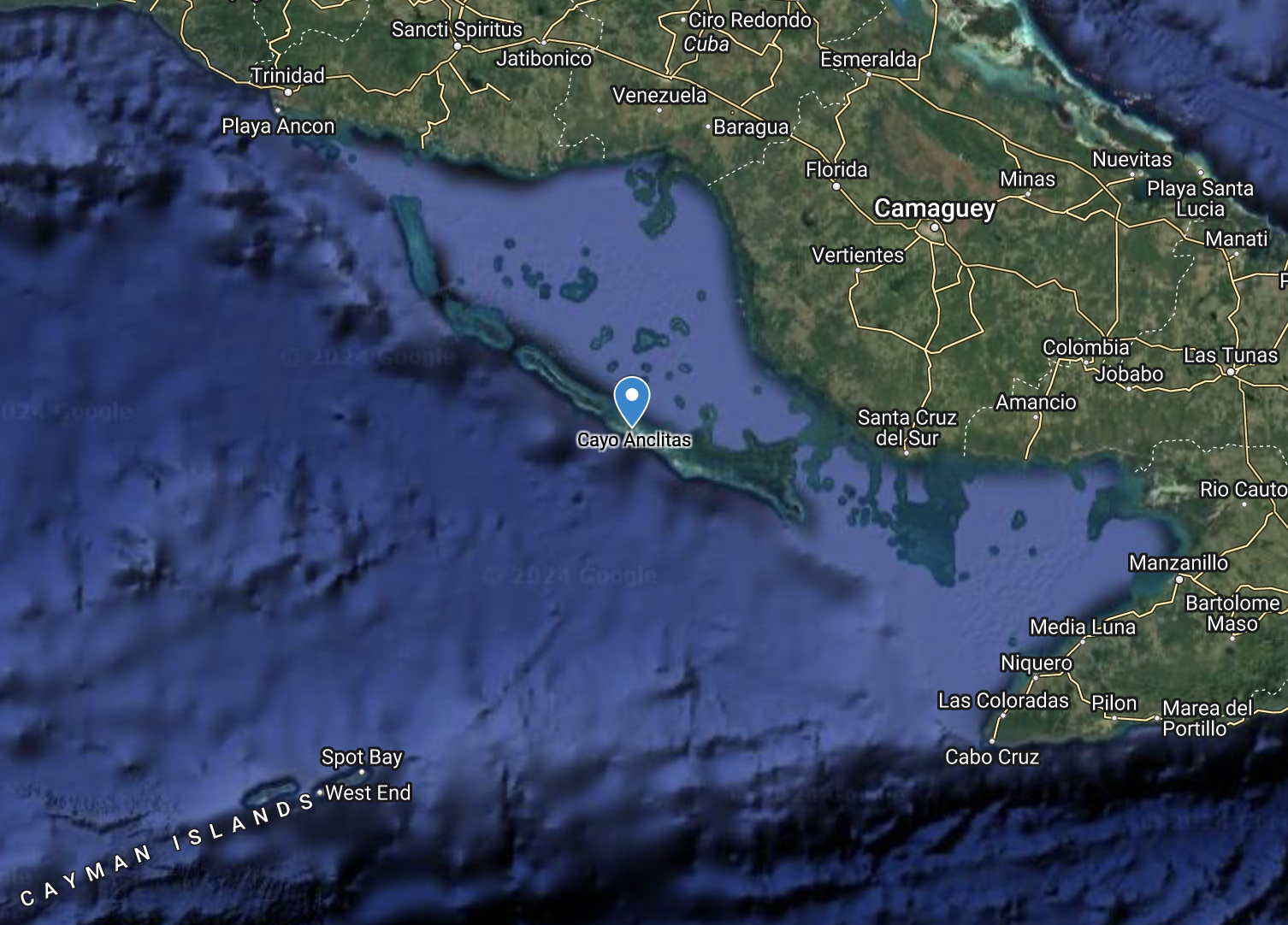
Less than 90 miles separates Spot Bay, Cayman Brac from the inhabited Cayo Anclitas on the Cuban south coast, making the 780-mile-long island of Cuba our closest neighbour. Despite the proximity, there has been little regular interaction between the governments of Cuba and Cayman over the past 50 years or more.
Mario Ebanks, who was born in Cuba and left with his parents and siblings when he was 5 years old, believes we should improve communication with our neighbour to the north.
He told the Compass, “From the early 1900s up until 1959, many Caymanians went to live in the Isle of Pines [now Isla de la Juventud] because there were quite a few Americans who had set up businesses there, and there wasn’t a lot of work to be had here in the Cayman Islands at that time.”
He said Members of the Legislative Assembly at the time, including Willie Farrington and Benson Ebanks, “were instrumental in bringing some of the Caymanian Cubans back home”.
He added that in the early 90s, there were more freedom flights that brought Caymanians home from Cuba.
“I feel terrible about the lack of food and fuel shortages and the power outages that are leading to so much suffering for the people in Cuba,” he said.
While he doesn’t believe that a significant outbreak of unrest in Cuba is likely at the present time, he is concerned that the economic problems and the ongoing embargo is “pushing Cuba into the arms of Russia and China”, which he believes “could one day place the Cayman Islands in the front row of global conflict between great powers”.
“It is in our best interests that Cuba has a strong and thriving economy,” he said. “The suffering is driving people to risk their lives on rickety boats, and we don’t need a repeat of the migrant crisis of the early to mid-90s, where we were accommodating and feeding thousands of Cuban migrants.”
He added that there are a lot of highly educated young and middle-aged Cubans.
“If they were trained and conditioned in the work ethics of and productivity of capitalistic countries and also learned how to speak English proficiently, they could possibly help diversify our own labour base, so we are not so dependent on workers from just a few countries,” he said.
Power outages
Regular blackouts for parts of the electrical grid in Cuba are not new. Outages of 10 hours per day are regular occurrences these days, but the Cuban government has now acknowledged the situation has reached a critical point.
Authorities said the outage that began Thursday stemmed from increased demand from small- and medium-sized companies and residences’ air conditioners. They also blamed breakdowns in old thermoelectric plants that haven’t been properly maintained because of a lack of hard currency due to US sanctions, as well as insufficient fuel to operate some facilities.
ABC news said earlier that “Cuba gets its power from huge thermoelectric plants like Antonio Guiteras and some smaller ones, which require crude oil to operate. The country produces about half of the crude needed, but must purchase some of the rest on the international market, which can be difficult and costly due to U.S. sanctions. It has also depended on allies like Venezuela and Russia for cheaper fuel.
“The impact of the blackout goes beyond lighting, as services like water supply also depend on electricity to run pumps. People have resorted to cooking with improvised wood stoves on the streets before their food went bad in refrigerators.”
The Guardian suggested “the Cuban government has run out of money. This has made power cuts of up to 20 hours a day a regular experience across the island, as the state struggles to buy enough fuel on the global markets for its five main thermoelectric power plants.”
All five of the country’s main plants are close to half a century old. According to Jorge Piñon, an expert on Cuba’s power system at The University of Texas, they are far beyond their planned lifespans.
Manuel Marrero, Cuba’s prime minister, has called for a shift to renewables and for the country’s growing private sector to pay more for the power it uses.
Related Videos








As of Monday, 10/21/24, flights from Europe were landing in Juan Gualberto Gómez Airport (Varadero).
There is a complete collapse of transportation of all sorts, including private. A drive from Varadero to Havana is $120 one way in a private vehicle IF ONE IS LUCKY to find a private transportation.
“A spokesperson for Cayman Airways, Olivia Scott-Ramirez said in a written statement to the Compass that they had seen no significant surge in demand from Caymanians and their family members to get out of Cuba…”
What spokesperson doesn’t understand is that
1. No communication of any sort is possible in a complete blackout of the entire country. One can’t possibly book a trip using internet, mobile phone or a landline phone which were also not working.
2. There is no transportation of any sort available to/from any airports during the blackout and if one is lucky to find one it costs an arm and a leg.
So no “surge in demand” simply means that there were no means to book a trip or to even make to the airport.
On 22/07/2024 Premier Juliana O’Connor-Connolly led a sizeable delegation around the region to take AID to islands hit by Hurricane Beryl. “The one commonality that we share is that we are all human, ” she said.
There is a humanitarian crisis in Cuba exacerbated by Mother Nature. YET, not a word in this article about Cayman’ plans to offer aid. Not a word from the CIG about hopping on a plane and delivering emergency supplies to its closest neighbor, just like they did in July. WHY?
As of last Sunday, Russia, Venezuela, Mexico, Colombia and Barbados have offered an assistance.