From the pages of the UK’s Daily Telegraph to the TikTok reels of a teenager’s smartphone, the Cayman Islands gets almost universally good press from travel journalists and social media influencers.
Fine dining, mangrove kayaking, sunset sails, spa days and even a bachelor weekend are described in purple prose or shown off in #nofilter glory in social media snaps.
But what readers and viewers might not know is that, in many cases, the food, the wine and the deep-tissue massages were funded by the Cayman Islands government.
A total of just over $600,000 has been spent over the past three-and-a-half years to bring an assortment of writers, videographers and content creators to the islands.
And a growing segment of that expenditure is going to a new wave of travel influencers, whose selfies and video reels supposedly entice followers to copy their clothes, food and travel choices.
Data shared with the Compass, following a freedom of information request, indicates a shift from traditional magazine and newspaper press towards creators who operate exclusively on social media.
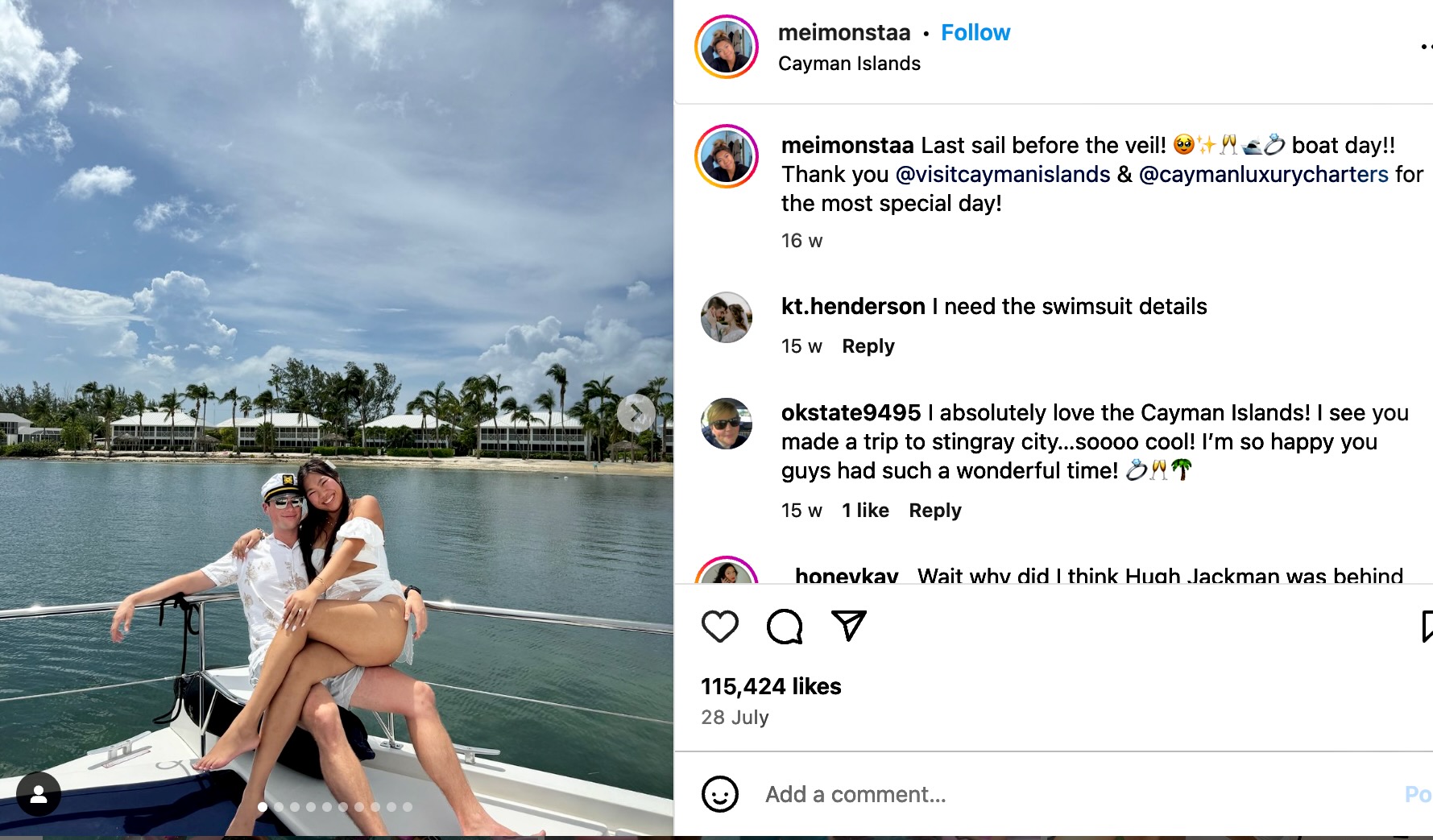
For example, in July this year, the Department of Tourism spent close to $40,000 to fund an all-expenses bachelor and bachelorette party for an Instagram celebrity known as MeiMonstaa.
@meimonstaaWAS NOT EXPECTING A WHOLE TOURISM BOARD TO BE IN OUR INBOX. We are so excited 😭😭🫶♬ original sound – Mei Mei
In return, she and her friends posted multiple pictures and short video reels of their trip on various social media sites.
One image of her and her fiancé posing aboard a yacht got a heart emoji from more than 100,000 of her Instagram followers. On TikTok, Mei Mei, from Atlanta, has 3.7 million followers, many of who viewed her posts about Cayman.
In some respects, it seems like a win-win-win for everyone. The influencer gets a free trip with her friends; the luxury villas, bus tour companies and dining destinations get paid; and the Cayman Islands gets good press.
A Department of Tourism spokesperson, in emailed answers to our questions, said its ‘digital first’ strategy is driven by data that shows that more than 75% of travellers are influenced by social media for destination choices.
While short videos and a few pictures might seem like a small price to pay for a luxury weekend trip, bite-size content hits more people in the medium where they are most comfortable, the department believes.
Short-form content aligns with ‘consumer preferences’ and the algorithms that drive reels and images to people’s feeds.
“Platforms like Instagram and TikTok are central to our strategy because they allow for the sharing of gorgeous visuals of the destination and interaction with local food and culture that entices people to visit,” the Department of Tourism said.
‘Authenticity’
The other common argument in favour of influencers is that they have built relationships with their followers, giving their content ‘authenticity’, similar to word-of-mouth marketing.
It also allows targeting of specific niche audiences, such as “solo travellers, arts and culture enthusiasts, families, divers, or foodies”, the department says.
@meimonstaa the most incredible experience of our life! 10000/10 bachelorette experience ✨Cayman Islands edition!! Thank you to the Cayman Islands Department of Tourism and @Black Urchin for an unforgettable trip! #CaymanIslandsPartner #VisitCaymanIslands ♬ original sound – Mei Mei
It also says it tries to curate itineraries that showcase the best of the destination and give opportunities for smaller businesses to be profiled, and uses influencers to target niche travel markets.
“The money spent on our Visiting Journalist and Influencer programme is used to showcase dining, accommodations, activities, and experiences across our three islands to a global audience of potential visitors,” it said.
Who can you trust?
For both traditional journalists and social media influencers, the new reality is that few content creators pay their own way.
The New York Times, Lonely Planet and National Geographic Traveler are among a handful of marquee publications that typically do not allow contributors to take trips funded by a destination. But many newspapers, magazines, television shows and social media content creators do accept free trips, as our freedom of information data shows.
The Globe and Mail in Canada, The Daily Telegraph in the UK and The Orange County Register in California are among the publications that have visited Cayman in the last few years on the Department of Tourism dime.
So, are readers and viewers getting an unvarnished view of reality or a misleading picture from someone whose trip is being paid for with the destination’s marketing budget?
Cayman’s Department of Tourism doesn’t dictate what writers or influencers say and it insists if a journalist provides “constructive criticism” in an article, that’s okay.
“We see it as a valuable opportunity to improve our product and we work with our local partners to ensure that our journalists have an experience that reflects the best of the Cayman Islands,” the DoT said.
‘Treat it like a business’
Trust in travel journalism is a complex issue, acknowledges Jane Broadus, vice president of business development at Steller, which works with more than 800 destinations worldwide on travel influencer marketing.
But she believes younger generations in particular are comfortable with the exchange of ‘goods for promotion’ that underpins much of the content.
Citing survey data, she said 78% of Americans indicated that social media influencers prompted them to explore new destinations, restaurants or attractions.
The most effective influencers are relatable and have built trust with followers who view them like a best friend, she said.
“Influencers are also becoming smarter,” she added. “They know what their audiences relate to and they’re not going to go on a trip that they don’t think is going to resonate with their audiences.”
While there are examples of people looking for a free trip in return for a few images, the sharp end of the influencer business is far more sophisticated.
The best content creators, she says, are essentially producers, photographers and hosts of their own travel or lifestyle show across multiple mediums.
Many have drone licences, photography and editing skills, and are storytellers who will deliver better value and better reach than legacy publications, she said.
Steller ran a coordinated campaign with Visit Puerto Rico, with 10 influencers producing content, including “video-infused itineraries”, on their own platforms and providing video and photography for the destination’s website. They combined that with an itinerary app that allowed followers to book their own trip.
She said that kind of practical link between social media content and trip planning or booking engines is an extremely effective way to turn clicks into trips. The campaign had over 60 million impressions, more than 300 social media posts, and 18% of people who viewed the content went on to create their own trip itineraries in the app.
“I do think a lot of these creators are so talented and work so hard to make sure that they’re telling an amazing story so that the destination feels proud and that their audience feels like, ‘Oh, I could do that too,’” she said.
New direction
Funding free trips is just the beginning of the expenditure that the Cayman government intends to put into this type of marketing.
The Department of Tourism has signalled its intent to use influencers in a more coordinated way going forward, signing a deal worth more than $2.8 million annually with public relations and influencer agency Praytell earlier this year.
It was Praytell that signed up Atlanta-based influencer Mei Mei for her recent trip.
The company hailed it as a success on its own Instagram account and in an interview on LinkedIn, saying they had “slipped into her DMs” after she posted a video talking about her dream of hosting a tropical bachelorette.
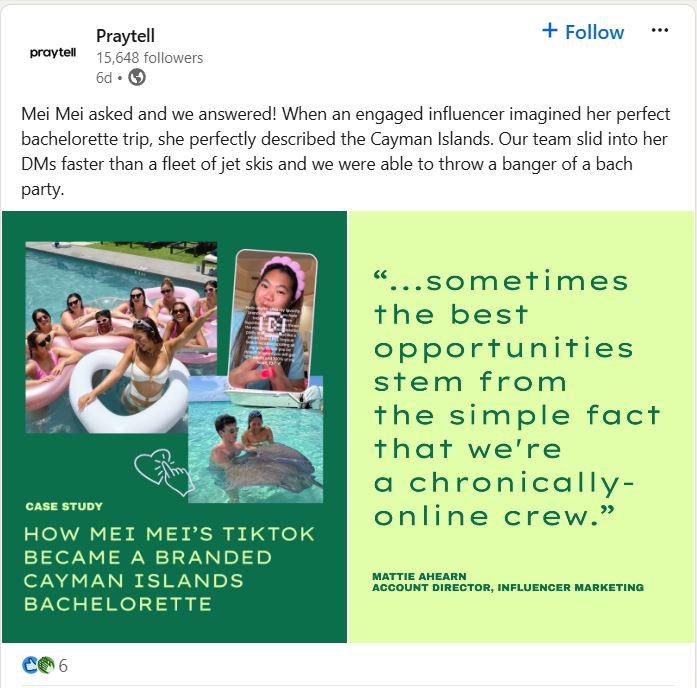
“Party guests and on-island partners created a combined 540 posts across Instagram and TikTok with an estimated potential reach of 296 million – all with $0 in content creator fees since the partnership was an in-kind collaboration,” according to the article, which quotes Mattie Ahearn of Praytell.
Related Videos