

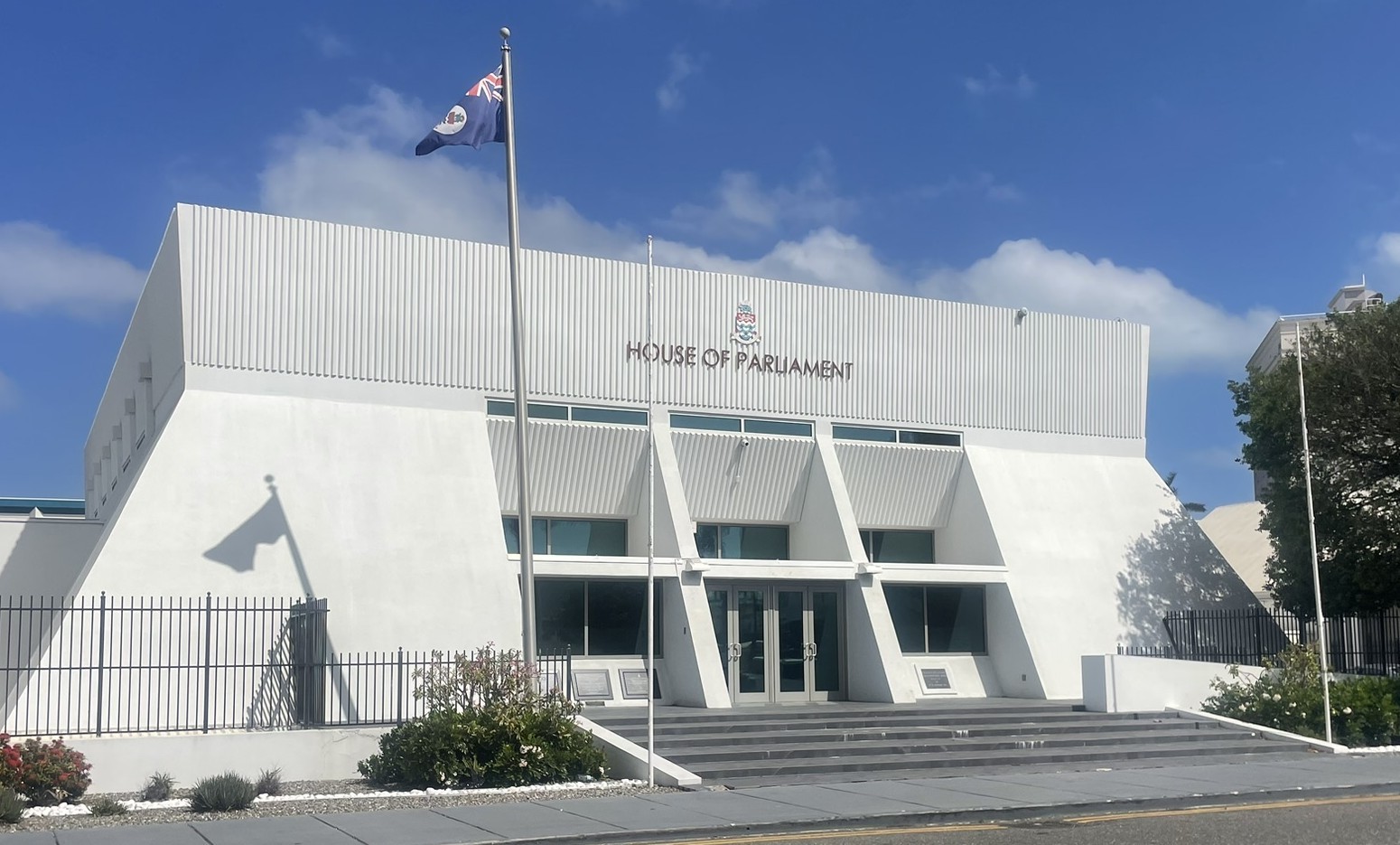
The premier of the Cayman Islands will in future be subjected to a weekly 30-minute grilling whenever Parliament is sitting, thanks to changes passed by MPs last week.
In one of the final acts of the House before April’s general election, MPs unanimously approved wide-ranging changes to the legislative body’s procedures, known as Parliamentary Standing Orders 2025. This included the introduction of Premier’s Question Time, which will mirror Prime Minister’s Questions, known as PMQs, in the UK Parliament.
Weekly questions
Premier’s Question Time will take place every Wednesday for 30 minutes when Parliament is in session and MPs from all sides of the House will be able to pose questions to the sitting premier. A 15-minute urgent questions period will also be available at each sitting, allowing MPs to raise pressing matters in the public interest.
Allowing MPs to question the sitting premier directly is likely to lead to a more combative style of Parliament if opposition and independent MPs take advantage of the opportunity to try and embarrass the administration, but also allows government members to highlight policies and updates on the floor of the House with favourable questions.
If run along similar lines to British PMQs, MPs will be selected at random to question the sitting premier on any subject they choose, without giving any prior notice.
The adoption of the new set of Standing Orders is the first major overhaul of parliamentary procedure since 1976 and will be in place when the new Parliament meets following the general election.
Other key reforms include:
- When Parliament is in session, MPs will sit from 2-8pm on Wednesdays, Thursdays and Fridays, with an optional 30-minute suspension at 5pm.
- Parliament will not sit during July or August, except for urgent matters.
- Lengthy speeches from MPs outside debates could be a thing of the past, with personal statements limited to 10 minutes and government statements capped at 20 minutes with prior Cabinet approval.
- MPs can remotely attend Parliament in exceptional circumstances.
- MPs will be able to use visual aids during debates.
- The Finance Committee will have enhanced powers to summon individuals and request documents.
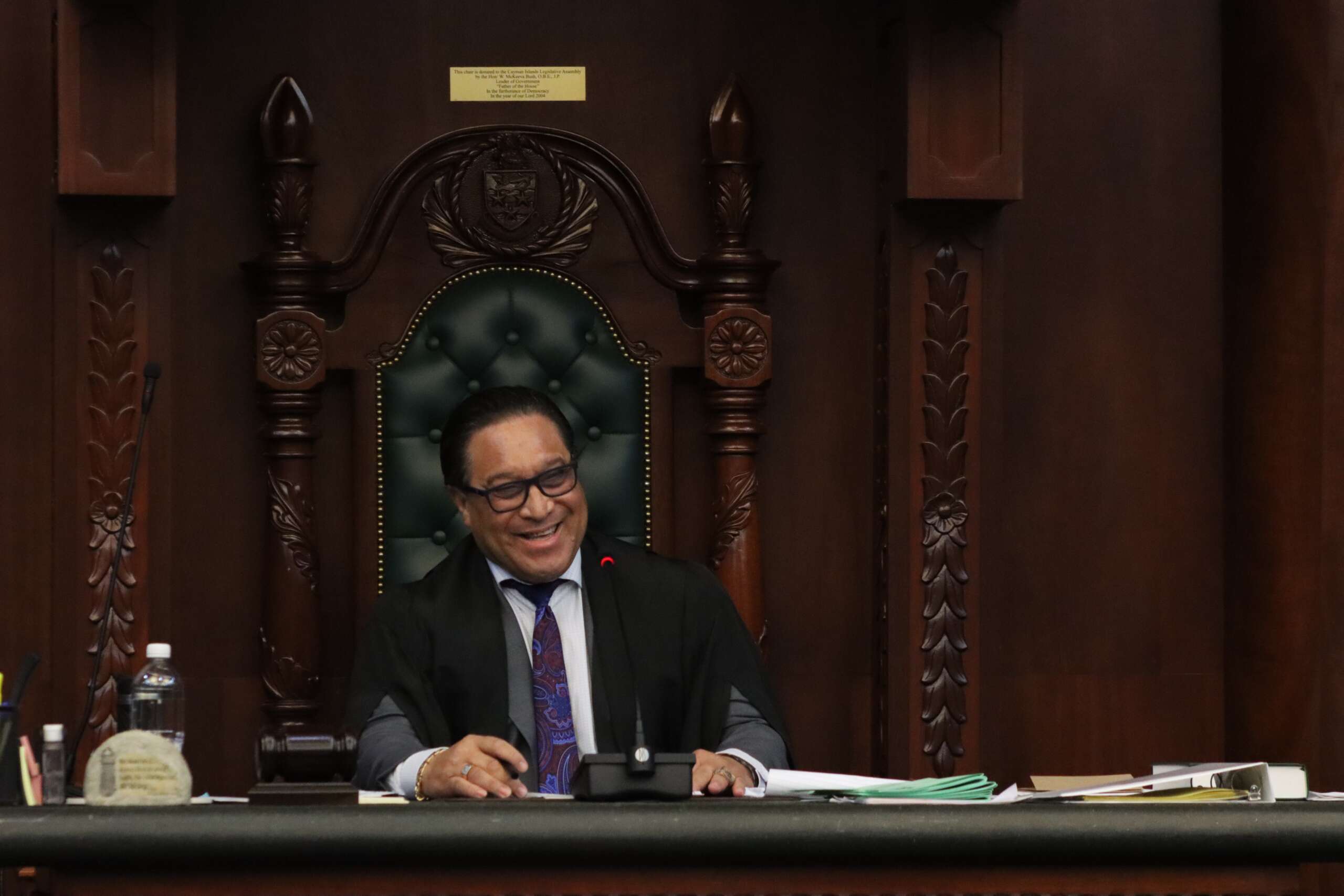
“Our Parliament and its Standing Orders are the cornerstone of our democracy, and for many years, I have longed to see them revised to enhance the effectiveness and efficiency of our legislative proceedings,” said outgoing Speaker of the House Sir Alden McLaughlin in a statement.
“These reforms represent a significant step forward in strengthening our parliamentary democracy and finally bring the procedures in Parliament into alignment with the constitutional and other parliamentary changes which have taken place over the last 15 years,” he added. “They will enhance the ability of Parliament to speak with and scrutinize the work of Government effectively while ensuring that parliamentary proceedings remain accessible to the public and in line with modern needs.”
A feature of the UK parliament
Prime Minister’s Questions has been a feature of the British Parliament since the 1880s, when a slot at the end of the day was reserved for questions to the then prime minister, William Gladstone. In 1953, with Winston Churchill as PM, questions to the prime minister were moved to Tuesdays and Thursdays, which later became two 15-minute periods.
When Tony Blair’s Labour Party won the election in 1997, one of the first things he did as prime minister was to change the two 15-minute segments allocated to PMQs to one 30-minute period, which since 2003 has been set for Wednesdays at midday.
The prospect of facing questions from hostile MPs has inspired and terrified British PMs over the years. Labour’s James Callaghan regarded it as “a complete waste of time” while his predecessor, Harold Wilson, used to fortify himself with a brandy before Question Time during his later years.
Harold Macmillan, known as ‘SuperMac’, said PMQs made him “physically sick”. It isn’t just the prime minister who has to prepare for PMQs – Labour opposition leader Neil Kinnock, who faced a formidable prime minister, Margaret Thatcher, for nine years, reckoned he spent “hours and hours” on preparation.
Loved by journalists, the gladiatorial and unpredictable nature of PMQs has yielded more than a few moments to savour over the years, if not necessarily by the participants. The House of Commons is usually packed for the weekly contests, with MPs squashed together on the parliamentary benches. Loud heckling by opposing parties means that it is often impossible to hear questions or answers, with proceedings often halted while the speaker of the house calls for calm.
Memorable moments
Future Conservative Prime Minister David Cameron was bruised by his first PMQs as a backbencher, asking Labour Prime Minister Tony Blair about council charging residents low rates, to which Blair pointed out that five of the top 10 council taxes in the country were run by Conservative authorities.
As PM himself, Cameron was branded “sexist, insulting and patronising” when during PMQs he told shadow Treasury Chief Secretary Angela Eagle, to “calm down, dear”, after a popular TV advert running at the time.
When new Conservative Party leader and Prime Minister John Major first rose to take PMQs, opposition MP Denis Skinner shouted “Resign” before he even said a word.
At the end of the Thatcher years, the first PMQs after the release of Nelson Mandela led Labour MP Joan Ruddock to raise the issue in the House, starting with: “If the Prime Minister had just spent 27 years in prison –” to which Labour MP Gerald Kaufman interjected: “As she should!”
Personality clashes as well as political ones would often show themselves in PMQs. Conservative Party leader Michael Howard hit out at privately-educated Blair on the subject of higher education: “This grammar school boy is not going to take any lessons from that public school boy on the importance of children from less privileged backgrounds gaining access to university.”
In May 2004, condoms filled with purple flour were thrown by Fathers4Justice at Blair as he faced MPs, with proceedings suspended and a major review of security launched.
Sometimes PMQs has its lighter moments. After Labour backbencher Barry Jones asked Blair, “Will he accept also that the Budget was magnificent?”, Blair responded: “On balance, I would agree. Some people may not like some old-fashioned sycophancy – but not me.”
Related Videos







Might I say better late than never. Might I also suggest the foot dragging on the minimum wage be addressed at our first PMQ.