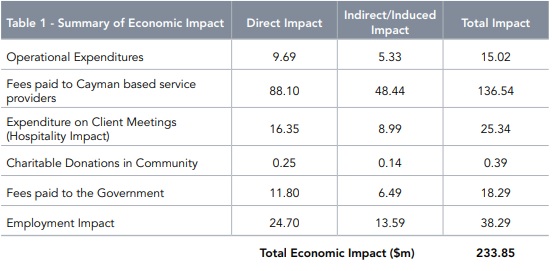
The insurance business has boosted the Caymanian economy by $233 million a year, a major study has found.
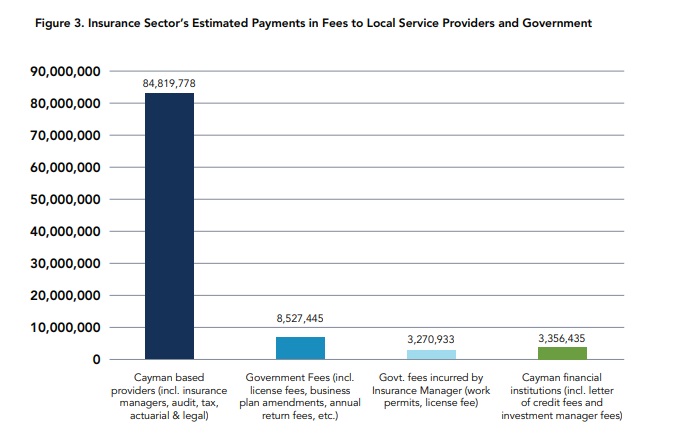
The figure included more than $136 million in payments to professions such as the law, accountancy and the compliance sector in Cayman, as well as $18 million in fees to the government.
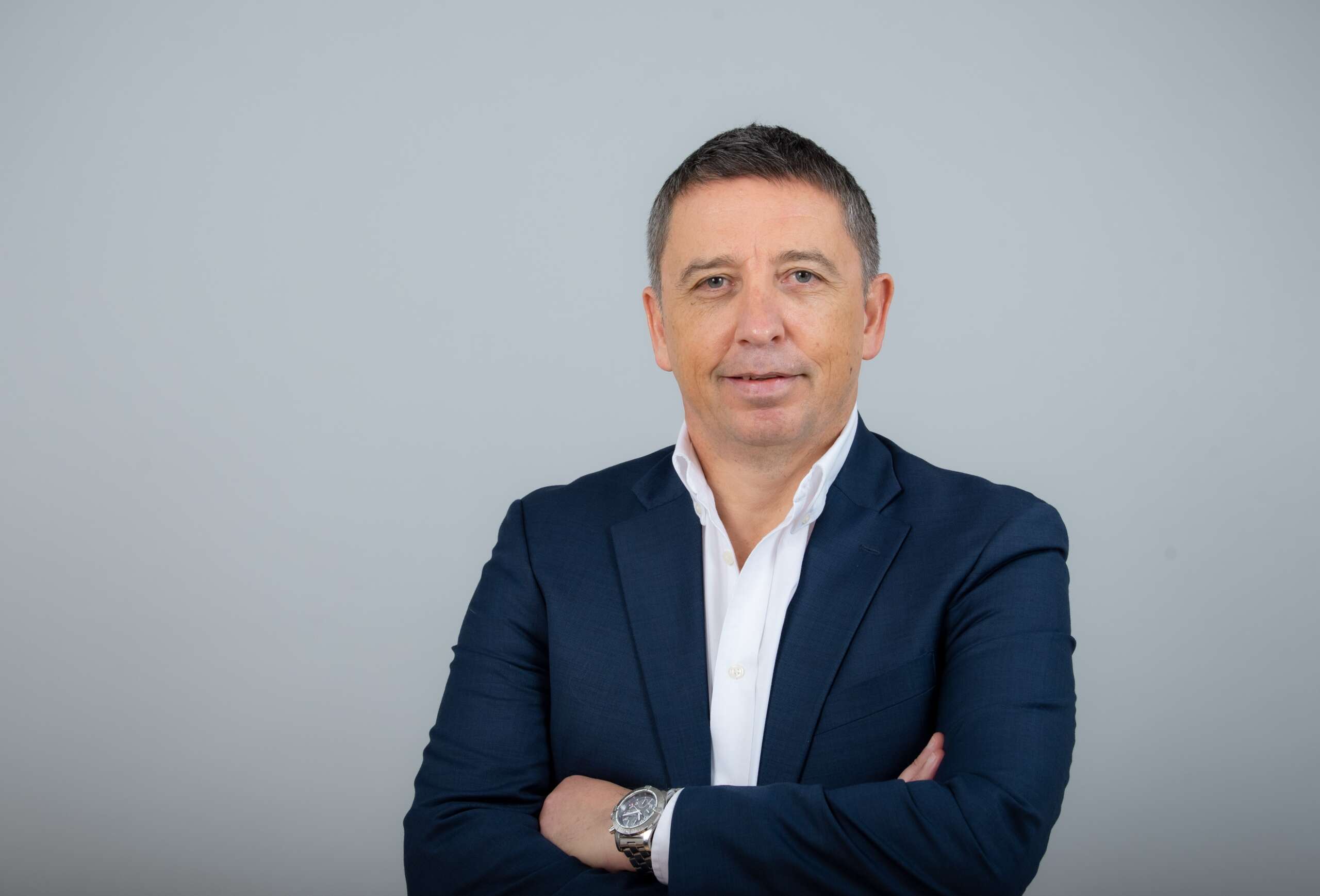
Kieran Mehigan, the chairman of the Insurance Managers Association of Cayman (IMAC), which released the report with Cayman Finance, said, “The findings of this study underscore the critical role that international insurance and reinsurance play in our financial services sector and the broader Cayman economy.
“From job creation to business travel and community engagement, the industry’s contributions are far-reaching and continue to drive economic growth.”
The economic impact study, the first of its kind, said there was no measurement of the financial services industry’s contribution to Cayman’s gross domestic product by the government’s Economics and Statistics Office.
But it added that, using figures from a range of sources, it was estimated it contributed about 5% of GDP.
The report showed that the industry directly employed 256 people, with almost half of the posts held by Caymanians.
The figure rose to more than 72% when permanent residents were included, with work permit holders accounting for the remaining 28% of those directly employed in the sector.
The survey said, “The sector also contributes more than $200,000 towards training of Caymanians overseas each year, in addition to a budget of $112,000 allocated to locally based training.”
Insurance boosts other businesses
The insurance sector was also responsible for more than 40,000 overnight stays by business travellers, which reinforced “the link between insurance and tourism”.
It was estimated that client meetings expenditure had meant a $25.3 million direct or indirect annual contribution to the hospitality sector.
That included almost $10.5 million on accommodation, $3.7 million on activities such as meeting expenses, buses, taxis and tours, and more than $2 million on meals.
The survey also highlighted that the annual IMAC-organised Cayman Captive Forum was attended by more than 1,500 people a year.
The survey said the meeting was “one of the most successful financial services conferences in the Cayman Islands as well as the largest captive forum in the world”.
It added, “This conference is a great example of the strong synergies between the insurance industry and tourism in the Cayman Islands.”
The insurance industry also gave $387,000 in charitable contributions to good causes in Cayman.
International insurance firms also paid landlords more than $2.6 million in rent for office space each year.
The research was carried out by consultancy firm FTS, with support from the Cayman International Reinsurance Companies Association (CIRCA).
The team surveyed members of IMAC and CIRCA, which provided additional statistics to ensure all the bases were covered.
Brittany MacVicar, associate director of Cayman Finance, said, “From driving economic growth and creating high value economic opportunities, to supporting local businesses, the industry’s impact is both substantial and far-reaching.
“It’s synergy with tourism, government revenues and community initiatives underscores its importance to the broader financial services ecosystem.”
IMAC and Cayman Finance said the survey was commissioned to hammer home the importance of the sector to the islands to policymakers, those connected with the industry and the public.
Industry scholarships and jobs
The survey also underlined the industry’s commitment to education, training and community engagement, including the funding of scholarships and workforce development.
Greg Mitchell, the CIRCA chairman, said, “We look forward to further collaboration to ensure that Cayman remains a premier jurisdiction for reinsurance.”
Kevin Poole, the general manager of IMAC, added the industry offered a range of worthwhile careers for young Caymanians, but that the industry was not as high profile as it should be.
He explained, “When people think about insurance, some from the younger generation might be a bit turned off and think about houses and cars, that type of thing.
“But, when you expand it out and look at the corporate world, there are a lot more diverse risks that need to be covered.”
He added the industry offered a wide range of careers, including accountancy, marketing and business development.
Poole said, “You might be an actuary and we also need people doing administrative roles as well.”
He added, “Generally speaking, these are well-paid jobs.”
Poole said 42 new international insurers set up shop in Cayman last year — the biggest number of companies in a decade.
He added, “All I can say is, from interactions with the public, people in the wider community don’t necessarily understand what the impact of the industry is in Cayman.”
Economic benefit bigger than recorded
The authors of the study added that the recorded economic impact was lower than it would have been because they had been unable to “capture most of the reinsurance firms that operate in the Cayman Islands”.
They said, “Capturing all reinsurance firms would have resulted in additional economic impact.”
The insurance and reinsurance sector in Cayman has grown significantly over the past decade.
There are at present eight Class D reinsurance companies — those with a physical presence on island and which operate independently without an insurance manager — up almost 100% since 2019.
There were more than 680 international captives based in the Cayman Islands at the end of 2023.
Captives are a cost-effective alternative to self-insurance as those insured set up a licensed insurance company for their own use, so premiums are priced at near cost as there are no separate investors.
A captive insurer also helps its sponsors to establish regular cash flow for their risks and gives them a direct choice for reinsurance.
The IMAC scholarship programme, which has totalled $5 million in grants to 73 students since it was set up in 1994, is open for applications until 30 April. More details can be found here.
Poole said scholarships were not restricted to insurance-related subjects, but that those who wanted to build a career in the industry were welcome to apply.
Related Videos