A husband and wife jailed last year for people smuggling have asked a court to quash their conviction.
The English couple, who cannot be named for legal reasons, have also lodged an appeal to have their sentences reduced.
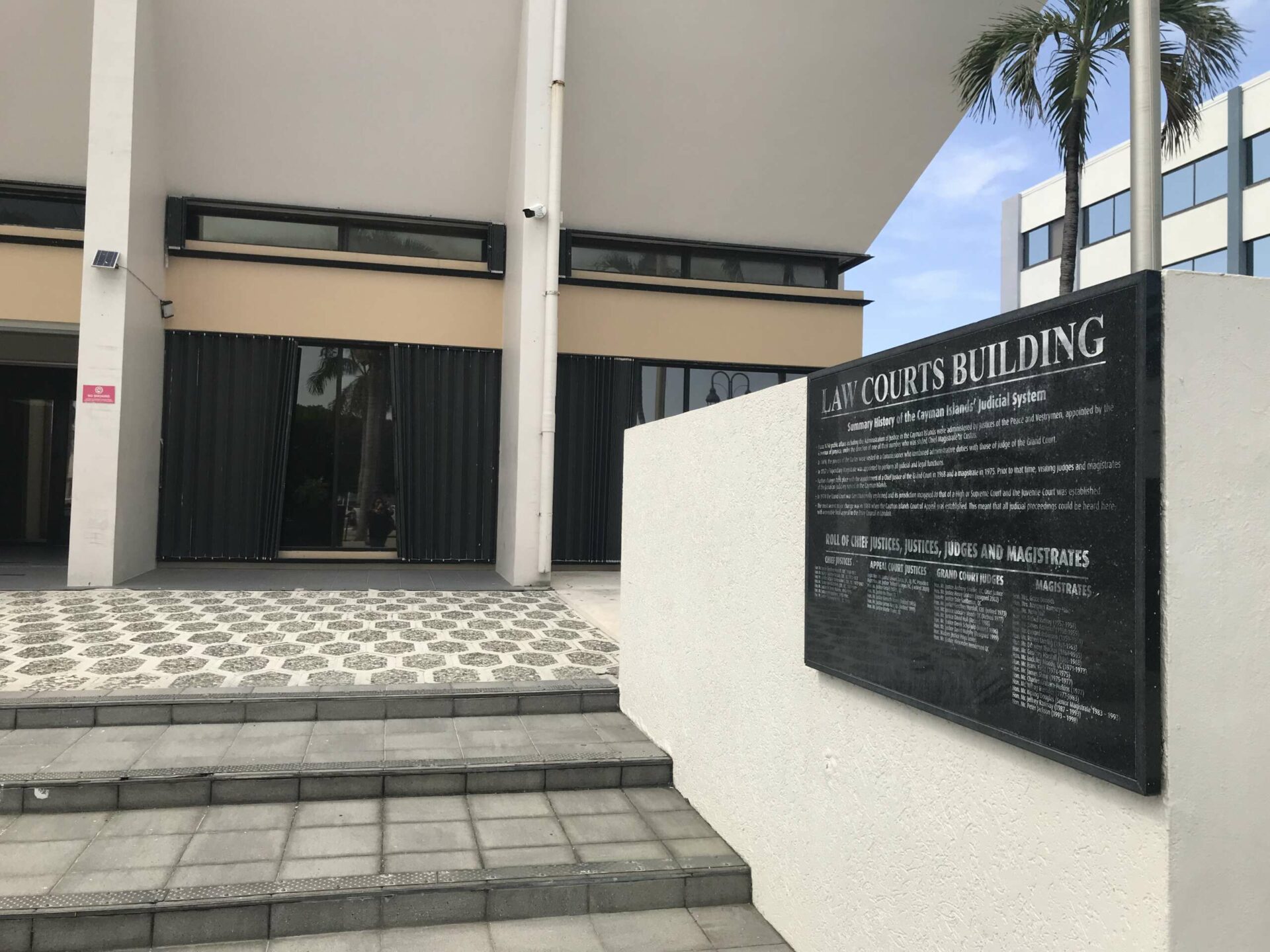
Nicholas Dixey, who appeared for the man, told the Grand Court on Friday that Caymanian law did not cover the type of offence that the two were convicted of and that the legislation used to charge them was inappropriate, so the conviction should be quashed.
He said the country should look at passing suitable legislation to cover human trafficking and modern slavery.
The man, then 52, the skipper of a sailing yacht, was found to have two Ethiopians locked in the cabin after the boat dropped anchor off Cayman Brac and it was raided by customs officials last year.
He was later sentenced to four years in prison and his wife, 39 at the time, was jailed for three-and-a-half years.
The two were convicted of human smuggling, illegal entry to the Cayman Islands and failure to complete a disembarkation card.
Dixey told the appeal hearing that the man had given instructions and agreed to attend court, but his wife had refused and rejected the bundle of papers connected with the case when it was delivered to her, but “hadn’t abandoned the appeal formally”.
Dixey explained the existing legislation used to convict involved arrangements between passengers and “criminals, essentially” to bring, with their consent, immigrants into the island in “an arrangement of complicit deceit”.
But he highlighted that the two Ethiopian men had contracted with the man to be taken to Honduras and were taken to Cayman against their will.
One joined the boat in Cape Verde, off the west coast of Africa, and at first asked to be taken to Brazil, and the other came on board in Sint Maarten.
The trial last year heard that the two Ethiopians, who later illegally fled Cayman in a boat with 10 Cuban migrants, had endured cruel and degrading treatment while on board the boat.
They were forced to sleep on deck, subjected to racist taunts such as “monkey” and kept short of food and water, despite having bought their own supplies, the court heard.
Dixey also argued that sentences of the severity handed down to the two usually involved large numbers of smuggled people, not two.
But Ben Brown, who appeared for the Crown, told Justice Cheryll Richards that Caymanian legislation was clear and that regulations quoted by the appellants’ lawyers from Jamaica, Canada and the UK did not apply in Cayman.
He said what the Summary Court had done at trial was “look at the law and apply its plain, literal reading”.
Brown highlighted that the legislation used said it was designed to “deter illegal immigration to the Cayman Islands or through the Cayman Islands”.
He added that claims the boat had drifted into Cayman waters because it was unseaworthy and the engine had overheated, so the arrival had been beyond the skipper’s control, had no evidence to support them.
He said, “We have heard evidence of duress. … The Crown’s position is there is no evidence of duress, no evidence of necessity of circumstance.”
Brown added that the couple had not behaved as if they had faced a crisis on a boat in peril of sinking.
He said, “There was no radio call for assistance, no effort to summon assistance from anyone else. The boat was moored. No matter how unsafe the boat was, the applicants left two people in a cabin on the boat.
“Would anyone have left two people on such an unsafe boat? The Crown says no.
“What they did was go to a supermarket, had a meal; they did their shopping. None of that is consistent with the claim of a boat in such a situation it drifted into Cayman waters by accident.”
He also dismissed claims that the pair’s sentences for smuggling were of a length normally reserved for large-scale people trafficking.
“What these cases do not involve is the measure of harm done to these two Ethiopian gentlemen,” Brown said.
“The lower court was quite properly entitled to take into account the poor treatment of these gentlemen and quite properly entitled to give a significant upgrade to sentence.”
Richards reserved judgment until next month.
Related Videos