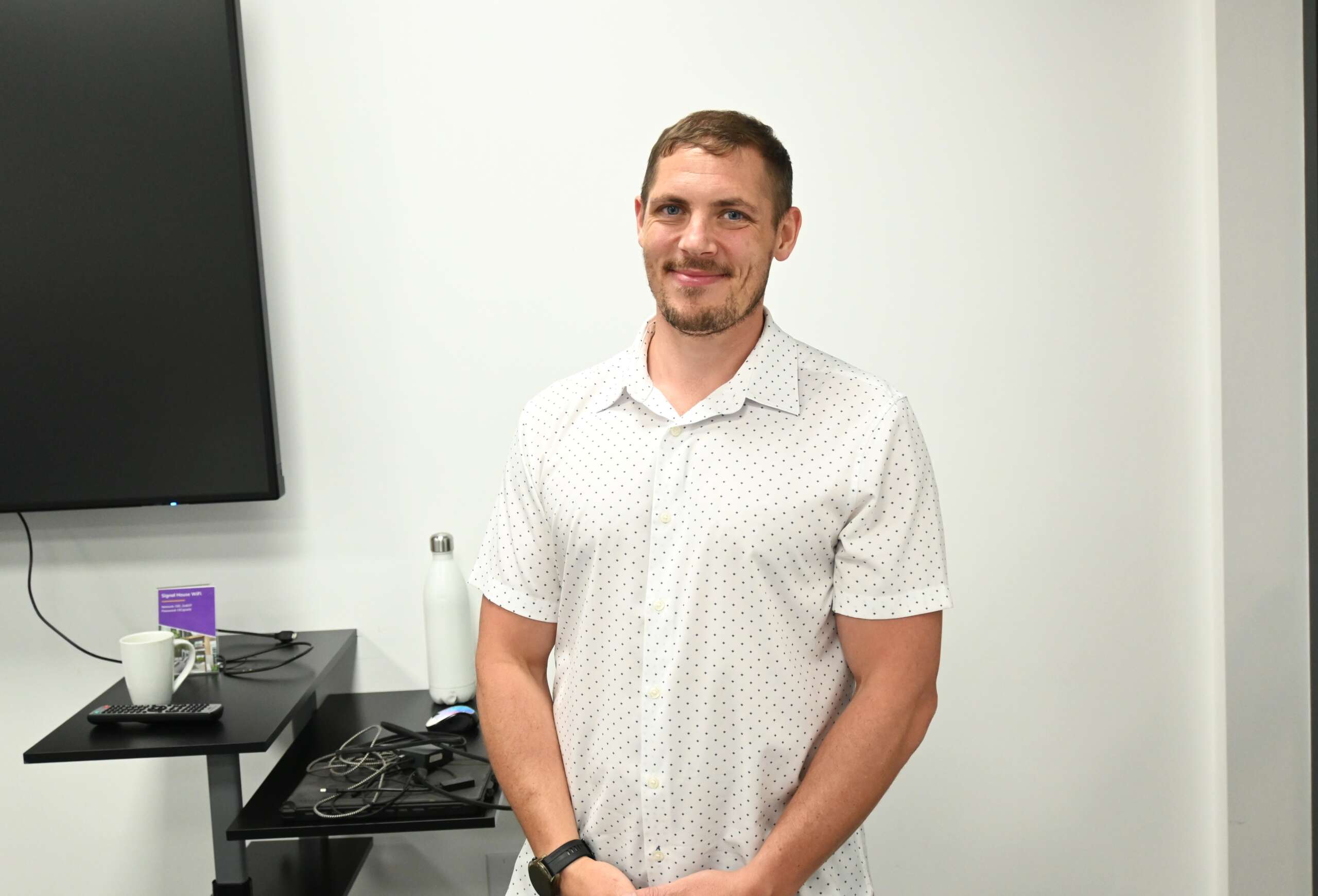
Cayman could become a Caribbean-wide storage centre for sensitive information as the use of artificial intelligence continues to grow, a government adviser has said.
Stephen Ta’Bois, the science, technology, engineering and maths specialist at the Department of Education Services, said international data protection rules often restricted information from being stored on foreign servers.
He added Cayman stored its sensitive information on-island or in the UK.
Ta’Bois pointed out, “We are a small island, but we are, compared with the rest of the region, pretty wealthy.”
He said that Cayman “could develop into a regional hub for the Caribbean or the overseas territories to avoid turning data over to servers based abroad.”
Ta’Bois added that he wanted to see Cayman develop its own AI tools, based in the country, to reduce reliance on overseas technology.
He said, “We already have servers which are based here – that’s one part of the picture. Developing the technology is certainly a possibility for us.”
Ta’Bois added that the growth of AI could also lead to the creation of new jobs in Cayman.
“The whole community, whether it’s people in existing roles, people worried about losing their jobs to AI, it’s something which could provide a new avenue for them and it could provide a pathway to employment for our students leaving school,” he said.
Ta’Bois was speaking at a ‘CyberSandbox session’ called ‘AI in Education: Making an Impact’, organised by Enterprise Cayman at George Town’s Signal House on 28 May.
He said that the use of AI would continue to increase and that the education authorities were keen that schools kept up with developments so pupils would leave prepared for working life in the modern world.
Ta’Bois added, “We are using this in our day-to-day lives already, so our children and our young people are certainly using it in theirs.”
Safeguards
But he warned that safeguards would be needed to prevent pupils being exposed to manipulative apps that could pose a danger to them, particularly from the use of convincing “deepfakes”, where video and sound can be manipulated to appear to be someone else.
“The biggest risk, other than not using these tools ethically, would be deepfakes,” Ta’Bois said.
“That’s a risk, not only to our students, it’s a risk to our entire community – the elderly community as well.
“It’s a risk because it’s now increasingly difficult to be able to tell what is real and original and what is generated using whatever platform it may be.”
He told the workshop earlier that deepfakes could be created from clips of voice recordings lasting just three seconds, which were then linked to images.
Ta’Bois said, “There is also a very negative side of which we have to be aware.”
He emphasised it was “really important” to teach pupils how to spot and deal with programmes designed to manipulate them.
“It boils down to them being aware of the consequences their decisions will have.”
Ta’Bois added that technology could never replace teachers in the classroom because of their depth of knowledge about the children in their care.
He said, “Teachers build a wealth of information about students; their hobbies, their likes and dislikes and what their subject preferences are and what their writing style is.
“You give your feedback and you deliver your lessons in a way that delivers that information. AI doesn’t do that. It’s based on snapshots of information.”
He added that some AI programmes were so sophisticated, they could alter their text to fool services designed to detect machine-generated input.
Ta’Bois told the seminar earlier, “It’s important to keep the human in the loop – teachers know their pupils and can see what they’re doing.”
Related Videos