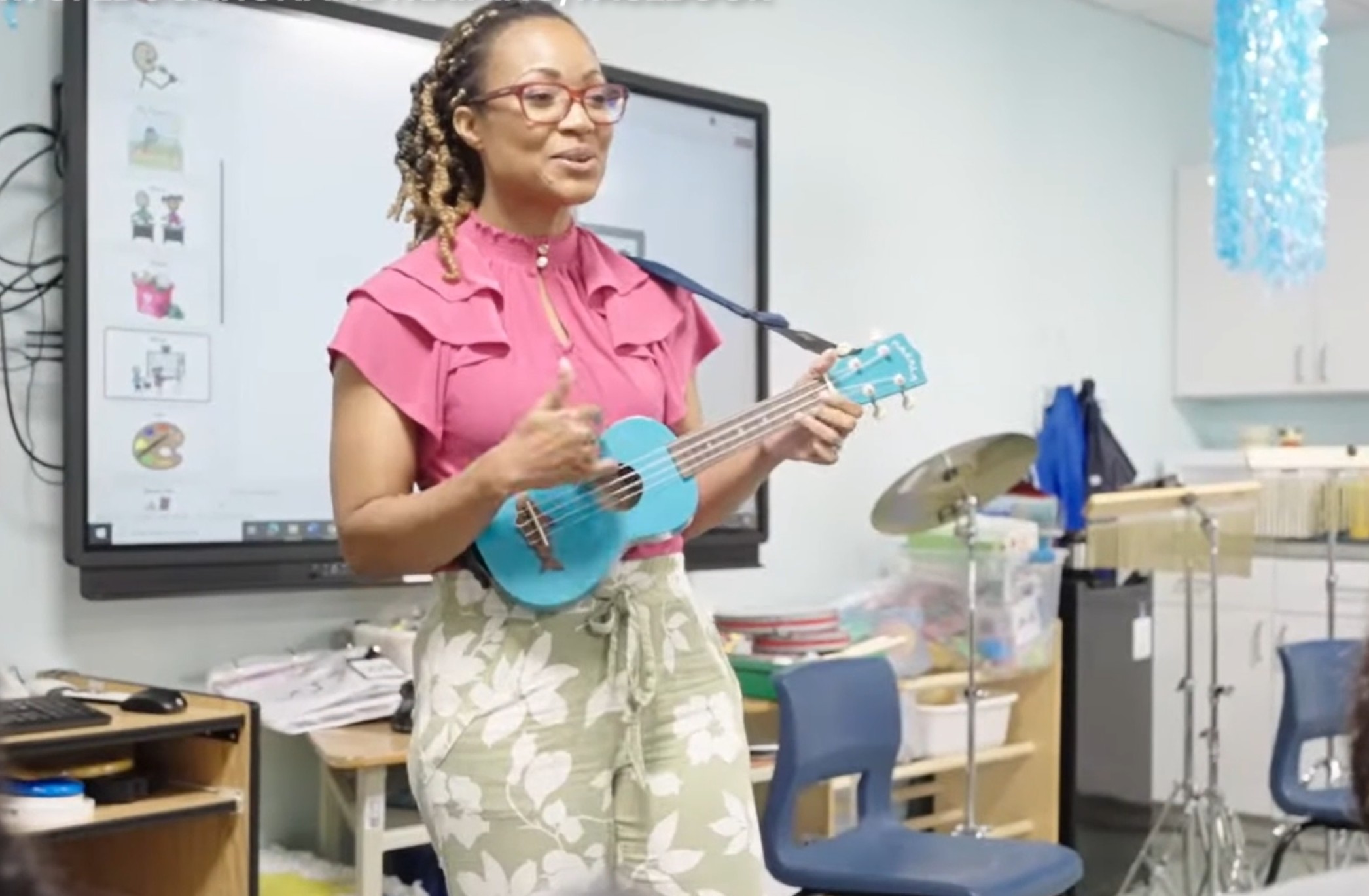
Specialists from the Department of Education Services say that music therapy can provide “powerful benefits” to support people who have specific challenges or who are going through difficult life stages.
Music therapist Georgi-Ann Morgan told Compass TV’s Daybreak on 13 May that while people often use music in their everyday lives, research has increased understanding of how music can have a significant impact on crucial parts of the nervous system.
Reducing stress and anxiety
“Music lights up multiple areas of the brain,” said Morgan, “so when we look at how we reduce stress, how we look at anxiety, how we think about regulation, using elements of music helps us understand things that are underlying when it comes to different mental health illnesses, or when it comes to looking at the different traumas and difficulties that we’re having”.
Fellow music therapist Kendra Bodden said that the benefits of music therapy were not age-specific and span all parts of people’s life journeys.
“Music therapists work with the [whole] lifespan,’” she said. “We work with early attachment with parents and neonatal wards, for instance, all the way up to dementia care with individuals with Alzheimer’s [disease]. We’re working with people with special needs, autism and intellectual disorders. We have individuals who’ve experienced trauma, anxiety, depression and ADHD. You’ll see music therapists everywhere, such as in hospitals, schools, prisons – anywhere where there’s a need that music therapy can meet.”

Music therapy offered by the Department of Education Services can take the form of individual sessions or working with groups, and specific goals are set after an initial assessment.
“A lot of it is improvised,” said Morgan. “With music therapy, you don’t necessarily have to know how to play an instrument. As therapists, of course, we’re trained, but we believe that the creative element and aspect that comes out through that trusting therapeutic relationship, can help build connections in different ways. Whether we’re dealing with pre-verbal, non-verbal or verbal students.”
Those connections come about by the music engaging with the brain in a physiological sense, she said, such as the pre-frontal cortex that governs executive functioning, focus and regulation, with the structure and elements of music, such as rhythm and timing.
“The combination works really well when we’re trying to target specific needs with ourselves or within other individuals,” she said.
Making connections
The reason that music therapy is different than just listening to music, said Morgan, “is because it’s within the context of a therapeutic relationship, with someone who can help bring perspective and connection from a theoretical background or through different processes.
“They can look at what might come up for you in the particular type of music that you’re listening to, in the music that we’re creating –what does it mean on different levels – and peeling back the layers”.
Morgan added, “The importance of past, present and where we want to go in the future plays a big role in the process of the therapy.”
To connect with Department of Education Services music therapists’ email m[email protected].
Related Videos