Cayman has eclipsed the US state of Delaware for formations of special entities set up to take over other companies, with US$11 billion worth of deals worked on last year, figures have shown.
Financial research site PitchBook logged a total of 63 special purpose acquisition companies (SPACs) formed in 2024 – 62 of them in Cayman and just one in Delaware.
Natalie Bell, a partner in the Cayman office of international law firm Ogier, said that the number of the special publicly traded companies, and ‘de-spacs’ – a company merger transaction involving a special purpose acquisition company, a buying entity and a target private business – had increased in Cayman because of legal changes in the US.
“The use of Cayman became more common after following the passing of the Inflation Reduction Act in the US, which imposed a 1% excise tax on redemptions,” Bell said.
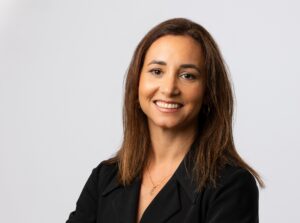
“The risk of the excise tax applying to SPAC redemptions triggered the move to incorporate more SPACs in Cayman or, in some cases, the [British Virgin Islands].”
Bell added that special purpose acquisition companies had seen a surge in popularity in the latter part of 2024 and into this year, which had helped boost the Cayman formations.
“Although the volume of SPAC initial public offerings is not nearly back to its peak of 2020 and 2021, with 248 and 613 respectively, there is a recent uptick in SPAC activity.
“Since Cayman is now the preferred jurisdiction for the formation of these vehicles, we are experiencing a surge in activity compared to recent years,” she said.
Cayman has traditionally been a common home for special purpose acquisition companies, but was generally used for potential business combinations outside the US, where advantage could be taken of ‘foreign private issuer’ status and more flexible ‘home country rules’ for corporate governance.
The jurisdiction was also used where the sponsor team came from outside the US, although Delaware was at the time the most common choice.
Bell added that a wave of special purpose acquisition company litigation followed the Delaware boom at the start of the decade.
Court cases imposed an ‘ultimate fairness test’ for the fiduciary duties of SPAC boards, because of the conflicts of interest existing for sponsor directors.
“As a consequence, sponsors have become wary of the risk of litigation in Delaware and insurance premiums for Delaware-domiciled SPAC entities have increased,” Bell said.
“Cayman, which applies the ‘business judgment rule’ and has cost awards in litigation, has become the preferred choice for domicile.”
She added that Delaware – considered an onshore tax haven in the US because of business-friendly laws and tax structure – had also suffered from other problems, such as a string of court decisions against start-up businesses and founders.
The US state was also hit by high-profile moves away by major companies such as Tesla, SpaceX, file-hosting service Dropbox and venture capital firm Andreessen Horowitz, as well as by competition from Texas and Nevada.
Ogier’s corporate teams in Cayman, BVI and Hong Kong have advised on special purpose acquisition company listings and de-SPAC deals worth a total of US$7 billion in the first half of 2025. The figure for the full year is expected to beat the US$11 billion worth of deals worked on last year.
Related Videos