Like so many other people who have experienced the joy of scuba diving in the Cayman Islands, Bob Kitchens from Colorado can’t praise it highly enough.
“Diving is addictive,” he said. “The more you do it, the more you want to do it.”
Unlike most other divers though, Kitchens is completely blind and paralysed from the waist down. He was driving home 14 years ago when another car ‘T-boned’ him, rolling his van and breaking his back. Blood and oxygen loss during emergency surgery caused him to lose the sight in both eyes.
Diving in Cayman Brac
Despite his disabilities, Kitchens was part of a group of 73 people who travelled to Cayman Brac in June this year to spend the week diving in the open water, an experience he described as “outstanding”.
It wasn’t only the deep relaxation and pleasure he felt from being immersed and weightless in the ocean, but the sense of connection he had with memories of diving with his father as a boy.
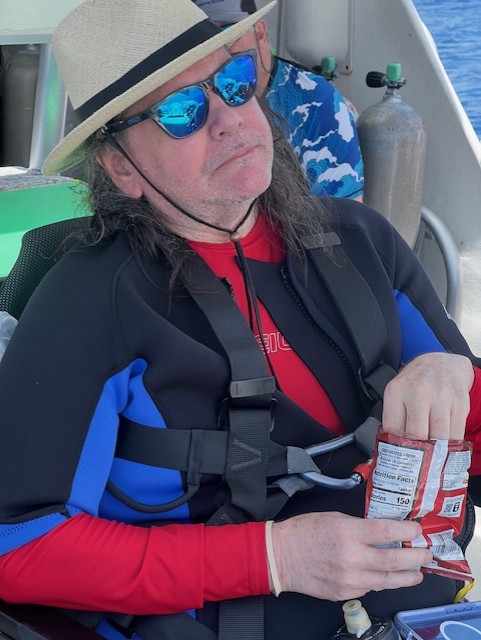
“I got my PADI qualification when I was 14 and I used to dive all the time with my father when he was stationed at the US Air Force base in Guam,” recalled Kitchens, who subsequently followed his father into the military.
“He is truly a hero to me and diving once again brought back memories of diving with him all those years ago.”
Back home, Kitchens, now in his sixties, was able to share pictures and videos of the trip with his elderly father, who also lives in Colorado, with the two of them being able to share diving memories once again.
Highlights of most people’s diving experiences are of seeing colourful fish and stunning coral formations underwater, so it might be hard to understand the joy and benefits of diving without sight.
But, Kitchens said, his recent diving holiday was “a great moment in my life. I could sit back and reflect and remember things which were in my past and which are now in my future.”
“If you’re looking for something that’s stress-relieving, diving produces what I call the ‘zen moment’,” he added.
“When you’re out there, the only thing you can hear is the ‘blub-blub-blub’ of your regulator and you can just sit there, in neutral buoyancy and enjoy the moment. It’s hard to say what that moment is, but I used to get that moment when I used to drive my motorcycle with my father or with my buddy.
“You ever see the dog hanging his head out of a window with his ears flapping? That’s the moment. It’s pure relaxation. Experiencing that moment is truly earth-shattering for me. You can’t beat it.”
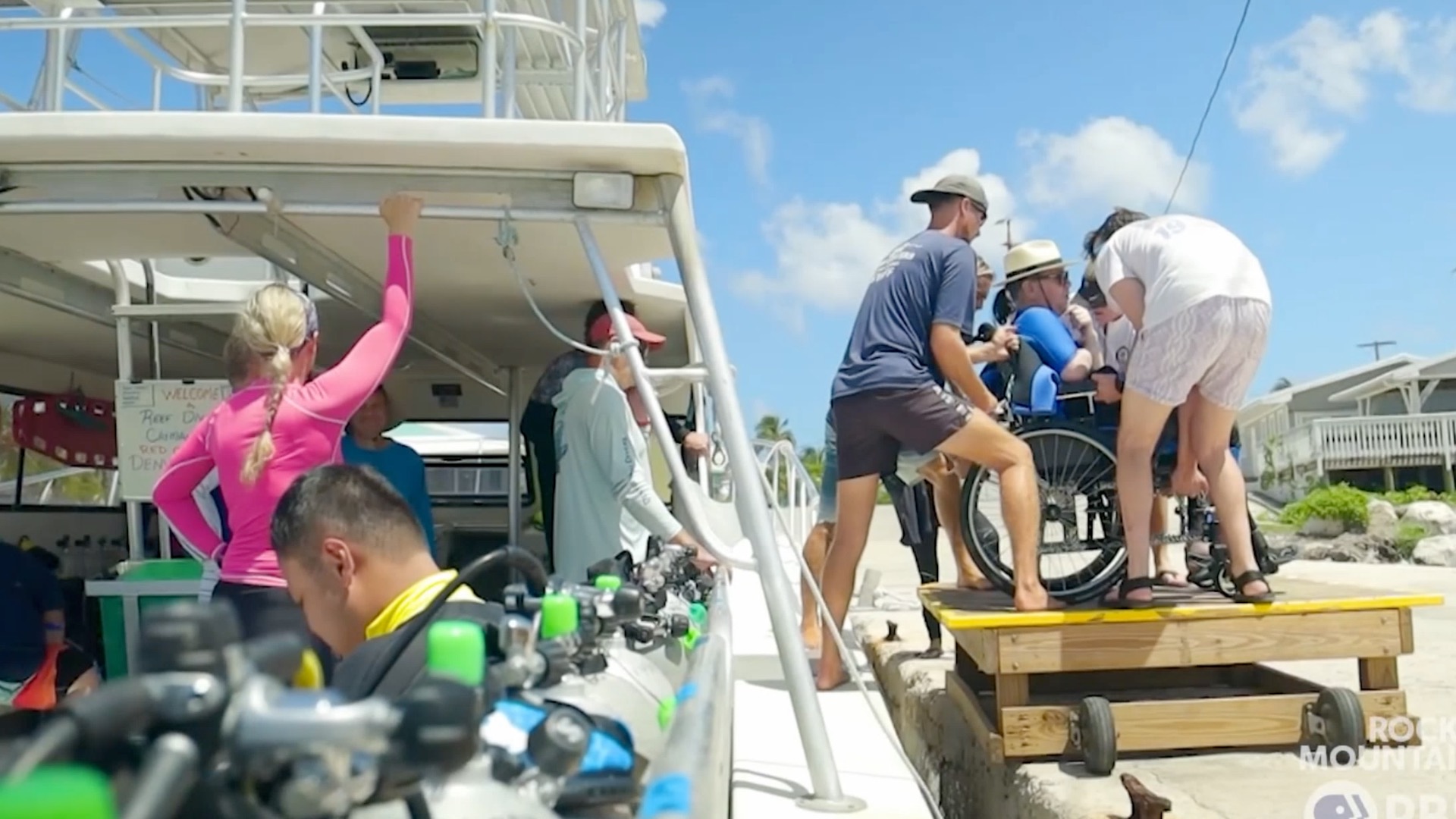
Kitchens was able to experience all of this thanks to Denver Adaptive Divers (DAD), an organisation that helps people with disabilities discover freedom of movement under the water through scuba diving. In June this year, DAD arranged for a group of 73 people, including 16 adaptive divers and their dive buddies, plus family members, caregivers, volunteers and sponsors, to stay for a week at the Cayman Brac Beach Resort, diving up to four times a day.
DAD was launched by Denver Divers, the oldest dive shop in Colorado.
John Sherman, a diving instructor at Denver Divers and executive director at DAD, explained, “A little over eight years ago, we wanted to give back to the community and one of the things that we obviously know how to do was teach scuba. So we took a look and said, let’s teach scuba, to those with physical disabilities initially, but we’ve expanded into some of the cognitive-related activities as well since.”
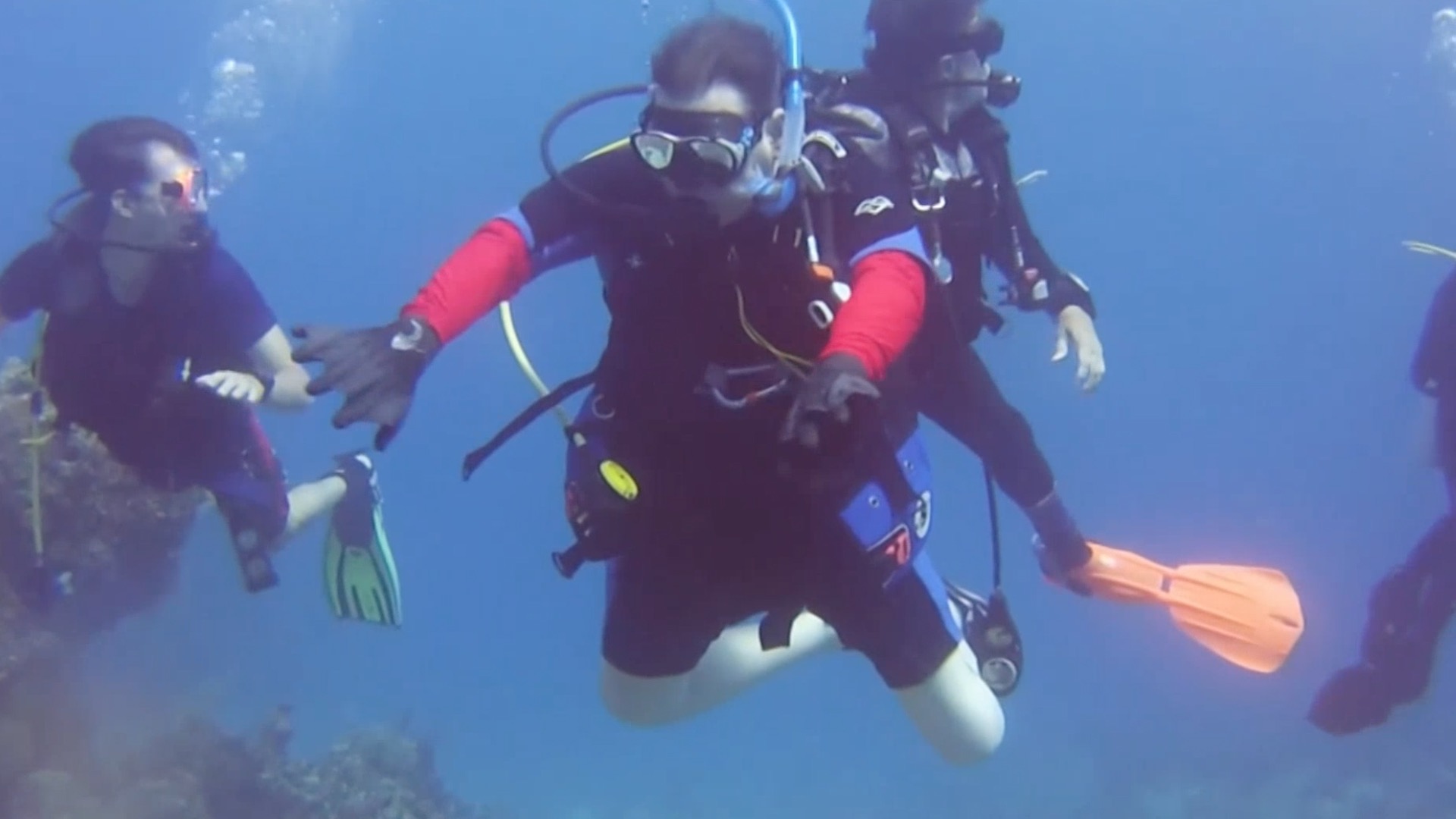
Sherman and his colleagues undertook extra training, so they could teach people with physical disabilities to dive and provide the additional support they might need in getting in and out of the water, as well as during the dive itself.
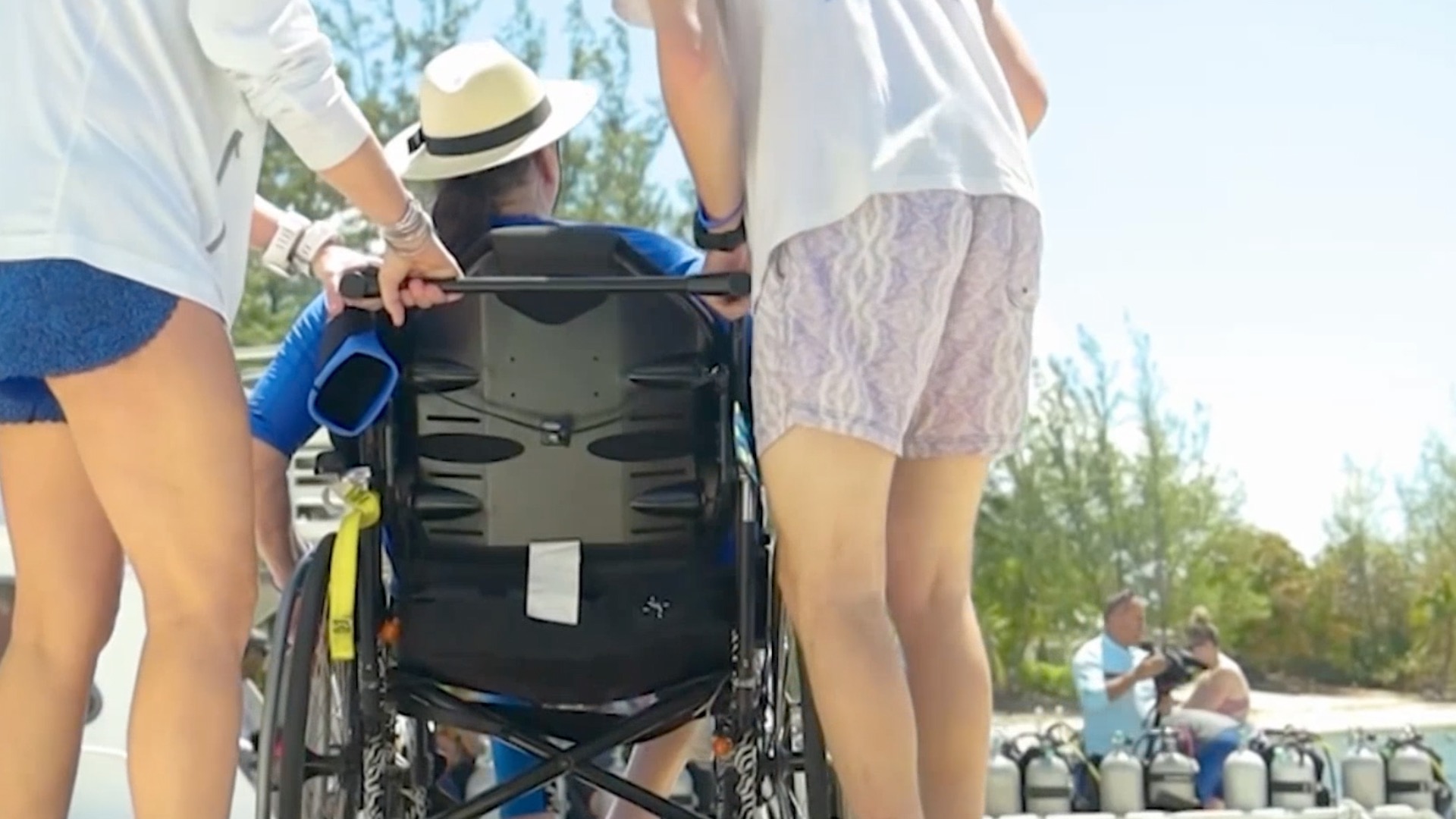
“In the case of spinal cord injuries, for example,” Sherman said, “we need to get people with their chair onto the boat and then get them from their chair to the back of the boat, where their diving gear is brought to them, and they get all strapped in.
“They’re then rolled forward into the arms of the instructor, who flips them over and then brings them upright and then helps them drop, controlling their buoyancy control device. In the case of Bob Kitchens, we had a team of three people to help get him down and move through the water and then we used a climbing harness to help him back onto the boat.”
Spreading the word
To reach out to people who could benefit from adaptive diving but might not know that it was even a possibility, Sherman started working with partners in Colorado, such as world-renowned rehabilitation centre Craig Hospital, Rocky Mountain MS Center and the Rocky Mountain Regional VA Medical Center for veterans, which is where Kitchens first learned about DAD’s work.
“We have worked with people with spinal cord injuries and degenerative spinal cord-related diseases,” Sherman said, “as well as amputees and blind people such as Bob Kitchens and we could work with hearing-impaired [people] as well.”
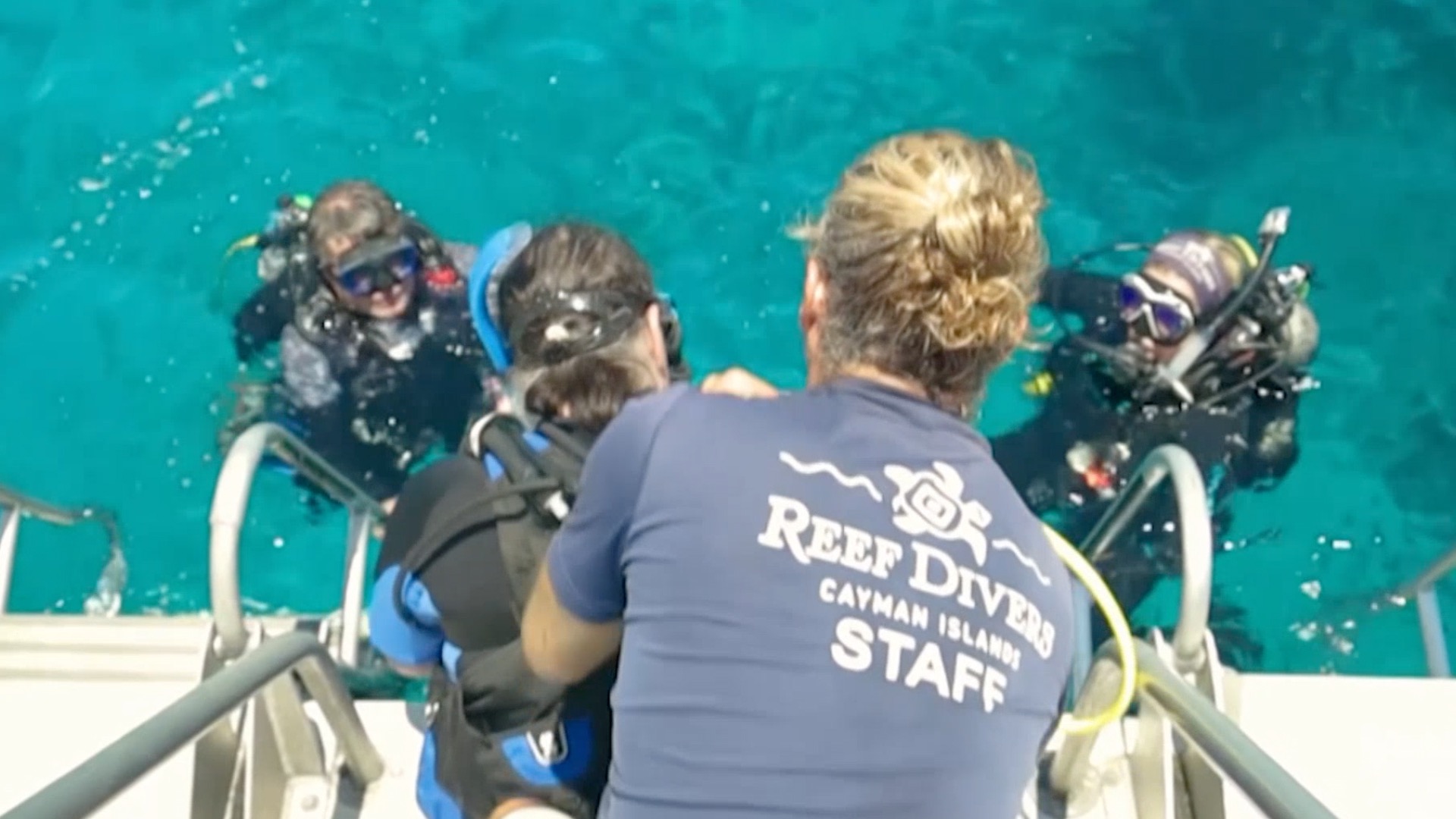
Kitchens hadn’t had a chance to dive in years before discovering DAD, said Sherman, asking rhetorically, “What can someone who is blind enjoy about diving? Diving isn’t just about what you see – although that’s a big part of it – it’s about the sensation, the feeling of weightlessness underneath the water. To Bob, it was about grabbing things from the past and feeling it again. It’s also about freedom.”
“Divers know that the minute you go underneath the water, you forget about everything above the water,” he said.
“You’re immersed in this world. And there’s a lot of relaxation and therapeutic value to that.”
Related Videos