

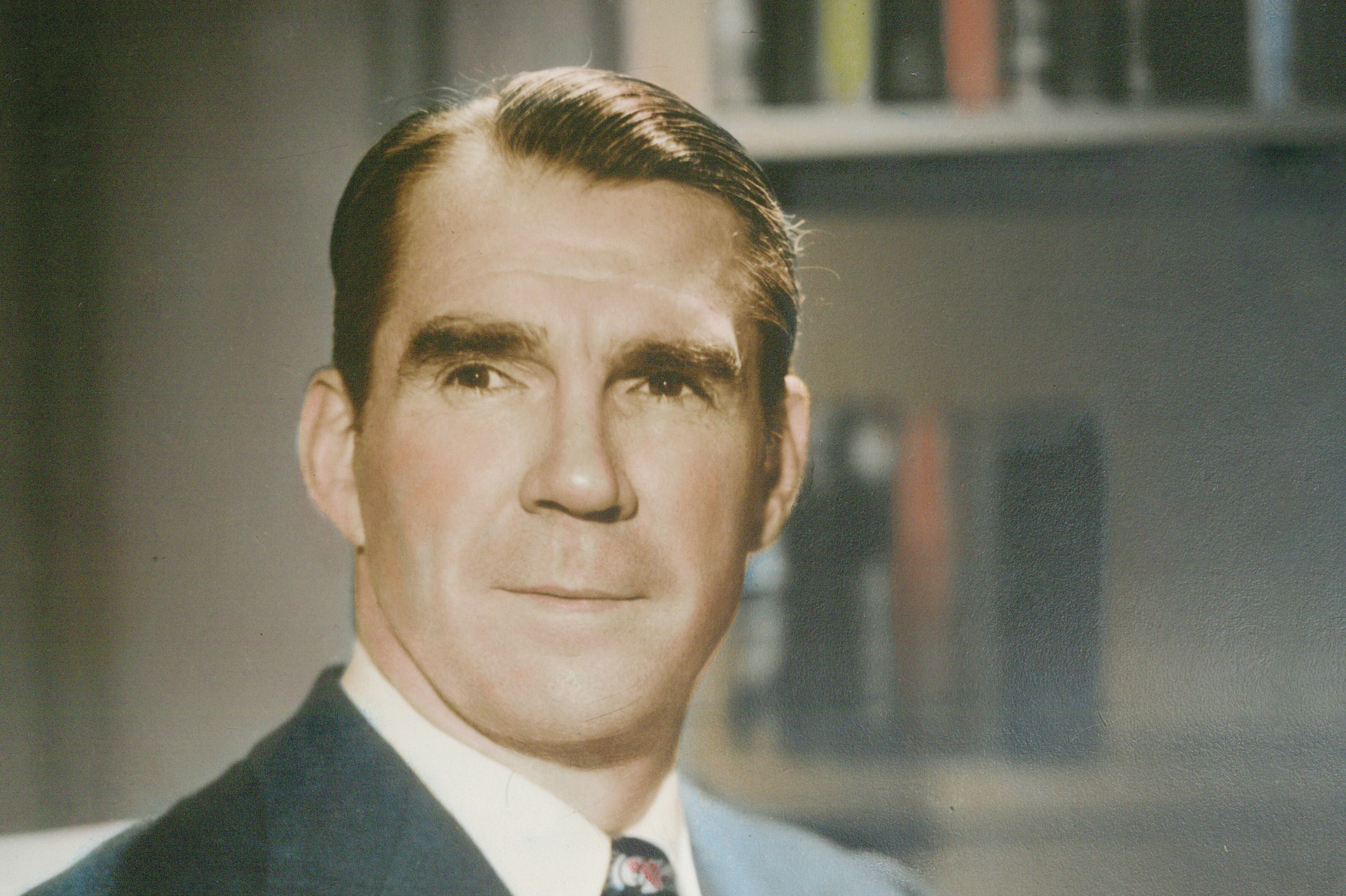
Daniel K. Ludwig and Gwendolyn ‘Miss Gwen’ Bush never met, yet together they mapped a maritime bridge between Cayman and the wider world.
Their lives intersected through Cayman’s seafarers. He built the ships; she sent the men. Together, they shaped generations of Caymanians who learned discipline, travelled the world and sent home the wages that sustained families.
Daniel K. Ludwig: Magnate of the seas
Daniel Keith Ludwig (1897–1992) remains one of shipping’s most mysterious figures. In 1982, he was listed by Forbes magazine as the richest man in America. Despite his wealth, he remained frugal: flying economy class, famously wearing the same plastic raincoat around Manhattan for years, walking to work, and owning only a 16-year-old Buick as a car when he died at age 95 in 1992.
Through his company, National Bulk Carriers, Ludwig built one of the largest privately-owned fleets in the world, spanning tankers, bulk carriers and passenger ships. At his peak, accurate public counts are elusive, but historians place him among the world’s major fleet owners, commanding “fifty-odd tankers and bulk carriers.”
Ludwig was known as “the father of the supertanker,'” and his obsession with scale was unrivalled at the time. In 1959, he commissioned the Universe Apollo, one of the first oil tankers to cross the 100,000-deadweight-ton threshold. At 104,500 long tons, it surpassed his earlier supertanker the Universe Leader.
To build such vessels, Ludwig leased Japan’s former Kure naval shipyard, a site once used to construct Imperial warships.
Though his fleet was vast, Ludwig himself remained private. Obituaries described him as “notoriously reclusive.”
For mid-20th century Cayman, seafaring was more than work. It was survival. With no financial services or tourism industry, families depended on remittances sent home by men who went to sea.
Ludwig’s tankers, bulk carriers, and passenger ships provided local opportunities. Shipping companies sent telegrams to George Town in search of crews. And that is where Miss Gwen became indispensable.
Miss Gwen: The Connector
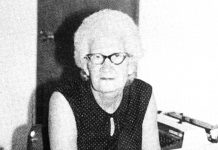
An earlier Compass article reveals that Miss Gwen never owned a passport. She never travelled overseas. Yet from her desk at Pan Carib Agencies in George Town, she became one of the most important figures in Cayman’s maritime story.
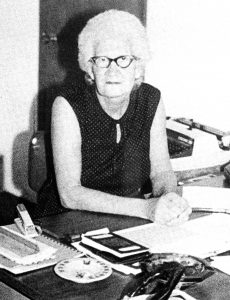
Working alongside A. Colin Panton, she managed the steady stream of telegrams from shipping companies. She recognised the names on the crew lists, knew their families, and knew their districts. When necessary, she would climb on her bicycle to track them down.
“Gwen would study the names of who was ‘called’. She invariably knew them and where they lived,” Panton later recalled.
She rarely missed a day at work. Over nearly 30 years, she helped ensure thousands of Caymanians reached ships that carried them to ports around the globe. When she died, almost 400 seafarers marched behind her casket — testimony to the love and respect Caymanian seamen had for Miss Gwen, and the reach of her work.
Her name lives on in the Gwen Bush Memorial Scholarship.
Voices of the Seafarers
For the men who went to sea, Miss Gwen was the link between Cayman and the world.
“Without Miss Gwen, plenty of us would never have made it. She was the one who called your name, who told your mother where you had to be, and when,” recalled Captain Andrew Ebanks in a Compass interview. “She never went abroad herself, but she sent half the island.”
Others remember the dignity of the work — and the hardship. “When you went on Ludwig’s tankers, you worked hard. But the pay was steady. That money built houses, sent children to school, and kept Cayman families afloat,” said former seafarer David Bodden.
These stories are echoed in households across the islands. The wages remitted from Ludwig’s ships were often the only cash income a family received. They built homes, paid for church pews, and gave younger generations opportunities their parents never had.
Ludwig’s Quiet Legacy
Though Ludwig never sought recognition, his impact outlived shipping. In 1971 he established the Ludwig Institute for Cancer Research. After his death in 1992, much of his fortune went to fund science. In 2014, his estate executed a $540 million donation to six top U.S. cancer centres, including Harvard, MIT and Johns Hopkins.
It remains one of the largest philanthropic gifts in medical history.
As former mariner Thomas Hydes put it, “The sea carried us out, but it also carried Cayman forward. Without those ships, without Miss Gwen, we would be a different country.”
The story of Ludwig and Miss Gwen shows how two unlikely figures: one a billionaire recluse, the other a small, but big-hearted Caymanian woman on a bicycle helped carry Caymanians across oceans and into the modern world.
Related Videos







This article is enlightening and sheds invaluable light on how important Cayman’s merchant seafaring history is to our culture…..for the benefit of younger generations and those who never grew up in Cayman. Big props to Miss Gwen’s role!
However, it excludes the crucial link between Mr. Ludwig and Miss Gwen…….one Mr. Merrill Southwell. Southwell was National Bulk Carrier’s personnel manager and recruiter.
Many Caymanians who sailed on Ludwig’s bulk carriers and tankers may have never heard of D. Ludwig, but they all heard of Southwell. To them, they were working for Southwell.
“Southwell” became part of Caymanian vernacular through the 1950s to 1970s. “He sailing for Southwell” was a common description of a man going to sea, as opposed to the traditional fisherman roles.
The late Consuelo Ebanks (Miss Gwen’s neice, btw) compiled a lovely coffee table book called “The Southwell Years” in recognition of local seamen who answered Mr. Southwell’s recruitment visits.
The Cayman merchant seafarer story is a proud part of Cayman’s history: from the mid 1800’s when Caymanians crewed whaling ships which ventured into the Arctic and Antarctic seas (Abraham Bodden of BT, among others), to the mid 1970s when the last of our young men made that rite of passage, including the very dangerous days of turtle fishing and living on uninhibited Cays.
Lord Mountbatten of India (Prince Phillip’s uncle) recruited Caymanian Capt. Dias to sail his personal yacht across the Atlantic. It says a lot when a scion of the world’s greatest naval power at the time, entrusted his own safety to a humble man from a virtually “unknown” island.