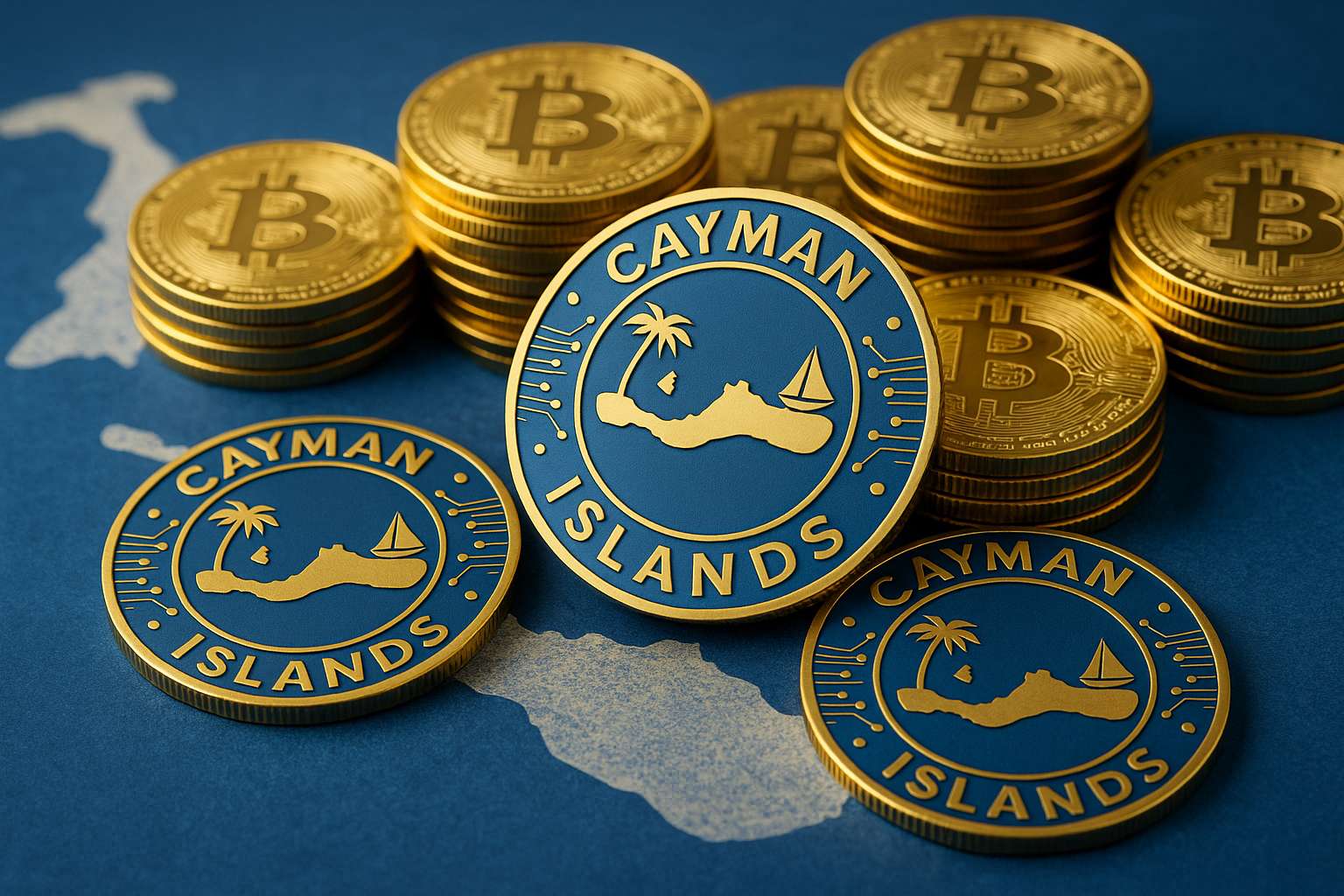
When Mike Silagadze shops at Foster’s supermarket, he pays in crypto.
As the CEO of EtherFi, he is able to use the Visa-backed credit card to swipe and sign for his groceries.
“This lets you use it in everyday life. It doesn’t need to be stuck in the digital realm,” he explained, brandishing the sleek indigo card his company has created.
The ability to buy bread with bitcoin is one everyday example of a much bigger story about the evolution of digital assets.
Once seen as a fringe experiment, dismissed by banks and feared by regulators, digital currency is slowly being folded into mainstream finance. And the Cayman Islands, where some old-school retailers still only take cash, is emerging as an unlikely hub for a growing cluster of firms driving that jump from the virtual world to the real one.
The new arrivals fall into three broad camps. There are companies within the TechCayman and Cayman Enterprise City special economic zones that are building alternatives to traditional banks. There are firms like Marfire and Hash Directors that extend the islands’ hedge-fund governance model into the digital space. And there are big fish like Bullish and its parent company Block.one, which have chosen Cayman as the legal and physical headquarters for global portfolios of crypto ventures.
A mix of ambition and caution is shaping how Cayman positions itself. The potential prize is a new pillar of the economy. But there is risk too. Having only recently worked its way off the Financial Action Task Force’s grey list, the jurisdiction is wary of fresh scrutiny over money laundering and cybercrime.
Government has moved swiftly with a slew of new laws and regulations to protect consumers and safeguard the jurisdiction’s reputation. Industry leaders characterised Cayman’s step into the world of virtual assets as a cautious, relatively small stakes play, with more upside than risk.
They argue that a well-regulated virtual assets industry not only gives Cayman the chance to grow its economy, but it is also a hedge against its decline.
As the overseas funds that form the islands’ dominant client base become increasingly engaged in the digital economy, Cayman needs to ensure it has the expertise and the legal frameworks to meet that demand.
Through the crypto looking glass
A recent event at the George Town Yacht Club was billed as a ‘back to basics’ on crypto. But, for the uninitiated, it was a jarring fall through the looking glass into a world with its own language and customs. It’s like arriving at a Star Trek convention or a Dungeons and Dragons game with no frame of reference for the intense discussion under way.
Words like fiat (actually just regular money), TradFi (traditional finance), soft wallets and ‘custodians of the seed phrases’ are brandished with casual familiarity. It’s a daunting environment for those who came for the ‘101’.
But once fluent in the jargon, you’re “on-chain” – not just plugged into the blockchain that records transactions but into a mindset reimagining what money can be.
Panellist Patrick Mulrenan, director of FFP, likened the current stage of digital assets to the music industry before iTunes.
He compared traditional banking to the serviceable but “clunky and outdated” cassettes and CDs.
“Right now, we’re in our ‘Napster’ era. We’ve seen MP3 players, but we don’t yet know what the Spotify or the iTunes moment will look like – the killer app that makes this mainstream.”

All panellists agreed that the big change over the past 18 months has been the arrival of institutions, which have turned digital assets from an outsider experiment into a mainstream project.
“If you’re not doing it, you’re a fax machine,” Mulrenan added, “Everyone wants to do it right, and to be regulated. And Cayman is a very good jurisdiction for that.”
A sense of optimism ran through the discussion. Stablecoins – dollar-pegged digital tokens – were highlighted as the “bridge” that is bringing real-world-use cases like remittances, bill payments and cross-border settlement within reach.
What makes Cayman stand out, according to Sarah Wheeler, a director of Marfire and one of the panellists, is not a promise of regulatory laxity but the opposite – a clear, pragmatic framework that attracts firms looking to build in a legitimate way.
The demand, she said, is not for looser rules, but for stronger ones.
Another panellist, Sarah Howie, counsel for Conyers, said Cayman’s virtual asset service providers (VASP) model is driving business to the island.
“We’re seeing an uplift in enquiries, people being interested in actually having regulated and licensed VASPs. So I think that speaks really strongly for anyone as a jurisdiction that people are seeing as a place where they want to be.”
A mini Silicon Valley for fintech
A space leased through Cayman Enterprise Citty on the upper floors of Strathvale House on the George Town waterfront has the feel of an early dot-com office. Programmers in baseball caps scrawl equations across whiteboards and work late into the night on the next big thing in finance.
For Ledn, a Canadian-founded digital finance firm, the attraction of Cayman was as much about regulation as lifestyle.
“The reason we moved our headquarters down here is that Cayman put forward one of the best regulatory frameworks for our industry and for digital assets in general,” said Mauricio Di Bartolomeo, one of the company founders.

In Canada and the US, at that time, he said, there was no such clarity. Even access banking was a challenge.
That frustration is widely described in the industry as ‘Operation Chokepoint’, a perceived campaign by US and Canadian regulators and banks to push crypto-related firms out.
In Cayman, he said, they had found the opposite experience – a welcoming environment that came with the credibility of a mature financial centre.
The landscape has shifted dramatically in North America in recent years, but Cayman remains an attractive place to do business and companies that started here feel a sense of loyalty.
Ledn is now considered one of the more established players in the space, providing Bitcoin-backed loans at favourable rates.
“We want to bring the same ease of use and accessibility for financial services on Bitcoin and stablecoins as exists with traditional banking,” said Di Bartolomeo.
From virtual to real-world-use cases
Like his peers at Ledn, EtherFi’s Silagadze says regulation is not a burden, but a draw.
“At the time we started the business, the regulatory environment in Canada and the US was very murky. Here in Cayman, there is a lot more clarity.”
Based in Cayman, ether.fi is a crypto banking platform that lets users earn higher returns on digital assets while maintaining full control and spending them like regular money through a Visa card.

It also allows users to borrow against their crypto portfolio, earn yields and make everyday purchases without selling their investments.
For Silagadze, the goal is to take crypto out of the speculative realm and make it part of everyday life.
“There are a few businesses now thinking in the same way. This is something that creates an option to create a viable alternative to traditional banking,” he said.
It’s a transition that is happening globally and a growing number of Cayman companies are at the forefront.
Charles Kirkconnell, CEO of Cayman Enterprise City, said there are currently 125 crypto or virtual asset companies within the special economic zone, which he said was helping position Cayman as a hub for fintech and blockchain innovation.
“We expect continued growth in the number of virtual asset and fintech companies establishing a Cayman Islands presence, likely driven by institutional adoption and regulatory clarity,” he said.
“Cayman is well-positioned to lead in this space, and CEC will continue to support companies shaping the future of fintech.”
TechCayman has a similar ambition, bringing innovative start-ups to Cayman and pitching the jurisdiction as a place to build their businesses – not just establish a legal presence.
Jennifer McCarthy, head of client services and operations, said the ‘founders programme’ provides investment, hands-on support and office space to help start-ups through the early stages with the critical advantage of domiciling their intellectual property on island.
“We want innovative founders to build in Cayman, not just register here,” she said. “When IP, leadership and teams sit on island, Cayman gains real substance in the forms of jobs, mentorship and genuine knowledge transfer into the community.”
TradFi goes digital
While some firms in Enterprise City and TechCayman are building new products for the crypto economy, Marfire represents something different – an extension of Cayman’s traditional financial services into the digital space.
Marfire director Wheeler described it as a natural evolution. Cayman already supplies independent directors and governance services for hedge funds and private equity.

Edward Noyons, managing director at Marfire, said the same needs are emerging in the virtual asset sector.
“If more and more of these companies are going to come here,” he said, “at some point, they’re going to need directors, much like the existing hedge fund industry has, but directors who have extensive knowledge around crypto.”
The company provides directors who sit on the boards of crypto foundations and funds, build policies and controls, and provide strategic oversight without running the day-to-day business. Sister firms complete the package. ‘Autonomous’ handles administration and token operations, while ‘Architech’ advises on token design.
It is important, says Noyons, that Cayman keeps pace with what is happening globally with its core customer base – not just to grow its economy but to avoid losing business to other jurisdictions.

Risk management remains central, and Wheeler points to her former role as head of the Anti-Money Laundering Division at the Cayman Islands Monetary Authority as pivotal in providing reassurance to Marfire’s clients.
She said Cayman’s lawmakers and regulators had moved swiftly to make the jurisdiction both a safe place to do business and one that protects its reputation against threats. The challenge, she acknowledged, will be keeping pace with the rapid evolution of the digital assets space.
“We all want the jurisdiction to be the gold standard,” Wheeler said.
Guardrails for growth
Premier and Financial Services Minister André Ebanks shares that ambition. He said Cayman has worked hard to provide a well-regulated space for virtual asset service providers that want to come here.
The next regulatory step is to update legislation to allow for funds that use blockchain technology.
Blockchain – the underpinning digital ‘ledger’ that provides a secure record of transactions – is increasingly being used by traditional funds as a means to register shareholdings.
And Cayman has currently put out for consultation some legal changes that would clarify the rules around how funds registered in Cayman use that token-based technology.
“It is a simple but important change because a new technology is beginning to dominate,” Ebanks said.

The approach to virtual asset service providers is more involved, he said, and Cayman has already passed legislation aimed at allowing those businesses to prosper within defined guidelines.
“Virtual assets is more of the future – digital payments, cryptocurrencies. So we have taken a very deliberate approach to this, because there are risks … There are famous examples in the region where it has gone spectacularly wrong,” he said, alluding to the collapse of Bahamas-headquartered crypto exchange FTX.
“We can’t afford, with our reputation that we’ve worked so hard to build, to take an unnecessary chance. Where we’re going is to see where these new technologies align with our traditional financial services and ensure that the regulator knows how to police them so we build it in a prudent fashion.”
That requires resources and constant vigilance.
The premier added, “I feel for the virtual assets division because they’re dealing with a technology that can change daily, and they’re trying to keep up with it.
“We have to ensure, going forward, that they have the staff complement that they need, and that we as a country make policy decisions of which areas of business we’re willing to take on board that we feel that we can appropriately regulate.”
In the end, Ebanks argued, the issue is not just about crypto but Cayman’s place in a fast-changing financial world.
He goes back to the evolution of the entertainment industry for an appropriate metaphor.
“If we stick with Blockbuster while other countries use Netflix, we’ll get left behind.”
Related Videos