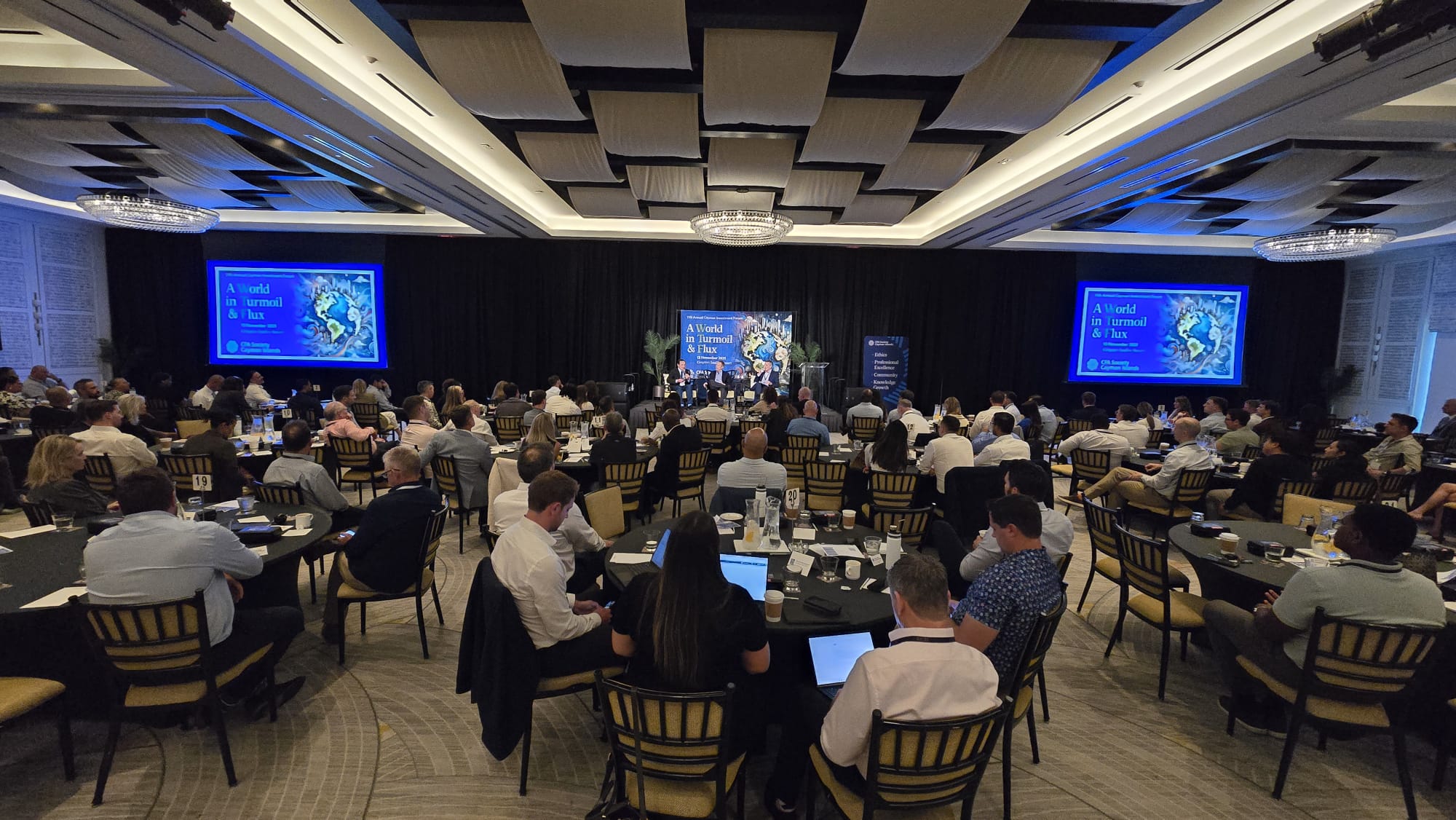
Quantum computing, world demographics and geopolitics dominated the 11th annual Cayman Investment Forum, hosted by the CFA Society Cayman Islands on 13 Nov.
The conference didn’t focus on typical financial fare but instead shone the spotlight on some of the lesser-understood big themes that could remake our world in the coming decades.
“We want to provide thought-provoking concepts and ideas for our members,” explained society member and local organiser, Simon Cawdery, who is also a director at HLX Management. “Many of the topics and ideas may not yet be on people’s radars but very much should be as they will be impacting everyone’s lives over the next few years.”
Held at Kimpton Seafire Resort + Spa, the international lineup of speakers included Neil Howe, a demographic expert and author, who coined the term millennial; Shohini Ghose, a quantum physicist and professor that serves as the chief technology officer at Canada’s Quantum Algorithms Institute; Juliet Schor, an economist, sociologist and author of the US bestseller ‘The Overworked American: The Unexpected Decline of Leisure’; and John Sitilides, a geopolitics consultant who has advised US governments.
More powerful computers but fewer people
One of the most-startling takeaways to come from Ghose’s in-depth explanation of quantum computing was that it has the potential to undermine blockchain technologies like cryptocurrencies.
To paraphrase Ghose, most blockchain technologies rely on cryptography which is designed to be secure against classical computers. But a quantum computer could unlock those codes far more quickly, allowing a hacker to forge transactions, steal funds or even rewrite parts of the blockchain, undermining the system’s integrity and trust model.
The same computer would also be able to quickly crack online passwords. Sufficiently powerful quantum computers don’t yet exist but with AI potentially able to speed up quantum computing development, their arrival could come sooner than some expect, warned Ghose.
Meanwhile, Howe cautioned that dwindling populations, especially in East Asian countries like South Korea, could lead to conflict in the future. Noting that “history doesn’t tend to like a vacuum”, he suggested that countries with rapid population decreases may face competition or even invasion from more populous peers.
Cayman in the era of big power competition
The final speaker was Sitilides, who warned that tensions between the US and China are set to increase.
“Unfortunately, we are set on a path of heightened US-China competition,” he said. China’s “literature speaks of becoming a world-class power equal to or surpassing the US by 2049, the centenary of the Communist takeover.”
There are two ways that Sitilides foresees this could impact Cayman. “Like any geopolitically-neutral global financial centre, the Cayman Islands might find things more difficult if the US or China forces it to take sides,” he said.
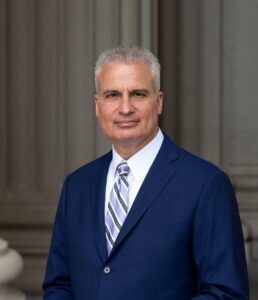
“If the US were to perceive that Cayman’s financial centre was helping to aid the flow of capital to the Chinese military, or to a particularly strategic technology, then [the US] might clamp down on that.”
Another, more severe, impact would come if there were tensions in Taiwan. In his presentation, Sitilides forecast that even a Chinese blockade of Taiwan would produce a hit to global GDP similar to the great financial crisis, while a full-blown conflict would have a more significant economic impact than even the COVID pandemic.
But it’s not all doom and gloom. Sitilides also noted that US attempts to restructure the global refining industry would need huge amounts of international capital. “This will be an investment opportunity not in the hundreds of billions but probably exceeding a trillion dollars over the next decade,” he said.
If that happens, Cayman would be an obvious and efficient conduit for the new investment.
Related Videos