

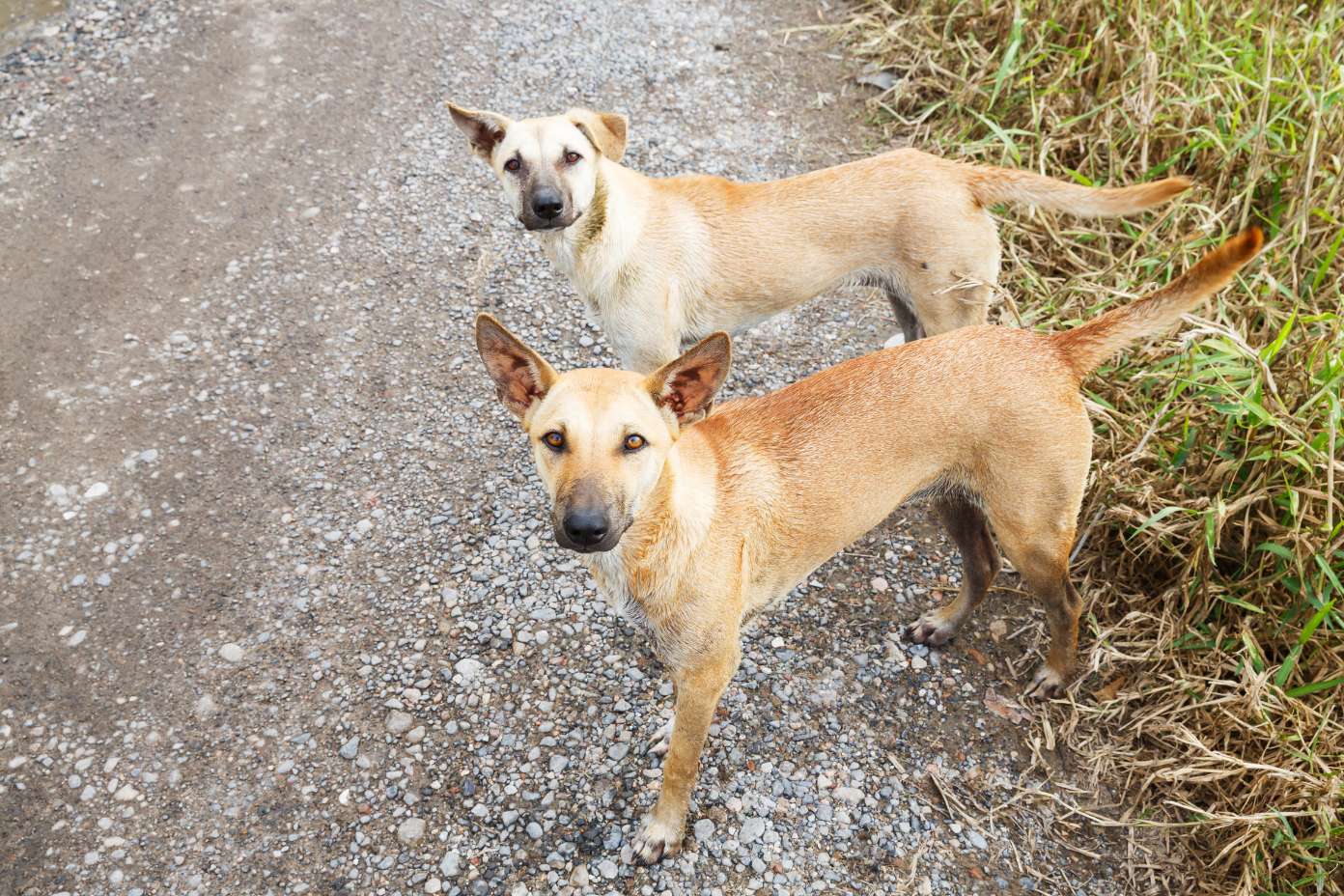
Animal rescue charity One Dog at a Time says it is seeing a troubling rise in dogs that appear to have been abandoned, with growing numbers picked up from the streets and never claimed.
The foster-based organisation has already rescued 224 dogs this year and currently has 64 in its care, including 15 in foster-to-adopt placements. Since January, 71 dogs have been adopted on island and 98 flown overseas to rescue partners and adopters.
Despite the steady outflow, arrivals show no sign of slowing. The charity has an average monthly veterinary bill of about $11,000 and says it ends each year with roughly the same number of dogs it started with – not because demand has stabilised, but because new cases constantly replace those rehomed, particularly at the moment.
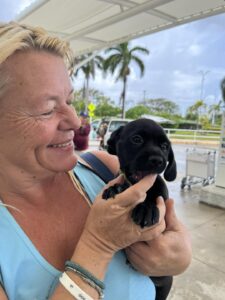
“We are seeing more dogs wandering that aren’t claimed,” said Caroline Johnston, president of One Dog At A Time.
“We share photos, names get suggested in the comments, friends speak on behalf of owners – and then the owners deny having the dog, say they already gave it away or admit they don’t want it back because the dog keeps escaping.”
Johnston said that many of the dogs being rescued are older animals in poor condition, suffering from heartworm, mange, skin infections, untreated injuries or malnutrition. It is uncertain whether animals were abandoned when illness set in or as the costs mounted.
She added that financial strain in the lead-up to the holiday season may also be pushing more owners to let pets go.
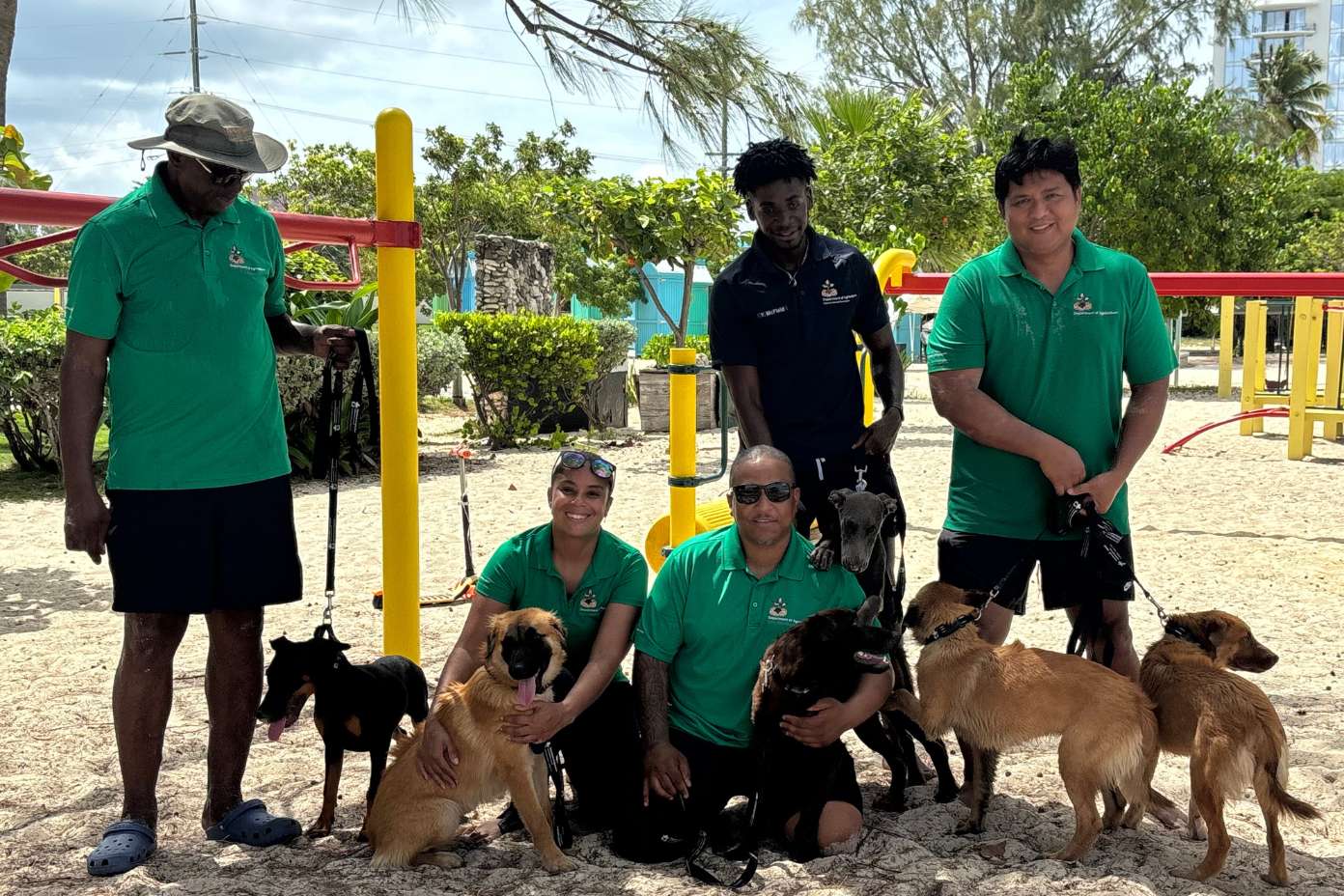
Department of Agriculture confirms increase
The Department of Agriculture confirmed the charity’s observations that stray dog numbers are rising, attributing the increase to a mix of travelling pet owners and unplanned breeding.
Senior animal welfare officer Erik Bodden said the pattern is seasonal and is most evident between the months of August and January, when dogs are more likely to roam as females come into heat.
“We are seeing an uptick in stray animals,” he said. “This time of year plays a big role. Dogs go into heat, more animals are moving around and there are more disturbances and fights being reported in communities.”
Bodden said many animals are never reclaimed because owners do not realise that missing pets should be reported to their local police station, leaving dogs untraceable even when they are picked up.
Increased travel during the latter months of the year, he added, is another recurring factor, with cases each year of dogs effectively being left behind when owners go overseas.
“A lot of people are travelling and animals end up at the mercy of the community,” he said. “We are urging anyone who is going away to use proper boarding facilities rather than leaving pets unsecured.”
Fireworks can also turn owned dogs into apparent strays overnight. Loud explosions often cause animals to panic and break free from chains or fencing, sending them running through neighbourhoods.
While he declined to comment directly on whether financial pressures are contributing to abandonment, Bodden said the department’s “surrender your animal” service has seen increased use since the pandemic, as more owners struggle with the cost of veterinary care, food and appropriate housing for their pets.
The department and One Dog at a Time both said that the long-term answer lies in prevention – spaying and neutering, microchipping, responsible rehoming and better planning for pets when owners travel or face hardship.
As part of that effort, the Department of Agriculture will host a holiday microchipping clinic on Saturday, 13 Dec., at the Rabies Vaccination Clinic on Agricola Drive, from 8am to noon. Chips will cost $10 and animal welfare officers will be on site to offer guidance on responsible care, with officials warning that fireworks, visitors and disrupted routines over Christmas are peak conditions for pets to go missing.
Bodden said that, without intervention, the cycle will continue: “Unfixed animals attract each other when females are in heat. That’s when the dog fighting starts, neighbours complain, and more animals end up reported or collected.”
‘Every time one dog leaves our care, more take its place’
For One Dog at a Time, the numbers tell a story that volunteers already know too well: Cayman’s rescue system is stretching to its limits.
“We are rescuing about 30 dogs a month,” Johnston said. “But the flow never really slows. Every time one dog leaves our care, more take its place. Right now, we are at financial capacity. Without more donations, we simply will not be able to keep up with the demand.”
Those interested in meeting dogs in the charity’s care or donating can email [email protected], donate towards ‘One Dog at a Time’ at the Vetinerary Clinic in Savannah, or give directly via Butterfield’s online portal under charities.
The group said adoptions include a meet-and-greet, home check and trial ‘sleepover’, with minimum donations of $250 for puppies and small dogs and $100 for adults, with all vaccinations, spay/neuter, deworming and medical care, including heartworm treatment, covered by the charity.
The Department of Agriculture is also encouraging members of the public to consider adoption in the lead-up to Christmas, as it works to place as many dogs as possible into permanent homes. The Animal Pound at 135 Agricola Drive in Lower Valley is open to visitors Monday to Friday from 12-1pm and 3:30-4:30pm. Enquiries can also be made by calling 947-3090 or emailing [email protected].
Related Videos







What, exactly, did the Department of Agriculture expect when they stopped the “Spay and Release” programme???
Stray animals isn’t a new concept on Cayman, or any other island. I’ve mentioned many times that the responsibility lies with the owner. They neither spay nor neuter their animals. They are discarded and neglected like trash. Euthanizing animals isn’t the answer, if we are to believe we are humane beings. So called back yard breeders, I use this term very loosely, haven’t any idea the damage they are doing to the animals. So, who is going to attempt to alleviate this problem. Doesn’t seem anyone is addressing it. Please spay and neuter your animals. Don’t have them, if you can’t be responsible for them. The Humane Society can only do so much. Wake up