The head of Health City Cayman Islands’ sleep lab warns that sleep disorders may be significantly under diagnosed in the Cayman Islands, with severe implications for other chronic health conditions existing on-island like obesity, hypertension, diabetes and mental illness.
Dr. Archita Joshi-Bhatt, consultant in pulmonology, critical care and sleep medicine at Health City Cayman Islands, estimates that as many as one in three Cayman residents may be living with an undiagnosed sleep disorder, including sleep apnea, insomnia, narcolepsy and sleep-related movement disorders.
According to the International Classification of Sleep Disorders, insufficient sleep is defined as a long-term pattern of curtailed sleep lasting at least three months on most days of the week and accompanied by daytime sleepiness.
“For the number of people we have, it’s a big problem,” said Joshi-Bhatt, noting that her team has assessed 2,029 patients since the sleep lab at Health City opened its doors in 2015. Most are local residents referred by primary-care physicians or presenting with symptoms directly.
Of those assessed, 946 were female and 1,083 were male. Just over a quarter were between the ages of 41 and 50, and just under a quarter were between 50 and 60. The clinic reports that 84% of all patients have been between the ages of 30 and 70.
High burden, low awareness
Joshi-Bhatt said that many patients do not typically recognise their symptoms as a medical problem. Snoring, chronic fatigue, poor concentration and repeated nighttime awakenings are often dismissed as normal, cultural or lifestyle related.
“We have patients come in through various routes,” she explained. “A lot of times, we internally identify people who come in for another ailment or concern, and they might say something like, ‘Oh, and by the way, I don’t sleep well, and my wife is always complaining I’m snoring,’ and it’s connected to their other symptoms. It’s connected to their underlying health-related issues.”
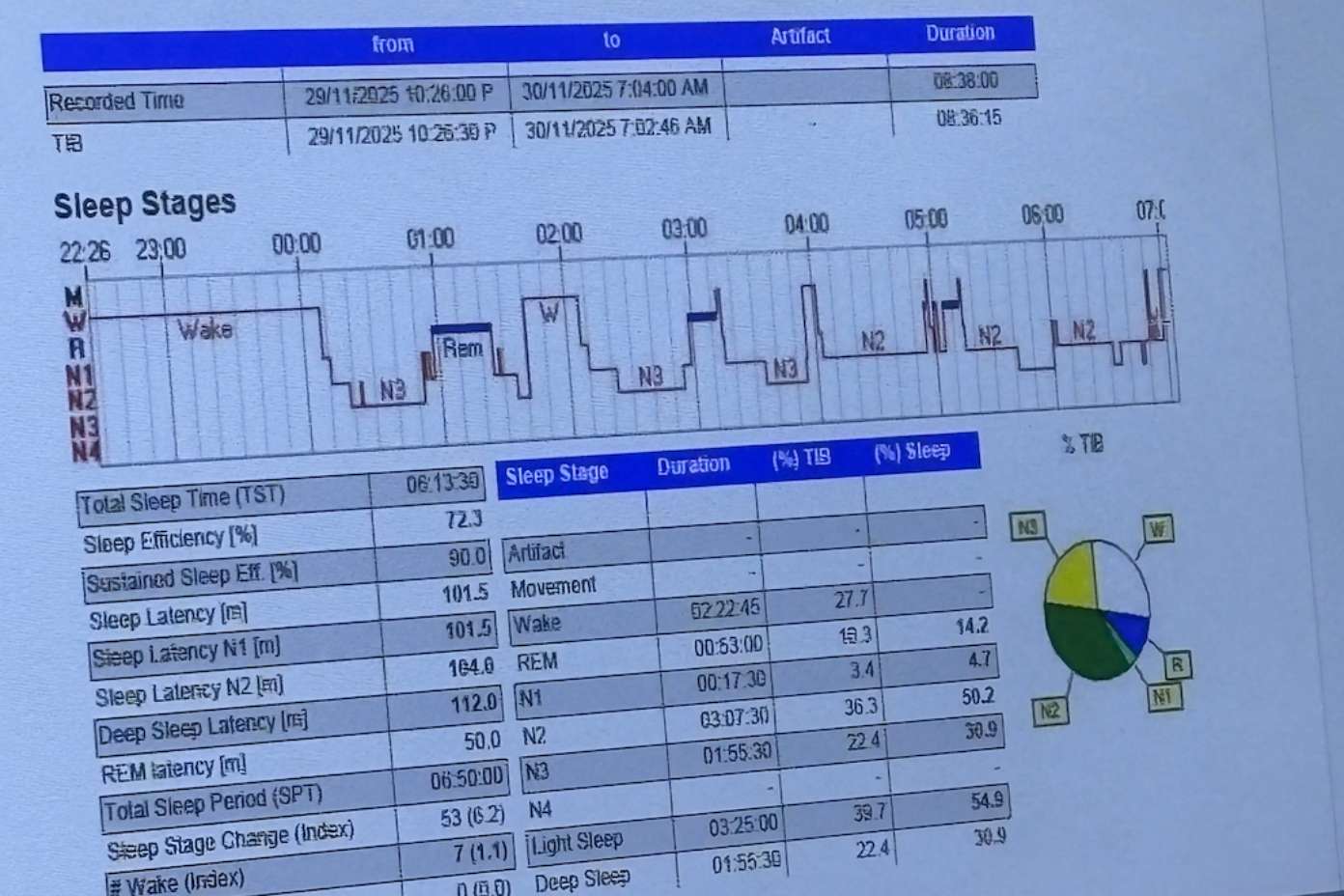
She added that one of the most persistent misconceptions is that snoring is harmless. “People say, ‘I sleep very well; I snore all night.’ It’s not normal,” she said. “Many do not realise they stop breathing during sleep or that their oxygen levels are falling to dangerous levels.”
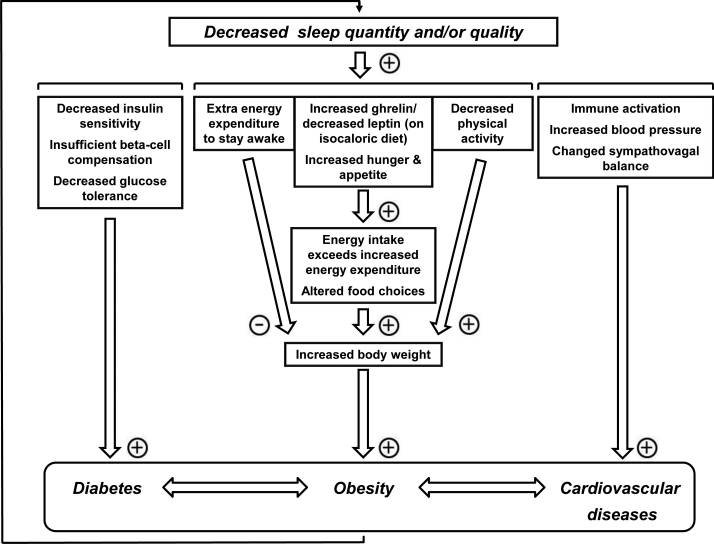
Sleep is central to metabolic regulation, energy balance and overall health, and clinicians warn that untreated sleep disorders contribute directly to Cayman’s high burden of non-communicable diseases. Repeated oxygen drops and stress responses during sleep can cause spikes in blood pressure, blood sugar, stress hormones and inflammation.
Untreated conditions are linked to obesity, hypertension, type 2 diabetes, cardiovascular disease including heart attack and stroke, mental illness, neurodegenerative disorders and an increased risk of motor-vehicle accidents.
International research shows that persistently poor sleepers can face up to a 40% higher risk of obesity, a 30% higher likelihood of developing type 2 diabetes, and a 45% increase in the odds of developing or dying from cardiovascular disease.
The Health City sleep lab has documented oxygen drops as low as 50–60% in severe cases of sleep apnea – levels they describe as life-threatening. The team has also treated patients on multiple blood-pressure medications who saw improved control once their sleep disorders were addressed.
“Sleep medicine is truly preventive medicine,” Joshi-Bhatt said. “We can prevent so many things from happening later down the line if only we sleep better or address sleep-related problems earlier.”
Cayman’s first full sleep lab
Before Health City launched its sleep lab, in-lab diagnostic options were limited. The Cayman Islands Hospital offered home-based studies, but there was no facility capable of conducting full polysomnography or complex diagnostic evaluations.
Joshi-Bhatt identified the gap almost immediately after arriving in 2014.
“We saw a large burden of sleep-related issues, especially connected to obesity, high blood pressure, diabetes and cardiac problems,” she said. But there were few structured services available.
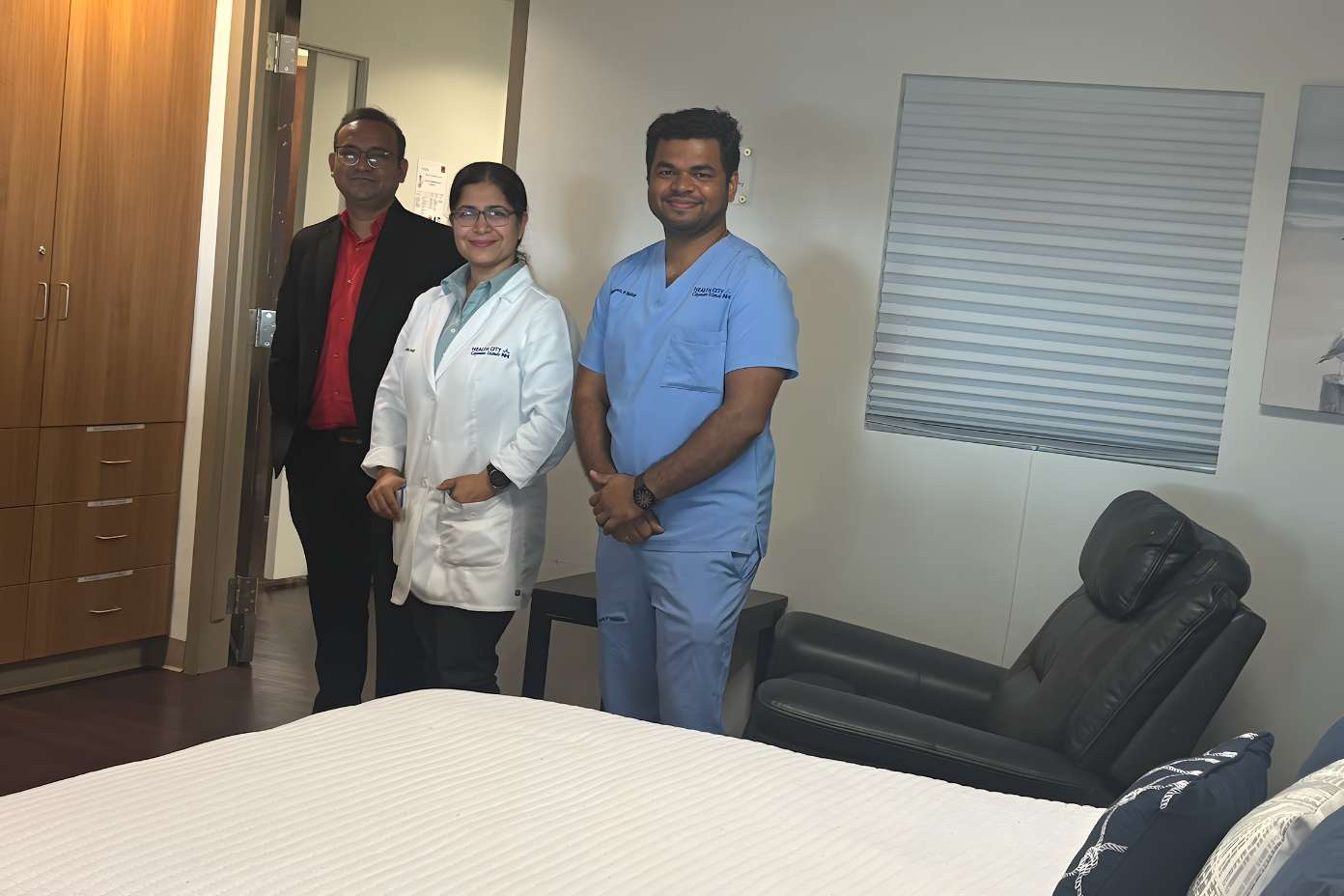
The lab is now operated by a three-person team: Dr. Joshi-Bhatt, sleep technologist Dr. Deepesh Vaidya and sleep technician Mangesh Naskar. Together they run overnight studies analysing 22 parameters of real-time data, including brain activity, airflow, oxygen levels, respiratory effort, ECG, limb movements and video monitoring for conditions such as REM behaviour disorder. Results are then used to create customised treatment plans.

Demand has increased steadily over the past decade, particularly among adults aged 40–60, though younger patients are beginning to seek evaluation as well.
Vaidya said awareness remains limited despite the seriousness of the cases they see.
“In some cases, patients stop breathing once or twice every minute,” he said.
Barriers to diagnosis and care
The team reports that some patients avoid seeking help due to fear of being prescribed a CPAP device or being diagnosed with a long-term condition. Others believe sleep disorders are a “luxury” concern or a niche specialty.
“Procrastinating does not solve the problem,” Dr. Joshi-Bhatt said. “It only delays diagnosis and risks worsening other health issues.”
She added that sleep medicine remains underdeveloped across the Caribbean, with limited published data, few specialists and very few formal diagnostic centres. Cayman has an opportunity to lead regional public-health efforts in this field.
When to seek help
“Many people with sleep disorders do not realise they have one,” Vaidya said.
The team advises the public to seek evaluation if they experience persistent snoring, morning headaches, daytime sleepiness, memory or concentration problems, leg restlessness, unexplained weight gain, choking episodes during sleep or irritability. Partners’ observations, they said, are often critical.
“You may become more irritable, start forgetting things – faces, numbers – and begin eating more without realising it,” Vaidya said. “Your hand will automatically reach for carbohydrates even when healthier options are available.”
Joshi-Bhatt said she has seen countless patients who only recognise how poorly they’d been living once their issues were treated. Some of the most striking cases involve sleep apnea, she explained, where breathing repeatedly stops and starts, often many times an hour.
“It’s a severe problem, and it destroys sleep quality,” she said. But the turnaround can be immediate. “The very next morning, they’ll say, ‘I don’t know how I could sleep so well. I feel like a new person.’ That’s incredibly gratifying.”
Related Videos