Caymanian artist John Reno Jackson will hold his first solo exhibition outside the Cayman Islands, at TERN Gallery in Nassau, Bahamas starting on 15 Jan.
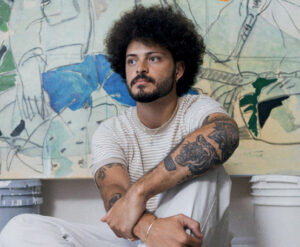
Jackson, an interdisciplinary artist, has been creating art or studying it for much of his lifetime. He studied at the Slade School of Fine Art and the Royal College of Art in London – the first Caymanian to do so – where he received the Sir Frank Bowling Scholarship.
His works are exhibited at the National Gallery of the Cayman Islands and at The Ritz-Carlton, Grand Cayman. Most recently, he was able to work as the artist in residence at Miss Lassie’s ‘Mind’s Eye’ in South Sound – supported by the Cayman National Cultural Foundation – and it was during that time that he was able to concentrate on preparing for this latest exhibition.
Jackson’s work has historically explored themes of identity, migration and cultural expression and he often draws from his Caymanian heritage.
Disappearing Sun
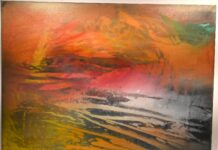
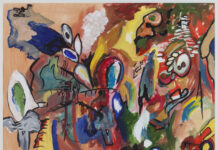
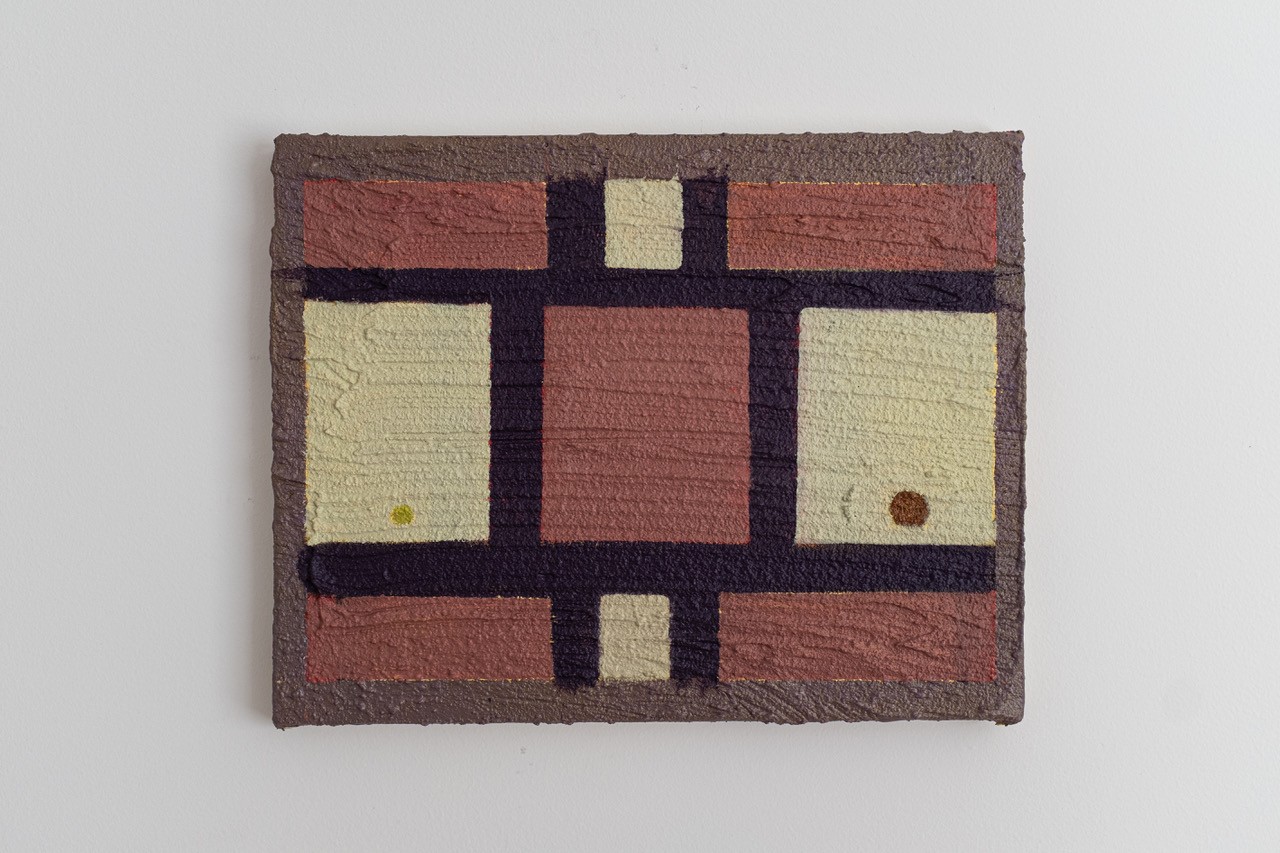
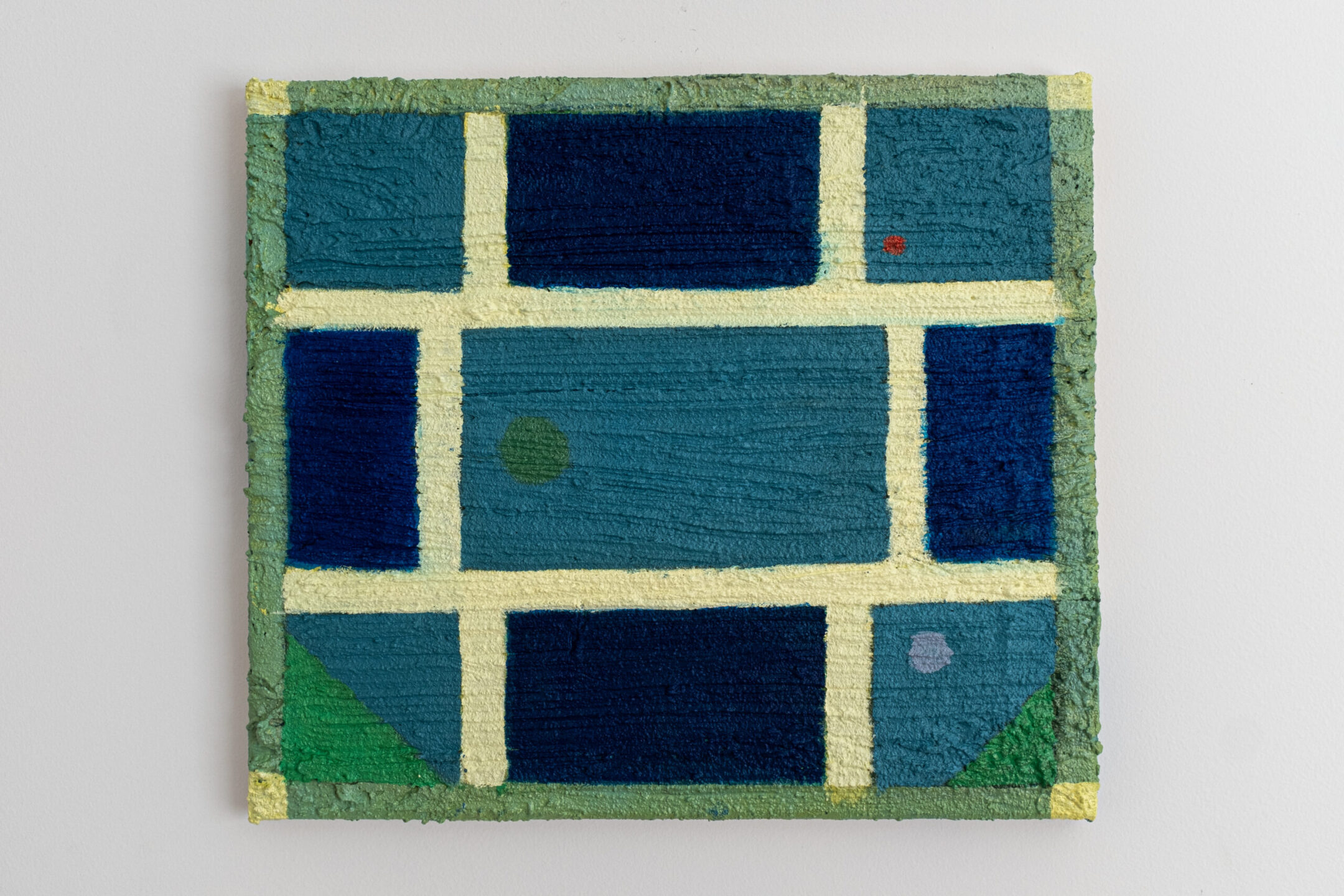
This latest exhibit, titled ‘Disappearing Sun’, however, is slightly different, starting with the fact that it’s a mixed media display of abstract paintings, drawings and poetry.
“Jackson uses the day points of sunrise, day, sunset and dusk as a way to think about heritage, identity and the fragile continuity of culture in the ever-shifting Caribbean,” a press release issued by the TERN Gallery stated.
These latest works showcase the shift that Jackson says he has been leaning into lately, which he calls a more minimalist language.
“I wanted to say more with less,” Jackson said. “In my historical practice, I was looking at how I can distort the language around me. Prior to going to the UK and completing my studies, I was looking at distortion, and I would mash up images into fragments as part of that.
“When I went to the UK, I started to think more about my relationship to where I’m from and the region and I realised the conversation was really based on people from the Caribbean – but the ideas and practices about the Caribbean weren’t really taking place.”
So rather than distorting images, Jackson began to look at things around himself and in the environment using a more abbreviated language, considering them in a new way, with the aim that his works would better translate to a global audience.
“I looked into what was Caymanian heritage. Everyone here thinks of silver thatch when they think of Cayman,” said Jackson. “I thought of sand yards, as I used to go around with my father to look at people’s light shows when I was young and remembered there were yards that were fully made of sand.”
Jackson learned about the practices to prepare sand yards and Caymanians’ relationship to it. “It’s kind of intrinsic to our identity. It is the first thing indigenous people touched, and it is always there, always present. I wanted to use that,” he said.
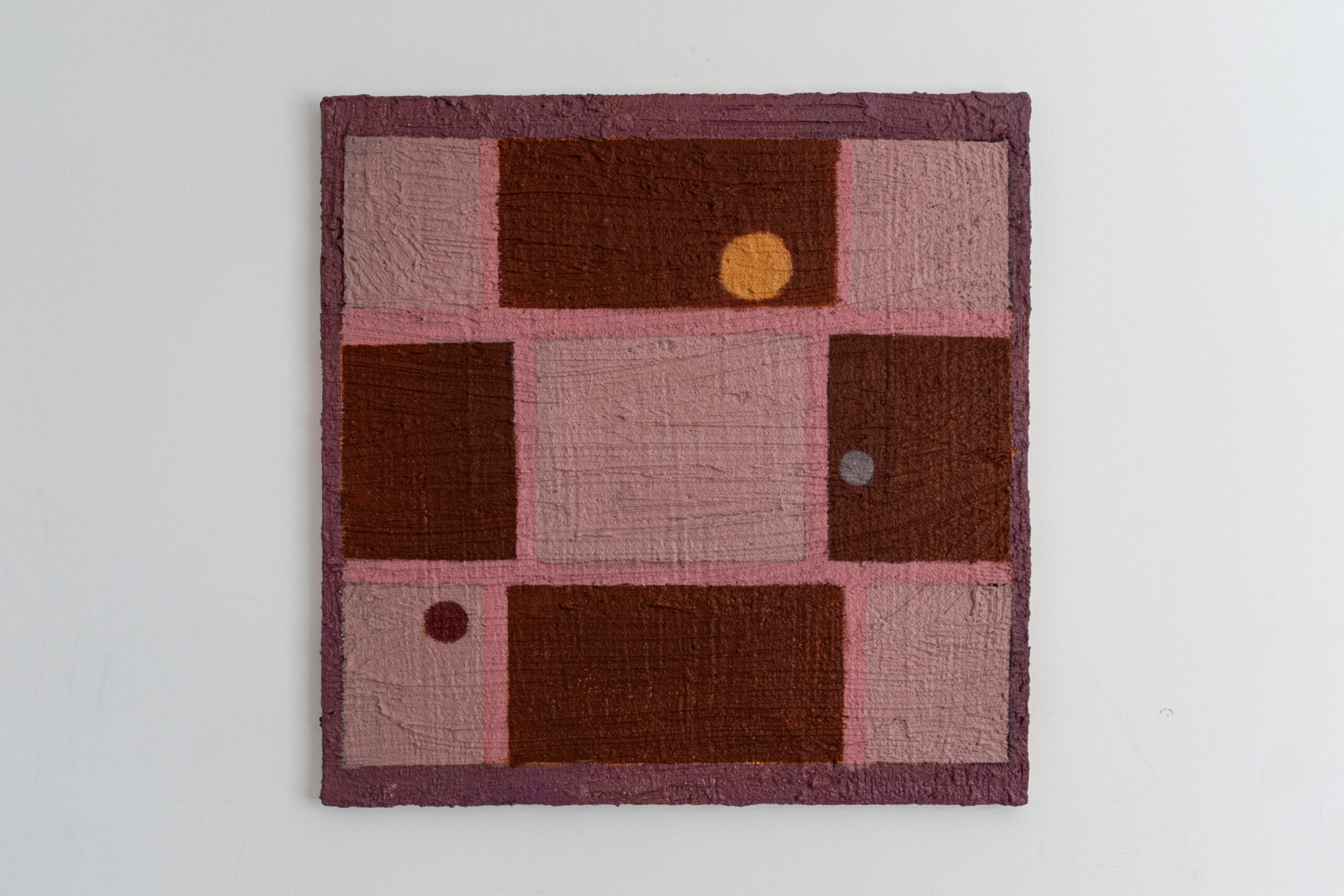
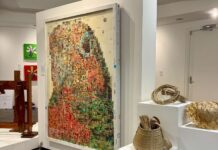
Jackson found a way to make sandstone by creating a blend, almost a cement, but made purely from sand. As part of his process, he then brushes silver thatch through it in a traditional way to leave marks on the painting. He then creates grids that reflect local architecture, palm roofs, thatch ribbons, wattle-and-daub and basket weaving. He also chooses colours from the local environment.
More stories to tell
The process translates these Caribbean materials into a contemporary painterly language. According to the TERN press release, “His work approaches the archipelago as both metaphor and method, a structure of dispersion, repetition and relation – simultaneously positioning Caribbean abstraction as both archive and proposition for its futures.”
Jackson intends to continue to pursue this approach in his art as well and is excited about the possibilities.
“I know it can keep going further – there are more stories in Cayman to tell. I think of things structurally, and how I can relate them to something without directly doing it – a kind of hybridisation – and I can continue to push into this new language,” he says.
Jackson also said he realised that he didn’t need permission from the Western art world to make art that incorporates local cultures. He was once challenged by an art professor on the authenticity of his pieces.
“He asked me if I was ‘faking it’ when I was literally bringing silver thatch in my suitcase to London at the time to use in my pieces. I was shocked.”
His exhibit at TERN promises to challenge that judgement.
“Disappearing Sun questions how culture persists in a region where the past is continually overwritten by tourism, globalisation and the relentless acceleration of the modern world,” the TERN press release states. “Jackson rejects the binary logic of Euro-American Modernism, its strict doctrines of purity, and its fantasy of universality.
“Instead, he literally works from the ground up, sourcing materials and textures of the Cayman Islands, archipelagic thinking, and indigenous and Afro-Caribbean cultures of ‘making’ that never needed permission from the Western canon.”
Jackson certainly has found a way to open viewers’ eyes and have a conversation about and honour local traditions in a new way. His exhibit also enables Caymanian stories to be shared with new audiences in the Caribbean and elsewhere.
Disappearing Sun will remain on view until 28 Feb.
Related Videos