By Cayman Compass contributor Christopher Tobutt
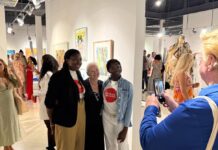
There is a quiet emotional charge running through ‘Next Wave’ at the National Gallery, the kind that doesn’t shout, but settles into you as you move from piece to piece.
The works of more than 20 young artists – most of them still in their teens – fill the Dart Community Gallery with colour, texture and experimentation. But beneath the surface energy is something more intimate: a generation using art to express feelings that are difficult, sometimes impossible, to articulate in ordinary language. The works I mention here are only a handful, but they trace the deeper current that runs through the exhibition.
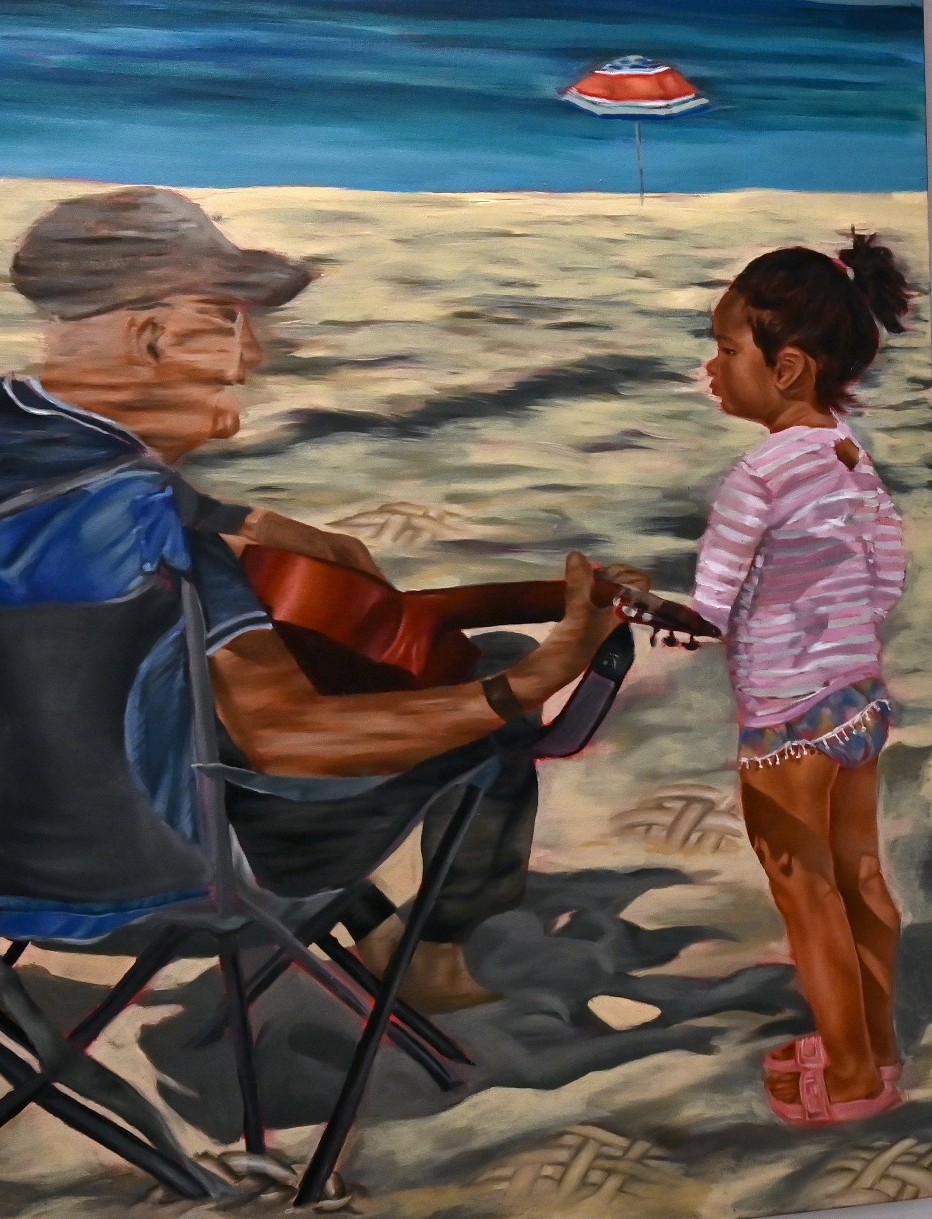
Zuri Hannah Whittaker’s “Woven Voices Strengthen Our Legacy”, shows an elderly Caymanian man playing guitar on the beach for a young girl who might be his granddaughter. It is a gentle, affectionate scene, but the gentleness is complicated by the fact that his body is fading, the shoreline visible through him. The painting holds joy and loss in the same frame – the joy of passing something on, and the ache of knowing that what is precious can slip away if we do not make time to receive it. Even the sand carries woven thatch patterns, as though the land itself is trying to keep hold of memory.
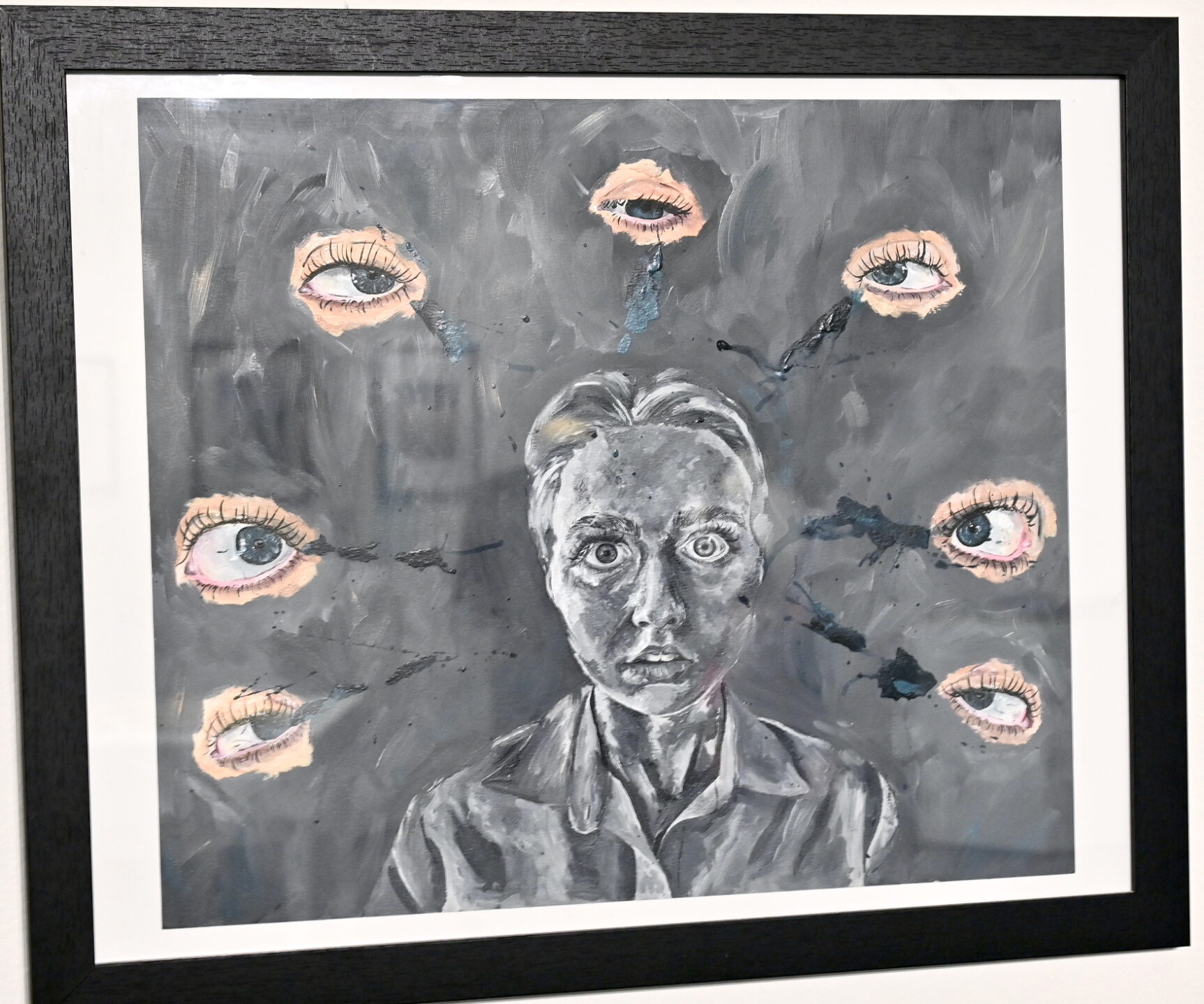
The emotional tide moves into the uneasy self-awareness of Krisi Ilizabeth Smith’s “Eyes Off Me”. A young woman’s face sits at the centre of a ring of disembodied eyes, arranged like the points of a clock. It is the feeling of being watched from every direction all the time — not only by peers, but by the invisible expectations that gather around young people, pressurising them and making them feel uncomfortable. Smith captures the tension between wanting to be seen and fearing the scrutiny that visibility brings. The painting becomes a portrait of a mind trying to find space to breathe.
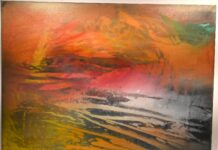
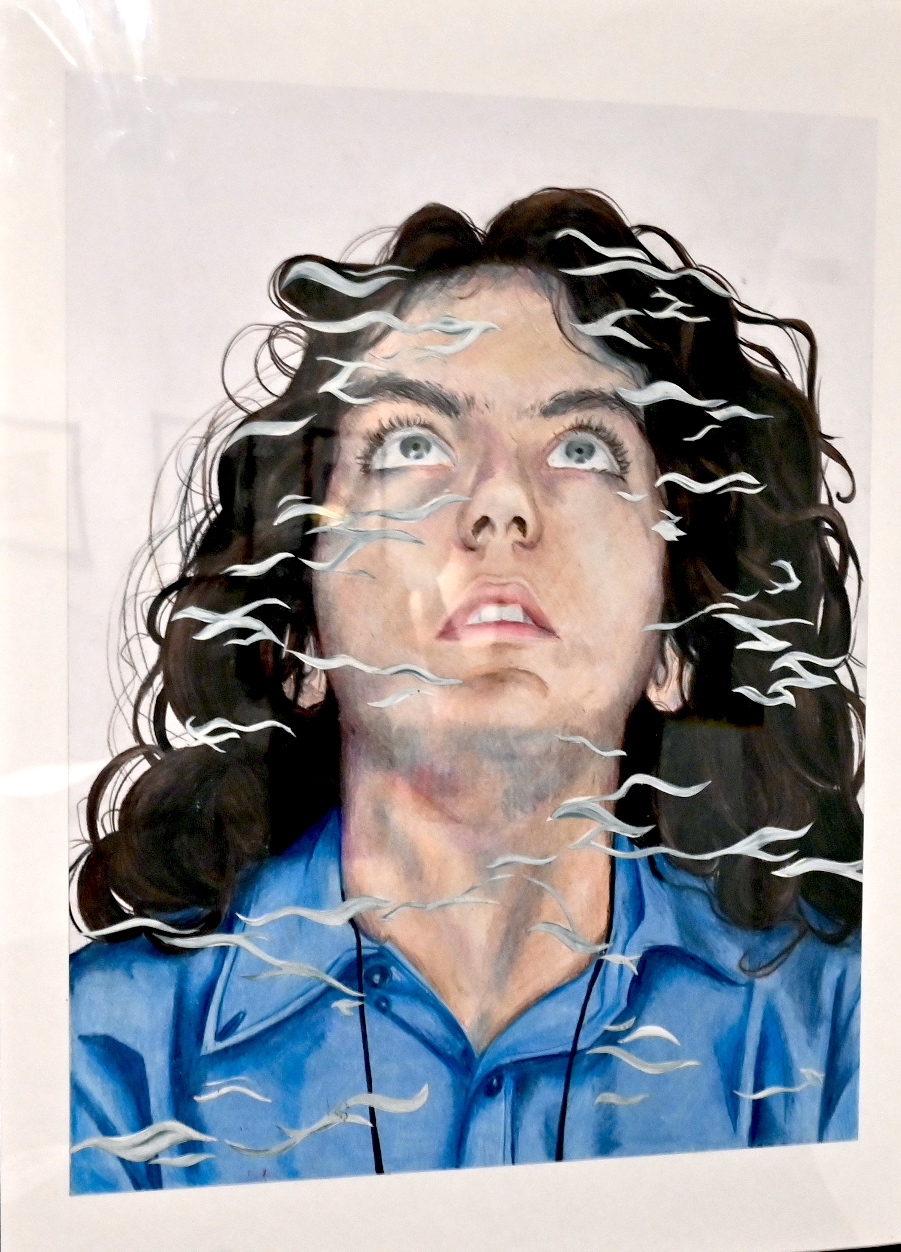
Jessica Dawson’s “Submerged” deepens the mood. Her self-portrait, filtered through the distortions of water and light, turns the ocean into a metaphor for confinement. Layered gouache waves form a barrier that is both beautiful and suffocating, like a dream that becomes too heavy to carry. Living on a small island can feel like belonging and isolation at once, and Dawson makes that contradiction visible. The white, fluttering shapes drifting across the surface resemble butterflies, but they behave like obstacles – delicate, persistent, inescapable.
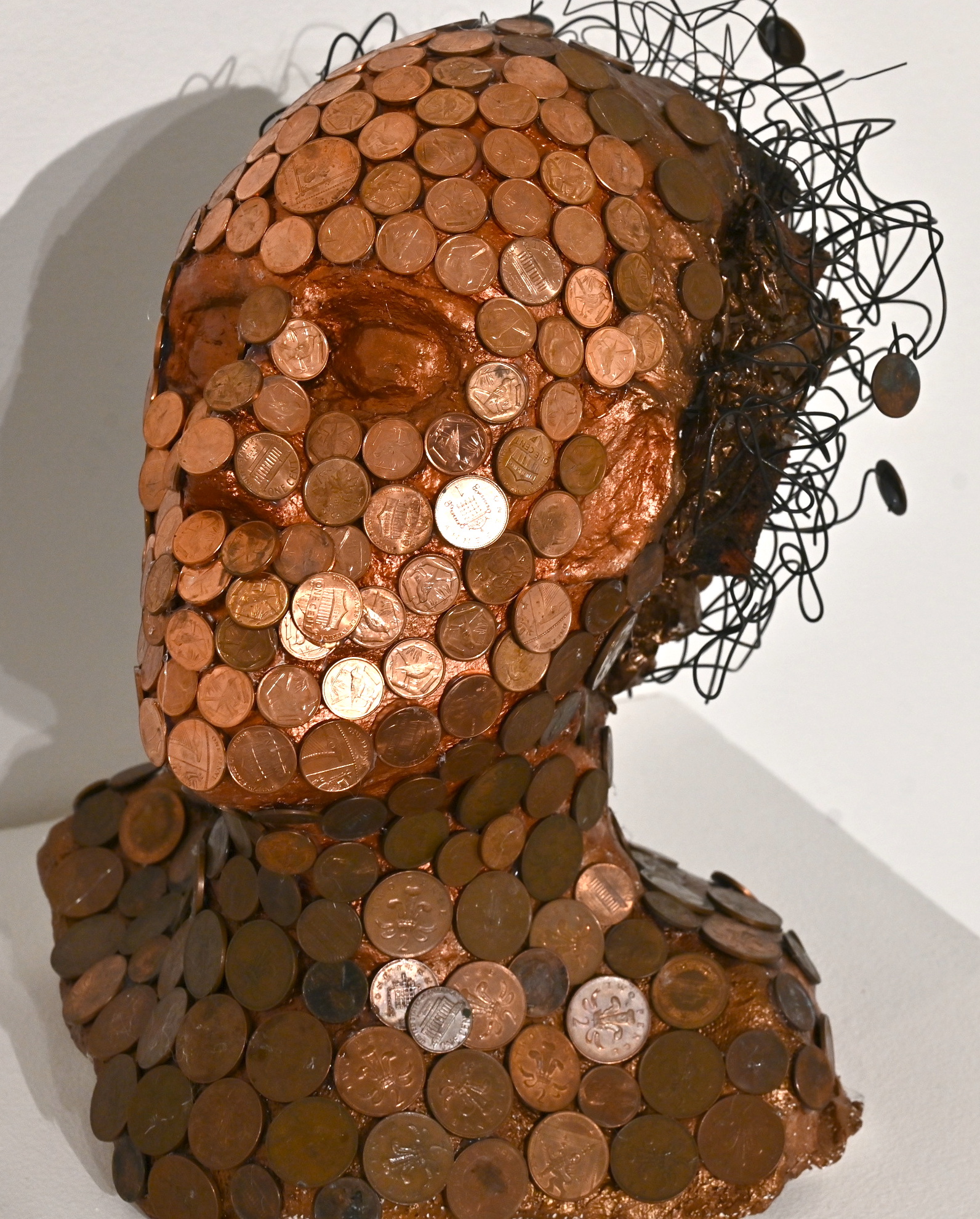
The river then twists into the uneasy presence of Harry Cowell’s ‘Misfortune’, a life-sized head made from plaster bandage and covered in copper coins, their orderly placement disrupted by tangled black wire looking like hair. The sculpture looks upward, but not peacefully; it seems caught between aspiration and anxiety. The coins suggest value, worth, the pressure to ‘add up’, while the wire speaks of internal conflict that refuses to be tidied away.
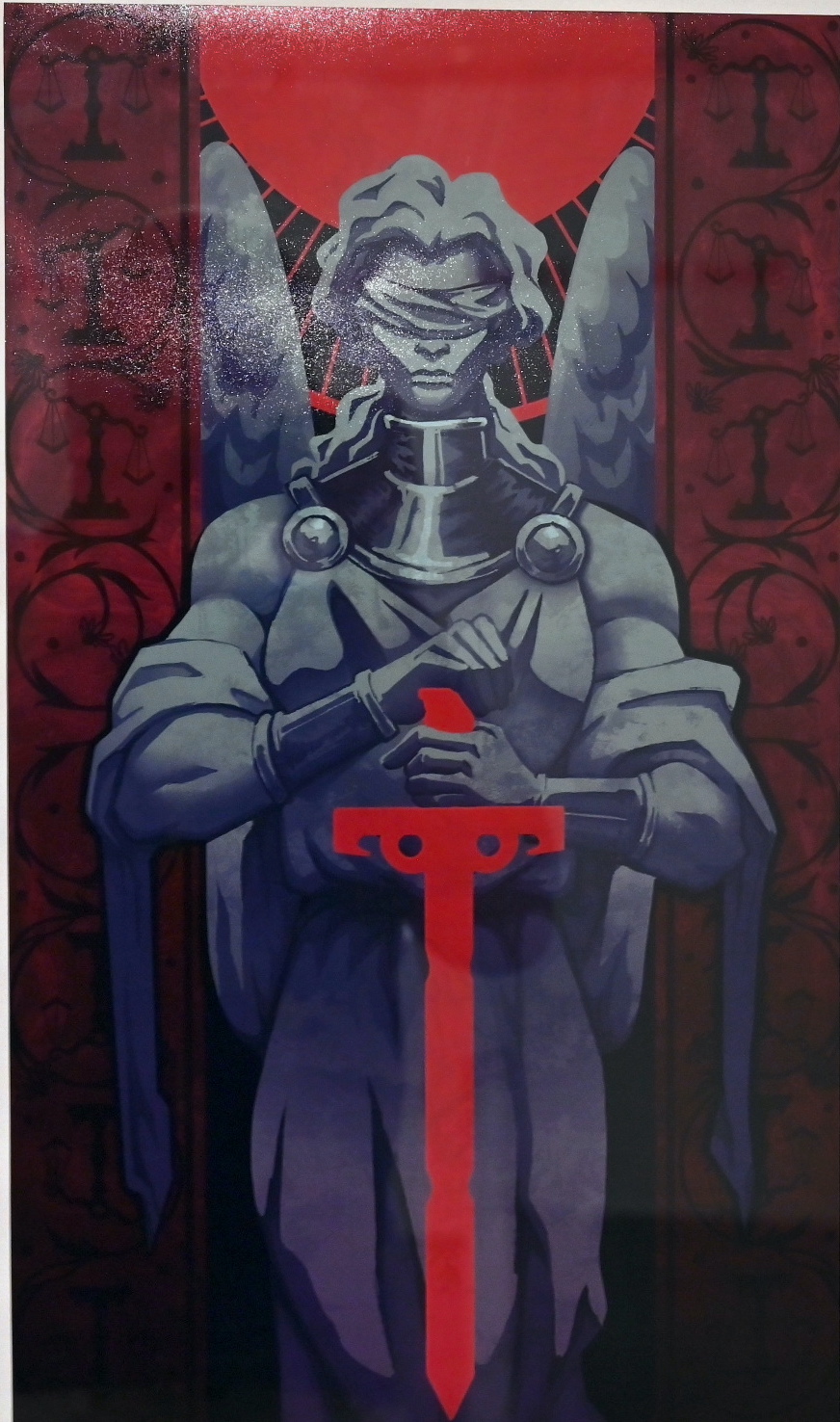
Victoria Suarez’s ‘Retribution’ shifts the tone again. Her blindfolded female figure, sword in hand, is rendered with the stylised clarity of a medieval brass rubbing. The work explores the idea of justice – not as a fixed ideal, but as something filtered through human perception. The figure stands firm, but the questions she raises remain open.
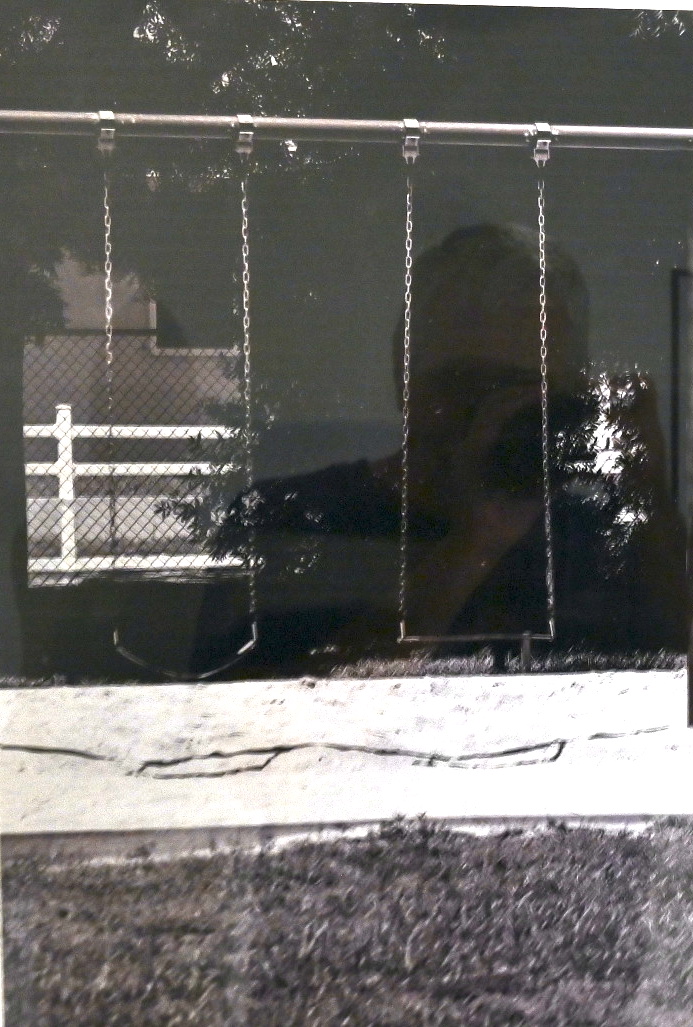
Madison Black’s ‘From Playgrounds to Pathways’ is a monochrome photograph of two empty swings. Childhood is not depicted; it is remembered. The swings hang motionless, like a breath held before the next step. The pathways ahead are implied in the quiet.
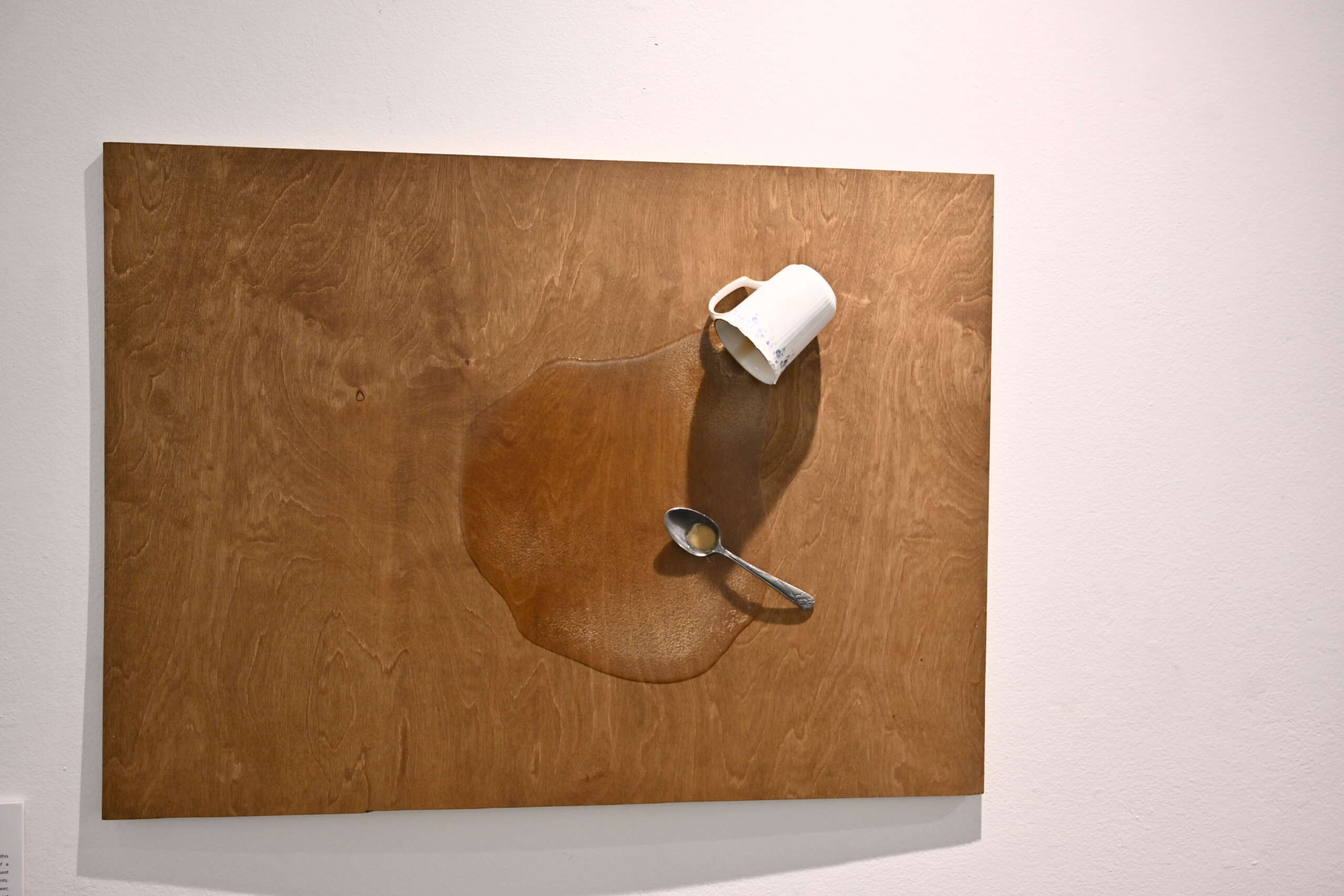
Taken together, these works reveal young artists using images to express what words cannot yet hold. Next Wave is not simply a showcase of emerging talent; it is a collective act of emotional honesty.
Christopher Tobutt is a freelance journalist who has written for various publications in the Cayman Islands since 2003.
Related Videos