

At a glance
• Women welcome in Cayman regiment
• Females already 10% of Cayman’s armed service
• Women represented in most ranks
Women represent about 10% of Cayman’s military force – but female soldiers have beat the drum for more to join the colours.
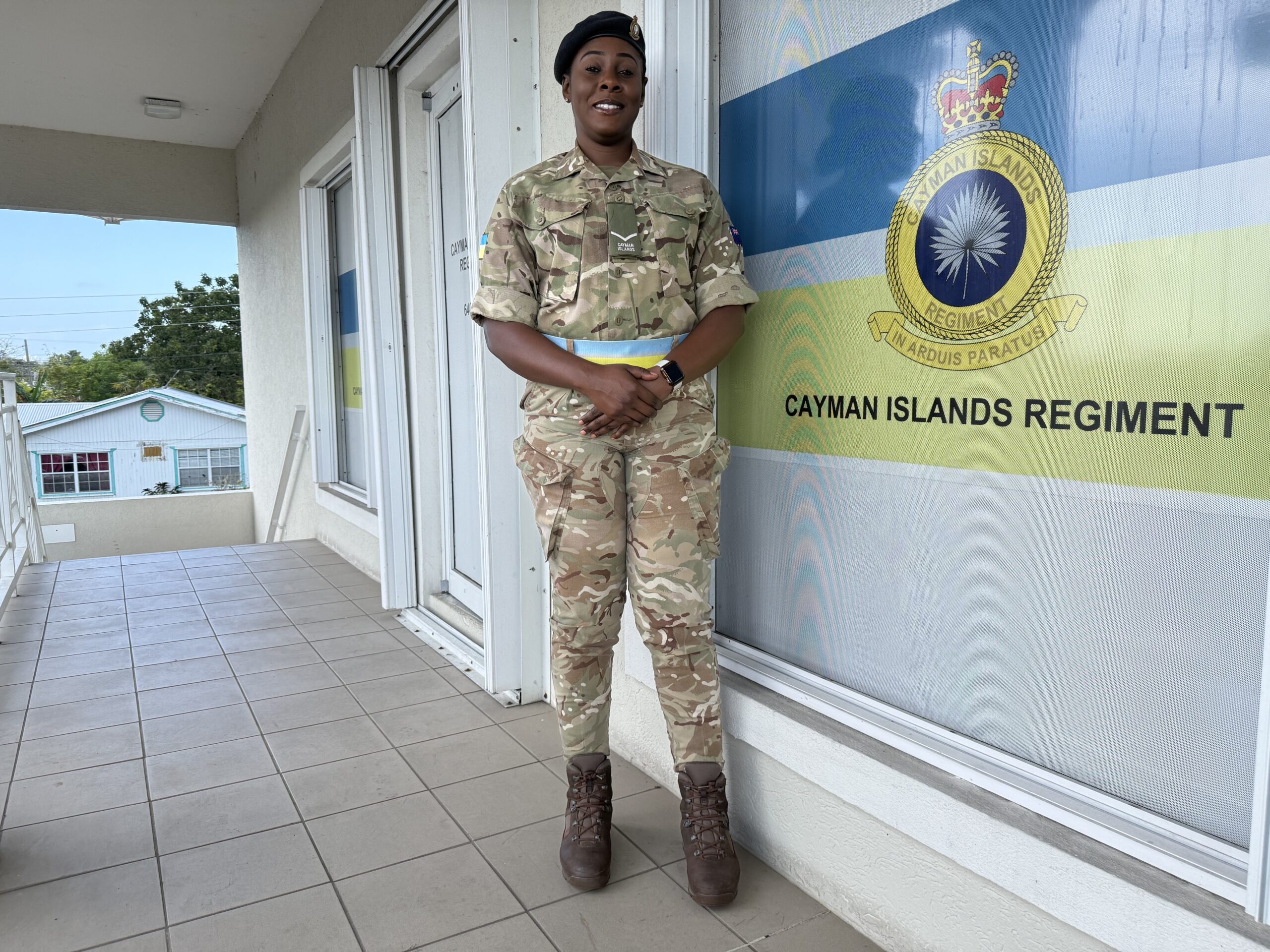
Lance Corporal Crystal Ayton, who in 2020 became one of the first women to join the then-new Cayman Islands Regiment, said service life helped boost confidence and improve leadership skills, as well as offering learning opportunities.
She added, “It was what I expected and more. The regiment is about discipline, teamwork; it’s about inclusiveness – no one is left alone.”
Ayton, 36, a mother-of-four and a prison officer in civilian life, was speaking as Cayman marked March’s International Women’s Month.
The soldier remained a trailblazer, even after completing basic training, as she was the first corporal posted in the force’s headquarters signals group, which is responsible for communications networks, including the radio net vital for dealing with disaster situations.
“In the prison service, I have to work in a team, I have to be disciplined,” she said. “The regiment helped me gain confidence as a leader and as a woman. It gave me the confidence to say to myself ‘yes, you belong’.”
She told other women who may be keen on part-time service in the regiment, but worried about fitness or whether they could cope with the rigours of army life, to give it a go.
“Don’t let fear keep you from playing the game. You’re capable of more than you think. Step forward, invest in your community, invest in your education,” Ayton said. “Take that step. Join and you will definitely see for yourself.”
She added, “We work as a team and each female is capable of what every male can achieve in the regiment. We can use the chainsaws … there is no difference in terms of what we’re capable of doing.
“We’ve never had an exercise where the females do this and the males do that. We’re all treated the same.”
Ayton added that the regiment was keen to reflect Cayman society.
She added that military training also included skills such as first aid, which could be applied across the board.
“A child could be choking at home. You would know what to do until the professionals arrive. The training is very beneficial and a lot of it transfers to civilian life,” she said, adding, “I like the discipline, the resilience. It taught me that, no matter what, you are capable of doing the unimaginable.”
Ayton said that, in the field, soldiers had to contend with basic living conditions and a lack of leisure time, but training helped push them through.
“Challenges come, but you learn how to overcome them,” she said.
Women welcomed in the regiment
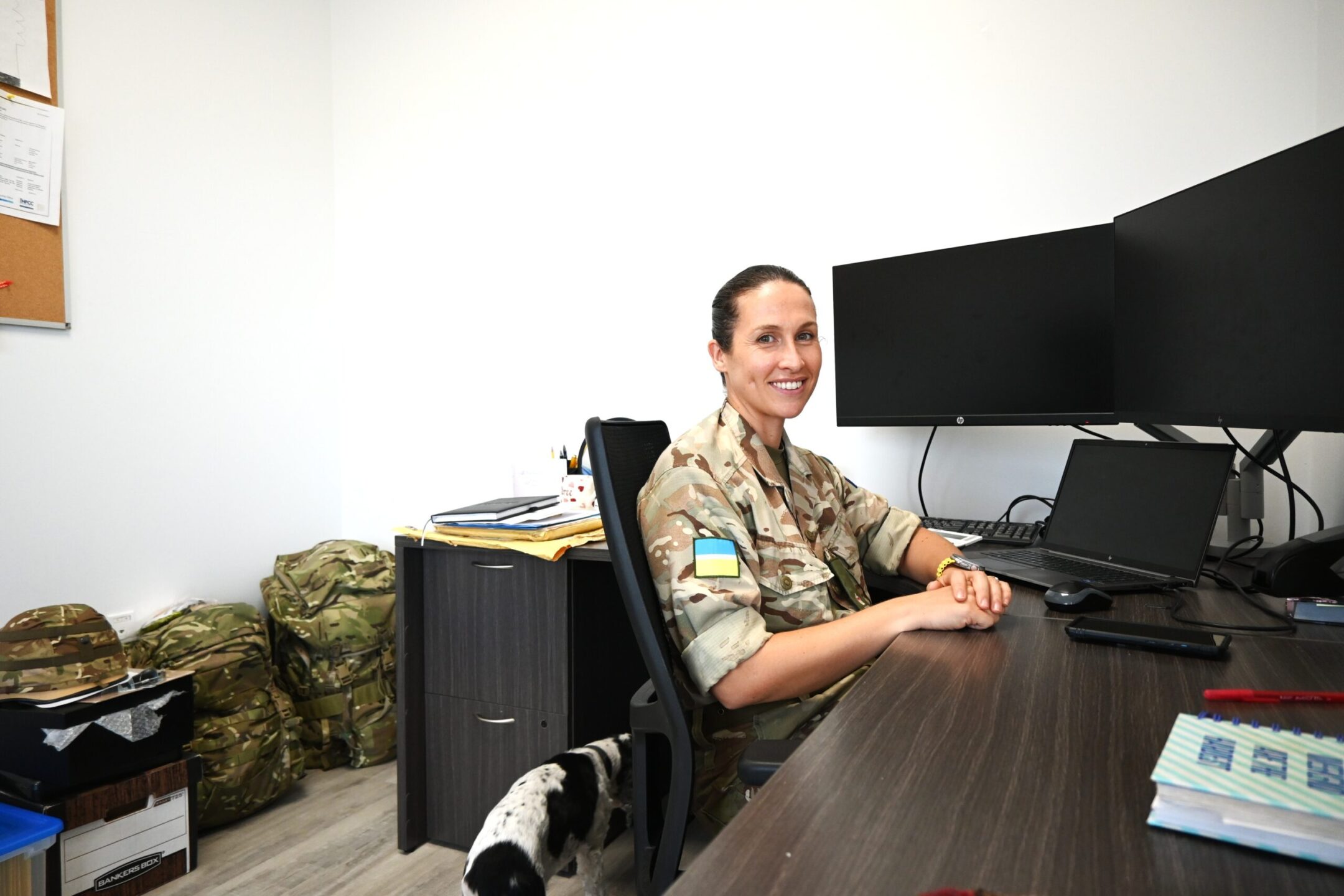
Major Paris Goldsbury, 35, a former officer in the British Army’s Royal Corps of Signals who has worked in Cayman for more than three years, said women in the military were promoted on merit, not to fill quotas.
“Certainly, we’ve seen women in the regiment do very well. They bring some balance and definite dynamic to the team,” she said. “They do everything in terms of the physical side of the role. That intimidates some people – you do need to be fit.”
Goldsbury said she had suffered some discrimination earlier in her British Army career, but even then, the views were regarded as dated and she was supported by the vast majority of her male colleagues.
“I certainly found a military organisation a great place to be as a woman,” she said.
Goldsbury said the Cayman regiment had also been helpful when she had her first child, a son, now nine months old.
“The organisation has been so supportive – considerate without making me feel like I need to be treated with kid gloves,” she said.
She advised women thinking of wearing the uniform to “do it – just try it”.
“The scariest thing is that first step,” she said. “Come and speak to us.”
She added that it was hoped to organise a recruitment drive this year and that everyone was welcome to discuss options.
“There is absolutely no pressure. If they come and it’s not for them, there’s no hard feelings,” Goldsbury said. “If someone is interested, they already have that inside themselves that they want to push themselves and do something different.
“I know more and more women who are interested in joining and doing something that challenges them.”
Goldsbury said that a different perspective helped in collective discussions and decision-making in the military.
“My last job in the British Army was working with some special forces personnel, and they really enjoyed having a different person in the room,” she said. “We’re not doing what they’re doing, but we are tackling complex issues and dealing with the community.
“It’s important not to have all the same type of person in uniform. One way you can do that is to encourage women to join. And it’s fun.”
Goldsbury said that women, despite the newness of the Cayman force, were already represented in most ranks.
“It’s entirely on merit as well,” she said. “We need people who are at the top of their game. It just happens there are women who are at the top of their game.”
Related Videos







I must confess I have limited knowledge of the Cayman Army. Are the majority parttime, do they have access to armed weapons?. I acknowledge they have been taught valuable skills, many very useful in emergency situations such as the recent Jamaican hurricane. Perhaps more information can be published on their role in our society, it would be helpful.