

Built in 1981, Her Majesty’s Prison Northward was condemned as unfit for human habitation more than a decade ago. Yet it is still holding 237 men in a building certified for 168. The Compass went behind the walls of Cayman’s main prison to shine fresh light on the challenges for inmates and the staff working around the clock to rehabilitate them.

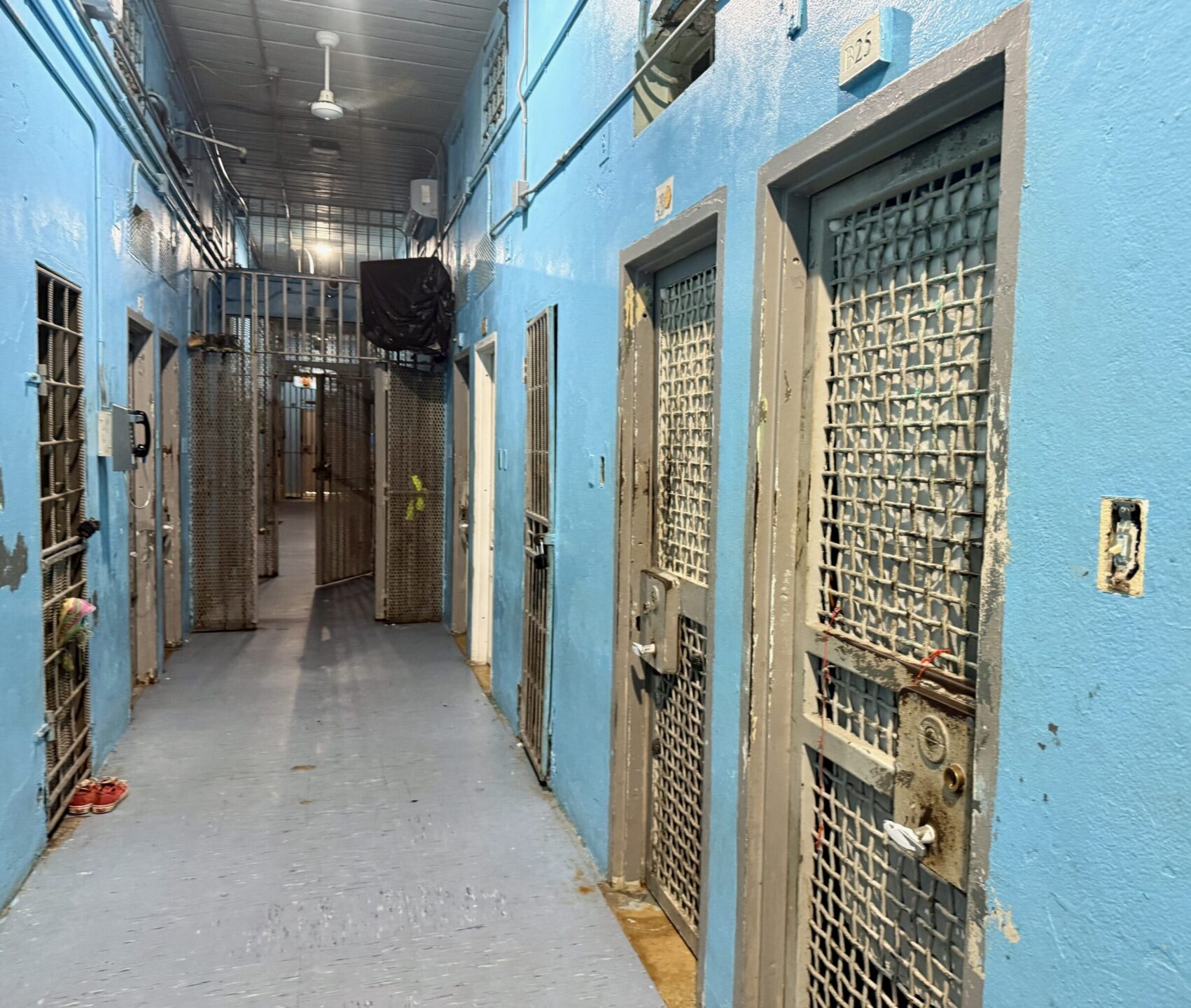
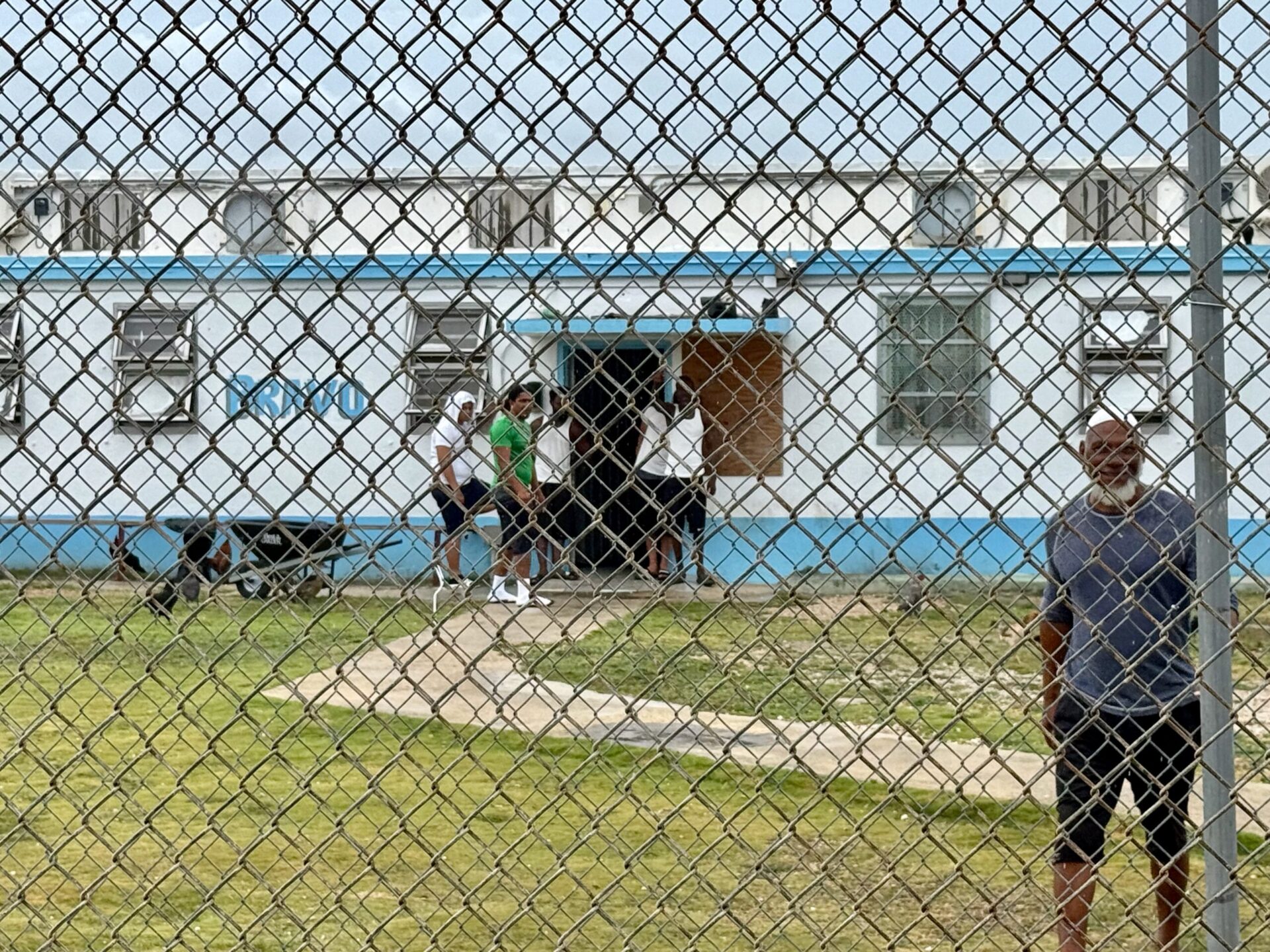
A bare low-wattage lightbulb flickers in the dark corridors of Bravo Wing. The security camera watches silently from the roof space as a heavy steel dividing door clanks open.
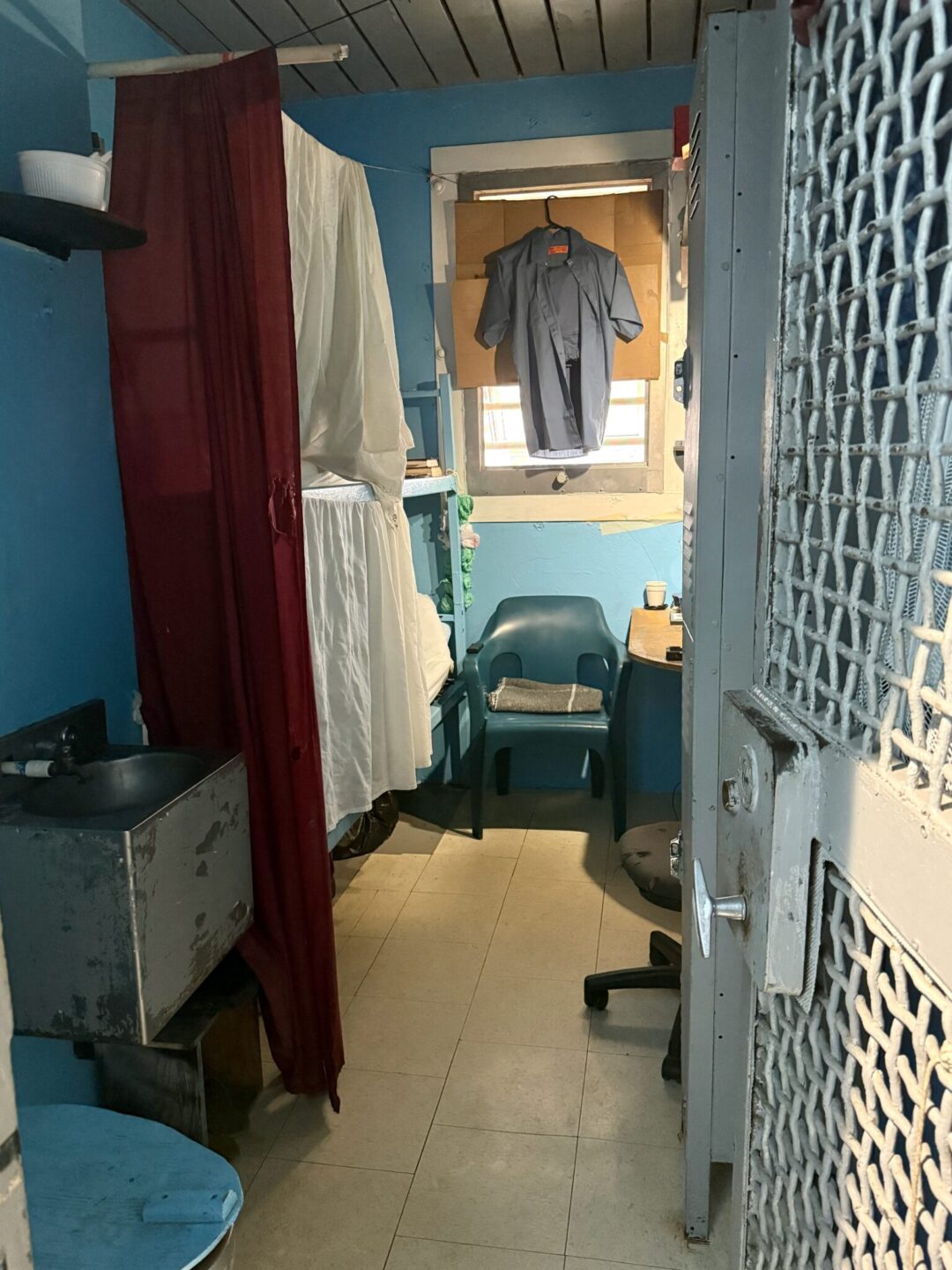
Exposed wiring and pipes run the length of the ceiling and down walls, thick with layers of bright blue paint.
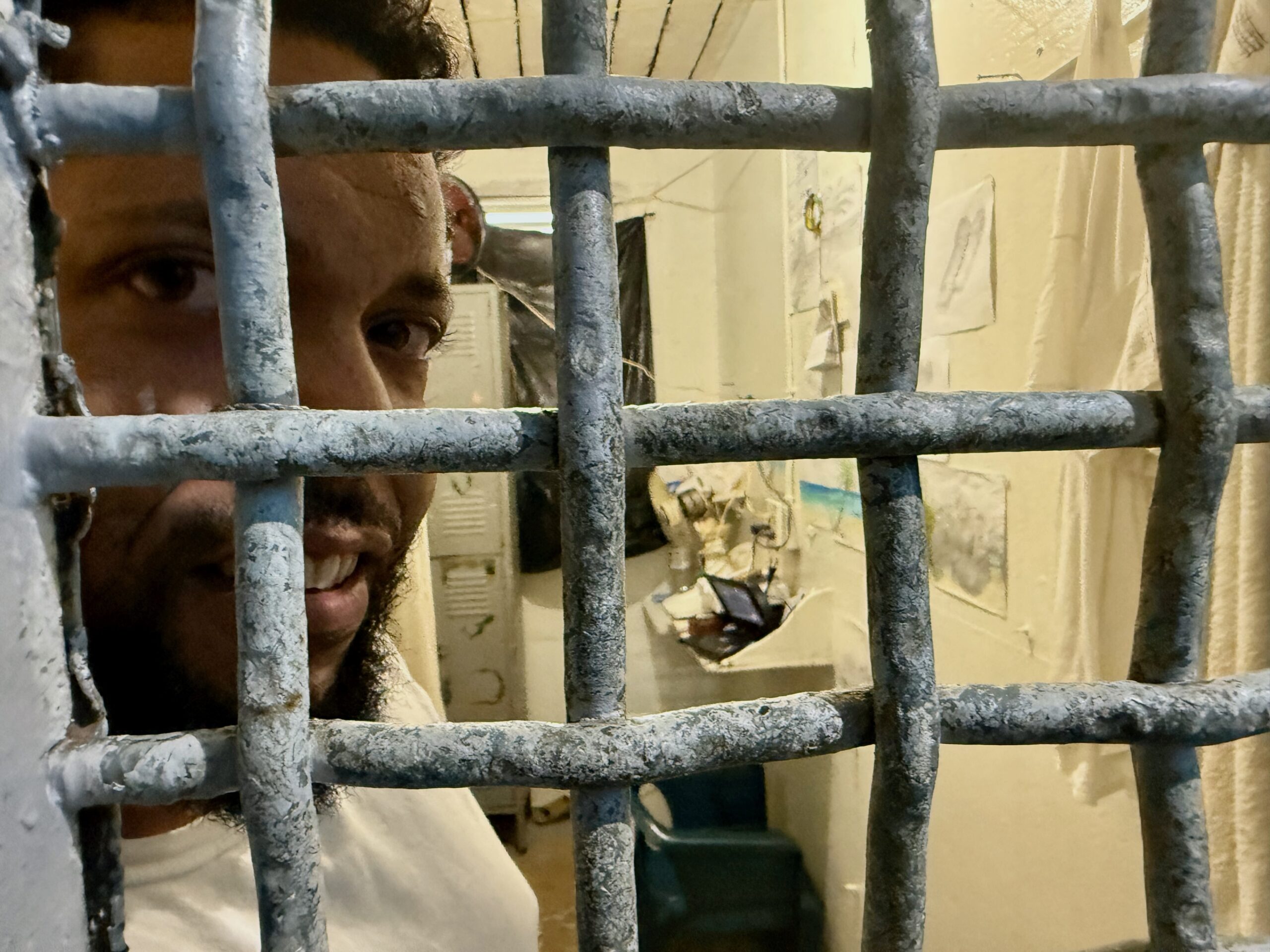
Arek Ebanks pulls aside a makeshift privacy curtain and presses his face to the rusting mesh grid of his cell door. A bin liner taped to his window space wafts in the faint draft of a pair of slow-spinning portable fans.
The walls of his narrow cell are decorated with artwork.
“It helps me pass the time,” he says, pulling down a brightly coloured scene of waves lapping a sandy shore, sketched from memory of the Bodden Town coast.
There are 65 inmates residing in the squat concrete wing within the prison compound. Most of them live two to a cell in a space that affords just enough room to turn around.
Inmate Dencle Vic Barnes says, “The cells are so small you can’t move. You got cockroaches running all over the place. The toilet’s right in front of the door, right where you lay your head. You got no privacy.
“We put those curtains up ourselves. Otherwise, you’re taking a s**t in front of the whole corridor.”
The cell block is not just uncomfortable, it is dangerous, says another prisoner, Tareek Ricketts.
After more than a decade in prison, he has moved on to a different wing, but he still fields complaints from others on a constant basis because of his own role on the council.
“Sometimes, you could actually smell the dust and mould in the air. Every few months, they power-wash out the cells and you feel some kind of freshness, but a few more weeks down the line, it is back like it was, with mould coming up, rust falling off the ceiling,” said Ricketts.
Barnes, now in his 50s, acknowledges he has been in and out of HMP Northward since he was a teenager.
Security is better than it once was, he says, but when the cell blocks are packed like this and the inmates are bored and restless, tension rises. There have been a few fights in recent months.
“People get frustrated. Ray Charles himself can see when it’s gonna happen,” he said.
A system under strain
In the prison’s intake area, reception supervisor Terry-Ann Brown moves white plastic tiles along a grooved board that tracks the prison’s ever-shifting population.
The tiles click into the ridged surface as she updates the figures, slotting numbers into ordered columns that break down inmates by remand status, sentence, nationality, and type and category of offence.
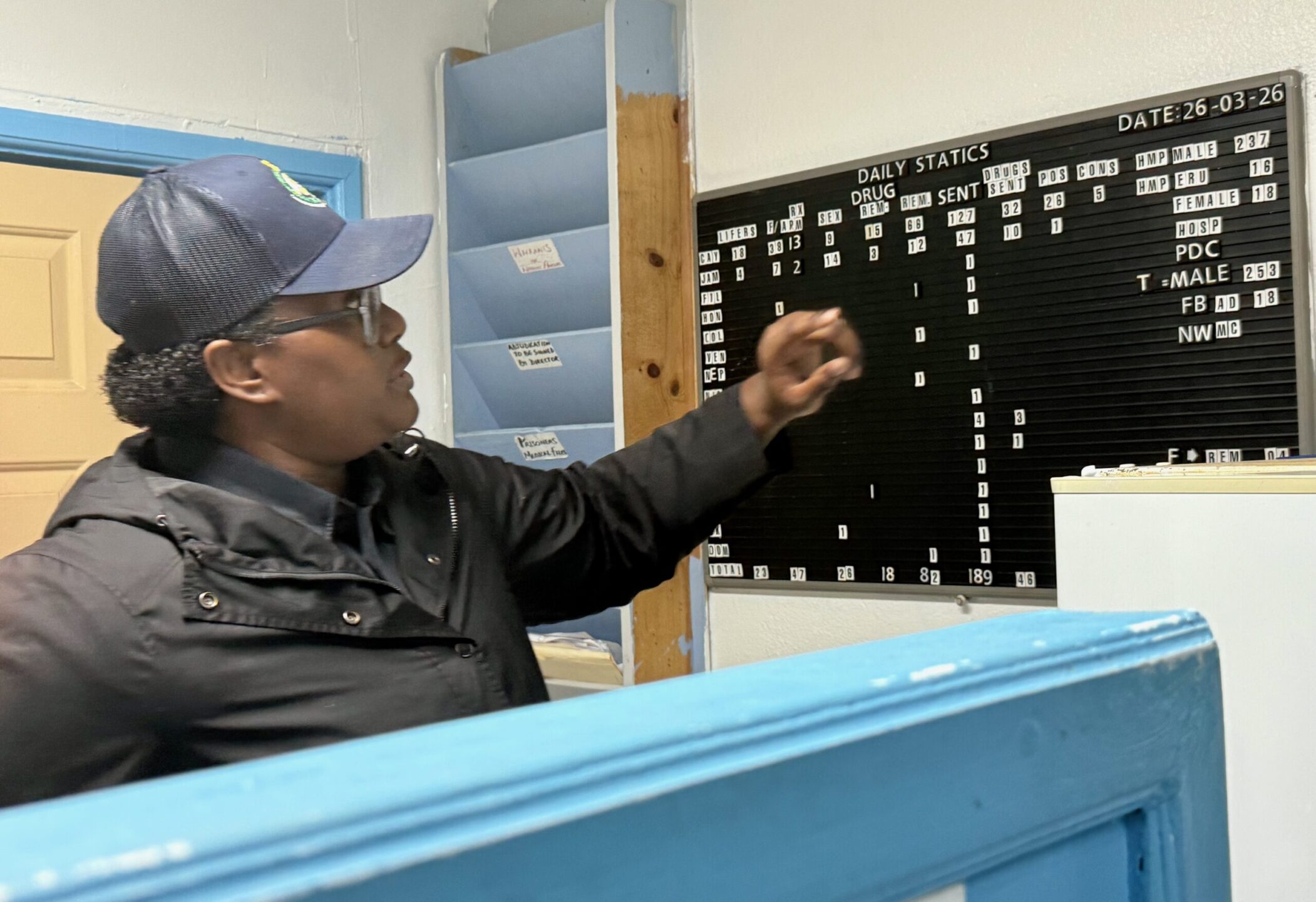
At the bottom, the total roll reads 271, split between HMP Northward, the Enhanced Rehabilitation Unit and the women’s prison at HMP Fairbanks.
The men’s prison, on a large compound in Bodden Town, was built in 1981 and is certified to hold 168 people. The board shows that day’s population at 237.
A UK prisons inspection team visited in 2012, finding that the cells were “dark, stifling and intimidating, with inmates living in overcrowded dirty wings that lacked privacy” and were “barely fit for human habitation”.
Inmates who spoke to the Compass last month were able to quote verbatim from that report by memory. Those that were not around at the time, nonetheless, described their own cells in similar terms.
Since that incendiary report, security and safety concerns have improved and the Cayman Islands Human Rights Commission has applauded the increase in educational and training programmes, despite budgetary constraints.
But watchdogs and prison officials accept there has been little meaningful improvement to the property.
Hard-working staff manage around the limitations, maximising time outside the cell block in the prison garden or the vocational training wing.
But the ever-increasing population puts continual strain on a building that is now more than four decades old.
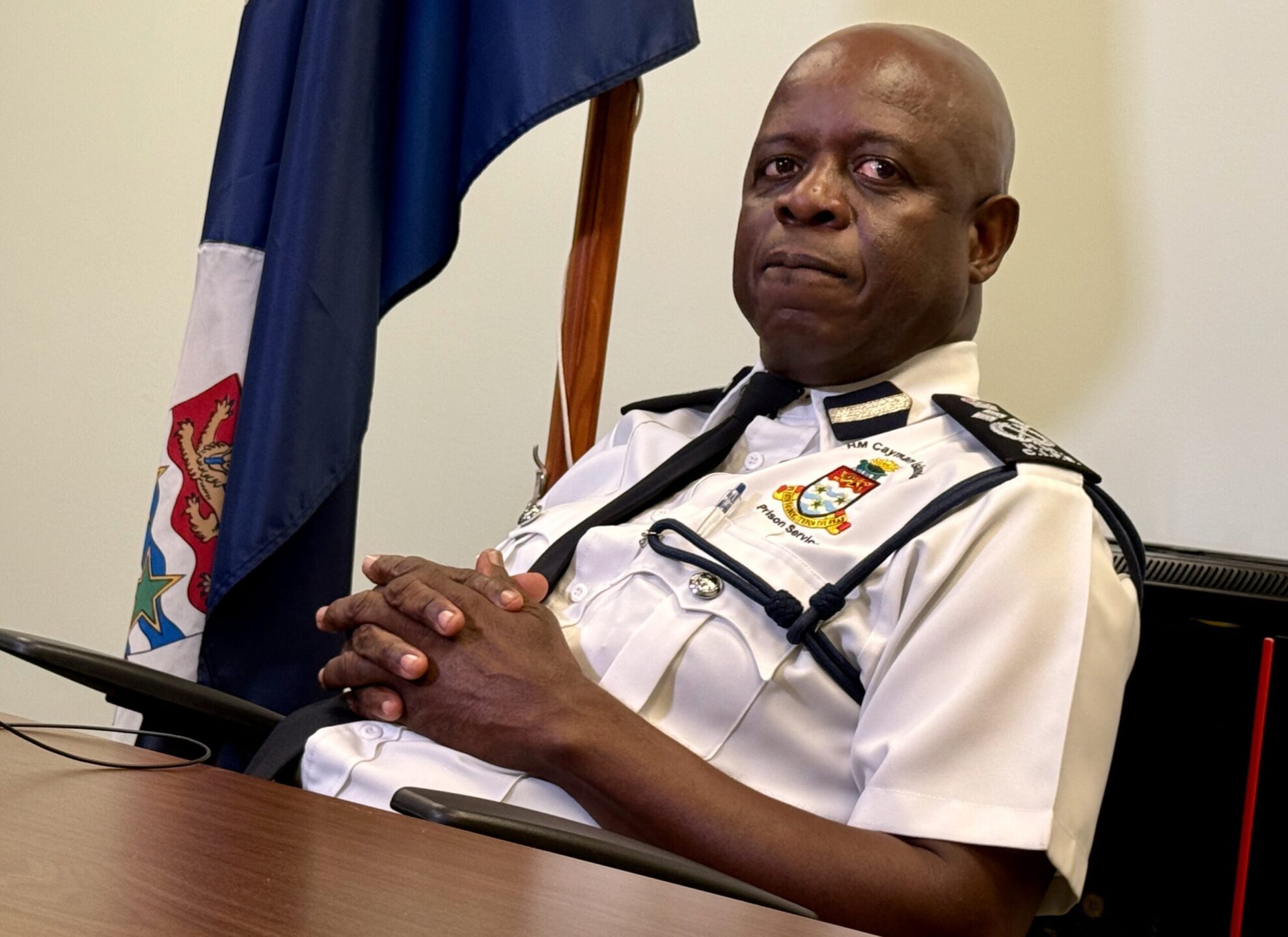
“We have leaking, we have ventilation issues; there are times when cells become inoperable,” said Director of Prisons Daniel Greaves.
Storerooms have had to be converted to cells. A planned juvenile wing has already been co-opted to meet increased demand from adult prisoners.
A political football
The prison’s ageing infrastructure is haemorrhaging money and a long-term fix is still some way off.
Minister of Home Affairs Nickolas DaCosta, who took up the portfolio after last April’s election, was struck by the scale of the waste when he first reviewed the prison’s accounts.
“I was shocked at the expense for water at the prison. When I queried it, it’s because of leaking pipes … an incredible amount of water being wasted because the infrastructure is so old.”
The wastewater treatment plant is currently inoperable, and sewage has to be pumped out every other day because the plant cannot process it.
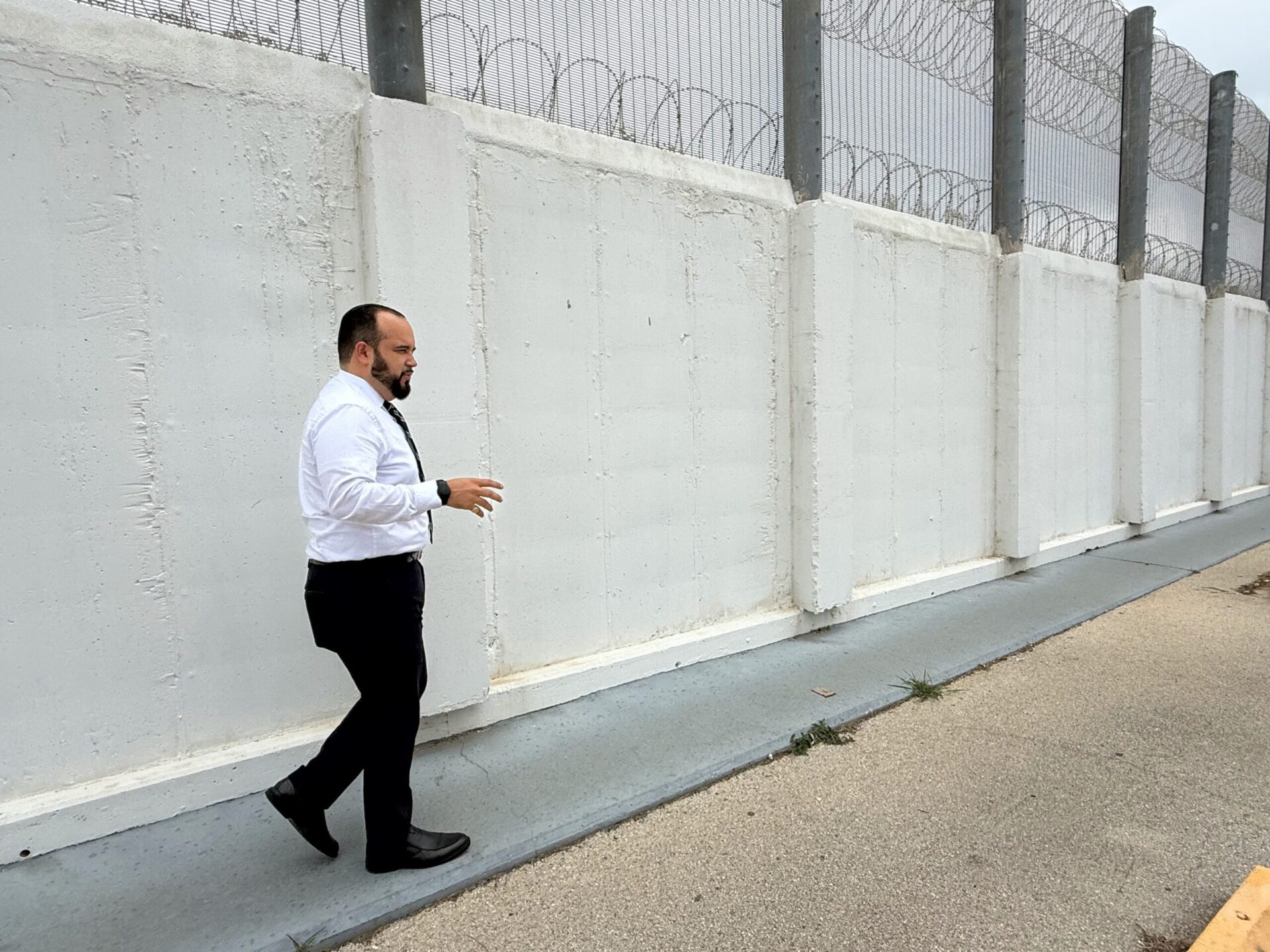
“The condition of the prison is not a new issue,” says DaCosta. “It was condemned 20 years ago. This is a political football that has been kicked around for too long.”
Cayman’s infrastructure needs are broad. The landfill, the cargo port, the airports, the road network and the schools system are all competing for limited capital. Securing public money for prisoners, some of whom are responsible for heinous crimes, has never been an easy political argument to make.
Even within the prison system itself, there is competition for funds. The women’s facility at HMP Fairbanks, occupied as a temporary measure after a fire in 1999 and never replaced, is also riven with mould, failed electrics and deteriorating infrastructure. Its female population has grown 85% since 2020. It has been waiting for investment for longer than Northward.
The Governor’s Office, which has oversight of the prison service, is monitoring human rights concerns. The conditions at HMP Northward put the UK at risk of breaching its international treaty obligations.
DaCosta is determined to reframe the argument for investment.
“Prison can’t just be seen as a place of confinement alone. It has to be a place of rehabilitation,” he said. “When you reduce recidivism, when you increase rehabilitation and reintegration, it makes it a safer community.”
The cost per prisoner, currently around $90,000 a year, reflects dysfunction rather than luxury.
“That level is so high, not because it’s a hotel, but because of how old it is – the excessive water loss, the electricity. Because of ageing infrastructure, the cost per prisoner is naturally high,” DaCosta said.
Putting skills to work
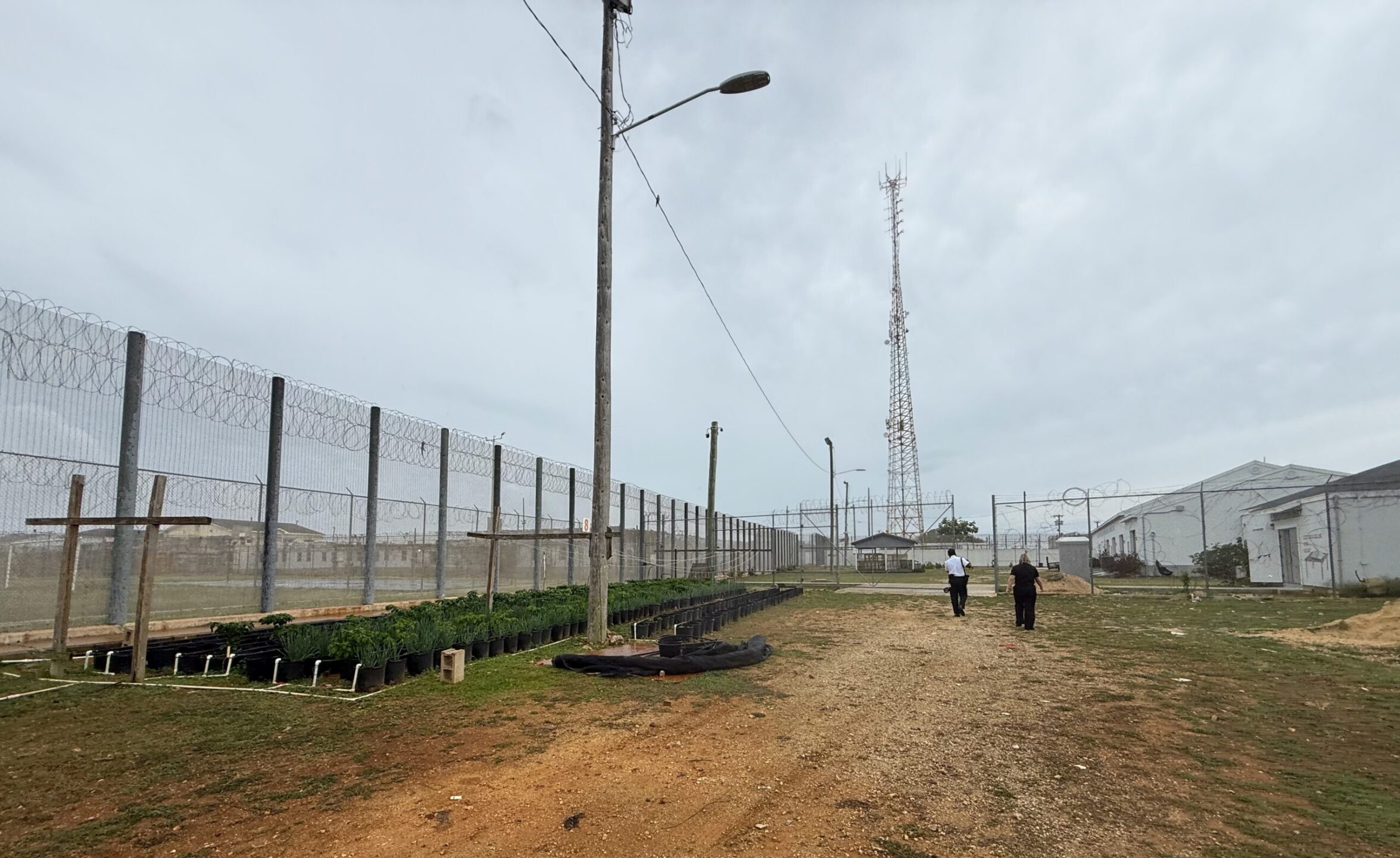
Walking through the yard, the evidence of decades of under-investment is visible.
Pipes leak into the gravel. Paint peels from the walls. Feral chickens roam freely between mesh fences. Laundry hangs on lines outside tumbledown buildings.
Prisoners call out, ‘No bail for Caymanians’, voicing frustrations put on the record in later interviews with members of the Inmate Council around the amount of prisoners being held on remand and perceived lack of action from the parole board over early release.
The multi-coloured stripes of a barber’s pole stands outside a small salon where a prisoner qualified before his sentence cuts hair for fellow inmates.
Where possible, prisoners are put to work and, where they have skills, they use them.
Inside a neat pale blue building at the far side of the compound, prisoners are earning internationally recognised trade qualifications – and using them to help keep the condemned building standing. For many, it is not a second chance, but a first.
A clearing house for Cayman’s wider issues
Not everything the prison offers for the first time is a trade or a certificate. For some, it is a doctor.
Greaves describes men who present at the prison gate asking to be taken back in because they have no shelter, income or means to survive on the outside.
“I can name specific cases where prisoners come to the gate and want us to take them in,” he said.
Barnes recalls a diabetic inmate who re-offended simply to get back inside for his insulin. Others, he says, have nowhere to live and no money to buy food.
“Some guys will do stupid s**t just to get back in,” he said.
That is why DaCosta insists he is placing a heavy focus on rehabilitation and urging employers and the wider community to play their part by providing opportunities in housing and the job market for people leaving the system. Prisoners who have a roof over their heads and a job to go to are much less likely to re-offend, he said.
“Unless we are willing to accept them back, they’ll continue pounding down the walls, begging to come back in,” said DaCosta. “This is the only structure and support that they have.”
One in three prisoners has mental health challenges
The prison’s clinical team estimates that around 30% of the population has some form of mental health need.
Many are diagnosed for the first time when they are seen by health professionals in prison. Depression, anxiety and post-traumatic stress disorder linked to childhood experiences and generational cycles of neglect and violence are common.
Dr. Ginelle Nelson, the prison’s clinical psychologist, suggests the numbers are not as shocking as they seem.
“I think that’s well within international standards,” she says of Cayman’s ratio.
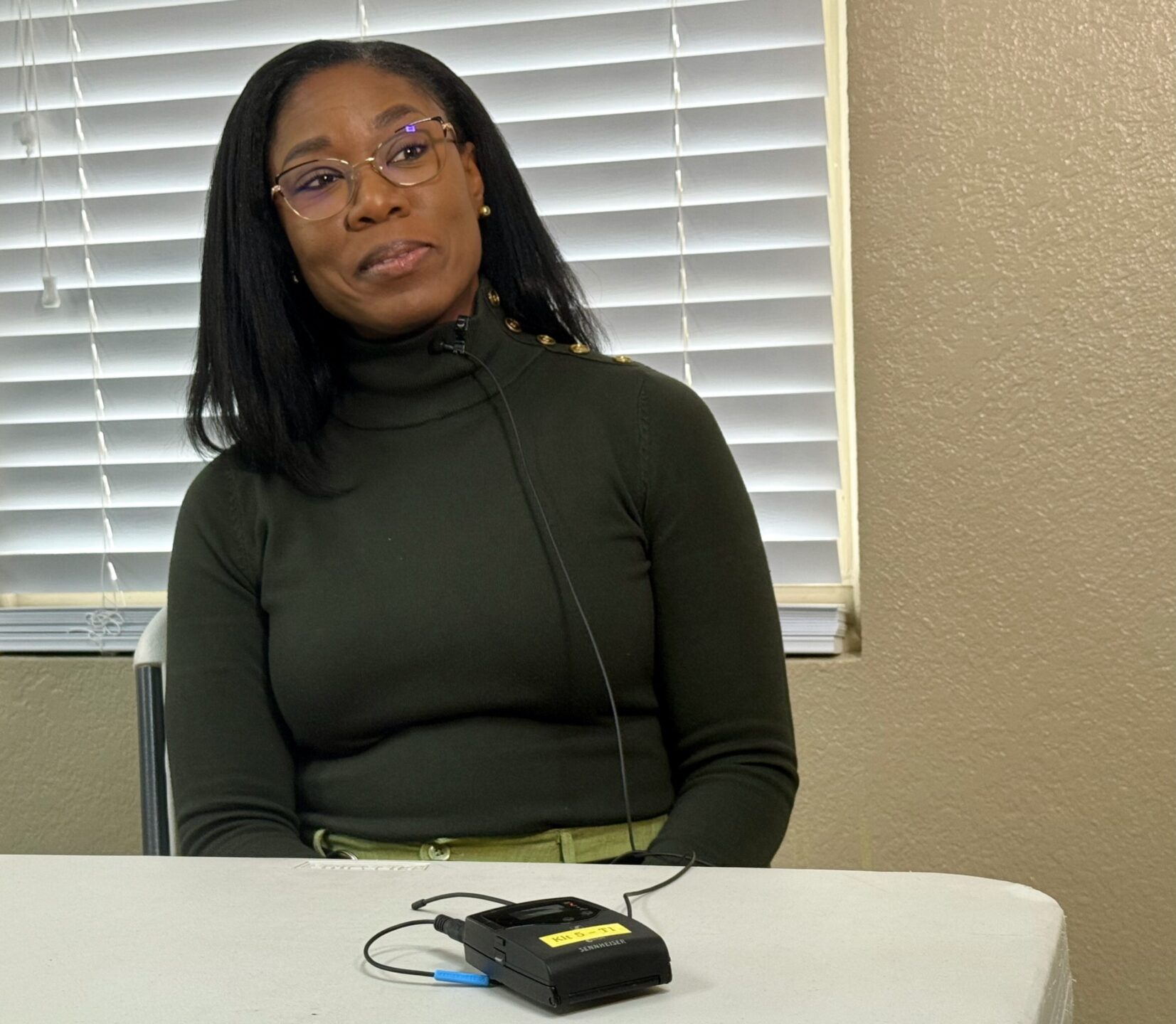
Nelson suggests around 10 to 12 individuals currently in prison have debilitating conditions that demand greater support.
For the wider population, the Department of Community Rehabilitation runs parallel programmes in anger management and trauma-informed therapy, as well as individualised case plans designed to move prisoners through risk categories toward release.
The department’s acting director, Melissa Rivas, describes a continuum of care that is meant to begin on the day a prisoner arrives and continue after they leave.
She said probation officers work with inmates to excavate the roots of offending behaviour in an effort to break the cycle.
“What are the wounds that they’re carrying? What have been adverse childhood experiences that perhaps have not been addressed the way that they needed to be addressed?” she asked.
But the size and state of the prison remains a limiting factor.
Prisoners with serious mental health issues are housed in the general population.
There is no segregated care facility, and the new Poinciana mental health facility is not currently equipped for incarcerated patients.
When HMP Northward is near capacity, the problems compound.
At current population levels, leaders of the Inmate Council warn, it becomes nearly impossible to properly separate inmates with acute mental health needs from the general population.
Overcrowding worsens symptoms, escalates crises and increases safety risks for both inmates and staff.
Citing an earlier Human Rights Commission report, the council warned that the cell blocks were “like a tinderbox” waiting to explode because of these pressures.
Back on the cramped corridors of the wing, the claustrophobia is evident. It is more than a decade since the cell blocks were publicly labelled by UK inspectors as unfit for human habitation.
And inmates are skeptical about the possibility of change now.
“This place has been condemned how many times and we are still living in it,” said Barnes.
Inside Stories is a multi-part series looking at the conditions in Cayman’s prison system. Look out for more stories in print, online and on television.
Related Videos







“The Governor’s Office which has oversight of the Prison Service is monitoring human rights concerns”. What on earth is the point of monitoring this dire situation if they seemingly do nothing about these very serious problems. Time for the Governor to speak up!.
One very easy way to avoid this. Don’t do illegal stuff.
The 50 year old guy who is in and out of there since he was a teenager clearly does not mind it much.
How many Directors of Prison have been trying to convince government to build new facilities? I suppose politicians vanity projects like Scranton Park are more important than safety, security, and rehabilitation. Northward and Fairbanks are obviously well past the point of effective maintenance. The UK needs to step in and help finance a brand new prison because it will never happen otherwise – were plans not recently done when the last Director was there?