Cayman’s Minister for Finance and Economic Development Rolston Anglin told the Compass his ministry has decided to increase the islands’ insurance coverage for natural catastrophes.
“We agreed within the Ministry of Finance that it was time to review the current coverage level – it has been in place for a considerable period of time,” said Anglin. “Our exposure has increased. The country has grown, and there are more assets at risk.”
The rapid expansion of Cayman’s population, economic output and built environment means the jurisdiction could see much higher monetary losses if hit by a hurricane. Moreover, inflation in construction costs means that even replacing an old building will need more insurance cover now than it did a decade ago.

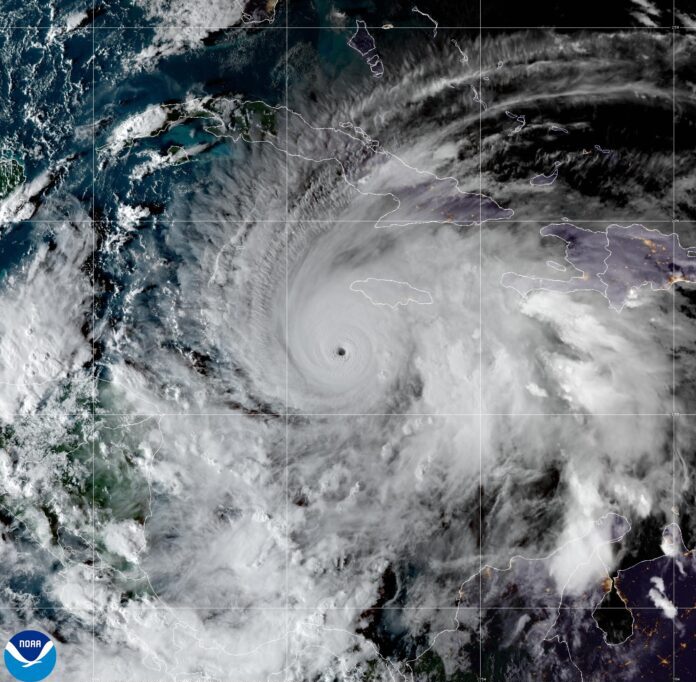
There are various insurance options available to Cayman. One would be to issue a natural catastrophe bond independently. This type of bond proved useful to Jamaica, after it was hit by Hurricane Melissa last October.
Another option is to increase Cayman’s coverage in CCRIF SPC, formerly known as the Caribbean Catastrophe Risk Insurance Facility. Again, CCRIF coverage proved vital for Jamaica in the wake of Melissa.
There are also different types of natural catastrophe cover. Parametric insurance pays out quickly if a natural catastrophe reaches certain meteorological metrics, such as wind speed, rather than waiting for the cost of damage to be assessed, like traditional insurance. Parametric insurance was particularly helpful to Jamaica because Melissa was a Category 5 storm that triggered maximum payouts. It can be less helpful with smaller storms that cause damage but don’t reach the meteorological criteria to earn a payout. For example, Jamaica’s catastrophe bond didn’t pay out in the wake of Hurricane Beryl in 2024.
So far, Anglin remains tight-lipped on which option he will recommend to government. “We will look at all options, including catastrophe bonds, increasing traditional coverage, and parametric solutions, and then assess them holistically,” said Anglin.
With regard to Cayman issuing its own natural catastrophe bond, Anglin said: “It comes down to cost. The key question is whether the cost justifies going down that route.”
And in relation to increasing Cayman’s CCRIF deal he said: “We are also reviewing our current level of coverage. I will need to make a decision on that shortly, as hurricane season is approaching and policies are up for renewal.”
Lower premiums for Cayman?
Cayman’s need for increased natural catastrophe cover comes as the global reinsurance market is ‘softening’ following hard years in 2023 and 2024.
“For the years 2023 and 2024, there was a contraction in available reinsurance capacity,” said Michael Gayle, CEO of Cayman’s government-owned insurer CINICO, who also serves on the board of CCRIF. “But as rates have gone up locally we have seen a return of capacity in the reinsurance market, [that is] coupled with the fact [that international reinsurers] had a couple of good years – Hurricane Melissa for example didn’t really move the meter in the international reinsurance market it fell within the range of expected losses for the year.”
Gayle was speaking specifically about the property insurance market, yet he said the same dynamics would apply broadly to Cayman’s coverage as a jurisdiction.
And so far, 2026 has continued the favourable trend. Gallagher Re’s Q1 2026 Natural Catastrophe and Climate Report estimates that economic losses from natural catastrophes were approximately US$58 billion in the quarter, 12% below the 10-year average. Meanwhile, insured losses came in at a minimum of US$20 billion, which was 26% below the mean figure for the decade.
“Market conditions can make premiums more favourable at renewal,” said Anglin. “However, for government, the primary consideration is risk, not just price. The key issue is exposure – there is more at stake now. That is why we are reviewing our position before renewal.”
Related Videos