 Earlier this month, four astronauts aboard NASA’s Orion spacecraft completed a loop around the moon, the first crewed lunar flyby in over fifty years. Artemis II captured many imaginations and reminded investors of the potential growth in the space economy. Against that backdrop, SpaceX is quietly advancing plans for what could be the largest IPO in history, reportedly targeting a valuation of US$2 trillion.
For Cayman-based investors watching this unfold, the question is not whether SpaceX is a remarkable company, it clearly is, but whether remarkable is enough to justify the price.
Starlink: The engine beneath the rocket
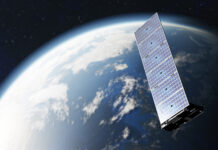
SpaceX’s commercial story rests on two pillars. The larger by far is Starlink, the low-Earth-orbit satellite broadband network that generated an estimated US$10 billion to US$11 billion of the company’s roughly US$15 billion in total 2024 revenue, more than two-thirds of the business. EBITDA margins are running around 60%, which is well above the 30% to 40% typical of terrestrial telecoms.
The structural reason is straightforward, once a satellite constellation is in orbit, the incremental cost of adding a new subscriber is close to zero. There are no trenches to dig, no cell towers to maintain, no last-mile crews to dispatch. Fixed costs are front-loaded into launches; after that, every new customer flows almost directly to the bottom line.
The addressable market for this model is genuinely large. Satellite broadband analysts put the global opportunity at US$50 billion to US$100 billion annually within the decade, and Starlink is still serving only a few million of the potential tens of millions of customers. The growth vectors are clear, remote and rural communities underserved by fibre-optic cables, maritime shipping and superyachts. You also have commercial aviation – where airlines are already paying premium rates for inflight connectivity – disaster-recovery and emergency services when ground networks fail.
Perhaps the most lucrative field is defence. Military contracts command the highest margins in the sector and Starlink’s proven utility in contested environments has moved it firmly onto defence procurement lists in multiple NATO countries. Analysts project Starlink revenue could compound at 45% to 55% annually through 2030, reaching US$45 to US$55 billion per year if user growth targets are met.
Launch is profitable but not the growth story
The second pillar, launch services, contributed roughly US$4 billion to US$4.5 billion in 2024 revenue and includes Falcon 9 missions for NASA, the US Department of Defense, Space Force, and commercial satellite operators. NASA accounts for only around 5% of total company revenue, a figure that surprises many observers. The global space launch market is approximately US$15 to US$20 billion today, growing to perhaps US$35 to US$40 billion by 2030. SpaceX’s dominant position in that market is secure for now but launch alone will not carry a US$2 trillion valuation.
Future speculative revenue lines
To reach US$2 trillion, the market must be pricing in several businesses that barely exist today. Orbital data centres are generating real venture capital interest. Starcloud recently achieved a US$1.1 billion valuation after launching a satellite equipped with an Nvidia H100 GPU, on the premise that space offers unlimited solar power and natural vacuum cooling with no grid costs or planning permission. The counterargument is equally real, you cannot pop open a panel in orbit to swap a failed chip, and radiation degrades GPUs faster than on the ground. Proponents suggest making the satellites disposable, deorbiting and relaunching with upgraded hardware on a regular cycle, much as Starlink does with its constellation.
In-orbit manufacturing is perhaps the nearest-term of the speculative lines. Microgravity enables the production of materials impossible to make on Earth at scale: purer optical fibre, higher-quality semiconductor crystals, and pharmaceutical compounds with superior consistency. Companies such as Varda Space are already flying capsules, processing materials, and returning products to Earth.
Further out sit space-based solar power, collecting continuous sunlight and beaming energy to ground receivers via microwave, point-to-point Earth transport using Starship as a suborbital vehicle, and eventually asteroid resource extraction. These markets range from early-stage to purely theoretical, and their combined near-term TAM is measured in the low billions, not the hundreds of billions needed to move the needle for a US$2 trillion enterprise.
The valuation question
At US$2 trillion, SpaceX would rank alongside Alphabet and Amazon as one of the five most valuable companies on Earth, trading at roughly 100 to 125 times 2025 revenues and over 200 times EBITDA. Compare that to peers: Verizon and AT&T trade at one to two times revenue with single-digit EBITDA multiples; Nvidia, the AI darling of the moment, trades at around 22 times revenue.
Even accepting Starlink’s superior margin profile and growth rate, those multiples demand flawless execution across every existing business line and successful commercialization of several businesses that remain unproven. A more grounded bull case, Starlink hitting US$50 billion in revenue by 2030, Starship generating meaningful commercial lift revenue, and one or two new verticals gaining traction, might support US$700 billion to US$900 billion. Getting from there to US$2 trillion requires a leap of faith that goes beyond fundamentals.
View for Cayman investors
SpaceX is a genuinely extraordinary business. Starlink’s operating leverage, its growing defence revenues, and its structural cost advantage make it one of the most interesting companies to come to public markets in a generation. The problem is the price. A US$2 trillion entry point demands near-perfect execution across multiple business lines simultaneously, the rapid commercialisation of several speculative revenue streams, and continued market willingness to apply growth-stock multiples to what is, at its core, a capital-intensive infrastructure and communications company. That is a heavy burden for any management team, visionary or otherwise.
Hyped IPOs have a long history of disappointing early investors even when the underlying business eventually succeeds, the entry price matters enormously. I would rather watch SpaceX season as a public company before committing meaningful capital. In the near term, the recent geopolitically driven sell-off in AI infrastructure names offered a more attractive risk-reward proposition, established earnings streams at depressed multiples, without the speculative premium.
We continue to favour adding selectively to AI infrastructure, while increasing exposure to hard assets as a hedge against the resource scarcity that often accompanies elevated geopolitical risk. SpaceX belongs on every serious investor’s watchlist. At US$2 trillion valuation, it does not yet belong in the portfolio.
Robert Whelan, a chartered accountant, is the portfolio manager at NCB Capital Markets (Cayman) Ltd.
Related Videos