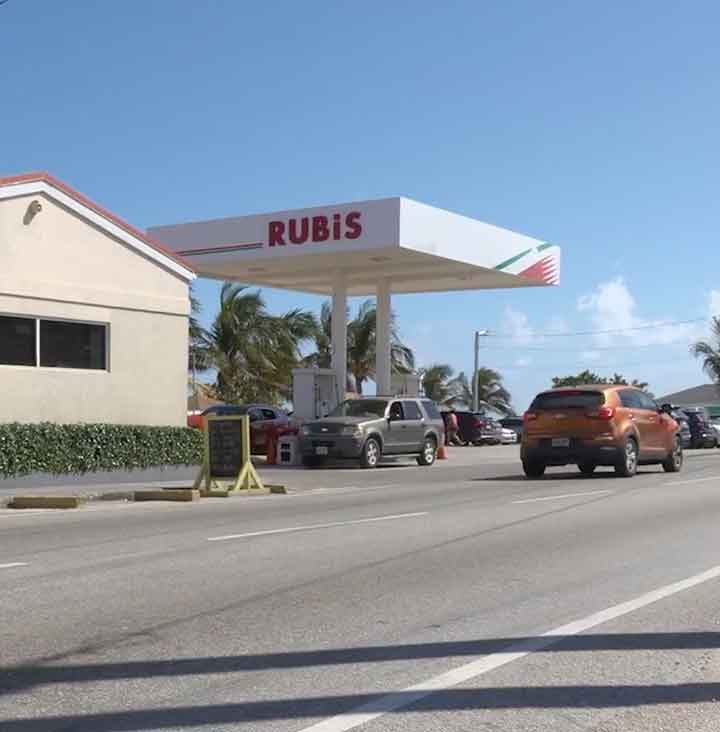
Consumers will not see the benefits of the fuel duty waiver that came into effect on 1 June until gas stations use up their stocks of fuel on which tax has already been paid.
Rolston Anglin, the finance minister, said that fuel “held in storage tanks across the supply chain was imported before the waiver took effect and already had duty paid on it”.
Anglin added, “As a result, it may take several days for existing inventory to be fully utilised before duty-free fuel begins flowing consistently through to consumers at the pump.
He added, “Service stations must first dispense their existing duty-paid inventory before refilling with duty-free fuel from wholesalers and this will vary from station to station due to the varying volumes that they sell.”
Anglin predicted that busier service stations that sell greater volumes of fuel would drop prices more quickly than smaller stations with less of a turnover.
But he said that the ministry, the Utility Regulation and Competition Office and Customs and Border Control were working together to minimise any delays and to ensure the public reaped the benefit of the relief measures as soon as possible.”
Fuel wholesalers will get duty credit for all duty-paid gasoline and a diesel that remained in their tanks on Sunday, 31 May.
The credit will be applied against future import duty obligations after the normal duty regime is restored in October.
‘Immediate effect’ on wholesale prices
Anglin explained that would help ensure that the duty cut would have “immediate effect” on wholesale fuel prices from 1 June and prevent any individual wholesaler from gaining a competitive edge, as well as allowing the relief measure to benefit consumers as fast as possible.
Dow Travers, the founder and CEO of Refuel gas stations, said the fuel duty relief plan was “a workable solution”.
“Whether it is the most proportionate or fair way to implement it, however, will depend largely on how it ends, which has not yet been confirmed,” he said.
“But if it ends in the same, but reverse, manner, with all fuel remaining in wholesale tanks at the end of the programme being charged duty, that would be agreeable.”
Travers added that the government now had an excellent opportunity to support the National Energy and the Climate policy by considering the findings and recommendations of the 2020 Public Accounts Committee report.
“The PAC report recommends that the government consider waiving duty on biodiesel and any other products that would help the move to greener fuel and contribute to the National Energy Policy,” he said.
“When duty is restored in October, we view it as an excellent opportunity for the Cayman Islands Government to waive the duty on the renewable portion of the fuel … and as the Public Accounts Committee said, ‘contribute to the National Energy Policy'”.
$9 million package
The duty-waiver measures, which are intended to help cut the cost of living, will run for four months, covering consumption in the peak summer months of June through September, and include a cap of $0.18 per kilowatt hour on what power firms CUC and Island Energy can charge residential customers.
Government estimated the electricity cap alone will save a household that used 1.750 per kilowatt hour a month up to $105 on their bills.
The coalition government announced the $9 million package of cuts at the end of April, which will cover gasoline, diesel and propane and it was approved last month.
The move came amid an escalation in conflict in the Middle East, which has led to a global surge in oil prices.
Gasoline under the normal regime attracts import duty of 75 cents per imperial gallon and diesel has an 85-cents-per-gallon duty charge levied on it.
Diesel fuel imported imported for electricity generation is taxed at 25 cents per gallon.
Related Videos