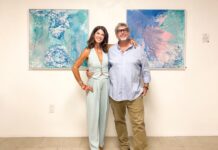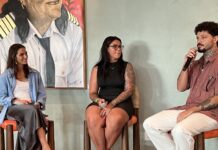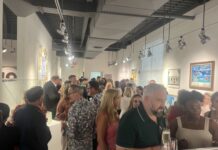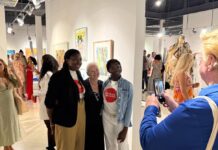
Cayman’s week-long celebration of its thriving art scene staged its penultimate event with a whistlestop bus tour of a string of galleries and pop-up exhibitions.
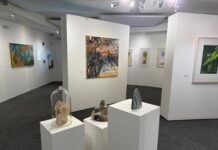
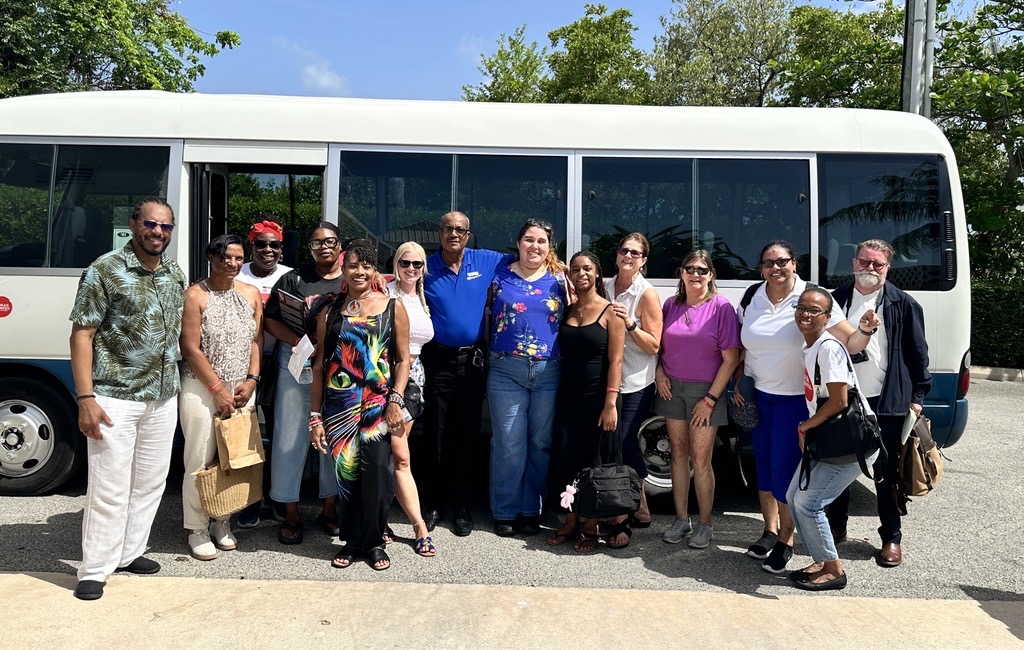
Buses queued at the National Gallery of the Cayman Islands to transport dozens of people around a dozen sites designed to showcase the huge variety of artistic endeavour,
Art outdoors was on show at Harbour Walk at Red Bay’s Grand Harbour, with two different exhibitions.
Kevin Rolle, who paints as Ramah and teaches art at Triple C School, said it was important to draw on personal experiences and memories to make art.
He highlighted his own fight against a cancer diagnosis and his work “Aftermath”, a hurricane-ravaged palm tree after the storm, battered but a survivor.
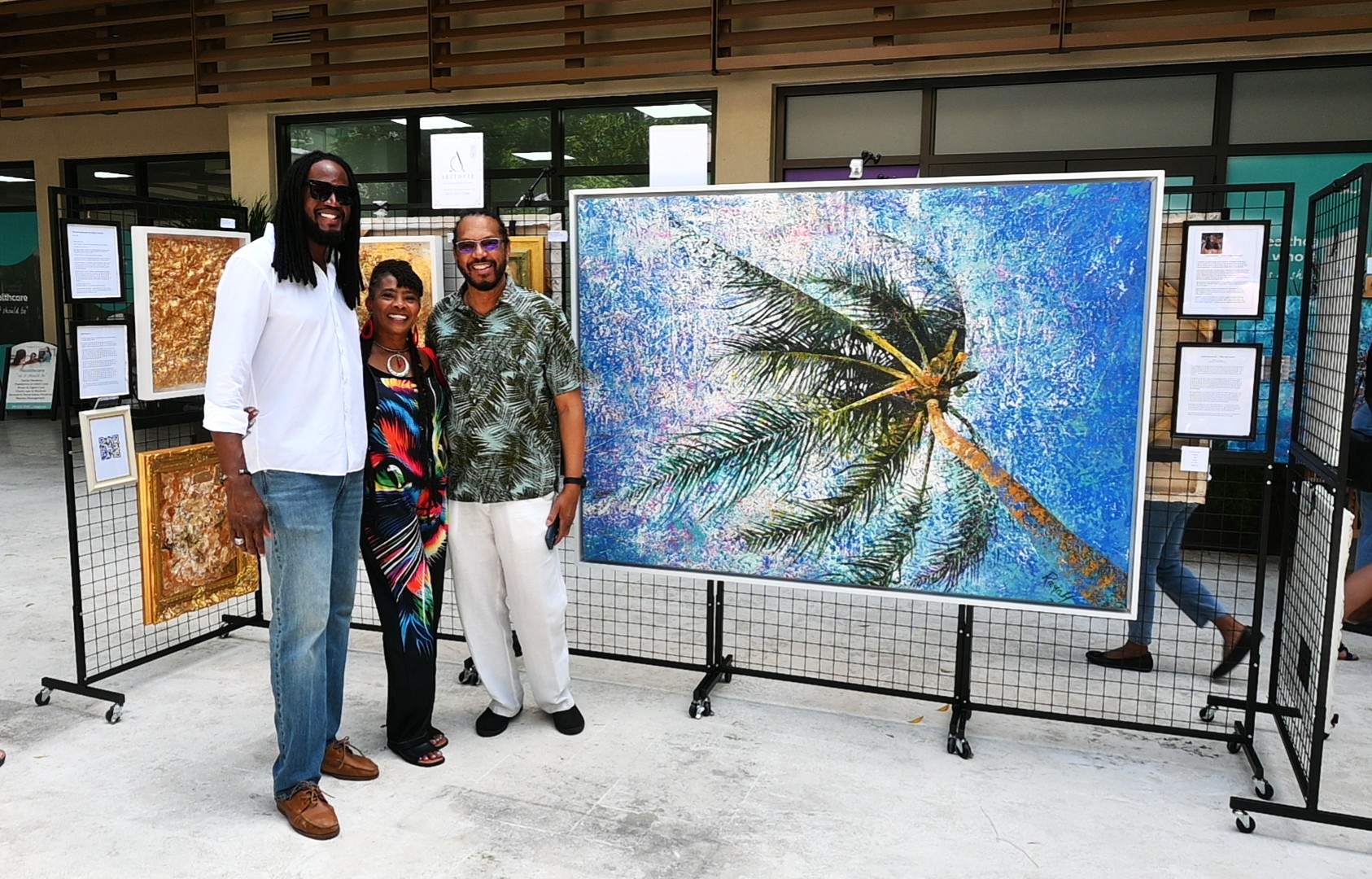
Rolle said, “When I experienced cancer, it was like a hurricane experience, and I was able to bounce right back from that experience.”
He added, “I wanted to inspire people who have worked through that. The palm tree is a symbol of the Caribbean people, a symbol of what the Caribbean is. The people are resilient and I believe this island is a resilient one.”
A visit to Scott Swing’s studio in George Town, a once-a-year open day for the general public, and the “Adrift” exhibition featuring several artists was a rare treat.
His massive 8-foot-by-8-foot work “The Journey”, which was a year in the making, commanded attention.
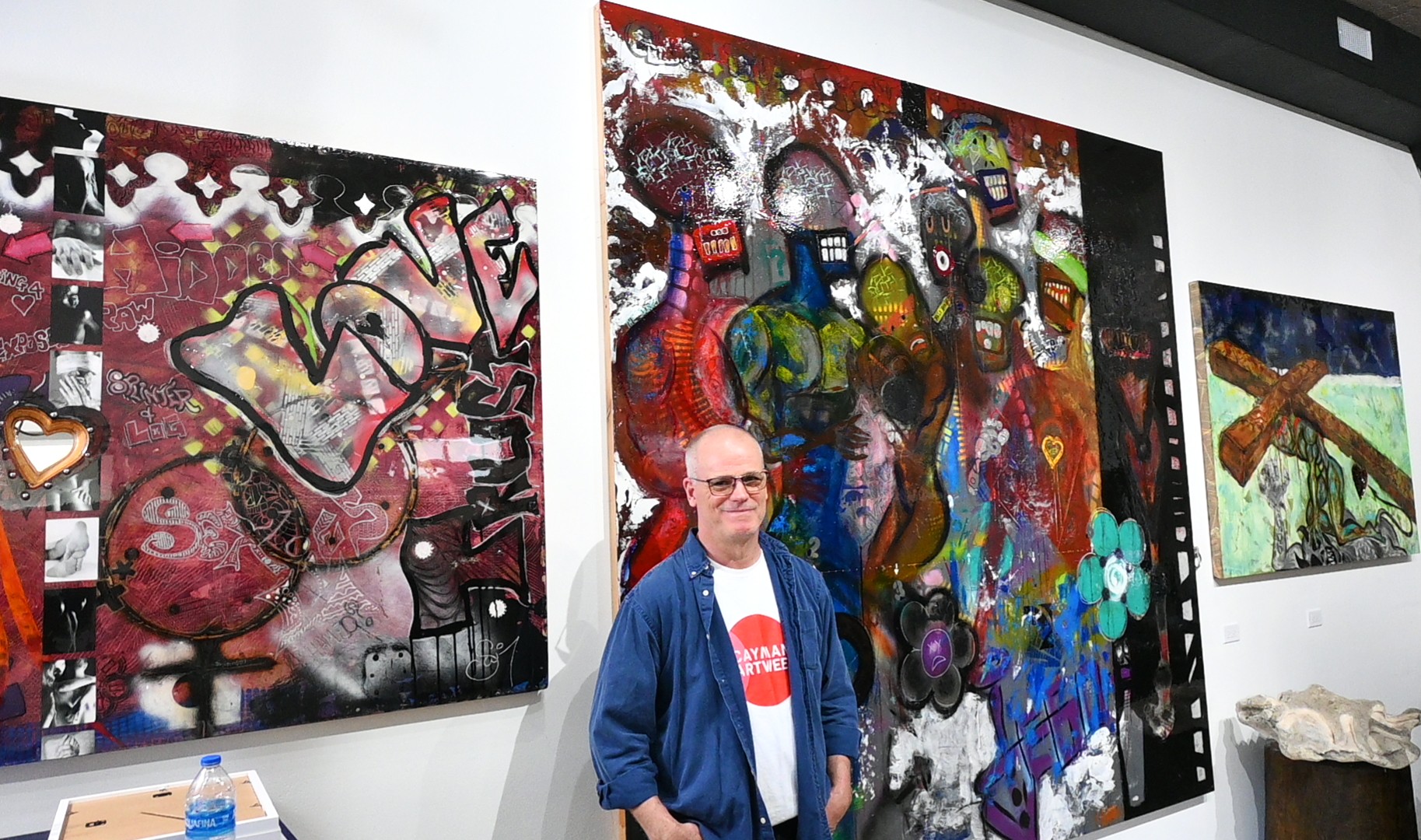
“For me, when I’m doing pieces, it’s about getting out the energy, whether it’s negative, positive, indifferent, happy or sad,” Seing said.
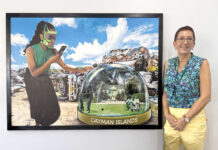
The dark and brooding artwork was countered by a playful take on the 1960s pop art revolution, a giant domino created for a National Gallery show.
The next stop was a real trip down memory lane. The Mind’s Eye Centre on South Sound Road, George Town, where the former home of the late Gladwyn K. Bush, a renowned folk artist also known as Miss Lassie, has been transformed into an artwork in its own right, alongside a more conventional gallery.
Tatiana Tibbetts was one of the artists working at the Visual Arts Society at Pedro St. James in Savannah.
She said she had always loved drawing but had fallen in love with ceramics when she moved to Cayman from her homeland of Brazil.
Tibbetts said, “I love painting, so I transferred my love of ceramics into painting plates.”
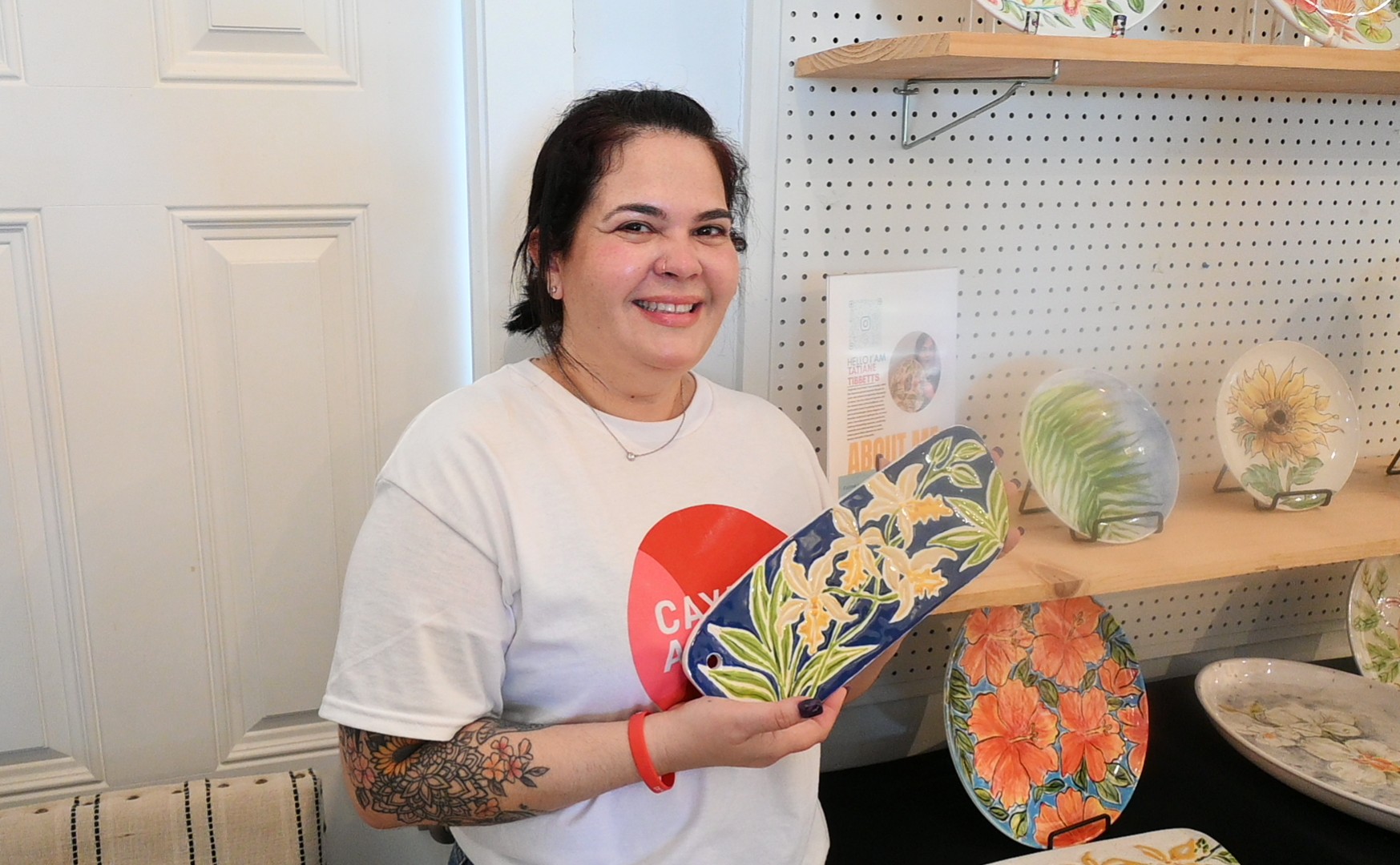
She said she used the Spanish-derived cuerda seca technique, which uses wax to create outlines which are filled in with paint. The method also leaves slightly raised patterns, adding depth to the work.
Tibbetts specialises in flowers, reminiscent of works by post-Impressionists Henri Rousseau or Paul Gauguin, who both produced works inspired by tropical flora.
“Art is so important. It’s how we keep things alive,” Tibbetts said. “Cayman Art Week is changing the way the Cayman Islands sees art. People can meet artists and all kinds of people come in and see what’s around. It’s a way to keep inspired.”
Mary McCallum, administrator for the Visual Arts Society, said art week “gives us good coverage and gives the artists confidence to come out and show their artwork”.
She added, “I have watched artists over the years grow from the work they started with to what they are doing now.”
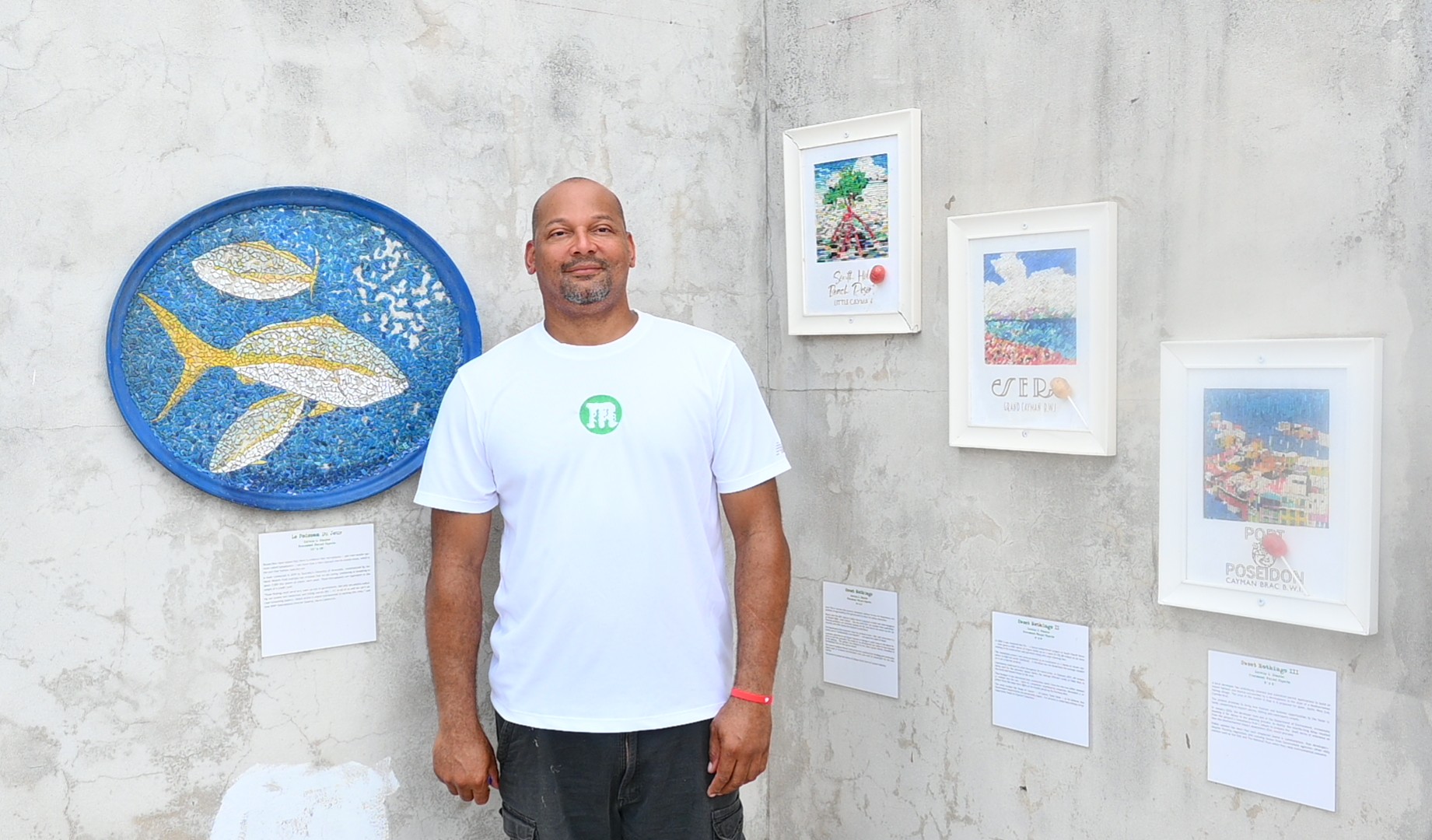
Kerwin G. Ebanks’ work, on show in Gram Bella’s, the shell of a home on Rum Point Drive in North Side, is … well, garbage. But in the best possible way.
Ebanks, an art teacher at John Gray High School in George Town, creates intriguing and thought-provoking multi-media eco-art by repurposing shoreline waste, recycled materials and found objects. He has pulled a range of his creations together in a show called “Manavelins“, nautical slang for odds and ends and, in Cayman, a mixed parcel of turtle meat containing skin, fat and organs.
His work features items such as discarded disposable lighters, hair clips, lollipop sticks, ghost fishing nets and tackle and other flotsam and jetsam washed up on Cayman’s shores.
Ebanks said he had been a painter but was inspired to use garbage to create art after he noticed “more and more trash” on beaches he walked on.
He added, “I started wondering what kind of world would we leave behind for our kids?
Ebanks said he decided to use the trash he saw to put his own artistic spin on the environment, although he was at pains to point out he didn’t see himself as an environmental campaigner.
“It’s marching to the beat of my own drum, I guess,” he said.
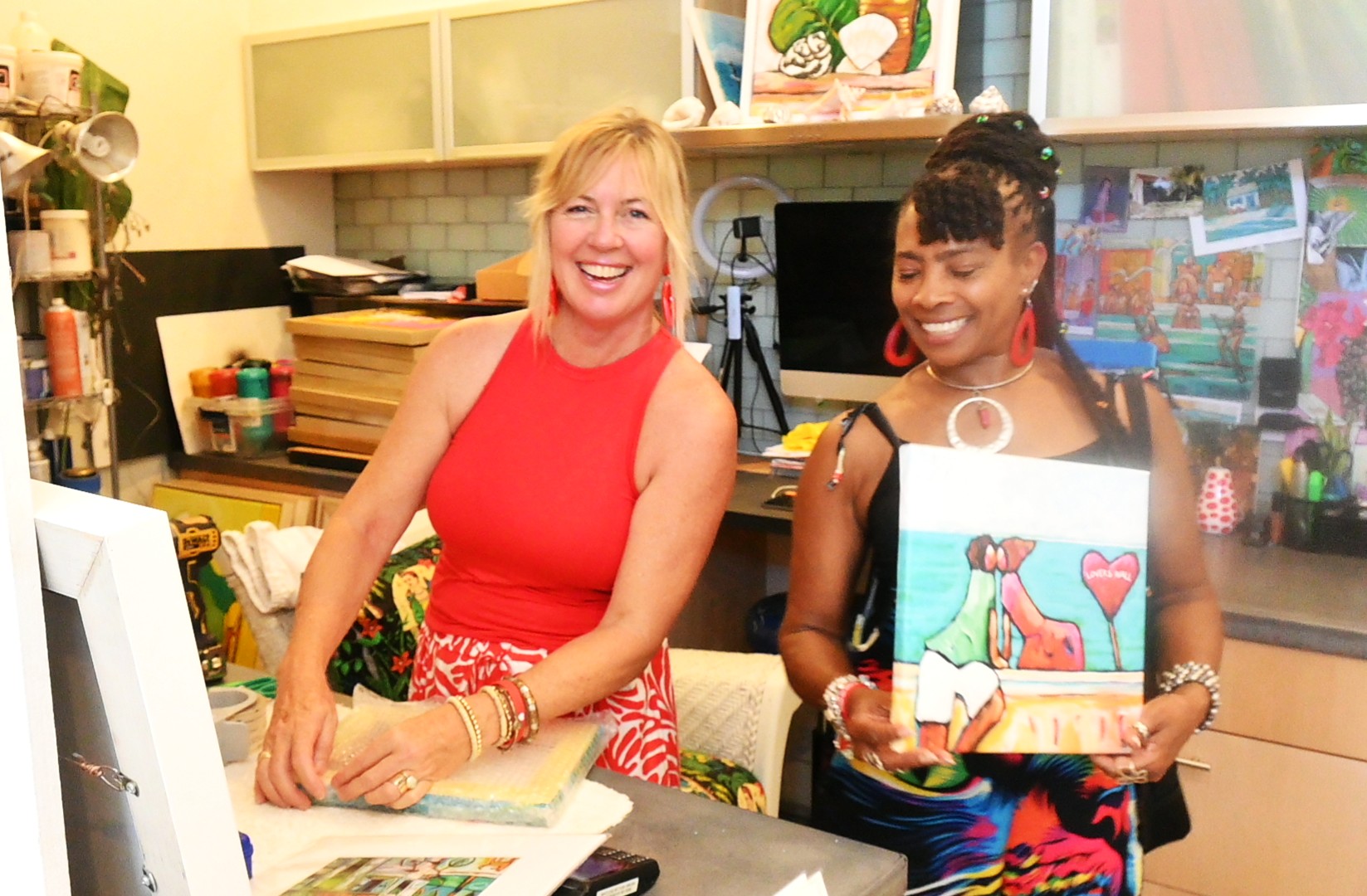
The work of Kay Smith, whose studio is in Bodden Town, draws inspiration from pop art icons such as Andy Warhol and Roy Lichtenstein, sci-fi and Japanese manga and anime.
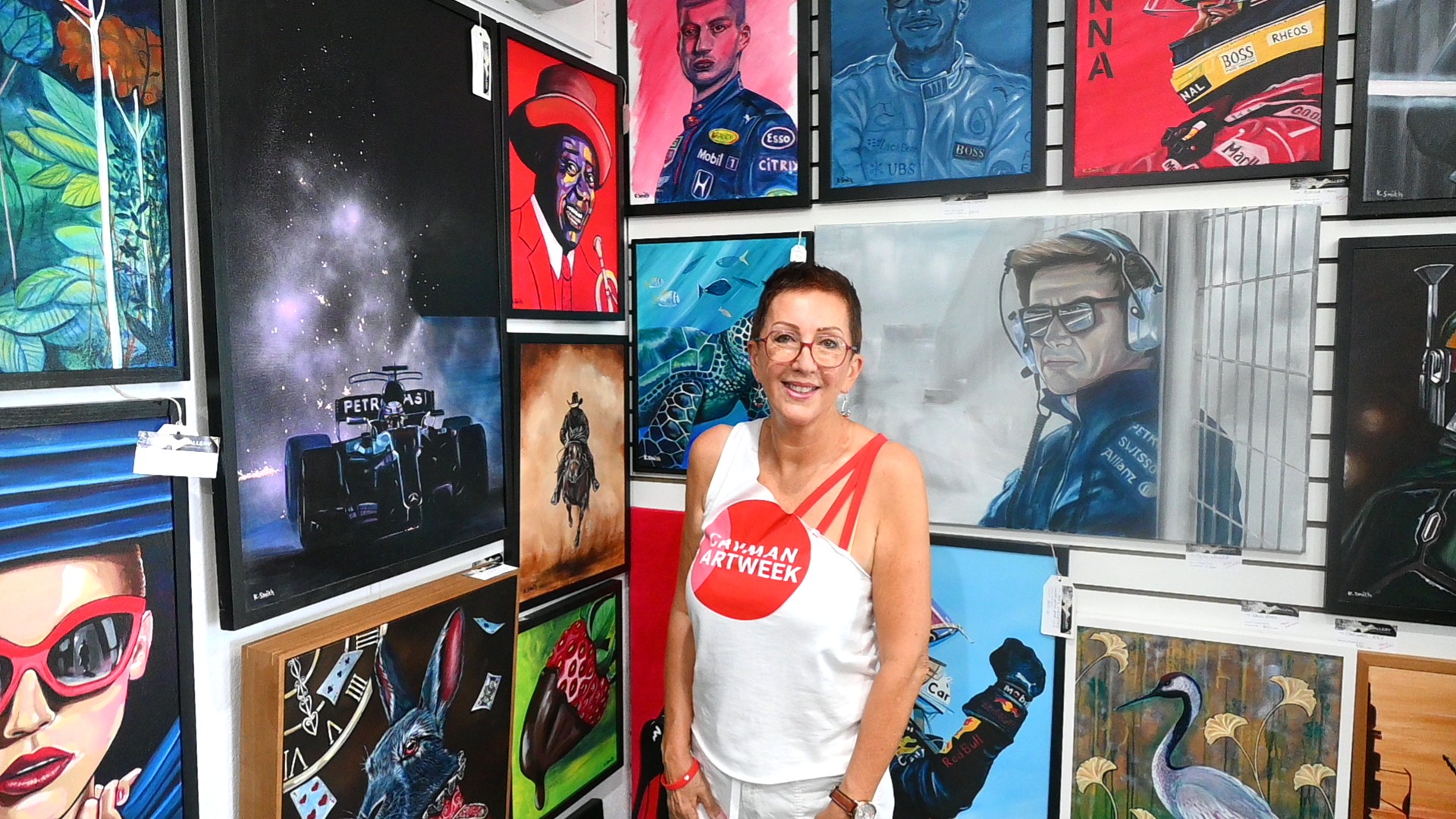
Smith, originally a graphic designer, said, “It’s kind of vintage pop art, mixed media, particularly acrylic.”
Some of her work also featured shades of Edward Hopper’s famous “Nighthawks” oil painting that defined American realism.
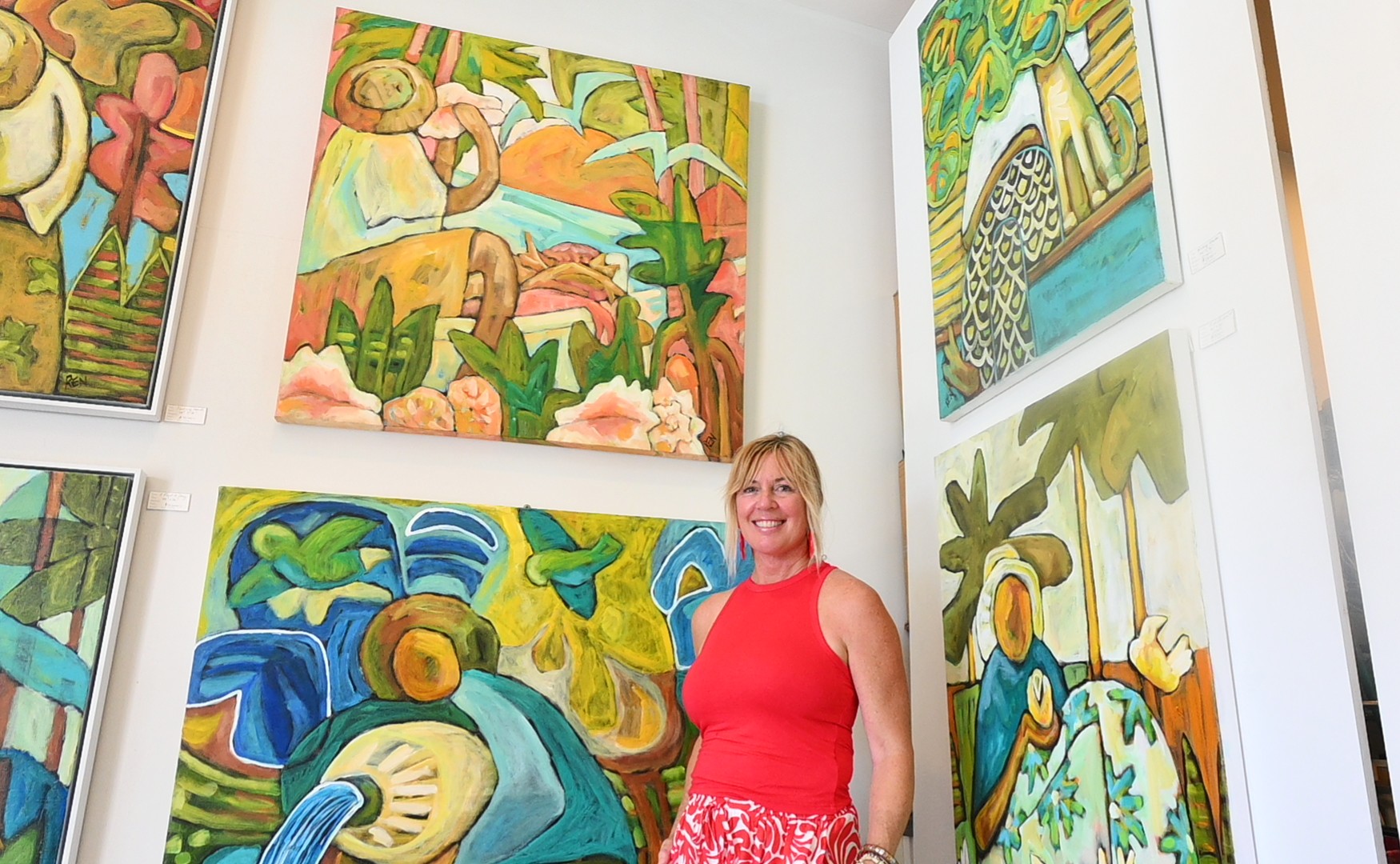
Ren Seffer, who owns White Dog Art in Breakers, displays more than a touch of Expressionism in her bright and bold canvases.
She said, “I love colour … I’m inspired by the surroundings and the people here and I love the older Cayman. I love to paint the cottages because that has to be preserved. The old-time Cayman is just disappearing.”
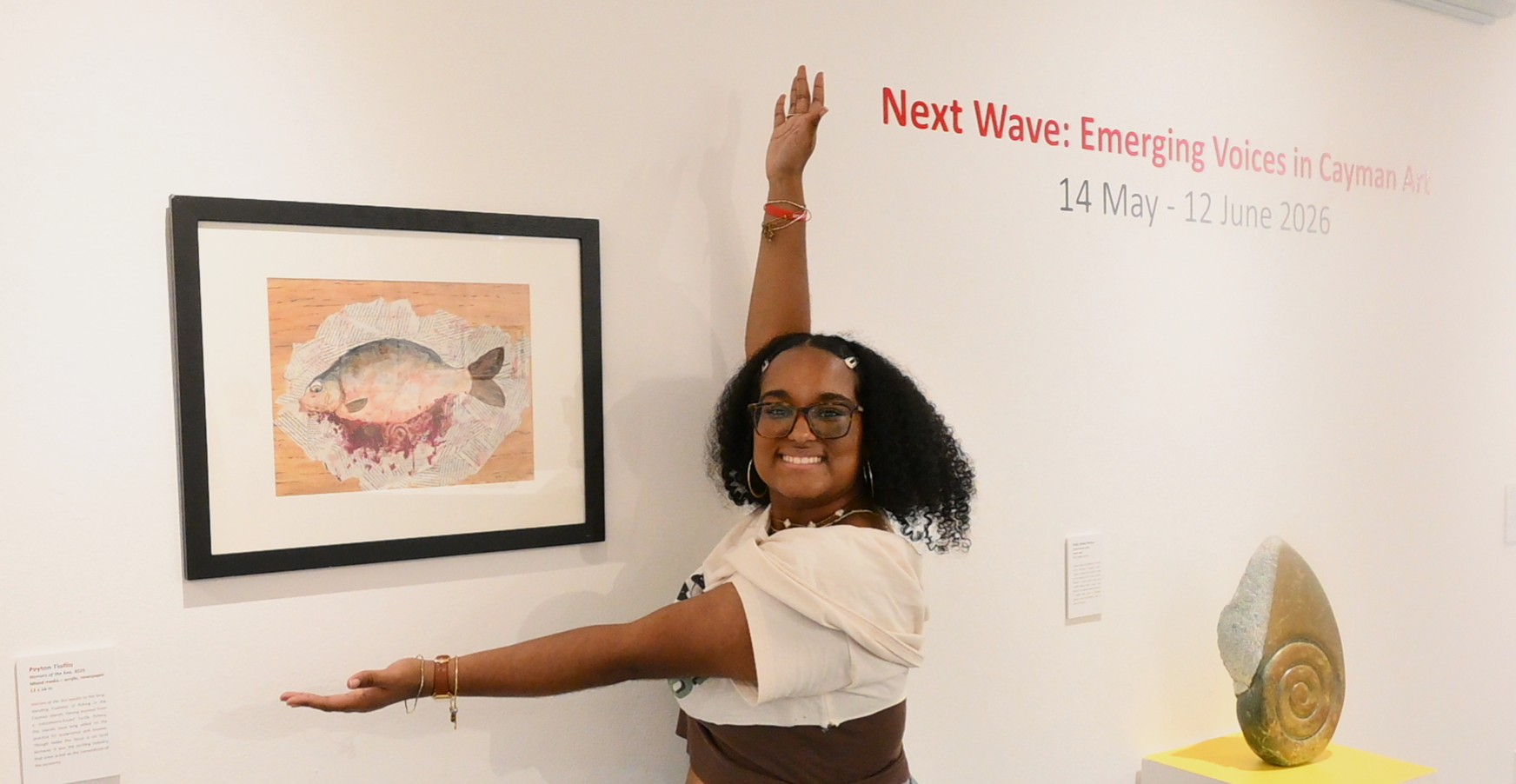
One of the passengers on the bus trip, Peyton Tiofilo, 17, of Cayman Prep and High School, earned herself a coveted spot in the National Galleries “Next Wave: Emerging Voices in Cayman Art” and said she hoped to go on to study art overseas.
She added art helped define and preserve a culture.
“All forms of history are preserved through some form of art from the first cave paintings,” she said.
Related Videos