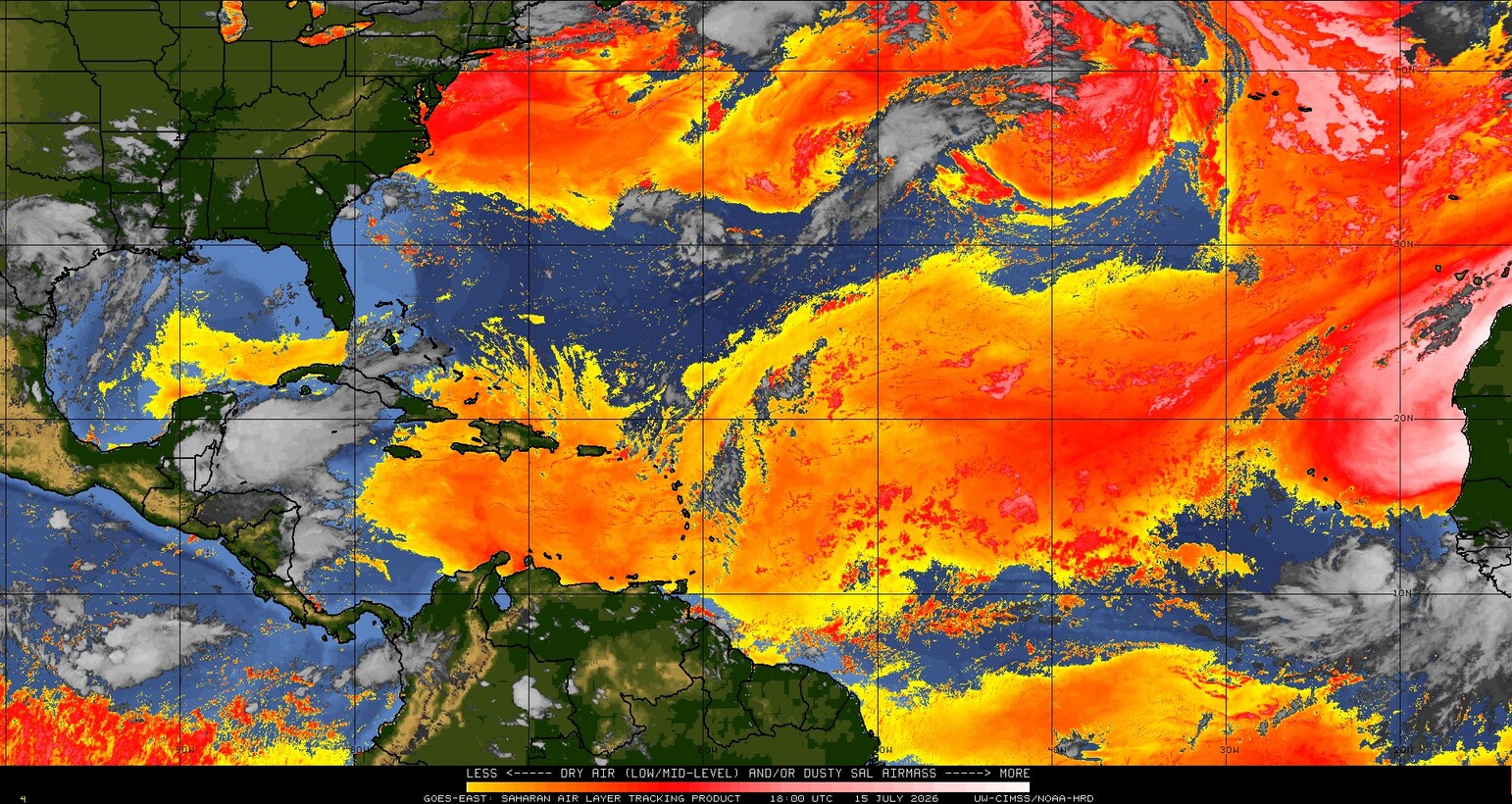
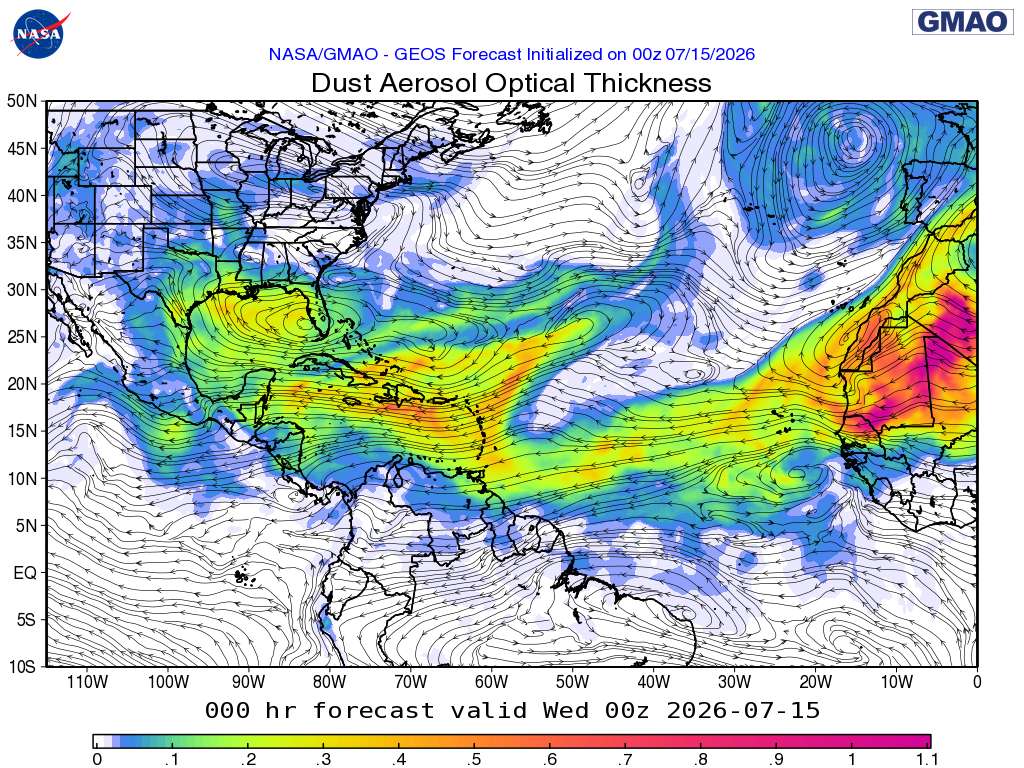
A fresh plume of Saharan dust has prompted another Dust Alert for the Cayman Islands, with forecasters warning that thick concentrations of airborne desert dust will continue affecting the islands through the afternoon of Thursday 16 July before gradually easing.
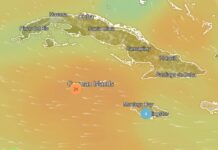
According to the Cayman Islands National Weather Service, dense Saharan dust circulating around a high-pressure system over the northwestern Caribbean moved across the islands on Tuesday, 14 July. Conditions began improving from Wednesday morning, although hazy skies are likely to persist until the alert expires on Thursday.
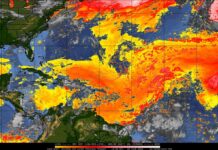
The latest event is another reminder that the Cayman Islands sits directly in the path of the annual Saharan Air Layer, a vast mass of hot, dry, dust-laden air that forms over North Africa before travelling more than 5,000 miles across the Atlantic on the trade winds.
While the dusty skies have become a familiar feature of Caribbean summers, meteorologists note that this is also the peak season for Saharan dust outbreaks. From late June through mid-August, new plumes typically emerge from the west coast of Africa every three to five days, with some travelling as far as the Caribbean, Gulf of Mexico and the southern United States.
Health concerns
Cayman Islands residents and visitors are once again being urged to take precautions, particularly those with asthma, chronic obstructive pulmonary disease, allergies and other respiratory conditions. Health officials advise limiting prolonged outdoor activity, keeping doors and windows closed where possible, using air conditioning on recirculation mode, staying well hydrated and ensuring inhalers or other prescribed medications are readily available.
Although most healthy people experience little more than mild throat, eye or skin irritation, the microscopic particles suspended within the dust can penetrate deep into the lungs and temporarily worsen existing respiratory illnesses.
Role in shaping the weather
Beyond its effects on human health, the Saharan Air Layer plays an important role in shaping Caribbean weather.
The same hot, dry air responsible for hazy skies also suppresses cloud formation and afternoon thunderstorms, often contributing to hotter-than-normal daytime temperatures. Meteorologists say the air mass contains roughly half the moisture found in a typical tropical environment, while strong winds within the layer can disrupt developing tropical systems.
Those conditions are one reason forecasters expect relatively quiet tropical activity during the coming weeks. Combined with the influence of El Niño, the persistent Saharan dust is helping to create an environment less favourable for hurricane development across the tropical Atlantic, although officials stress the effect is temporary and does not eliminate the threat later in the season.
Scientists continue to monitor these immense dust plumes using weather satellites, allowing them to track the movement of dust, dry air and upper-level winds from Africa across the Atlantic and improve forecasts for both air quality and tropical weather.
Related Videos