

At root, international affairs define the practical obligations that countries agree they owe the other. In light of the pattern of events that have occurred in the Cayman Islands since its introduction to the international financial scene up to today, we believe it is instructive to undertake a clear-eyed assessment of the true nature of our country’s relationship with the United Kingdom.
No one, we would argue, is more loyal than Cayman to the Queen, but the U.K. as an entity has many distinct facets, including Parliament and popular opinion, two worlds where Cayman is not held in particularly high esteem.
The usual prism through which Cayman interacts with the U.K. is the Foreign & Commonwealth Office, which, it must be emphasized, is just one department within the U.K. government. Its function is not to promote Cayman’s interests to the U.K., but primarily to protect British interests abroad.
Although some of the U.K.’s representatives in Cayman have made efforts to advocate for Cayman in the U.K. as well — most notably former Governors Peter Smith and John Owen — for the most part any “loyalty” between Cayman and the U.K. has flowed in a one-way direction, from us to them.
The latest British-honed dagger to find its way into Cayman’s back is the U.K. Financial Conduct Authority’s “high risk country list” that placed Cayman in the company of despots, terror financiers and narcotics dens, such as Iran, Saudi Arabia and Afghanistan — despite near-universal third-party acknowledgement of the robustness of Cayman’s financial laws and regulations.
Where was the FCO to defend us, or even notify us, that we were alone among British territories on the high-risk list? They were about as much help to Cayman as they were in the aftermath of Hurricane Ivan in 2004.
Of course, when the U.K. does try a hands-on approach with Cayman, the results are generally negative.
In December 2012, police (led by a commissioner appointed by the governor, the face of the FCO in Cayman) arrested the leader of Cayman’s government, following a wide-ranging two-year investigation.
Completely independent of the guilt or innocence of Premier McKeeva Bush, about which we cannot comment, here are the facts:
The arrest, and its timing, caused harm to our international reputation, led to the fall of our democratically elected leader, brought about a briefly tenured but nonetheless impactful interim government, and preordained the ascension of the current Progressives administration.
This dark cloud has followed Mr. Bush through his re-election and resumption of the post of Leader of the Opposition. A year-and-a-half later, he still awaits trial on six charges related to “dishonest” use of his government-issued credit card.
It gets worse. Seven years, and millions of Cayman dollars, after the start of Operation Tempura (orchestrated, executed and mishandled by the U.K.), we still don’t know exactly what happened, why it happened or who did what.
It is well-known in international affairs that foreign outposts of governments are, as part and parcel of their missions, information-gathering institutions. It is no secret in diplomatic circles that U.S. embassies and consulates worldwide work hand-in-glove with intelligence-gathering agencies. The U.K., and almost all countries’ foreign services, operate similarly.
Why would anyone presume Cayman is exempted from U.K. information gathering? It is an area that has never been thoroughly explored relative to Tempura.
Recall the Euro Bank collapse in 1999 and the ensuing scandal that concluded with the disintegration of the trial in 2003 with revelations that Cayman’s top financial crimes police officer was pulling double duty for MI6. In other words, we were being watched.
The relationship between the U.K. and Cayman might be symbiotic at certain levels, but no one should believe that the high regard in which most Caymanians hold the U.K. is anything close to mutual.
The U.K. understands what poet Emily Dickinson understood: In any relationship, “it is better to be the hammer than the anvil.”
Related Videos











It would appear that the editorial board of the Compass is of the belief that the benefits of the UK – Cayman Islands relationship is all one way. This could not be further from the truth.
Why do offshore financial centres exist if not to allow people and businesses to be less than transparent about their dealing? While the Cayman Islands could make a lucrative living from the toursit trade that requires much effort and work while the money being generated from the financial industry is earned (if that is the right word) as a by product of the inflow and outflow of capital. Take away the vast amounts of money made from the financial industry and you can forget about being a tax free island as revenues to support the Government and infrastructure will have to come from somewhere.
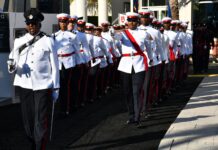
And as for the claim that no one is more loyal to the Queen than Cayman, I ask one simple question: How many Caymanians serve her Majesty in the Armed Forces? How many are ready to protect the UK and, by default, Cayman? How many Caymanians, however, take advantage of the opportunities to work or live in the UK or Europe because of this relationship?
Yes, there is a cost to Cayman to keep the relationship and it is for Caymanians to choose if it is a cost worth paying. The alternative is either total independence or a federation with other like minded countries.
It is because of the relationship with the UK – that Union Flag which appears in the corner of the Caymanian flag – that Cayman is as prosperous as it is today. Take that away and the prosperity and the tranquility will go with it.
Cayman’s choice. The UK won’t walk away but if that’s what the Caymanian people want then so be it.
This editorial is spot on and Caymanians should not fool themselves into believing that the relationship between Cayman and the UK is some form of partnership based on mutual respect and shared values. In reality the relationship is closer to that of an abusive husband and an abused wife. The Euro Bank scandal is a good example of this; and more recently Operation Tempura and the fact that ‘we still don’t know exactly what happened, why it happened or who did what’ shows exactly what type of relationship Cayman has with the UK.
At the end of the day Caymanians need to understand that nothing is free and there is a price to pay if we want to maintain our relationship with the UK. The old colonialist mentality has only disappeared on paper but is still very much in alive and well in reality.
While the relationship between Cayman and the UK is mostly one sided we do have to acknowledge the many people from the UK (especially those from decades past) that have been vital to the success of the Cayman Islands. Many of these people have come to love Cayman and have made Cayman their new home.
Mr. Ashley
Do I sense an undercurrent of envy and covetiousness in these statements and sentiments of yours ?
Are you a resident of the Cayman Islands; in other words, an expatriate Brit or are you based at home in the UK ?
What purpose does the financial industry in the City of London serve, if not the same as that of the Cayman Islands ?
How many expatriate Brits, those professionals in government, including the Governor of the Cayman Islands, the Commissioner of Police, many high-ranking employees in both the private and public sector are not reaping the benefits of the financial wealth of the Cayman Islands that you seem to be so envious of and sending the cream back to the UK to boost their retirement nests, send their children to the best schools, take the best vacations, etc etc ?
This listing of the Cayman Islands by this UK-based Financial Conduct Authority is driven by covetiousness, greed and revenge, nothing more.
No envy Mt Tatum as I am fortunate to live in an equally beautiful part of the world where we don’t have to worry about being smashed by hurricanes,or, more likely, shot in our beds by drug addled youths. Where we are not confined to a series of small rocks and the need to get off them every now and then.
However, I have worked and lived in Cayman and I do believe that the vast majority of the people are honest and hard working and that is why I believe that it is for them to decide if the price of the relationship with the UK is one worth paying.
Why don’t you put it to the test – not through some silly newspaper poll but a proper vote on staying with the UK of going your own way?
Mr. Ashley
How and where does an editorial and discussion on relevant issues that exist between the United Kingdom and the Cayman Islands turn into a discussion or vote on independence…except in your own mind ?
Any objective and informed reader will already know much of the truth in the existing issues and past incidents raised in the editorial; they cannot be denied or argue with.
The ongoing relationship between Cayman and the UK calls for a balancing act between the politicians of both countries that keeps the wheels on the wagon and not having the wagon derailed, pitching all and sundry into unsafe territory.
Your take-it or leave-it approach is one most safely avoided.
Thankfully, the politicians of both countries are ignoring your suggestions and approach.
Mr Tatum,
Where the relationship is perceived to be unequal or unfair then deciding whether to consider separation is a logical step – just ask Scotland. If this was a marriage would the party who feels unloved stay?
Of course, politicians can renegotiate the relationship but if those negotiations cannot be concluded to the satisfaction of both parties, then breaking off should be an option for BOTH parties.
Anyway, can you answer the question how many Caymanians serve in Her Majesty’s Armed Forces supporting their undoubted loyalty?
Mr. Ashley
In a direct answer to your question regarding Caymanians serving in Her Majesty’s Armed Forces, that question needs to be addressed to those who can answer it accurately; I’m sure there are statistics to answer it.
To my knowledge, there are and have been a small number of Caymanians who have and are serving in Britain’s armed forces but the relevance of your question to the current debate is questionable, imo.
I might ask you the very same question; what is the number of British citizens at home now serving in Her Majesty’s Armed Forces out of the total population of Britain’s 62 million people and the answer would be, very few.
Is service in the armed forces of your country the only criteria by which loyalty is measured ?
There are a number of Caymanians who have and are leaving Cayman to reside in Britain in recent years and those people will pay taxes and support the economy of the UK as any resident of the UK does.
My original point still stands; the relationship between Britain and Cayman has never been couched in black and white and the powers-that-be continue to negotiate in the various shades of grey that defines this complex but working relationship.
As of now, it seems that no one is interested in throwing out the baby with the bathwater…
Except yourself, that is.