

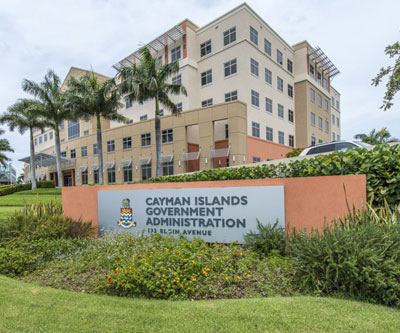
The Cayman Islands government should seek, within the next 12 to 18 months, to sell some $65 million worth of “surplus” properties the government Lands and Survey Department has identified it as owning, according to recommendations in a consultant’s report.
The government should also seek to enter into purchase and lease-back arrangements with private sector investors to free up capital needed to pursue current infrastructure development projects, the Ernst & Young report recommends. “Government presently holds some 170 operational buildings, the majority of which are described as specialized and of which 16 are described as non-specialized,” states the EY report, completed at the request of the government and issued on Tuesday. “The ascribed value of these properties is $285 million.”
Both the surplus land sales and the purchase and lease-back options could be implemented in the relatively near term and could equate to an estimated $350 million in value to the government.
Land sale
The EY report looked at the specific properties owned and leased by the government, which included 155 acres of “operational lands” and 5,415 acres of what were determined to be “non-operational” lands. The value of the non-operational lands was estimated at nearly $67 million.
Operational lands include parks and landfill space. The non-operational lands include undeveloped parcels, mangrove and swamp areas, ponds and coastal areas.
The report identified 154 operational specialized buildings and another 16 operational non-specialized office buildings.
EY reviewers found 20 government-owned buildings that are also considered non-operational, with an estimated value of nearly $3 million. Those include small vacant commercial and residential properties.
“It is our understanding the Department of Lands and Survey recommendation for the sale of surplus properties covers various properties sitting within the non-operational lands and non-operational buildings categories,” the EY report states.
The report does not provide an estimated value for 180 acres of “heritage sites” owned by the government. It also does not evaluate infrastructure or highway assets.
The government currently holds leases on 60 building sites at a cost of $5.2 million per year.
REIT
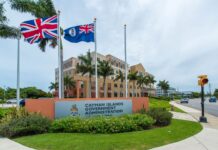
The EY report suggests a second option of a purchase/lease-back arrangement, particularly for newer government buildings that are more flexible in regard to general office space. The Government Administration Building on Elgin Avenue is a prime example. The recommendation is that government consider releasing available capital through the sale of various public buildings to a real estate investment trust.
“[The trust] would be established as an independent commercial vehicle which would seek investment capital from Cayman pension funds, the Cayman public and foreign investors [could] acquire government buildings which could be leased back to the government on secure long-term leases,” the report states. If a building was sold for cash in such an arrangement, it is anticipated that government would regain ownership of it at the end of the lease period. The investors in the property would earn a specified amount each year from government lease payments and would manage the buildings, releasing government from that responsibility.
Legal changes would be needed to create such a fund in the case of pension investments, the report notes.
“In relation to the establishment of a [trust], the [Government Administration Building] alone is valued at $90 million, so between just currently identified surplus lands and a cornerstone [trust investment] asset, some $150 million could be realized,” the EY review states.
Concerns
Most of the concerns in the area of land sales or the sale/lease-back arrangements involve public perception, which EY said would have to be managed properly by government.
“[There is] the perception that government must be a substantial land holder being often driven by concerns that, as a small land area, the Cayman Islands government must control substantial land to maintain sovereignty and hold a land bank for future development,” the report opined.
“Communications around the benefits of releasing capital should be focused on including debt reduction and capital works that stimulate the economy and provide immediate utility to the community.”
In the case of a potential real estate investment trust, local residents might be troubled by the potential for foreign investment in such arrangements, EY reviewers said.
This concern could be addressed by requiring a majority Caymanian ownership in any such investment.
Related Videos











The more I hear about public private partnership as it relates to government restructuring, the more I see attempts by the private sector to dissolve governmental agencies. Why would Caymans have to sell and then lease back from the private sector our Government Headquarters..
How would the private sector react if the government allowed them to build, but the structure remained property of the state. Why should we sell our Government Headquarters, when banks and financial entities build monuments to their success on a platform and in an environment our governments made so liberal and profitable for them.
You know what, you all keep your seven story hotels and your towering banks and profit making sticks and stones, and leave our one little National HQ alone. The sale of our utility company is one mistake that should not be repeated. If the government need money, tax is route all governments use.
Right now the USA is manning up to go on an offensive, you can bet they are not selling their Aircraft Carrier to pay the bills..
How about telling the Cayman people the threat level the USA IRS pose to our economy if they were to stop money transfers, if we don’t gather intelligence for them to get their taxes..
What gall, to suggest that Cayman cannot afford its own HQ and must sell and pay rent. If Cayman has to sell its HQ, misfits, no perception about it..
Hopefully before the govt starts even thinking about where to spending any potential revenue they will make good on past commitments.
Civil service pension funds is still owed 200m from a decade ago and Mr. Arthur indicates it will take another decade to pay this off.
Shaw Miller cites a 2004 actuarial report pegging the civil service healthcare liabilities at 665m, which in today’s terms, using a healthcare inflation rate well below what the US has/is experiencing pegs that number at 1.1b today. (Not to mention that the great expansion of the civil service by both past governments did not occur until AFTER 2004). NOTHING has been set aside to pay for this!!! Lets let that sink in for a moment.
1.1 BILLION plus plus with no reserving in place.
That is the single most largest threat to the viability of the country.
No disrespect to Mr. Levy, but I think his reaction to this is a good example of what most people’s will be. Pride of ownership is one thing but there are a lot of situations where renting or leasing in more financially sustainable, primarily in areas where the cost of management and upkeep is expensive or the properties or business is costing money instead of making it or even breaking even for example the Cayman Turtle Farm. Budgets cannot be successfully managed based on emotionally driven choices and decisions, like weather to keep that fancy Car or boat in lieu of paying bills. There is a lot that Cayman has that they cannot afford this is obvious or they would not be so far in debt. One other thing is that government can never be compared to the private sector. The Private sector is much better at running businesses, which is why the CIG needs people like Miller Shaw and EY to tell them how to manage their money. The CIG’s history of financial decisions speaks for itself, for example imagine if EY had examined the CIG’s plans for the Turtle Farm upgrade or the new 200 million dollar schools.
Question for John, from reading your comments below I get the impression that you feel the implementation of direct taxation to get Cayman out of the hole would be better than the things recommended by EY. Is that what you’re suggesting, if so what kind of taxes do you see being put in place. Income, Property ? and should it be on everyone or just a certain group. One thing I would say about income tax is that it would alleviate the dependence on Work Permit fees that the CIG currently has. Because right not the CIG only makes money from Expat workers not Caymanian workers. this is why I believe they are not pressed to lower the number of Expat workers on the island.
Michael, The way I look at it, the economic climate created by our various governing bodies at our location make it possible for many to prosper through earned income. When all is said and done, government reason for existence is to manage a prosperous economic climate safely, where its corporate partners and workforce make it possible to self finance operations through earned income.
Income tax on only one group of people was beyond silly.
Income tax on anyone making wages above the poverty level is my suggestion.
Having government employee pay their share of pension and medical is a good start. With continued emphasis on good financial value for money management and a healthy national reserve the objective.
John, I do agree with some of your ideas. However it is obvious that no one is going to agree with any kind of direct taxation in Cayman and no politician is going to touch it. People want everything for free yet disagree with every attempt to find alternative ways to increase revenue. I think people really do believe that money grows on trees in Cayman. Free benefits, free Garbage pickup government jobs for all, but no taxes. Buy this, never sell that, just keep spending and spending and borrowing is the Caymanian way. One day Cayman is going to find themselves so far in the hole that they will be ripe for the picking by Vulture Capitalists who will put up the money to bail Cayman out and end up owning it…