

Reforming Cayman’s tort law to create a $500,000 cap on punitive damages for medical malpractice cases is essential if a medical tourism hospital is to go ahead, the local partner in the project said.
Asked after a presentation to Chamber of Commerce meetings if failure to introduce the medical malpractice cap would be a deal-breaker, Gene Thompson said all the undertakings given by the government in a deal signed with Indian heart surgeon Dr. Devi Shetty in
April were “essential” to the project.
Members of the Law Reform Commission have reviewed the tort law on the invitation of Attorney General Sam Bulgin and recommended in their report released last month that no cap be introduced to non-economic losses – known as punitive or pain and suffering damages – in cases of medical malpractice.
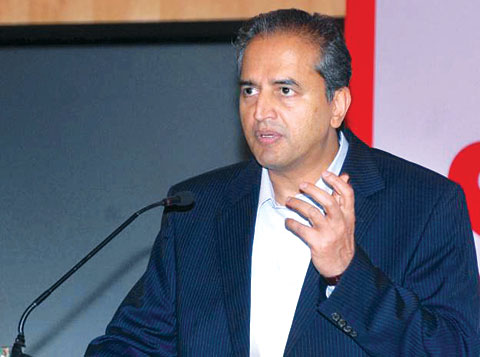
Dr. Shetty gave a presentation to about 50 members of the Cayman Islands Chamber of Commerce outlining his plans for the Narayana Cayman University Medical Centre and the benefits he said it would bring to Cayman.
Mr. Thompson said the project is moving forward. “It may not be as fast as we would like to see… We are still fully committed to the project,” he said, adding that he and Dr. Shetty met with government officials Wednesday and were comfortable with the speed with which
they were working.
Questioned by an audience member on why local tort reform was necessary, Dr. Shetty said caps on medical malpractice punitive damages already exist in several US states and it is “not exceptional” to request it.
“All the reforms and concessions and everything we are asking for is with the idea that eventually [healthcare] could become affordable to everyone,” he said.
Mr. Thompson explained that the amount of medical malpractice insurance and annual liability paid by specialists such as obstetricians and gynaecologists – some as much as $12,000 or $14,000 – was high because of large payouts for pain and suffering damages,
which then led to higher healthcare costs.
“The truth is if you have 100 or 200 doctors with an additional $120,000 burden, it starts to eat away at being able to operate at a low cost,” Mr. Thompson said.
“Until those issues are resolved, we’re not going to move forward… to the next stage,” he said, but once those legal issued are worked out, “there’s nothing to stop us, we’re ready to go”.
First phase
If the relevant legislation is amended within the next two to three months, construction could begin by the middle to the third quarter of 2011, Mr. Thompson told Chamber members.
Among the undertakings the government gave to Dr. Shetty when they signed the deal in April was acceptance of Indian and overseas medical qualifications; amendments to legislation to enable human tissue and kidney transplants and donations; and the medical
malpractice limit of $500,000 on non-economic losses.
“Some of the medical issues in Cayman are pretty complex when it comes to legislation. Things like human tissue and donors and so on are pretty complex issues that are taking some time to work through,” Mr. Thompson said. “We’ve had to bring in some external
expertise to help us with that, so it’s delayed the progress a bit.”
Minister of Health Mark Scotland told the Legislative Assembly this month that amendments to the Health Practitioners Law, which governs medical qualifications accepted in Cayman, and the Tort Law would be dealt with at the next parliamentary sitting, while
amendments to legislation dealing with organ donations would be dealt with at a
later stage. The LA resumes on 22 November.
The first phase, which will be a 200-bed hospital, will take 18 to 20 months to complete, he said. When the deal was signed in April, the government said groundbreaking could begin as early as January 2011.
Why Cayman?
The hospital will cater primarily to American patients travelling to Cayman for cardiology, orthopaedic, cancer and major surgical procedures.
Dr. Shetty said that initially the hospital’s most senior surgical staff would come from the US, with many of the rest of the staff coming from India, and that the government’s willingness to accept overseas qualifications was one of the reasons he chose Cayman for the hospital over other Caribbean countries.
“We are very bullish about Cayman. We believe Cayman is the worlds best kept secret. Why did we choose Cayman? First of all, if we set up a hospital here, we will be able to reduce cost of health care by about 50 to 60 per cent from what it is in US,” he said.
He added that he had planned a large medical project in Mexico but abandoned that plan because “superstar” Indian surgeons and their families did not want to work there.
Dr. Shetty said Cayman’s trusted banking system, its low rates of infectious diseases, lack of income tax, and a government that was willing to cooperate with the project made the Islands an attractive option for medical staff and tourists.
The fact that Cayman already has a successful regular tourism industry is also a plus. “Medical tourism grows in a country which has a tradition of regular tourism. We have fantastic hospitals in India, but medical tourism will not grow because traditionally we are not a destination for regular tourists,” he said.
Cayman, in return, would benefit from access to more medical care on Island, unlimited employment opportunities, the spending fallout from the medical tourists, and training and education opportunities at the project’s medical university, the surgeon said.
Healthcare reform in the United States would lead to a “socialised form of health care”, the doctor said, whereby patients would receive joint replacements and other operations, but
only after being placed on a waiting list for several months or even a year, so some, especially elderly patients, will look elsewhere for treatment.
The aging baby boomers, which are now in their 60s, will also need assisted living as the age expectancy of Americans increases, and that would also be offered to them in Cayman.
He also suggested that Cayman offer citizenship to Nobel Laureates of Medicine and offer them living facilities here. “They will bring phenomenal goodwill to the Cayman Islands,” Dr. Shetty said.
“The world’s best hospital is a hospital which is built on a ship which is docked outside the US waters. And this is that ship,” he said.
Regional competition
Ana Bassil, international relations director of Baptist Health, asked Dr. Shetty how Cayman, with its high cost of living, could compete with other medical tourism destinations, such as
Colombia, Mexico, and Costa Rica.
He responded: “There is no competition. We are talking about a $2.5 trillion industry [in the US]. We are talking about 200 million people. What these countries do is tiny compared to the massive number of what is available. Most of these countries are specialising in cosmetic and other types of operations rather than serious operations, like heart or joint replacement or cancer care.”
He added: “There is so much out here. Someone has to change the rules of the game. Somebody will. Instead of it being somebody else, we thought we should be the one to change the rules.”
Related Videos









Doesn’t this demand rather undermine the whole concept of this hospital?
The services offered are clearly aimed at the US market but will US medical insurers send their customers to Cayman for treatment when they know that if anything goes wrong the cap on any local damages claim will simply leave them wide open to punative litigation in the USA?
I would also treat the requests for what amounts to exemptions from Cayman’s medical licensing requirements with some caution. The UK has lengthy history of problems with overseas doctors, particularly from the Indian sub-continent, whose abilities failed to match their apparent qualifications.
So here we have a request to cap damages claims backed up by a request to reduce licensing requirements. The cynics amongst us might just suggest that the two are connected.
Well said Dr. Shetty, well said. Cayman with it’s high cost of living and world class medical facilities like this will attract the best doctors and that opens the door to the worlds wealthy seeking medical treatement.
This is another great project for Cayman with opportunities for all Caymanians. I trust we are reforming the relevant areas of education to ensure our children are prepared. Caymanian parents, ignore the noise and prepare your children.
I’ve seen lots of articles on this hospital, but have yet to see where they are building it. I’ve heard that there are 3 sites under consideration — have they decided WHERE it’s going to be built ? Surprised this article didn’t mention it.
They need to make this happen. This will attract world class doctors and reduce the risk of injury. If you are allowed to choose your physician based on qualifications, then what is the problem? GC needs this project sorely for both near and long term positive impacts. The benefits to Caymans and others is fantastic. Tune out the noisemakers.
The numbers quoted by Gene Thompson in the article were misquoted by 90%
Some doctors pay 120,000 to 140,000 dollars per year in malpractice insurance. Some have stopped delivering babies.
US Hospitals are ‘full’ of doctors from India, hundreds of midwest towns entire hospitals are staffed by doctors from other countries. This is exactly why Dr. Shetty’s hospital will work here… the US has a massive shortage of doctors, especially in rural areas.
US medical insurers are already sending their clients to India for operations to save money and because of delays in having these operations done in the US.
The market and the conditions are already in place… we are not building something and then looking for demand… we are building something to meet a demand that is already there.
A 2,000 bed hospital phased in over ten years will cost $3 billion and employ 10,000 people. This is one million a day… every day, for the next ten years and from a stay over point of view this is larger than everything combined that currently exists.
Anything you can think of, we don’t have enough of to handle the demand this facility will create. Hotels, apartments, places to eat, shops, rental cars, flights.
I am not sure people understand just how big this is. Take the two new schools, now add in the GOAP, the bypass and the new dock. GOOD… now multiply that by TEN… that’s how big this is.
Hmmm… the less government restrictions on the market, the more competitive it is and better for everyone.
Now just what laws and regulations would Dr. Shetty like to see lifted is a major concern, because a healthy market in the medical field has to be FAIR and OPEN to competition.
This could be the best thing that ever happened in the Caymans. Great medical care at reduced prices. A large increase in employment and many more tourists. It is a no brainer and the government should do everything it can to help this happen.