The Department of Environment has
partnered with the US National Oceanic and Atmospheric Administration to
monitor the reefs in Cayman waters.
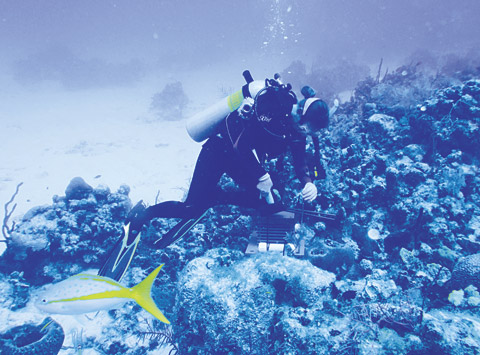
NOAA’s researchers placed nine
artificial habitats called ARMS — Autonomous Reef Monitoring Structures — on
three west side underwater sites.
The ARMS are used to enhance
ecosystem-based management and increase scientists’ ability to monitor and
predict ecological impacts of global climate change, particularly ocean warming
and acidification.
“What we were able to do here was
to put them alongside sites that we were already monitoring, so we have areas
that we monitor for coral cover, fish biodiversity, and also larger
invertebrates; lobsters,” said John Bothwell, DOE research officer. “But we can’t see the small stuff, so the
idea behind these ARMS is that over the next couple of years, animals and other
organisms will recruit to it. It lets us see what we can’t see.”
Most underwater surveys are visual
based, according to Mr. Bothwell. The ARMS allow researchers to see the cryptic
(very small) animals.
Similar ARMS have been placed in
waters across the world, including sites in the Pacific near Hawaii where NOAA
researchers found an average of over 350 species per each of the ARMS.
“We sort through the various
organisms, and then we preserve them all and do mass parallel 4-5-4 sequencing,
genetic sequencing, to get an indication of diversity, or the number of
organism actually in the ARMS,” said Kerry Grimshaw, NOAA researcher.
Ms Grimshaw is looking to the ARMS
research as a long-term monitoring tool in the Pacific.
The research will feed into other
global databases like the Ocean Bio geographic Information System, and the DOE
will be able to use information gathered from the ARMS in other projects like
the recently announced Darwin Initiative in Cayman.
“By getting a better understanding
of the smaller, lesser-known organisms, the reefs can be managed as a whole
ecosystem,” Ms Grimshaw said. “You’re
taking into account the fish, the coral, the water quality, the oceanography of
the environment, so you’re managing the package as a whole and hopefully that
will help with conservation efforts.”
There are millions of species
associated with reefs, according to Mr. Bothwell. So, the DOE will look at the collected evidence
in approximately two years, allowing enough time for different species to
gather on the ARMS.
The ARMS were placed inside the
replenishment zone near West Bay, just outside the protected zone, and near
dive sites off the Ritz-Carlton.
Related Videos