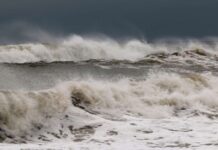
One of the most active hurricane seasons on record ends today, 30 November, with the Cayman Islands escaping the worst of this season’s storms.
As predicted, this year’s hurricane season was one of the busiest on record for the region, with 19 named storms, 12 of which developed into hurricanes.
Although the hurricane season is now officially over, Cayman’s National Weather Service Director General Fred Sambula warned residents against becoming complacent about the weather.
“From historical records, tropical cyclones can occur any month of the year, but the frequency is much more noted… from June to November,” he said, adding that more storms are “highly unlikely, but not improbable” after the official end of hurricane season.
“I always advise that you should always be in a state of readiness… We have to remember some strong north-westerlies can be disruptive to shipping, which is a huge lifeline for the Cayman Islands. Be ready and have supplies on hand,” he said.
Tropical storms and hurricanes killed more than 250 people in the Caribbean and Central America this season, the Associated Press reported, with the deadliest storms being Tropical Storm Matthew, Hurricane Tomas and Hurricane Alex.
Five of this year’s storms were classified as major – Category 3 or higher – with wind speeds of over 111 miles per hour.
The 2010 hurricane season began with System 93L developing, on 26 June, into the first tropical depression of the Atlantic Ocean hurricane season.
That tropical depression strengthened into Tropical Storm Alex, which then intensified to become a Category 2 hurricane. It struck northeastern Mexico on 30 June, causing major flooding and landslides and is estimated to have killed 30 people.
“It was a busy season. Our sympathies go out to our Caribbean neighbours who were devastated in a lot of hurricanes, especially Haiti,” said Mr. Sambula.
Haiti, which was struck by an earthquake in January, was hit by heavy rainfall and winds from Hurricane Tomas early this month, while also reeling from a cholera outbreak.
“For the Cayman Islands, we were lucky this year. It was a welcome reprieve after hurricanes like [September 2004’s] Ivan and [November 2008’s] Paloma. We did have a little bit of excitement with Tropical Storm Nicole, but that fizzled out,” Mr. Sambula said.
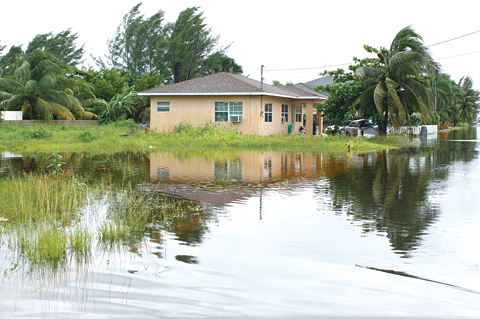
Tropical Storm Nicole was the shortest lived named storm of the season, but the one that caused the most problems for Cayman where schools were closed and roads and low-lying areas flooded due to heavy rain.
Tropical Storm Nicole was named on 29 September, but lost its tropical storm status just six hours later. However, the remnants from Nicole produced very heavy rain and wreaked havoc across Jamaica, where 12 people were killed in flash floods.
Weather experts had forecast this season to be one of the busiest seen in the region. Colorado State University scientists Phil Klotzbach and William Gray forecast 18 named storms, 10 hurricanes and five major hurricanes of Category 3 strength or higher during this year’s hurricane season.
The National Oceanic and Atmospheric Administration also predicted a very active season, estimating that between June and November, there would be 14 to 20 named storms; eight to 12 hurricanes; and four to six major hurricanes.
According to NOAA, the average for the Atlantic Basin hurricane season is 11 named storms, six hurricanes and two major hurricanes. Since 1944, only two other years had as many named storms as this year – 1995 had 19 storms, and 2005 had 28.
Hurricanes seen this season were Alex, Danielle, Earl, Igor, Julia, Karl, Lisa, Otto, Paula, Richard, Shary and Tomas.
Only two storm names were not used this season – Virginie and Walter.
Related Videos