When Tropical Depression No. 9 formed on 2 September 2004 in the eastern Atlantic Ocean, some 555 miles southwest of the Cape Verde Islands, residents of the Cayman Islands – safely thousands of miles away – had no way of knowing that Nature had set in motion an event that would abruptly change their lives
On that day in early September, all forecasts appeared sunny and bright for the Cayman Islands.
Residents enjoyed the highest standard of living in the Caribbean through the successes of their financial services and tourism industries.
The country had almost meteorically risen to become the fifth largest financial services industry in the world. Even tourism, which slumped after the 2001 terrorism attacks in the United States, had rebounded to surpass pre-9/11 statistics earlier that summer. From all indications, it looked like calm seas and sunny skies were in the future for Cayman.
Of course, the indigenous people and long-time residents of the Cayman Islands knew the dangers of hurricanes.
Some were old enough to remember the devastation left by the November Hurricane of 1932, which killed 70 residents, and most Caymanians had heard stories of what that event had been like for the country during those more primitive days.
Only 16 years previously, Hurricane Gilbert, one of the worst storms in Atlantic Basin history, came dangerously close to Grand Cayman, causing substantial damage with a glancing blow.
More recently, Hurricane Michelle had caused an estimated US$28 in damage to Grand Cayman in early November 2001, even though the eye of the storm never came closer than 150 miles.
However, years of close calls with relatively minor and isolated storm damage had given some residents the feeling that the Cayman Islands – such a small target in a big Caribbean Sea – was somehow blessed with good fortune, and therefore immune from the harsh severity of hurricanes.
This mind-set had been reinforced only three weeks earlier when Hurricane Charley had passed directly between Grand Cayman and Little Cayman, causing minimal damage with its Category 1 strength, and then greatly intensified afterwards, devastating parts of Cuba and Florida.
‘We were lucky with Charley,’ said Fred Sambula, head of Meteorological Services in the Cayman Islands, ‘but that’s the kind of luck that tends to make people complacent.’
Charley had passed the Cayman Islands only days after the United States National Weather Service had issued an updated outlook on the 2004 Atlantic hurricane season.
This revised outlook downgraded the Service’s earlier probability prediction of an above-normal hurricane season, even though the Atlantic was in what it called a multi-decadal signal of atmospheric and oceanic conditions conducive to increased hurricane activity.
The Service said that the Atlantic had been in an active phase of the signal, which includes elements such as higher sea surface temperatures, since 1995.
In the ensuing time, the only years that had below normal numbers of hurricanes in the Atlantic were 1997 and 2002, both years that saw the formation of an El Nino weather pattern in the Pacific Ocean, something that tends to reduce Atlantic hurricane activity.
Although the key elements of the multi-decadal signal were again in place in the Atlantic Ocean in 2004, the National Weather Service cited the increased possibility of a weak El Nino forming in the Pacific as the basis for slightly lowering its prediction to indicate that there were equal probabilities of an above-normal hurricane season as there were a near-normal one.
While Cayman Islands’ residents were still chuckling over the chaotic preparations for Hurricane Charley being much ado about nothing, it indeed seemed like another hurricane season might pass the country by without further incident.
However, Tropical Depression No. 9, spinning harmlessly in the warm open waters of the eastern Atlantic, would soon show people in the Cayman Islands, and in many other places, that there would be nothing normal about the 2004 Atlantic hurricane season.
Unfortunately for the residents of Grand Cayman, their luck of avoiding the big hurricane was about to run out.
Ivan gains strength
On 3 September, after the winds of the cyclone increased to 40 miles per hour, the cyclone system was upgraded to a named tropical storm, ensuring that the moniker ‘Ivan’ would have terrible connotations for thousands of people along a wide swath beginning in the Lesser Antilles and ending in the United States.
With Tropical Storm Ivan still far from any land mass, people of the Western Caribbean and coastal American states were focused on another storm system that day, Hurricane Frances, a major hurricane that was hitting the Bahamas on its way to wreaking wide-spread destruction in South Florida.
It was probably not until 5 September that Ivan began raising eyebrows of interest when, in less than a day, it strengthened from a tropical storm classification, with maximum sustained winds of 70 mph, to a strong Category 3 hurricane, with wind speeds of 125 mph.
Such rapid intensification was unprecedented at the low latitude of Ivan’s position at the time, according to the United States National Weather Service.
As the fifth hurricane of the 2004 Atlantic hurricane season, Ivan had by then become a menacing threat to many island countries in the Lesser Antilles.
Barbados looked to be in the direct path of the dangerous Ivan and issued the first hurricane watch in response to the approaching storm, altering it to a hurricane warning on 6 September.
The storm was still predicted then by the various computer guidance models to turn more northerly as the strong subtropical ridge that was steering Ivan westward weakened.
Even so, some in the Cayman Islands had already become leery of the storm, and several hurricane preparation plans kicked into effect.
It was late in the afternoon on Monday, 6 September, as the people of Barbados prepared for the worst, when Ivan gave a display of the unpredictability of a hurricane’s path by veering southward, putting the tiny island of Grenada in its crosshairs.
About this time, one of the computer guidance models – that of the UK Meteorological Office – started showing Ivan would likely continue on a more southerly route, not making its expected turn to the north until long after the other models predicted.
In the direct path of that UK model was the Cayman Islands.
On Tuesday, 7 September, Hurricane Ivan finally made its terrible presence felt on land, devastating Grenada with a direct hit, and causing damage in Barbados, Trinidad and Tobago, St. Vincent and the Grenadines, and St. Lucia.
A Category 3 hurricane when it crossed Grenada with 120 mph winds, Ivan caused catastrophic destruction on the Isle of Spice, damaging 90 percent of the buildings on the island and destroying the residence of Prime Minister Keith Mitchell.
‘We are terribly devastated. It’s beyond imagination,” Mitchell said the next day aboard a British Royal Navy vessel off shore.
From that point forward, the storm became known as ‘Ivan the Terrible,’ after the infamous Russian ruler, for many people in its path.
Cayman takes heed
Shortly after the National Hurricane Center in Miami issued its 5 p.m. advisory on Tuesday, 7 September, Donovan Ebanks, acting chairman of the National Hurricane Committee, announced that a Hurricane Alert had been issued for the Cayman Islands.
Organizations in both the public and private sectors of the Cayman Islands began implementing their hurricane preparation action plans.
After passing the Windward Islands, Ivan strengthened to a Category 4 storm, and Venezuela was put under a Hurricane Watch, while the Dutch islands of Aruba, Bonaire and Curacao were put under a Hurricane Warning. Luckily for those countries, Ivan did not veer south again, but stayed on a west-northwest course, putting Jamaica in its path.
Still, five people were killed in Venezuela as a result of Hurricane Ivan.
Awaking to news of the extent of damage in the eastern Caribbean on Wednesday 8 September, residents in the Cayman Islands began preparing for the possibility that Ivan could pay the country an unwelcome visit.
At noon on Wednesday, Cayman’s National Hurricane Committee issued an advisory suggesting to visitors who were scheduled to depart the coming weekend or later to consider leaving by Friday instead.
At 10 p.m. that evening, the Cayman Islands was put under a Hurricane Watch.
‘This system should be taken very seriously by all persons in the Cayman Islands,” said Donovan Ebanks of the National Hurricane Committee, noting that conditions were favourable for Ivan to intensify.
Additional commercial flights were added and an exodus from Grand Cayman began in earnest on Thursday, when more than 2,000 residents and visitors were evacuated on flights that departed through 1:31 a.m.
The country’s national carrier, Cayman Airways, ran 14 flights, including nine specially added that day.
One of the flights that left Thursday was chartered by the accounting firm Ernst & Young.
At the beginning of the hurricane season, employees of the firm, their family members and some of the firm’s clients were given the opportunity to sign-up for an evacuation flight in the event of Grand Cayman being in the possible strike zone of a Category 3 hurricane or stronger.
Ernst & Young also chartered a Lear jet to take the company’s back-up computer data to its affiliate office in Bermuda.
After putting the charter company on notice at 72 hours before the predicted passing of the hurricane, Ernst & Young had to make a decision 24 hours later if it would leave.
Only once before had the company initiated its evacuation plan – in 2001 with Hurricane Michelle – but the firm’s partners decided not to leave the island that time.
With Ivan, it was different, said managing partner Dan Scott, who was concerned about the safety of his wife and two small children.
‘There are certain things in life, like Mother Nature, that we can’t do anything about,’ he said. ‘We all need to manage our risks. I tend to be very safety minded.
‘People acted as if it were unpatriotic to leave. But as a friend of mine said recently, it’s a free country and we have an opportunity to make a choice. It’s each person’s choice whether to leave or not. Patriotism has nothing to do with it.’
Preparations begin
Those who stayed on the Island found Grand Cayman a beehive of activity on Thursday.
Supermarkets, hardware stores and gas stations all experienced a booming business with long queues and dwindling supplies as Ivan churned toward what appeared to be a direct hit on Jamaica, and then close to the Sister Islands of Cayman Brac and Little Cayman.
At the airport location of Foster’s Food Fair in Grand Cayman, residents started coming in from Wednesday to purchase hurricane supplies such as canned goods, batteries, flashlights, candles and water.
Although the threat of Hurricane Charley had sent residents scurrying to the stores for hurricane supplies less than a month earlier, the grim reports of Ivan’s destruction in the eastern Caribbean seemed to make residents prepare more thoroughly for Ivan.
‘Many people still had hurricane stocks at home left over after Charley,’ said Foster’s Marketing Supervisor Maria Tom-Pack. ‘But they still went out and bought incremental stocks – even more than what they bought for Charley.’
Many residents reported afterwards that they just had a bad feeling about Ivan.
Ivan had been upgraded to a Category 5 hurricane with sustained winds of 155 mph, however the storm’s path was still so uncertain that tourists and mobile home residents were told to evacuate the Florida Keys on Thursday morning.
Though Ivan was still predicted by National Hurricane Center in Miami to pass north of the Sister Islands, many businesses let their employees leave work early to prepare for the worst-case scenario.
Shortly after noon Thursday, the Committee of the Clearing Banks announced that all retail banks would close at the end of the business day until the hurricane passed. The banks said that ATMs would remain operational as long as there was power.
All Government buildings were secured with shutters or boarding and hurricane flags began flying at places like post offices and police stations.
By Friday morning, 10 September, the southerly breezes began to pick up. About two dozen surfing enthusiasts, taking advantage of large waves and an unscheduled day off, congregated at the shore near the South Sound Community Centre for rare high waves in Cayman’s waters.
‘This is great,’ said one surfer, ‘I’ve never seen waves so big here.’
Some residents of the Sister Islands headed to Grand Cayman, where weather conditions were not expected to be as bad. Between Wednesday and Friday, Cayman Airways’ Cayman Express ran 50 flights from Cayman Brac to Grand Cayman, before the airline’s two Twin Otter aircraft left for safe ground in Roatan, the largest of Honduras’ Bay Islands.
A sense of urgency began to grip the public as the potentially devastating hurricane approached, and air evacuations increased on Friday. Cayman’s National Hurricane Committee continued to advise visitors to leave before the storm closed the airport.
The Canadian government, through its Head Warden for the Cayman Islands, arranged two special charter flights off the island for all Canadian citizens who wished to evacuate Grand Cayman.
At Cayman National Bank, a checklist of tasks in the Business Recovery Plan preparations had begun, said the business group’s president and Chief Executive Officer, Stuart Dack. Data was secured and backed up in several local and off-island locations, while computer equipment was moved into secure areas.
Cayman National’s employee contact information, particularly cellular telephone numbers, was updated.
Important documents were put in waterproof vaults on each floor, and the building’s generator was filled with fuel.
The drill was pretty much the same at the law firm Appleby Spurling Hunter.
‘Plastic bags were put on computers and all files were properly stowed in cabinets,’ said the firm’s Managing Partner Huw Moses.
‘We also put tape on every little pane of glass, which proved to be the smartest single thing we did because our windows were not hurricane rated,’ he said.
The firm had offered their building, known as Clifton House, as a shelter for the storm, but through Friday no one had responded.
‘We told them they had to bring their own supplies, like food and sleeping gear,’ said Mr. Moses.
‘We had purchased 20 five-gallon bottles of water at the start of hurricane season, and we thought that would be enough for the six to eight people who might decide to weather the storm in our offices.’
Shelters on all three Cayman Islands opened at 1 pm on Friday.
Only days before, a previously planned annual two-day training exercise for shelter wardens and emergency service workers had taken place. Following an enlistment campaign, 20 new shelter wardens had been trained.
Chairwoman of Essential Relief Services Deanna Lookloy said 46 people attended the training sessions, which included nurses and two doctors as well.
‘They went through the training exercise on the 5th and 6th and they were deployed on the 8th,’ she said. ‘They told me afterwards that they were very glad that they had done the training because they had learned a lot, and had referred to the manual they received many times.’
All Government schools, including the University College, were closed on Friday, as were all government offices, except for those providing essential services.
In total, an additional 2,700 people left the island Friday before Cayman Airways flew out the last commercial flight at 7:24 p.m. There were also 12 private flights that left the island that day, with the last one leaving for Florida at 8:51 p.m.
‘After that, we sent out an international NOTAM (Notice to Airmen) saying that the airport was closed until after the hurricane had passed,’ said Richard Smith, director of the Civil Aviation Authority.
Mr. Smith said the scale of the pre-Ivan evacuation showed that people took the storm seriously.
‘After Hurricane Charley, some people were complacent, but many realized this was no Charley.’
Sisters prepare
People in Jamaica began to feel Ivan’s fury that day, and it was expected for the storm to cut a path across the country roughly from Kingston to Montego Bay before heading toward Cayman’s Sister Islands. The hurricane had weakened some as it went through one of its reorganization cycles, but still remained a very dangerous major hurricane.
Weather conditions were supposed to worsen in Cayman Brac and Little Cayman on Friday night as well, with the brunt of the storm scheduled to affect the Sister Islands on Saturday morning.
Making the situation even more dangerous for the Sister Islands was the likelihood that Ivan’s maximum winds would arrive about the same time as high tide, increasing the severity of the storm surge levels and wave heights, which were already expected to be in excess of 12 feet.
‘This will create extremely dangerous conditions for all coastal areas of Cayman Brac and Little Cayman,’ said Chairman of the National Hurricane Committee, Chief Secretary James Ryan, who had by this time returned from being out of the country. ‘No one should take any chances by remaining in or close to coastal areas, which will likely be subject to dangerous storm surges and beach erosion. I strongly urge all residents of coastal areas to seek alternative accommodation for the passage of this severe storm.’
Just before 6 p.m., the National Hurricane Committee said that residents of the Sister Islands were battened down in anticipation of a direct hit by Hurricane Ivan. It confirmed that all tourists had been evacuated from Little Cayman, and that only a handful – a number later reported at 32 – of seasonal residents and official workers remained.
In Cayman Brac, the island’s two hurricane shelters were nearly full.
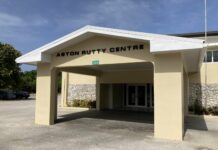
‘The Aston Rutty Centre has over 200 people and the shelter at West End has a similar number,’ said Larry Bryan, Fire Services Senior Divisional Officer in charge of the Sister Islands in a radio interview at the time.
Mr. Bryan noted that some Cayman Brac residents – later reported to number nearly 200 – had opted to ride out the storm in the caves in the side of the Bluff, a traditional hurricane refuge for Brackers.
Provisioned with coolers of food and beverages, a stove, mattresses and a make-shift toilet in a separate bathroom, one woman called the Watering Place Cave the Ritz-Carlton of caves for its 25 guests during the hurricane.
Some 90 miles away, residents of Grand Cayman went to bed Friday night thinking the island would begin to feel the effects of Ivan Saturday morning, with the worst of the storm – tropical storm-force winds up to 50 mph – arriving in the late afternoon.
Ivan, however, had other plans.
Westward wobble
Between Friday night and Saturday morning, during which time the hurricane was supposed to be crossing Jamaica, Ivan starting wobbling westward along that country’s southern coast, keeping its strongest winds out at sea. Its forward speed also slowed down from 13 mph to 8 mph, delaying the onset of the storm for the Cayman Islands.
‘Whatever our religion, faith or persuasions may be, we must give thanks,” Jamaican Prime Minister P.J. Patterson said in an address to his nation, speaking to the forces of Nature that kept the catastrophic hurricane from going ashore in that country.
Although Ivan only skirted Jamaica, it came close enough to pummel the island with winds in excess of 140 mph, bringing 25-foot waves ashore and flood waters that reached 27 feet high in the parish of St Ann.
Hurricane Ivan killed 17 people in Jamaica, destroyed more than 5,600 homes and damaged more than 40,000 others. The Hurricane devastated elements of the country’s vital agricultural industry, eventually triggering a food shortage there.
All tolled, Ivan caused an estimated US$362 million in damage to the nation. But it all could have been much worse, if not for the westward wobble the hurricane made just before it appeared it would make landfall near Kingston.
Though that wobble might have been providence for Jamaica, Ivan’s westward drift meant something much different for Grand Cayman.
By 4 a.m. Saturday, Cayman time, the National Hurricane Centre in Miami had adjusted Ivan’s predicted path south, from a direct hit on the Sister Islands, to going about one-third of the way between Little Cayman and Grand Cayman
People in Grand Cayman awoke Saturday morning to the reports that Ivan had not in fact traversed Jamaica, and that conditions were going to be much worse on the capital island than expected.
‘I went to bed Friday evening feeling pretty good about the storm not being too severe,’ said Caribbean Utilities Company President and CEO at the time Peter Thomson. ‘But when I got up Saturday morning, logged onto the Internet and saw that Ivan had bounced off the mountains in Jamaica, I knew it was going to be bad.’
At the Grand Old House restaurant, located on the southwest corner of Grand Cayman, it became apparent to general manager Martin Richter that things would be much worse than expected.
‘I could see by the wave movement and the wind that it was going to be bad,’ he said.
Mr. Richter started making some telephone calls at 11 a.m., and by noon he had hired three different contractors to help rebuild the 96-year-old building after the storm.
Though very windy, the sun was still shining early that morning with an eerie luminescence, and the air had taken on a thick, humid aspect.
Some walkers, joggers and bicyclists made their way out for one last bit of exercise before the storm.
The news got worse for Grand Cayman at 10 a.m., when the new projected course brought Ivan even farther south, two-thirds of the way between Little Cayman and Grand Cayman, on a track to take it about 30 miles north of the island.
Curious excitement was replaced with deep concern for many Grand Cayman residents, and some, who had not bothered to properly prepare for a storm that was only expected to bring tropical storm-force winds, hastened to get ready for a weather event that would be much, much worse.
At Owen Roberts International Airport, the control tower reopened briefly Saturday so two private jets that would not fit into the General Aviation hanger could depart just before 11:30 a.m. The departure of those flights, the only ones of the day, left everyone in Grand Cayman with no option but to ride out the storm.
Early Saturday afternoon, about 500 people had already moved to one of Grand Cayman’s 14 hurricane shelters, but space for 2,500 more remained.
The National Hurricane Committee urged residents in dangerous areas to move to one of the shelters before they closed at 9 p.m.
‘The weather this afternoon, while deteriorating, allows a window of opportunity for persons to move to shelters,’ the Committee announced.
At the offices of Appleby Spurling Hunter, the change of Ivan’s path caused many employees to reconsider the offer of shelter at Clifton House.
‘As the afternoon progressed, so did the telephone calls from staff members and others inquiring about coming to the office for shelter,’ said Managing Partner Huw Moses.
By the end of the night, Hotel Clifton, as it would became known, was sheltering 50 adults, six children, six dogs, two cats and a hamster.
Members of Royal Cayman Islands Police and Fire Services in Grand Cayman began visiting homes and apartments in coastal or other low-lying, flood-prone areas and advising residents to evacuate to a shelter.
At approximately 3 p.m. on Saturday the sustained winds in Grand Cayman increased above 35 mph, meaning that tropical storm conditions had begun.
It would be early Monday morning, some 37 hours later, before the winds subsided to below tropical storm force.
Radio Cayman, the government owned radio station, updated listeners throughout the day, adding live reports from different locations on Grand Cayman and the Sister Islands.
In between, the station played music, much of which had a religious content, like the reggae version of the song ‘Heaven Help Us All.’
In the crosshairs
The National Hurricane Center in Miami issued an updated projection of Ivan’s path at 4 p.m. showing the hurricane making a direct hit on Grand Cayman Sunday morning.
The report also noted that Ivan’s winds had increased to 165 mph – the highest speed of its life – and that the minimum recorded central pressure of the storm had dropped to 910 mb,, making it the sixth most intense Atlantic hurricane on record, and the most powerful hurricane in the Caribbean region for more than a decade.
Ivan’s hurricane-force winds extended 70 miles from its centre, and tropical storm force winds extended 175 miles from the centre, or an incredible 350 miles across.
‘A ridge of high pressure at the mid to upper-levels has developed from the Gulf of Mexico eastward across Florida,’ stated the 38th written discussion report on Ivan from the National Hurricane Center, ‘It appears that this ridge has been forcing the hurricane on a more westward track…delaying the expected northwest and northward turn, although the northward turn is still forecast to occur as a weakness develops in the Gulf of Mexico… it is now expected to occur over extreme western Cuba and over the open waters of the Gulf of Mexico.’
With that scientific explanation for Ivan’s erratic movements, residents of Grand Cayman were facing the worst case scenario.
‘We are looking at potentially catastrophic conditions,’ said Cayman’s National Hurricane Committee Chairman, Chief Secretary James Ryan, at the Committee’s 4:30 p.m. meeting. ‘At this time, the system is too close for any change to likely make much difference for us. We are in the path and we have to take every precaution at this stage to protect life and property.’
There was nothing anyone who had remained in Grand Cayman could do but hunker down in the safest place they could find.
Shortly after 5 p.m., Governor Bruce Dinwiddy, acting under powers granted to him by law, came on Radio Cayman and declared a State of Emergency for the Cayman Islands.
‘May God bless and preserve our island and all our people and visitors,’ he added. ‘Our thoughts and prayers are with you all.’
Water service was turned off in Grand Cayman just after 6 p.m. to ensure that there would not be any contamination in the event of ruptured mains.
After sporadic temporary power outages during the day, electricity started failing for the long-term at 7:56 p.m., when South Sound and the Eastern Districts went black.
For those who had stayed home and still had power, some watched a television show marking the third anniversary of the 9/11 terrorism attacks in the United States. Few Grand Cayman residents could understand that the date would become significant to them in a very personal way through a different kind of hardship that was just beginning.
Bracing for impact
Weather conditions in Grand Cayman deteriorated as the evening progressed. A steady rain began falling just after dark, and the wind became increasingly stronger. By 9 p.m., waves were washing onto parts of South Sound Road, making passage difficult there. Tree limbs were falling, debris was already flying.
Many residents who had planned on staying in their homes, especially those living near coastal areas, decided late that night to move to a shelter or other accommodation.
Essential Relief Services chairwoman Deanna Lookloy said wardens had been instructed to close the shelters at 9 pm. ‘They were calling in saying people were still arriving at the shelters, and they wanted to know what to do. We told them to let them in, but to be careful.’
Mrs. Lookloy said that in the end, most of the people in the shelters for the storm came after 9 pm.
Another person who decided to move late was electrical contractor Rob Duty. ‘I just got a bad feeling,’ he said. ‘At about 9:30, we packed up and took the wife and kids to One Technology Square.’
As the main electrical subcontractor for the One Technology Square project that housed essential Cable & Wireless equipment, Mr. Duty had an office in the uncompleted building, which was designed to withstand a Category 5 hurricane.
Subsequent events would make Duty’s presence in the building extremely fortuitous for the communications company.
After the State of Emergency had been declared by the Governor, the police sent officers to bars and restaurants advising owners that the sale of alcohol was no longer allowed, in an effort to get people off the streets and into safe shelter.
With many people still travelling from place to place, National Hurricane Committee Chairman James Ryan urged residents to get off the roads in a radio address.
‘It is imperative that everyone seek shelter immediately and stay there,’ said Mr. Ryan. ‘This is no time to take any chances. Conditions outdoors pose a real threat to life. At this point it is better for people to stay indoors even if there is leakage or some water blows in, as is likely.’
Just after 10 p.m., Cayman’s Chief Meteorologist Fred Sambula moved from the Met Office over to the Airport Fire Station to join the rest of the National Hurricane Committee, and prepared to weather the storm like the rest of the island’s residents.
As a scientist, Mr. Sambula was excited at the prospects of experiencing a hurricane of Ivan’s magnitude first hand.
‘I remember saying ‘This is going to be a good storm’ to someone and having them look at me like I was crazy,’ he said. ‘But there’s so much you can learn from a storm like this that can help for the future.’
At the time Ivan was 105 miles southeast, moving northwest at 8 mph.
Hurricane Ivan was knocking at Grand Cayman’s door, and something wicked had this way come.
The longest night
As midnight approached, a driving rain pelted rooftops, adding to the growing din of the storm. Wind whistled through trees and power lines. Frogs, perhaps sensing their impending doom, croaked incessantly.
Among those that had decided late in the evening to change locations to ride out the storm was Foster’s Group founder, the late David Foster, and six of his family members, including his wife Chi Chi and son Woody, who all head for shelter at the Airport Foster’s Food Fair.
The group also took three dogs with them, two Golden Labrador Retrievers and a Jack Russell Terrier.
‘We were on Melmac Avenue, and we became concerned about flooding there since the area is kind of low,’ said Woody, who is the Managing Director of the supermarket chain. ‘We just thought it would be safer at the store, plus we had a generator there and food obviously wouldn’t be a problem.’
At 12:07 am, power went out in West Bay, leaving only a small section of George Town still with electricity.
Although hurricane force winds had not even begun in Grand Cayman, all of the wind-measuring equipment at National Meteorological Service Office near the airport had already been destroyed, leaving only two automated weather stations, one in West Bay and one in Savannah, to scientifically quantify Ivan’s ferocity.
Radio Cayman personalities Joel Francis and Jay Ehrhart were on the air giving constant storm updates and taking calls from listeners. For many Grand Cayman residents, Radio Cayman served as the only real information during the long night as Ivan approached. ‘We’re the last radio station standing,’ said Mr. Ehrhart. ‘We’re the beacon in the storm.’
By this time, Chief Meteorological Officer Sambula had estimated that the center of Ivan would pass within three miles of Owen Roberts International Airport. The prediction caused one woman to call Radio Cayman with concerns about her location near the airport. ‘I heard the eye was coming three miles from the airport,’ she said, ‘but I need to know if it’s coming inside or outside of the airport.’
Mr. Sambula said that people often make the mistake of narrowing a storm’s potential impact. ‘People look at the line of a hurricane’s path and tend to focus on that point, but a hurricane is not a point,’ he said. ‘The truth is that a hurricane is a wide area of destruction. Even when Ivan was heading for Cayman Brac, the storm was 400 miles across, so of course we should have been concerned in Grand Cayman.’
A West Bay caller to Radio Cayman did not seem too concerned with the nearing hurricane, telling the show’s host she had not boarded up her home. ‘I’m catching the breeze through my window,’ she said. ‘I feel pretty safe. I trust God will bless us.’
The woman’s nonchalance prompted a man from Savannah to call. ‘This is a very serious thing,’ he said of the storm. ‘This is no joke. You should have long time battened up. We’re really going to get it this time.’
Around 1 a.m., another woman caller to Radio Cayman was told by Mr. Ehrhart that hurricane force winds were supposed to begin in about an hour. ‘The wind is horrible now,’ she responded. ‘If this isn’t hurricane wind, when it comes, I don’t know what we’ll do.’
Storm surge was already starting to rise in Grand Cayman’s canal subdivisions even though it was close to the 1:06 am low tide. ‘Water is already over the road,’ a man who lived 500 feet from a canal in North Sound Estates told Radio Cayman. He said that since his house was built three feet above the road, he did not expect any flooding in his house.
About 2 a.m., Cayman Airways’ CEO Mike Adam received a telephone call from his brother Tim, the Chief Executive of Cable and Wireless. ‘I live on the water in Boatswains Bay, and he told me I should get out of my house,’ said Mr. Adam. ‘He said ‘we’re looking at this thing on the Internet and it’s coming right for us – you need to get out of there’. So I decided to get out.’
There were 14 people at the Adam’s home, and they all piled in a van to head for One Technology Square, Cable & Wireless’ hurricane-proof bunker.
‘The wind was a good gale blowing by that time. We tried to make it to town, but we couldn’t make it any farther than the West Bay Fire Station because of the debris on the road,’ said Mr. Adam.
Already out in the storm, the Adam contingent headed for the home of a friend, Dalkeith Ebanks, on Willie Farrington Drive in West Bay. ‘I figured it was a strong house since he’s a contractor,’ said Adam, ‘Of course we never counted on the water rising the way it did.’
Although it would be hours before storm surge would become a factor on Willie Farrington Drive, sea water was invading other homes on Grand Cayman already. At the Sunrise condominium development in low-lying Red Bay, storm surge started pouring into some ground floor apartments even before 3 am, reaching a foot deep in less than 15 minutes.
At One Technology Square, where Cable & Wireless executives had made the decision to shelter anyone who showed up at the doors of the bunker-like building, even the smokers could no longer go outside for a cigarette because of the strengthening wind.
Around 4 a.m., with Ivan 55 miles south southeast of Grand Cayman, the approximately 480 people inside the vital communications building were suddenly plunged into darkness for 10 seconds as the primary generator cut off and power routed from the back-up generator.
Electrician Rob Duty, who had had checked the generators out the previous afternoon, went to see what had happened, and found that a low oil temperature indicator had come on and shut the primary generator off.
His attempts to repair the problem failed, but the back-up generator was working, so Mr. Duty was not overly concerned.
Cayman’s National Hurricane Committee issued a statement at 5:30 a.m. saying that Ivan was expected to pass southwest of Grand Cayman, rather than coming directly over the island.
Maximum sustained winds by that time had dropped to 155 mph as the storm went through an eye-wall replacement stage, based on reports from Hurricane Hunter aircraft sent out by the National Hurricane Center in Miami. This made Ivan officially a strong Category 4 storm, one mph short of a Category 5, when it passed closest to the island.
In a ground floor apartment at Sunrise, Norm and Louise Belanger awoke to the sound of water and realized that storm surge was pouring through their door and boarded windows. Within 30 minutes, they were in water up to their knees as they sloshed around through the apartment putting their belongings higher off the floor.
Outside, the wind speeds were increasing.
Radio Cayman’s Jay Ehrhart urged listeners to stay indoors and not venture out, even if they were getting wet.
By this time, the sea water, brown from mixing with raw sewage, was midway up the Belanger’s thighs at Sunrise Condominiums, so the couple climbed atop the kitchen counters to stay dry.
Dozens of other Grand Cayman residents were going through similar experiences, and some were fighting for their lives to keep their heads above the rising storm surge.
Callers to Radio Cayman were in increasingly distressed situations. Water was entering homes in many places on the island, and more roofs were starting to fail.
Mr. Ehrhart was noticeably upset by the calls. ‘I’ve never seen anything like this in the 10 to 12 hurricanes I’ve gone through,’ he said. ‘This is worst I’ve ever seen in my lifetime.’
At Clifton House, Huw Moses thought Cayman had come through the worst of the hurricane relatively unscathed.
‘Up until that point, we only knew of minor damage,’ he said.
‘A tree had fallen on a car in the parking lot, and we thought ‘that’s unfortunate’. We thought in general that we were in the unfortunate level of damage through daybreak, because we really couldn’t see anything.
‘At about 6:15 a.m., we watched the front of the One Regis Place building peal off and put debris everywhere, sending millions of pieces of glass into the air, some of which hit our building.’
A little after 6 am, North Side Legislator Edna Moyle called into Radio Cayman saying that she estimated some wind gusts were up to 200 mph. ‘We’ve never experienced anything like this before. Let us ask God’s mercy on these islands,’ she said on air.
Mr. Ehrhart confirmed that the shelter at the Bodden Town Civic Centre had lost part of its roof. ‘Please, don’t try to go out to help these people,’ he said. ‘It’s just too dangerous.’
Shortly after making those comments, Radio Cayman went off the air, leaving residents to wonder in isolation how the rest of the country was doing.
At Morgan DaCosta’s home in Savannah, he and his wife Jocelyn had thought they had prepared their house well for the hurricane. They had put shutters on the windows, cleared the coconuts from the trees and removed all of the debris that could become flying projectiles during the hurricane.
At around 6:30 a.m., they realised no amount of planning could prepare them for Ivan.
‘First we heard what sounded like a freight train, and then what sounded like a machine gun as the roof started to go and the nails started popping.’
Soon the DaCostas found themselves in horizontal rain inside their house and made their way to the bathroom with as many supplies as they could take.
‘We had the bathroom set up as our shelter,’ said Mr. DaCosta.
About that same time, water started entering the Airport Foster’s Food Fair.
‘The first thing that went wrong was leaking in the roof,’ said Woody Foster. ‘We tried to deal with that by putting a bucket under the leak.
‘Then water started coming in underneath the front doors. We barricaded the doors with pallets and put kitty litter around the door jambs,’ he said.
‘My father looked at it and said he didn’t think it was going to work, but we kept trying. Then we went toward the back of the store and saw a wall of water coming at us.
‘We gave up trying to keep the water out.’
With two feet of water in the store and a small part of the roof blown off, the Foster group headed upstairs for the safety of a concrete storage room.
As bad as things were, the worst was yet to come.
Height of the storm
Hurricane Ivan came closest to Grand Cayman at about 7 a.m. on Sunday 12 September. It passed approximately 20 nautical miles, or 23 statute miles, south southeast of George Town.
As the storm passed the island heading north northwest, the winds shifted to the south, and the battering of Cayman’s southern shores began.
Chief Meteorologist Fred Sambula said the south side of the island took the brunt of the largest waves.
‘The wind came from that direction longer and the water is deeper on the south side,’ he explained. ‘The force of water is difficult to compete against.’
It was during the period of mid to late morning that many of Cayman’s oceanfront developments that face south, such as Mariner’s Cove, Ocean Club, Dolphin Point and Bonnie’s Arch, were destroyed.
It was during this time, that the supposedly reef-protected South Sound area was inundated with enormous waves that washed through old-time Caymanian homes and multi-million dollar mansions alike. Ivan’s fury showed no class distinction.
Mr. Sambula confirmed waves as high as 30 feet, but many eyewitnesses reported waves of 50 or more feet, particularly in the Breakers area. Recently, it has been reported that Ivan produced some waves as high as 90 feet, the largest every recorded in an Atlantic Basin hurricane.
At the crowded National Hurricane Committee command centre at the Fire Station, Governor Bruce Dinwiddy and his wife Emma had to be moved from their room because the roof started leaking. Storm surge water had already started entering the downstairs of the building and people crowded into the dry areas.
Ivan’s worst winds on Grand Cayman occurred between 7 a.m. and 10 a.m. Although none of the Government’s wind measurement equipment was functional at the time, Mr. Sambula believes the island could have experienced gusts of more than 200 mph.
After two hours of being in the makeshift shelter in their bathroom, Morgan DaCosta noticed their house was showing further signs of distress.
Around 8:30 a.m., the worried couple climbed into the bath tub with their pet dog and put a mattress over them. A minute later the bathroom ceiling caved in on top of them.
The weight of the wet ceiling, insulation and water-filled duct work pinned the couple in the tub.
‘We didn’t move for 20 minutes,’ Mr. DaCosta said. ‘All we did is talk to each other and pray.’
Eventually, Mr. DaCosta propped up the mattress with a plunger to relieve some of the weight on them.
They stayed in the tub like that until after noon, but when water started coming up through the tub drain, they couple knew they had to get out.
‘It took both of us to push the mattress off,’ Mr. DaCosta said.
With the wall flexing from the wind, the DaCostas climbed out of a window and into their large van outside, where they stayed for 18 hours.
In the Foster’s Food Fair concrete storage rooms, the Foster clan was feeling OK until sometime between 8:30 and 9 a.m.
‘We heard a humungous noise and went to what it was,’ said Woody Foster. ‘When I got to where I could see what had happened, it was strange because I was wondering what I was looking at.
‘Then I realised, oh my god, there’s no roof. The roof had come down; it couldn’t hold the weight of the water.’
On Willie Farrington Drive in West Bay, the storm surge started coming in at Dalkeith Ebanks’ home where Mike Adam and 13 others had taken refuge.
‘It started about 9 a.m.,’ said Mr. Adam. ‘It got to about three feet inside, and higher outside.
‘About 2 p.m., we went to rescue a neighbour who couldn’t swim. The wind was strong, but what was going to fly had already flown. The water was chest-high.’
Then, amid the heavy rain and storm surge, there was an unlikely threat.
‘My daughter’s car caught fire right next to the house,’ Mr. Adam said. ‘We were afraid it would blow and catch the house on fire. But we finally got it out; there wasn’t any shortage of water.’
At Clifton House, the Appleby Spurling Hunter group noticed the windows and doors bowing and everyone headed for the basement.
After being there for several hours, water started coming in through the walls, so the group made its way to the stairwell.
‘By this time, people were getting upset, tired and worried,’ said Huw Moses.
Things were getting worse for the Belangers at Sunrise Condominiums as well.
Sitting on their kitchen counters with their furniture floating all around them about 10 a.m., the couple noticed the front door start to bow inward.
‘Before we realised what was happening, the front door burst in with a six-foot surge of water,’ said Mr. Belanger.
‘Norm and I made a dash for the guest bedroom and climbed on the bed that was now floating,’ said Mrs. Belanger.
‘We had just made it onto the bed when we noticed the ceiling starting to shake and realised it was collapsing.’
The Belangers sloshed their way to the guest bathroom and sat on an end table they lifted onto the bathroom sink.
‘We just stayed there for five hours as we watched the water continue to rise,’ said Mrs. Belanger.
‘When standing, the water was mid-chest level. I was wearing a life jacket because we knew if the water rose much more, we would have to swim out to reach an upper condo.’
The Belangers noted a spot on the wall that, if the water went over that level, it would mean they had to try to get out while they still had a chance.
‘The water would rise close, and then it would subside,’ said Mr. Belanger. ‘Then it would rise again close to the mark, and then subside again. It was only when it started to rise lower than before that we knew the worst was over.’
After two hours, the end table, which was made of pressboard, collapsed, sending the Belangers into the brown water. They found two floating plastic containers that they were able to get on the sink to wait out the rest of the hurricane.
Keeping communications
Through it all, some of Cable & Wireless’ telephone service continued to work, including mobile service and some land lines.
The other telecommunication companies lost all their service in the storm, and having Cable & Wireless continually maintain some of its service proved vital.
It almost didn’t happen.
At One Technology Square, the back-up generator went out at about 10 a.m.
The only thing preventing Cable & Wireless from a complete system breakdown was a huge 50 volt battery.
‘It was designed to run for one to 10 hours, depending on the load,’ said Cable & Wireless chief executive Tim Adam.
Electrician Rob Duty and others attempted to repair the back-up generator.
‘It was a ground fault short circuit,’ Mr. Duty. ‘We tried to reset it, but it wouldn’t reset.’
After trying to fix the back-up generator for two and a half hours, Mr. Duty and several others turned their attention back to the main generator, which had stopped six hours earlier.
The team was able to determine that water had gotten into the fuel holding tanks causing the main generator to stop.
Because the fuel was lighter than the water, it was in the top of the tank, but the fuel line was at the bottom of the tank.
‘We had to figure out how to get diesel from the tank to the generator,’ Mr. Duty said. ‘We had to figure a way to take the fuel from the top of the tank instead of from the bottom.’
In the end, the team was able to use the fuel line from the back-up generator to pump diesel from the top of the tank and connect to the main generator. With a scarcity of tools and spare parts, a piece of ordinary garden hose was used to couple the two lines.
Mr. Duty was there several days later and then a repair expert arrived from the generator’s manufacturer.
‘He said he couldn’t believe our solution worked,’ Mr. Duty said.
Mr. Adam said the batter back-up was almost exhausted when the main generator came back on line. Had the battery gone out beforehand, Cable & Wireless’ network would have taken much longer to come back on line.
Having some communications proved vital to the financial industry, and because it meant 911 operators at One Technology Square were able to continue advising residents in distressed situations because of the storm. Mr. Adam believes it meant even more.
‘It probably saved a lot of lives,’ he said.
Ivan heads for Cuba
As Sunday afternoon progressed, Ivan pulled away from Grand Cayman.
Still, the hurricane was moving slowly, and actually intensified back to Category 5-strength as it approached Western Cuba.
Winds remained tropical storm strength well into Monday morning.
Notified by telephone of the predicament of the Foster group, family members tried to make their way to the Airport Foster’s Food Fair, but found the road blocked with debris.
Eventually, West Indian Nursery director Sandy Urquhart came to the rescue in his Hummer vehicle.
‘He was with three other people,’ said Woody Foster. ‘And there were seven of us and three dogs, but we squeezed in.’
By 5 pm the water in the Belanger’s apartment at Sunrise had subsided enough for the couple to return to their kitchen counter.
Mrs. Belanger was cold and wet, however, and at 7 pm decided to wade through the waist-deep water to see if they could find anyone home in a second floor apartment.
Reid and Dorothy Dennis were indeed home, and invited the Belangers inside, giving them dry cloths and something to eat and drink.
Assessing damage
Remarkably, only two people died in the Cayman Islands as a direct result of Hurricane Ivan.
Fred Sambula was on the road assessing damage at 7 a.m. Monday.
‘Based on what I saw, I was surprised there weren’t more dead people,’ he said. ‘More people normally die in other areas of the Caribbean that have similar brushes with a hurricane.
‘It’s a testament to the stringent building codes in place in the Cayman Islands.”
The death toll could have been much worse if not for several factors.
Ivan passed nearest to Grand Cayman closer to low tide than high tide, saving the island from even higher storm surge.
The hurricane also was going through an eye wall replacement phase when it passed Grand Cayman, which caused it to lose a little of the strength it had immediately before and immediately after its closest approach here.
Lastly, and probably most importantly, Ivan held off its northerly turn long enough to take it’s centre more than 20 miles south of Grand Cayman. Had the centre passed directly over Grand Cayman, both the wind damage and the storm surge would have been worse.
Regardless, Ivan caused an estimated US$3.5 billion of damage and caused massive trauma to the people who endured its fury.
Residents had to endure severe hardships in the days, weeks and even months afterwards.
Looting was a problem immediately after the storm.
There were long queues at the banks, and for the purchase gasoline, groceries and building supplies.
It took months to restore everyone’s water and electrical service.
A curfew was in place until December and there were few restaurants and shops open in any case.
Many restaurants and shops were so damaged, they will never reopen.
In spite of the adversary, the country came together immediately afterwards in a way few could have imagined.
Within a week, the financial services industry was back up and running.
By 2 November, cruise ship tourists returned. By the end of November, tourists began coming back by air.
Ivan gave Grand Cayman its best punch, and although it was down, the country was not knocked out.
Cayman, perhaps only by the grace of God, had survived.
Related Videos