


An amendment bill that would limit non-economic damages
awarded in Cayman Islands medical malpractice cases to $500,000 has been
released to the public ahead of an expected vote on it in the Legislative
Assembly.
The Torts (Reform)(Amendment) Bill, 2011, seeks to limit
the civil liability for non-economic damages regardless of how many physicians
or healthcare facilities are sued. For example, if a patient successfully sues
five doctors, that patient could collect a total maximum of $500,000 in
damages, not $500,000 from each doctor.
According to a text of the bill, non-economic damages are
defined as: physical pain and suffering, mental or emotional pain or anguish,
loss of consortium, disfigurement, physical impairment, loss of amenities of
life, loss of capacity for enjoyment of life, loss of expectation of life, and
“any other non-economic losses to the extent that the claimant (the party that
suffered injury from the medical malpractice) is entitled by law to recover
such damages”.
In recent weeks, the tort reform amendment has been
touted as one of the legal changes needed prior to the start of construction
for the Narayana Cayman University Medical Centre – a major medical tourism
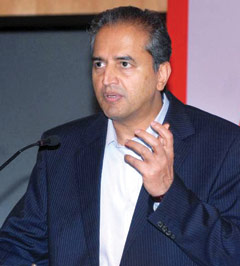
effort that began last year on Grand Cayman. The Indian heart surgeon who
brought the Narayana Hospital project to Cayman, Dr. Devi Shetty, told a
Chamber of Commerce meeting in November that caps on punitive damages for
medical malpractice exist in several US states and that it was “not
exceptional” to request such a move here.
Local hospital project partner Gene Thompson has said
that annual insurance premiums for medical malpractice in Cayman – particularly
for specialists like obstetricians and gynaecologists – have made it expensive
to operate in recent years due to large payouts if a malpractice claim should
arise.
However, the local legal
advisory board – the Law Reform Commission –
has publicly opposed the introduction of a $500,000 cap on punitive damages for
medical malpractice.
In a review made public
in October, the commission stated: “It is the belief of the LRC that the courts
of the Cayman Islands continue to be the more appropriate arbiters in terms of
assessing and awarding damages based on principles of justice and having regard
to the specific circumstances of each case. The findings of the LRC do not
support what may be construed as a proposal to implement a fundamental change
in the legal system in the Cayman Islands.”
The commission also
pointed out that statutes of limitations could be unfair on plaintiffs who may
be unaware of the existence of an injury or of its severity during the relevant
limitation time.
The legislation before
the LA addresses only a liability claim “where a final judgement is rendered”.
It does not address the issue of whether a specific timeline should be placed
on medical malpractice claims.
Both Mr. Thompson and
Health Minister Mark Scotland have said that the tort reform, as well as
changes to the Health Practitioners’ Law and the creation of regulations for
organ donations, must be approved in order for the Narayana Hospital project to
go forward.
Another key piece of
legislation, the Tax Concessions (Amendement) Bill, 2010, has already been
approved by assembly members.
A draft of the
amendments to the Health Practitioners Law has already been released. The organ
and tissue donor regulatory framework is still in the drafting stages and is
expected to take longer to complete.
The Legislative Assembly
is expected to resume on 10 January.
Related Videos













Hello Cayman.I am the first to celebrate expertise in our medical community. A country with good professional doctors is a plus in every way. However, I really, honestly feel that we need to read the writting on the wall before going ahead with this Tort reform bill. Say no more, please call the wise men.