As a mini experiment, Cayman Compass staff earlier this month swabbed 10 surfaces that would typically be touched by scores of people every day to get an idea of how hygienic, or unhygienic, people in Cayman are in the midst of the COVID crisis.
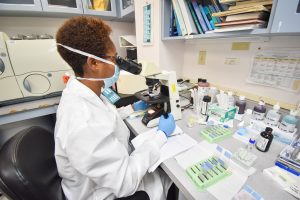
The Compass partnered with the Health Services Authority laboratory, which grew cultures from the swabs and determined what, if any, nasties grew from the samples taken from surfaces of various frequently touched objects.
We tested the following surfaces that people come into contact with on a regular basis, to determine if any contained dangerous bacteria or fungus:
• ATM keypad
• Petrol pump handle
• Office water dispenser
• Dollar bill
• Church door
• Supermarket trolley
• Soap dispenser at a public toilet
• Traffic light button
• Swing chains at a children’s playground
• Restaurant menu
The experiment was not exhaustive by any means, but was intended as a snapshot of the state of some public surfaces on a given day.
Of the 10 objects swabbed, after two rounds of tests, HSA laboratory technicians found that two – the water dispenser and the petrol pump handle – contained fungal growth.
The other eight showed only the typical microbes that one would find on a person’s skin.

Hazel Gordon-Fletcher, who is the infection-control coordinator at the HSA, said she was surprised by the findings, and believes they are indicative of people’s increased awareness of hygiene amidst the COVID-19 pandemic.
Health officials in Cayman have previously indicated that the prevention methods being taken in Cayman – additional sanitation of surfaces, regular hand cleansing and, earlier, the wearing of masks in public places – meant that cases of flu in Cayman this year had fallen sharply compared to previous flu seasons.
Gordon-Fletcher agrees that regular washing or sanitising of hands, as well as an increased awareness of the importance of cleaning down surfaces often touched by people, most likely accounted for no signs of fungus or unusual bacterial growth on such frequently touched items as the supermarket trolley or the traffic light button.
She says the fungi found on the two surfaces are not dangerous or overly worrisome. “It’s not unusual,” she said. “It’s fungus, but fungus is all over the place … the thing to do is just to clean it.”
She added, “It is surprising that even the supermarket trolley, the traffic light, the ATM, all they had was normal flora that would be on our skin.”
She said that, especially with the money and public bathroom soap dispenser, she would have expected the results to show other types of growth other than harmless skin flora.
“That shows that we are doing what we are supposed to do in the Cayman Islands,” she said.
She also drew a correlation between increased awareness of hand hygiene in Cayman and the drop in the number of influenza cases in the current flu season.
“The amount of flu symptoms we usually have has drastically reduced. People are washing their hands more and sanitising their hands more,” she said.
The experiment
During a four-hour period one Monday morning this month, the Compass, using Nitrile gloves and 10 individual swab kits, swabbed various surfaces in areas of Grand Cayman – a stoplight at a road crossing, an ATM keypad, a soap dispenser button at a public toilet, the handle of a church door, the bar of a supermarket trolley, the handle of a pump at a gas station, an office water dispenser, a well-used dollar bill that had recently been in a store till, the chain of a child’s swing at a public playground, and a menu from a popular restaurant.
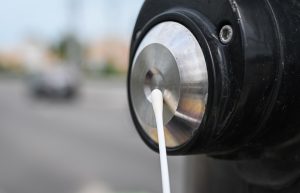
The swabs were placed inside sterile tubes, labelled with the relevant surface name, and then delivered to the HSA laboratory for testing.
There, technicians checked them within 24 hours of the swabs being made. That test was preliminary, and a final test was carried out on 20 Jan.
On the water-dispenser sample, according to the lab results, ‘sparse penicillium species’ was found, while the gas pump was found to contain ‘aspergillus flavus’. According to the US Centers for Disease Control and Prevention, both of these fungi are common indoor moulds.
Related Videos