

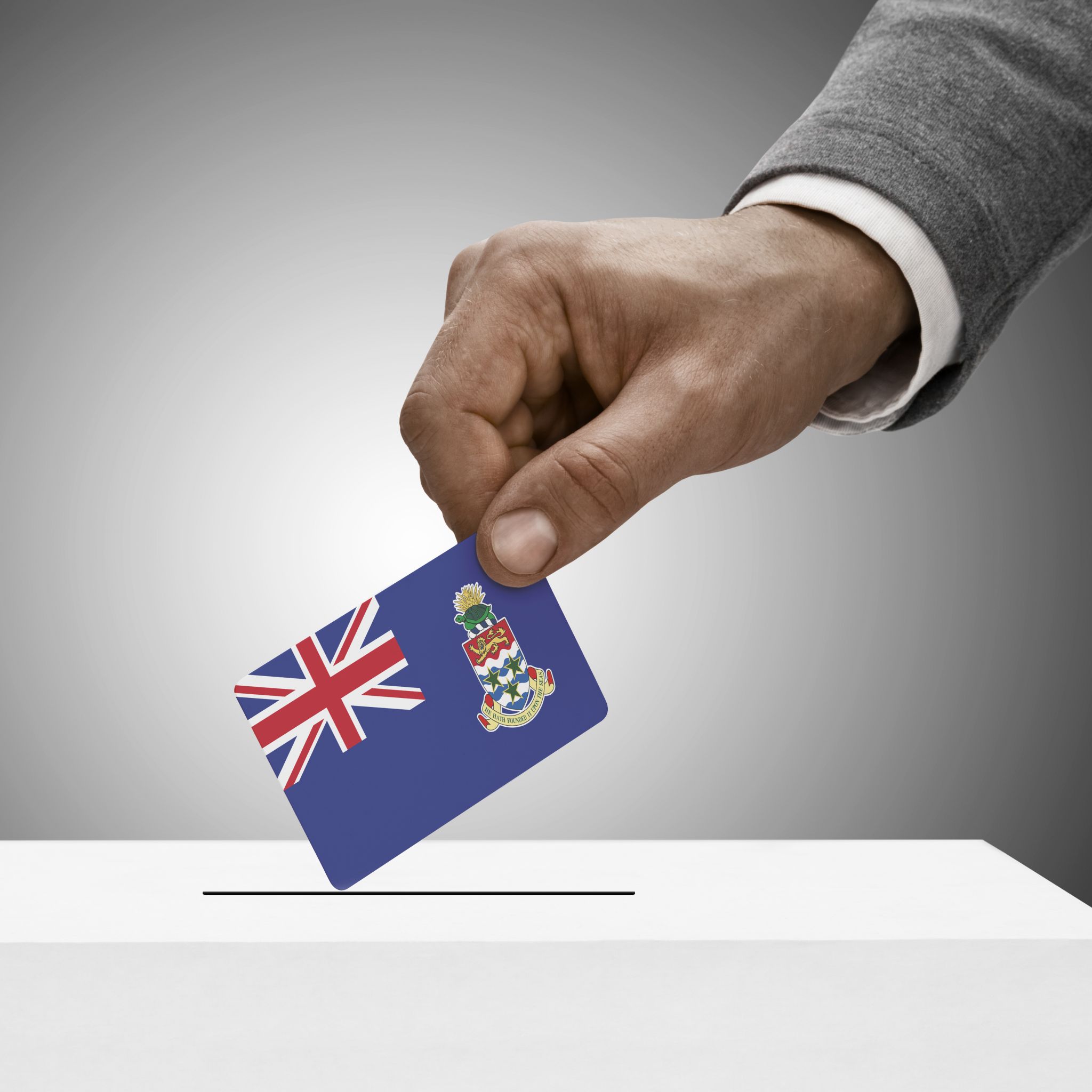
Premier Alden McLaughlin consulted with Governor Martyn Roper to dissolve Parliament, triggering a 14 April election, rather than the originally announced 26 May date.
With Cayman’s general election now set for six weeks earlier than expected, candidates are beginning their race to capture one of the 19 seats up for grabs in Parliament.
In this explainer, we look at how this unfolded and what happens next as Cayman votes in 2021.
Why did the premier call early elections?
With public pressure mounting on the premier to take action against House Speaker McKeeva Bush, he opted to call early elections, averting the need to call a sitting of Parliament to debate a motion of no confidence in the Speaker and efforts to remove the West Bay West MP from his post.
How was the governor able to dissolve Parliament?
Under Section 84(2) of the Cayman Islands Constitution, the governor, acting after consultation with the premier, may at any time dissolve the Parliament.
Can the Governor refuse to dissolve Parliament?
Only under exceptional circumstances can a governor refuse a premier’s request to dissolve Parliament. Roper, in response to a post on his Facebook page on 10 Feb., affirmed this, saying, “the legal advice I received is that only in the most exceptional circumstances – which do not exist – could I refuse the request. This decision is entirely the responsibility of elected politicians. The public can now have their say in the election.”
Can a dissolved Parliament be recalled?
Yes, under Section 85 of the Cayman Islands Constitution. The provision states that “If, between a dissolution of the Parliament and the date on which the next ensuing general election is held, a matter arises of a nature and urgency which in the opinion of the Governor makes it necessary for the Assembly to be recalled, the Governor may, acting after consultation with the Premier, summon the Parliament that has been dissolved and that Parliament shall thereupon be deemed (except for the purposes of section 86(1)) not to have been dissolved, but shall be deemed (except as aforesaid) to be dissolved on the date on which the next ensuing general election is held.”
What happens now that elections have been announced?
The official process to make way for the polls commences with the dissolution of Parliament and issuing of the proclamation declaring the general election, both of which happens on 14 Feb. Both acts are done by the governor and published by government notice. Following this, the governor then issues writs.
What is issuing of writs?
Writs are the documents the governor issues to the returning officers, commanding them to conduct an election in accordance with Section 28(2) of the Elections Law (2017 Revision). Returning officers are responsible for the organisation and conduct of elections in their respective districts.
What happens to these writs?
These writs, which are a form of record, will be returned to the governor following the election, with the name of the candidate who has been elected to serve in that electoral district.
When is Nomination Day?
1 March.
When will I know who is running in my constituency?
The official candidates will be announced after nominations have been filed and a candidate’s nomination is accepted.
Will all newly registered voters be allowed to vote on 14 April?
All voters who are affirmed in the 1 April Register of Electors will be allowed to vote in the general election.
Have the names on the revised list of electors been affirmed?
No. The Elections Office is still in the process of finalising that list. The deadline to submit claims and objections is 25 Feb.
Is 14 April going to be a public holiday?
Yes. The Public Holidays Act (2007) sets out that General Election Polling Day will be a public holiday. Therefore, 14 April will be a public holiday. This means schools, public offices and many businesses will be closed.
Will 26 May still be a holiday?
Cabinet will have to determine whether this day will remain a holiday.
Where do I vote?
The Elections Office will publish the official list of registered polling stations, which will also be available at The Compass’ dedicated election page votecayman.com.
Is postal voting allowed?
Yes. Postal voting is allowed for those who will be off island. You will have to apply for a postal ballot, the forms are available on the Elections Office website.
What times does voting start?
Polling stations typically open at 7am and close at 6pm.
Can you campaign on Election Day?
It is illegal to canvass on polling day. Campaign advertising, which applies to newspapers, periodicals, radio, television or any other printed or electronic form, is not allowed on Election Day. Billboards should be taken down and roadside signs removed by midnight on 13 April.
Can you congregate near a polling station?
The polling area is 100 yards from any building in which a polling station is located. No one is allowed to congregate within this 100-yard area, other than people who are waiting to vote or who may lawfully enter, such as candidates’ agents. Agents cannot wear T-shirts with campaign logos or a candidate’s name/face within the polling area.
Can you sell or consume alcohol on Election Day?
No. The Elections Law specifies that no intoxicating liquor shall be sold, offered for sale or given away at any premises that has a licence issued under the Liquor Licensing Law. This ban applies to any electoral district in which an election is being held.
Can I take my kids with me to vote?
Children will not be allowed inside polling stations, so parents may have to juggle voting times or arrange babysitting.
Can I take my phones/camera with me in the polling station?
Cameras, cellphones or other electronic equipment are not allowed.
Is my vote secret?
Yes. During the hours that the polls are open, no one is allowed to seek to influence any voter to vote for any candidate. No one is allowed to try to ascertain what candidate a voter intends to vote for or has voted for. In other words, no exit polls.
Related Videos













Good summary…useful. Question: WHERE can a member of the public can inspect the voters list? From your article I can see this is possible but haven’t seen anything about WHERE and time is running out.