

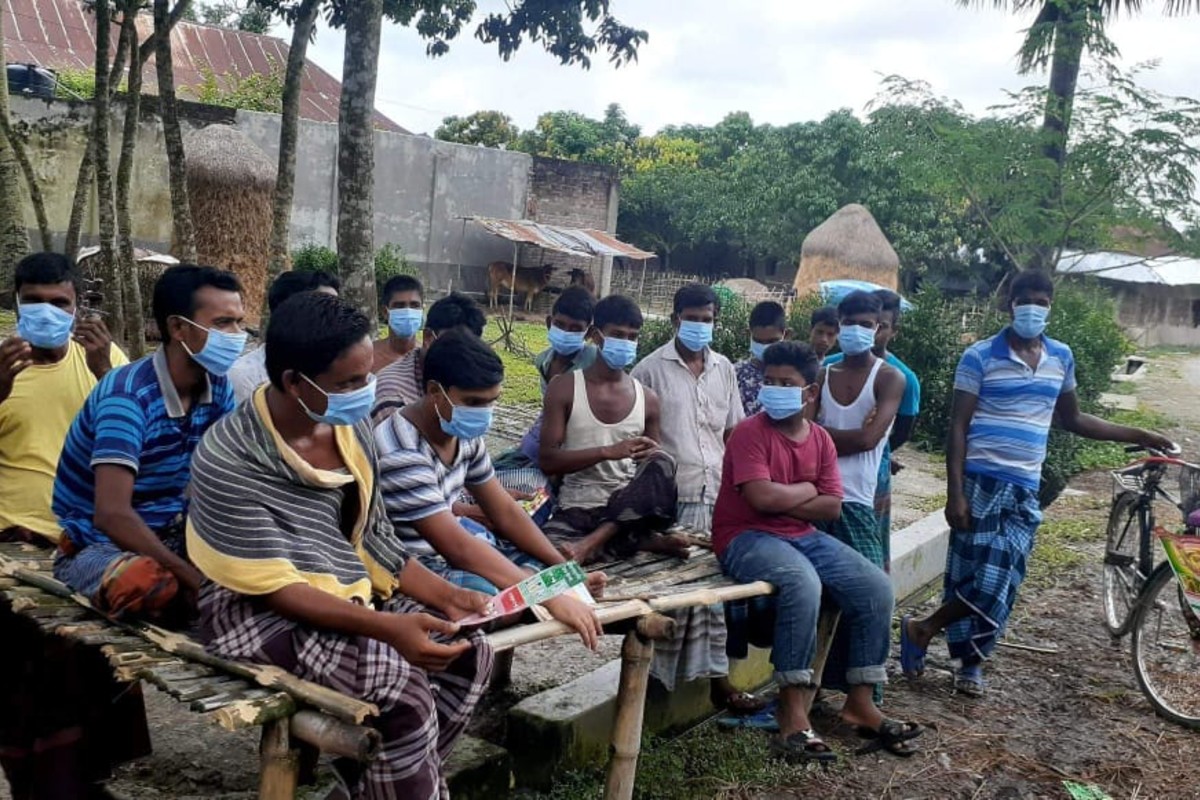
A new study, the largest of its kind, by a group of scientists from Yale, Stanford and UC Berkeley universities and other institutions has shown that masks, especially surgical masks, are effective at protecting against COVID-19.
A report on the study findings indicates that high-quality surgical masks are far more effective at filtering harmful particles than cloth masks, and remain highly effective even after being hand-washed up to 20 times.
The mask-efficiency findings formed part of a report into the results of the randomised trial – involving almost 350,000 people in 600 villages in rural Bangladesh – which was conducted to increase the wearing of masks to protect against COVID-19 and to determine in a real-world environment how effective masks were at reducing incidents of the disease.
Part of the study involved handing out free masks in a strategy aimed at making mask-wearing the social norm in a place where this was not previously the case.
The study, co-authored by Yale economics professor Mushfiq Mobarak, who spends much of his time in Cayman as he’s been married to a Caymanian for 25 years, found that, simply, masks work, and a high-quality, three-layer surgical mask rather than a cloth mask is the best option, if a choice of masks is available.
“One issue with surgical masks is people think you can only wear them one time and then you must throw them away,” he told the Cayman Compass in a phone interview. “But you can wash and reuse them. We tested that in advance. We tested the filter efficiency, and it was 97% effective. That is how good the filter is at blocking out the virus.
“You can wear and wash and wear. After 20 washes, the surgical mask is still 80% effective. Cloth masks, even ones with triple layers, are 40% effective.”
According to the study, even lower quality surgical masks are still more effective at filtering than cloth masks – at 62-65% prior to washing, and 47% after 20 washes.
Mobarak says higher quality surgical masks can be hand-washed with warm water and soap again and again.
The high-quality masks tested in the study consisted of three layers – two consisting of 100% spunbond non-woven polypropylene, with a middle layer of 100% meltblown non-woven polypropylene.
He and his Yale colleague, Jason Abaluck, worked with research and policy group Innovations for Poverty Action and scholars from Stanford University, the University of California Berkeley, and other universities on the trial.
Environmental impact
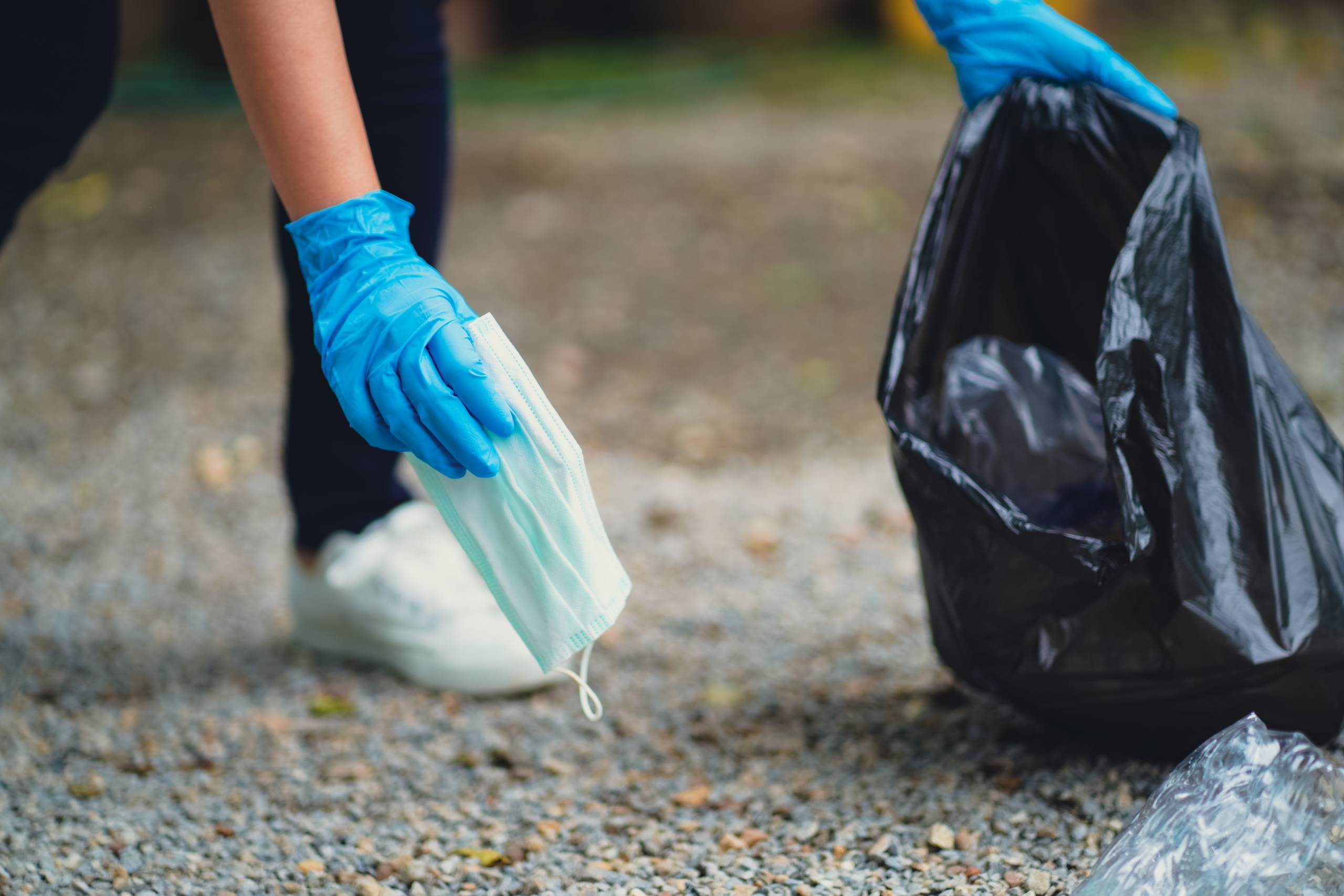
Mobarak says there is also an environmental component to demonstrating that surgical masks can be washed and reused, and still be effective, as it’s a common misconception that these masks are only for single use.
It’s not uncommon to see once-worn blue surgical masks on roadsides, on beaches or on ironshore in Cayman.
Mobarak says people have assumed that the surgical masks should only be used once and then discarded because “that is how surgical masks are used in hospitals”.
“Obviously, surgeons are only going to use a mask once and then dispose of it. We are in a different world now where ordinary people have to wear masks. Most of use aren’t performing surgery,” he said.
Mobarak, who is originally from Bangladesh, said his work on the 10-week trial was done while he was in Cayman.
The debate over masks began early in the pandemic last year, when the US Centers for Disease Control and Prevention and the World Health Organization advised the general populace not to wear them, in a bid to keep supplies available for healthcare workers. The organisations also had concerns that people may overly rely on them to the detriment of other preventative steps like social distancing and hand-washing. Both reversed their decisions and later advocated strongly for the wearing of masks.
The Bangladesh study found that people wearing masks also adhered to social distancing and hand hygiene.
Bangladeshi study
The study, titled ‘The Impact of Community Masking on COVID-19: A Cluster-Randomized Trial in Bangladesh’, was held from November 2020 to April 2021. It showed that masks are effective in preventing people from contracting COVID, especially older people.
The trial consisted of two components. In the first, the researchers found that four interventions, used together, led to a tripling of mask wearing among people in the targeted villages, from 13% to 42%.
Those interventions included: giving away free masks, offering information about mask wearing via videos and brochures, endorsements from community leaders and reminders from roving monitors.
“When we do these four things together,” Mobarak says, “it brings social norm change where everyone started wearing the masks.”
In the second part of the study, researchers asked people if they had experienced any COVID-19 symptoms. Those who indicated they had symptoms were tested for virus antibodies, and the researchers found that there were 9.3% fewer symptomatic infections in villages where they had distributed free masks – where 42% were wearing them – compared to villages where they had not given out masks.
They also discovered that, in villages where the team had handed out surgical – rather than cloth – masks, infections were 11% lower overall, 23% lower among people between the ages of 50 and 60, and 35% lower among people over 60.
The researchers said it was important to note that these results had occurred when just 42% of the population were wearing masks.
The ‘NORM’
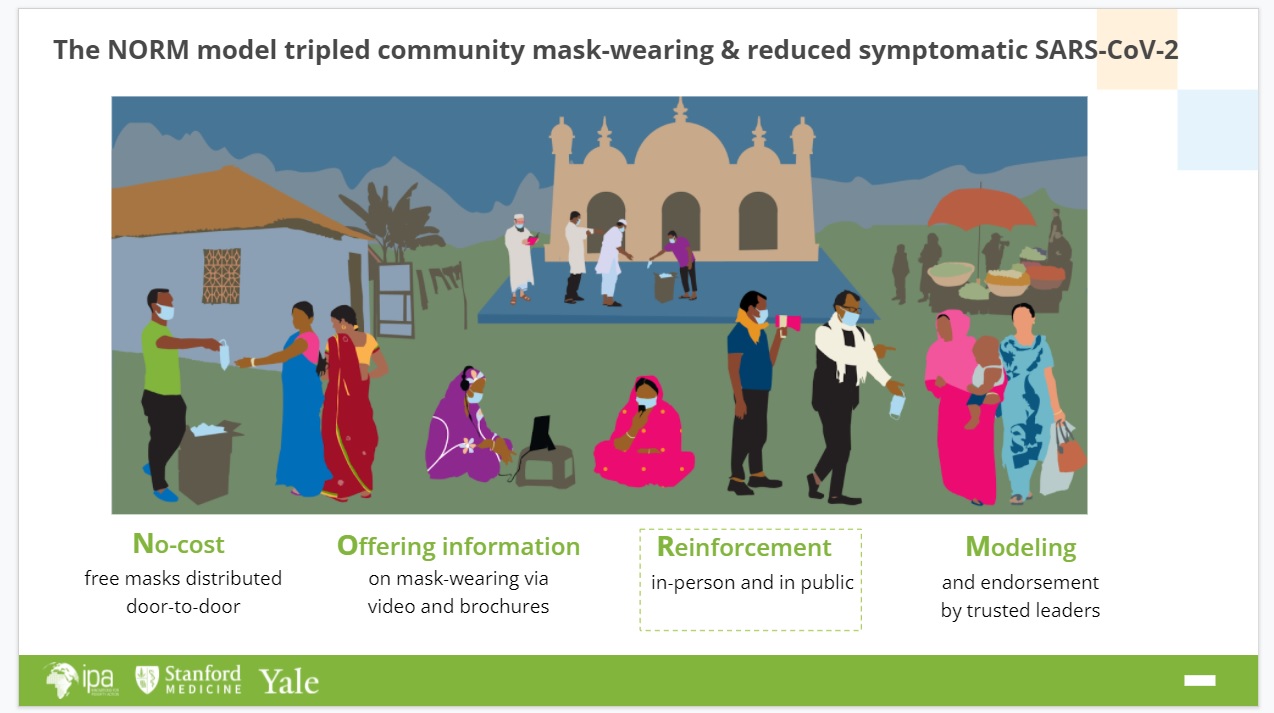 The findings of the research in Bangladesh has led to a programme known as ‘NORM’ – which stands for No cost (masks distributed door-to-door), Offering information (via video and leaflets), Reinforcement (in person and in public), and Modelling (endorsements by local leaders).
The NORM model was used in 300 ‘intervention’ villages where all four of these initiatives were carried out. The results were then compared to the 300 ‘control’ villages, where no intervention was done.
One-third of the intervention villages received a cloth mask and two-thirds received a surgical mask. The masks were handed out at homes, marketplaces and mosques.
Along with the distribution, the research team showed a brief video of notable public figures discussing why, how, and when to wear a mask. The video featured the prime minister of Bangladesh Sheikh Hasina, the head of the national Imam Training Academy, and the national cricket star Shakib Al Hasan. During the distribution visit, households also received a brochure based on WHO materials depicting proper mask wearing.
The third intervention step involved efforts to create a social norm, in which mask promoters encouraged non-mask wearers to wear one and provide them with a mask if they didn’t already have one. Mask promoters also played public service announcements in public areas using handheld microphones.
The fourth step – endorsement by local leaders – involved imams or religious leaders in the villages discussing the importance of mask-wearing at Friday prayers from a scripted speech provided by the research team.
The groups involved in this study have distributed more than 100 million masks worldwide, free of charge, using this model. Several governments have already implemented or have expressed interest in introducing the NORM model. The programme is being used in Pakistan, India and Mexico.
Mobarak said the next step will be “looking at using similar methods to convince people to get vaccinated”.
Watch a video about the NORM model here.
Related Videos










Is this the same news that came out in 2020? Time to move on Compass!
This story is about a report published in August 2021, based on research done between November 2020 and April 2021.