

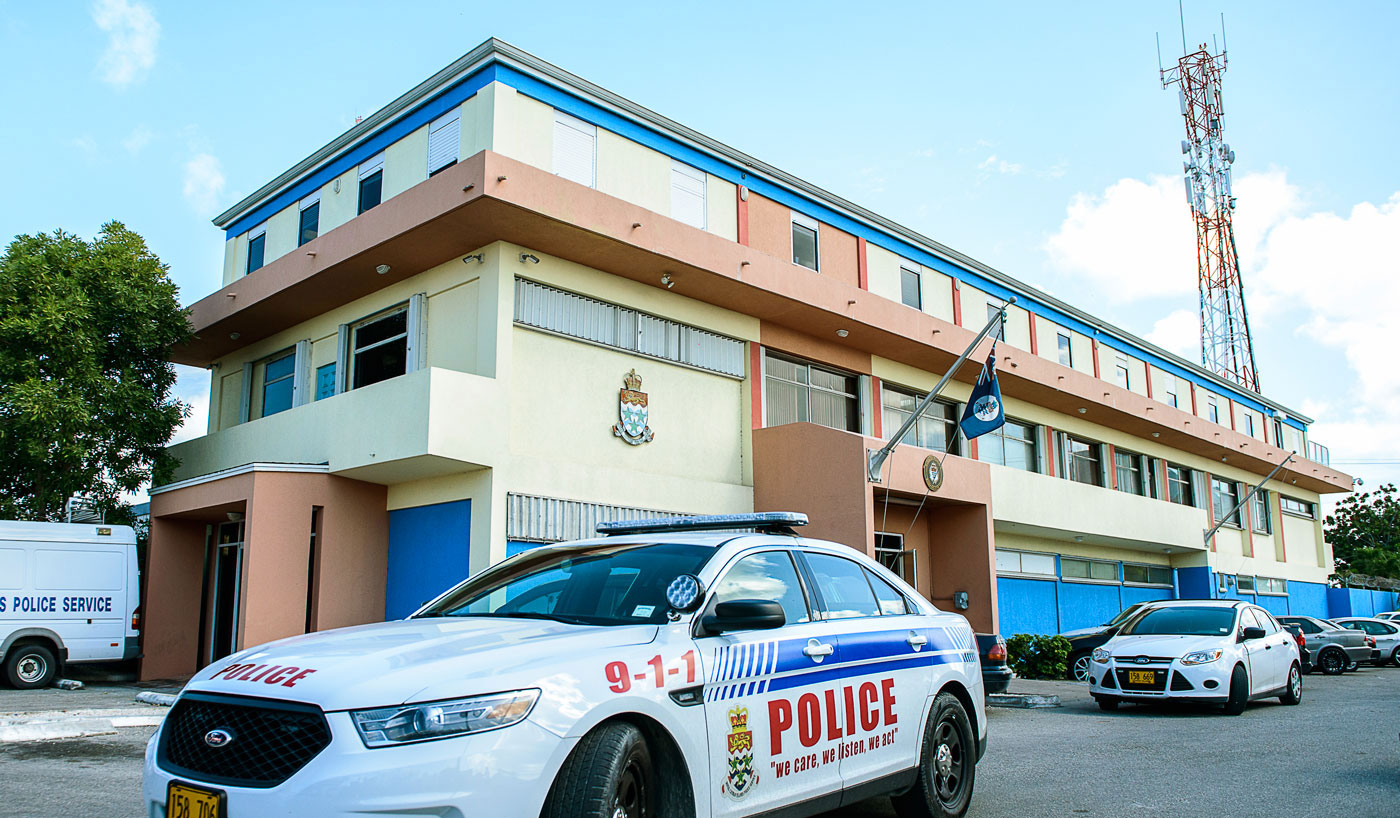
The granting of police bail recently has come under scrutiny by some members of the community following news of the release of an attempted murder suspect and a man accused of stalking joggers.
However, the Royal Cayman Islands Police Service says the issuing of police bail is set out in law and it is bound by it.
“When it comes to matters concerning bail, including conditions, police are guided by the requirements provided under the Bail Law (2015 Revision),” the RCIPS said in response to queries from the Cayman Compass.
Detention of suspects following arrest is covered by Section 65 of the Police Act (2021 Revision), which discusses the conditions under which individuals can be detained, and the length of detention, which is usually for a maximum of 48 hours, the emailed response explained.
Bail does not mean case is over
“Police bail is an investigative tool used in cases where a person has been arrested on suspicion of a crime, but the evidence currently available does not meet the legal threshold for a charging decision to be recommended, and the person can no longer be held in custody (as there is a limit on how long persons can be held before charge),” a police spokesperson said.
In such cases, the spokesperson said, “a person is granted bail for a period of time while the investigative process continues and further evidence is gathered so that a case file can be completed and submitted, or re-submitted, for legal ruling”.
Therefore, even though that individual may have been allowed bail, that does not mean the matter is at an end or that charges are not forthcoming.
“Police bail is an investigative tool used in cases where a person has been arrested on suspicion of a crime but the evidence currently available does not meet the legal threshold for a charging decision to be recommended, and the person can no longer be held in custody (as there is a limit on how long persons can be held before charge.)
Additionally, the police statement pointed out that, depending on the nature of the suspected offence, various conditions can be applied to a suspect on police bail.
These conditions include “curfew, restrictions on attending certain locations, or restrictions on approaching or contacting certain persons. Any violation of these conditions will result in a further arrest.”
Provisions exist for longer detention
Under the Police Act 2021, there are provisions for keeping suspects detained up to 72 hours, but that is contingent on specific guidelines and scenarios.
For example the detention can be extended, if it is decided that there is insufficient evidence to charge the person in custody but the arresting police officer, if he or she has reasonable grounds, believes keeping the suspect locked up without being charged is necessary to — “(a) secure or preserve evidence relating to an offence for which the person is under arrest; (b) obtain that evidence by questioning that person; or (c) complete the investigation.”
The granting of bail can be considered a legal obligation, but the breach of bail conditions certainly leads to arrest, according to police.
Under the Bail Act, police may arrest someone on bail without a warrant if the officer has reasonable grounds to believe he or she is not likely to surrender to custody.
Similarly, if the officer has reasonable grounds to believe that the person is likely to break or has broken a condition of his/her bail, that individual can be arrested without a warrant.
Another scenario in which a bailed person can be arrested without a warrant is if that person’s surety/guarantor for the bail notifies the officer that the suspect is unlikely to surrender to custody and requests to be relieved as a surety.
Related Videos












This is interesting but doesn’t take into account three issues:
Risk of re-offending.
Risk of witness intimidation.
Ability to destroy evidence.
For example: As Oddy fought with her assailant there might be his DNA on her, perhaps under fingernails.
Was this checked for?
There seems to be an epidemic of violent crime recently and everyone is concerned.