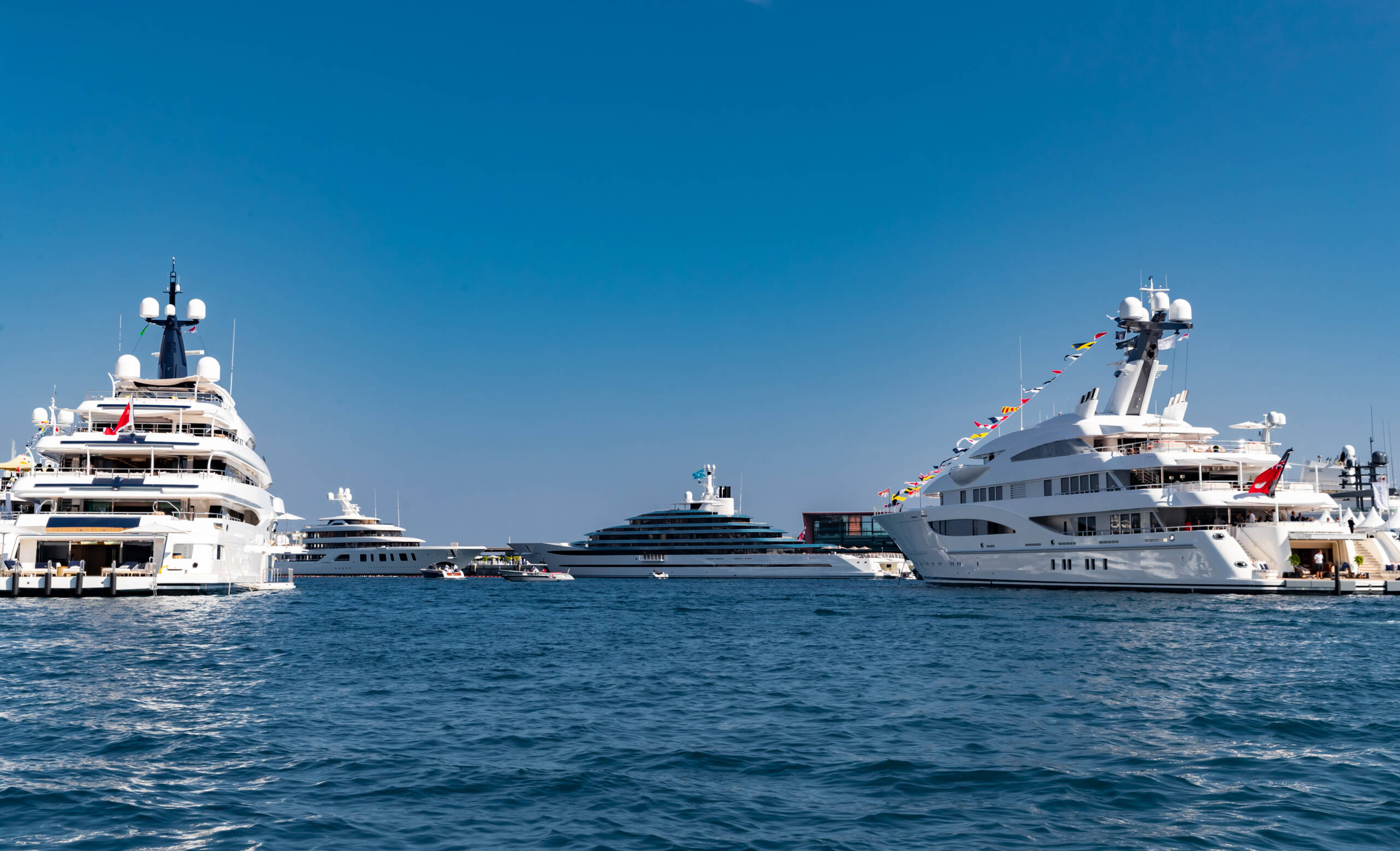
Authorities around the world have acted swiftly to enforce sanctions against Russian oligarchs tied to President Vladimir Putin.
In the superyacht segment alone, the US, the UK and the European Union have seized or detained at least 15 vessels with an estimated value of US$3.6 billion. Seven are registered in the Cayman Islands.
While preventing a ship from leaving port is easy, it is also where authorities enter a legal grey area.
Legal uncertainty
The government may take control, but not ownership, of a vessel. As such, the sanctioned owner has no access to the property, is unable to use it and cannot sell it.
But neither can the authorities. To take ownership of the vessel, authorities would generally have to prove that the asset represents the proceeds of a crime. Given that such alleged illegal activity would have taken place in Russia makes this very unlikely.
Who is responsible for the upkeep of the vessel, berthing costs and other fees under these circumstances is an open question. Even if the owner remains responsible, as European authorities maintain, paying for it is impossible under current sanctions.
Typically, the running costs of a superyacht, including fuel, can be as high as 10% of the ship’s value.
Most crews of seized superyachts have been made redundant or left because they could not get paid.
In early April, a London stock market-]listed port operator, Global Ports Holding, waived mooring and service fees for Roman Abramovich’s superyacht Solaris in the Turkish resort of Bodrum for fear of violating sanctions.
In La Ciotat, France, police have seized the Amore Vero, alleging it is owned by a company controlled by sanctioned oligarch Igor Sechin. The Rosneft CEO denies this. The shipyard where the vessel is held continues to invoice for its services but does not know where to send the bills, Reuters reported.
The French government maintained that it had seized and not just frozen the asset, because the Amore Vero tried to flee before it was detained and therefore committed an offence trying to evade sanctions. But it has not officially informed customs or other third parties.
Authorities tend to leave the status of vessels that are held deliberately vague, because the ownership structure of superyachts is often not immediately transparent.
This practice may lead to future lawsuits over the loss of charter earnings, the inability to use a yacht or any deterioration of a ship’s condition while it was detained.
Unravelling the ownership structure
The seizing of superyachts that are suspected to be owned by sanctioned Russian oligarchs continues to unfold according to a now-familiar pattern. First the suspected yacht is arrested and prevented from leaving port, until the ultimate beneficial ownership of a vessel can be determined.
Then the management company and lawyers acting on behalf of the vessel claim that the yacht is not owned by a sanctioned individual at all, but rather a legal entity that is often part of a Byzantine corporate structure stretching across multiple entities in various jurisdictions.
Sometimes it is claimed the ownership of a vessel changed just days before it was detained.
Unravelling such an ownership maze takes time.
In the case of the Cayman-registered Dilbar, which was held in a German shipyard near Hamburg in early March, it took several weeks of what authorities called “extensive investigations” to determine whether the $600 million yacht was owned by sanctioned oligarch Alisher Usmanov.
A spokesperson for Usmanov told The Guardian last month that assets such as his UK properties and yacht had been “long ago transferred into irrevocable trusts”.
This meant Usmanov had no control over them but could only use them on a rental basis. The beneficial rights had been donated to family members.
Hamburg customs and port authority were careful, stating no vessel had been seized but only those ships that are legally allowed were able to leave.
Although the Dilbar was the first yacht to be detained under Russia sanctions, German authorities only officially seized the vessel last week.
Germany’s federal police and tax authorities found that the ship – at 512 feet in length, one of the largest superyachts in the world – was ultimately owned by Usmanov’s sister, Gulbahor Ismailova, who was subsequently placed on UK and EU sanctions lists.
According to the UK government, Usmanov had transferred assets to Ismailova “leaving his sister as the only beneficial owner of the yacht Dilbar”. Usmanov had reportedly also transferred control of multiple Swiss bank accounts to his other sister, Soadat Narzieva, who received a gift of $3 million. Narzieva also controls 27 Swiss bank accounts, holding hundreds of millions of dollars, linked to her brother.
Amadea
Another Cayman-registered superyacht, Amadea, was detained last week in Fiji, after a request for judicial assistance by the US government.
The Amadea is widely suspected to be owned by Suleiman Kerimov, a Dagestani Russian billionaire and politician, who has been sanctioned by the US and the EU.
The Civil High Court of Suva granted a restraining order preventing the vessel from leaving Fijian waters and is awaiting an application to register a US warrant to seize the yacht.
The superyacht had previously travelled unhindered from Antigua through the Panama Canal to Mexico. It is believed that her destination was the perceived Russian safe haven of Vladivostok.
A yacht agent in Fiji who said he was a representative for the Amadea told Reuters the ship’s lawyers were contesting that Kerimov owns the vessel.
The registered owner of the $325 million superyacht is Nero Management Ltd in the Cayman Islands.
Alexandar V
How difficult it can be to trace the ownership of a superyacht was shown by the International Consortium of Investigative Journalists based on leaked documents from a financial services provider.
The documents involve the 157-foot Alexandar V, registered in the Cayman Islands. Until nine days before Russia’s invasion of Ukraine, the yacht was moored in the Italian port of Pesaro. Since then, the vessel has turned off its satellite location system and disappeared.
On paper, the Alexandar V is owned by British Virgin Islands company Ontario Challenge Ltd, which is jointly owned by Singapore company Winable Investments Pte Ltd and a Liechtenstein foundation named Equart.
This structure was introduced in 2016 to offer what internal documents called “extra asset protection of the vessel”, the ICIJ said.
The Singapore and Liechtenstein entities are owned by a Russian company that is ordinarily engaged in real estate leasing activities. This company, in turn, is owned by an investment company of Russian natural gas giant Gazprom.
And it is Gazprom that purchased the vessel for $25 million in 2010 to be used by its company executives and guests.
The ICIJ reported that in 2018 corporate services provider Asiaciti filed a suspicious activity report over invoices paid by Ontario that “did not seem to be commercially sound”.
The invoice in question paid more than €300,000 to a Scottish limited partnership named London Fortress LP for gym equipment. This included, for instance, a €67,000 charge for an elliptical trainer that retails for €15,000.
Although the service provider asked for clarification, the response did little to change the views of the compliance team which maintained “reasonable suspicions”, the documents show.
A suspicious activity report is no indication of illegality. Yet, it is not clear why the Alexandar V’s operating company would pay or, potentially, overpay – depending on whether any gym equipment was ever delivered – a Scottish limited partnership (SLP) controlled by a Russian with a Moscow address and a bank account in Bulgaria.
Scottish limited partnerships are favoured in Eastern Europe
The use of SLPs generally is illustrative of the corporate transparency weaknesses that continue to exist, as in this case in the UK. Although much information is now publicly available on the internet at no charge, it is the quality of that data and sufficient checks of the information that are lacking.
Public records show, for instance, that London Fortress LP was set up by Japan Intergroup SA and Kyoto Holdings SA.
Even a cursory search of the Companies House website and the internet reveals that those two Seychelles companies were used to create several other companies and limited partnerships.
A Ukrainian corruption investigation alleged that one such entity, Fuerteventura Inter LP, was used to syphon off $2 million from the sale of 23mm calibre ammunition from Ukraine’s state-owned defence company Ukrinmash to the United Arab Emirates.
Another was allegedly indirectly connected to firms who paid millions of dollars in lobbying contracts to advocate on behalf of Yulia Tymochenko in the United States. The Ukrainian politician and presidential candidate was from 2011 to 2014 arrested and imprisoned for corruption, a sentence that some Western leaders said was politically motivated.
A third SLP created by Japan Intergroup SA and Kyoto Holdings SA, was the European front for Russian electronic payment services provider that has now transitioned to crypto payments.
There is no indication that these companies, and others spawned by Kyoto Holdings and Japan Intergroup, are connected, other than having had the same founding partner companies at birth.
Scottish Limited Partnerships have long been known to facilitate corruption and organised crime or skirt currency restrictions and taxes. As such, they were frequently sold as offshore companies in Eastern Europe.
The ease with which companies and partnerships can be cheaply registered in England and Scotland, combined with a lack of checks and the use of fake, stolen or misused identity documents, has made them one of the major tools to launder funds from Eastern Europe through UK entities with British and European banks.
Some are formed to carry out one specific transaction. Others are quickly dissolved when they become the subject of increased scrutiny.
In February of this year, the British government released a corporate transparency white paper outlining plans to reform Companies House. The proposal would transform the British company registry from a largely passive recipient of information to an active gatekeeper of company formations based on more reliable data.
Related Videos